- Company Articles
- Products and Technology
- Product knowledge
- 3030a EU Standard Aluminum Profile in Home Appliance Manufacturing: ROI Analysis

3030a EU Standard Aluminum Profile in Home Appliance Manufacturing: ROI Analysis
Related Product
3030A EU Standard Aluminum Profile
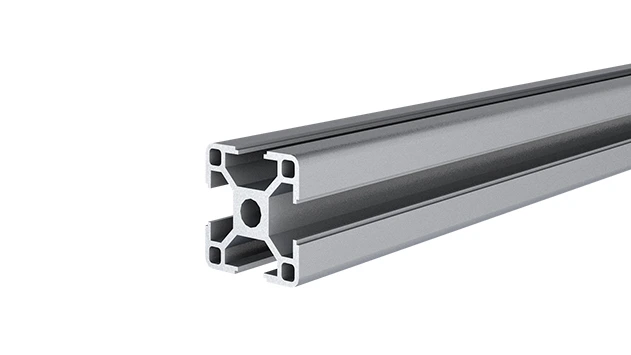
3030 is a 3.00 x 3.00CM fractional 30 series square extrusion T-slot profile with four open T-slots, each side with 3.00cm face. The profile has align-a-grooves to assist in aligning connecting profiles.
In the fast-paced world of home appliance manufacturing, where production lines shift with new models, deadlines loom, and profit margins grow tighter by the quarter, every decision counts. From refrigerators to washing machines, manufacturers face a constant balancing act: how to boost efficiency, cut costs, and stay agile—all while maintaining the precision and quality consumers demand. In recent years, one solution has quietly emerged as a game-changer for forward-thinking factories: the 3030a EU Standard Aluminum Profile. More than just a material, it's a building block for lean, adaptable, and cost-effective production systems. But does the investment truly pay off? Let's dive into the ROI of integrating 3030a aluminum profiles into home appliance manufacturing—and why it might just be the upgrade your factory needs.
The Home Appliance Manufacturing Landscape: Challenges and Opportunities
Home appliance manufacturing is a high-stakes industry. Consumer tastes evolve rapidly—think smart fridges with touchscreens or energy-efficient dryers—and manufacturers must pivot quickly to stay competitive. This means production lines that were once set in stone now need to reconfigure in weeks, not months. Add to that rising labor costs, stricter safety regulations, and the pressure to reduce waste (both material and time), and it's clear: traditional production setups are struggling to keep up.
For decades, factories relied on heavy steel frames, wooden workbenches, and fixed conveyor systems. While durable, these materials come with hidden costs: steel rusts in humid factory environments, requiring frequent repainting or replacement. Wood warps over time, compromising precision. And worst of all, reconfiguring a steel-based assembly line can take days—even weeks—of downtime, during which competitors are churning out new models. It's a cycle that eats into profits and stifles innovation.
Enter lean manufacturing principles: the focus on minimizing waste, maximizing efficiency, and empowering teams to adapt quickly. At the heart of lean systems is flexibility—and that's where aluminum profiles, specifically the 3030a EU Standard Aluminum Profile, shine. Designed to be modular, lightweight, and incredibly versatile, this material isn't just replacing old systems; it's redefining how factories operate.
What is 3030a EU Standard Aluminum Profile?
Before we jump into ROI, let's get clear on what 3030a aluminum profile actually is. At its core, it's an aluminum extrusion profile—a long, uniform piece of aluminum shaped by pushing molten metal through a die. The "3030a" refers to its dimensions: 30mm in width and 30mm in height, with a specific cross-sectional design (the "a" denotes a standard EU configuration). This isn't just any aluminum, though; it's engineered to meet strict European standards for strength, precision, and compatibility with a wide range of aluminum profile accessories.
Dimensions and Specifications: Built for Precision
The 30mm x 30mm size hits a sweet spot for home appliance manufacturing. It's sturdy enough to support heavy components (like fridge doors or washing machine drums) yet lightweight enough for workers to handle without specialized equipment. The EU standard ensures consistency across suppliers, so a 3030a profile from one manufacturer will fit seamlessly with accessories—connectors, end caps, brackets—from another. This interoperability eliminates the frustration of mismatched parts and ensures your factory isn't locked into a single supplier.
Aluminum Profile Accessories: The Unsung Heroes
What truly makes 3030a profiles transformative is their ecosystem of aluminum profile accessories. These aren't afterthoughts; they're the key to the system's flexibility. Think 90° aluminum profile connectors that snap into place without welding, 3030 aluminum profile end caps that protect workers from sharp edges, and t-slot rubber seal covers that keep debris out of the profile's grooves. Even small details, like aluminum angle codes, allow for secure, adjustable joints that can be tightened or loosened in minutes. This means a workbench built with 3030a profiles isn't just a workbench—it's a platform that can be retooled, extended, or repurposed as needs change.
For example, a 3030a-based workbench might start as a single-deck assembly station for small parts, then be modified with additional shelves (using parallel aluminum joints) when a new appliance model requires more tools. Later, casters can be added (via caster installation bases) to make it mobile, allowing workers to move it alongside a changing production line. None of this requires cutting, welding, or specialized labor—just a few hand tools and a team trained to reconfigure on the fly.

3030a in Action: Applications in Home Appliance Manufacturing
To understand the ROI, we first need to see how 3030a profiles are actually used on the factory floor. Their versatility means they pop up in nearly every stage of production, from assembly to storage. Here are three key applications driving real value:
Workbenches: The Backbone of Assembly Lines
Workbenches are the heart of any appliance assembly line. They're where workers spend hours attaching components, testing circuits, and ensuring each product meets specs. Traditional wooden or steel workbenches often fall short: wood dents, steel is heavy and hard to adjust, and both require replacement every 3–5 years. 3030a aluminum workbenches, by contrast, are built to last. The anodized aluminum finish resists scratches, corrosion, and even chemical spills (common in factories using cleaning agents). And because they're modular, you can add pegboards for tools, adjustable shelves for parts bins, or even ESD (electrostatic discharge) mats for sensitive electronics—all without rebuilding the entire bench.
Take a typical fridge assembly line: workers need a stable surface to mount compressors, attach door hinges, and test temperature controls. A 3030a workbench with an aluminum honeycomb panel top provides the rigidity needed for precision work, while adjustable height (via telescoping aluminum legs and height-locking joints) ensures ergonomic comfort for workers of all sizes. Over time, this reduces fatigue, cuts down on errors, and even lowers workers' compensation claims—all tangible cost savings.
Material Racks and Flow Systems: Keeping Parts Moving
In home appliance manufacturing, downtime often starts with disorganized parts. If a worker has to walk 20 feet to grab a screw bin or wait for a cart of panels to arrive, every second adds up. 3030a profiles excel at solving this with custom material racks and flow systems. For example, a material rack built with 3030a profiles can be designed to hold exactly the parts needed for the day's production run—say, 3 rows and 3 floors of plastic panels for dishwasher doors—with adjustable dividers to prevent damage. Add roller tracks (another accessory compatible with 3030a profiles) and parts glide smoothly from storage to the assembly line, reducing picking time by 30% or more.
One factory in Germany, which produces small kitchen appliances, reported a 22% increase in line throughput after switching to 3030a-based flow racks. By angling the racks slightly and using gravity-fed roller tracks, parts now "present" themselves to workers, eliminating the need to bend or reach. The result? Faster assembly, fewer dropped parts, and a 15% reduction in material waste.
Lean System Integration: Adapting to Change
Perhaps the biggest advantage of 3030a profiles is how they enable lean system principles. Lean manufacturing is all about eliminating waste—whether it's time, materials, or unnecessary movement. With 3030a, reconfiguring a production line to fit a new appliance model isn't a major project; it's a weekend task. For example, when a manufacturer decides to add a larger capacity washing machine to its lineup, the existing 3030a-based conveyor rails can be extended using aluminum guide rails and connectors. Workbenches can be widened by adding extra profile sections. Even testing stations can be repurposed with new brackets and shelves—all without hiring welders or buying entirely new equipment.
This flexibility is a game-changer for small-batch production, a trend sweeping the industry as consumers demand personalized appliances (e.g., custom-colored ovens or smart fridges with unique features). With 3030a, a factory can run a batch of 500 specialty fridges, then reconfigure the line in 48 hours to produce standard models—something that would take weeks with steel or wooden setups. The result? The ability to chase niche markets and respond to trends without sacrificing efficiency.
ROI Analysis: Is 3030a Aluminum Profile Worth the Investment?
Now, the million-dollar question: does the upfront cost of 3030a aluminum profiles translate to long-term savings? Let's break it down into three key areas: initial costs, ongoing savings, and intangible benefits. To make it concrete, we'll compare 3030a profiles to two traditional materials: steel and wood.
Initial Costs: The Sticker Shock vs. Long-Term Vision
It's true: 3030a aluminum profiles have a higher upfront cost than wood or even some steel options. A single 3-meter length of 3030a profile might cost $25–$35, compared to $10–$15 for a wooden 2x4 or $15–$20 for a steel square tube of similar dimensions. When you factor in accessories (connectors, end caps, brackets), the initial investment can feel steep—especially for factories used to buying cheap wood or off-the-shelf steel racks.
But here's the catch: aluminum profiles are designed to be reused. A wooden workbench might last 3 years before warping; a steel rack might rust through in 5. A 3030a aluminum setup, with proper care, can last 15–20 years. And when you need to reconfigure, you don't throw it away—you take it apart and rebuild. That means the "per use" cost plummets over time.
Ongoing Savings: Where the Numbers Really Add Up
To calculate true ROI, we need to look beyond initial costs and consider maintenance, labor, and downtime. Let's create a hypothetical scenario: a mid-sized appliance factory replacing 10 workbenches and 5 material racks. We'll compare the total 5-year cost of wood, steel, and 3030a aluminum.
| Category | Wooden Workbenches/Racks | Steel Workbenches/Racks | 3030a Aluminum Workbenches/Racks |
|---|---|---|---|
| Initial Material Cost | $8,000 (replaced after 3 years: +$8,000) | $15,000 (replaced after 5 years: +$0) | $22,000 (no replacement needed in 5 years) |
| Installation Labor | $4,000 (2 workers x 5 days) | $6,000 (welders needed; 2 workers x 7 days) | $2,000 (no welding; 2 workers x 2 days) |
| Maintenance Cost (5 years) | $3,000 (repairs, repainting, replacing warped parts) | $5,000 (rust removal, repainting, welding repairs) | $500 (occasional tightening of joints, cleaning) |
| Downtime for Reconfiguration (5 years) | 10 days ($20,000 in lost production) | 8 days ($16,000 in lost production) | 2 days ($4,000 in lost production) |
| Total 5-Year Cost | $43,000 | $42,000 | $28,500 |
The numbers speak for themselves: over 5 years, 3030a aluminum profiles save $14,500 compared to wood and $13,500 compared to steel. The biggest drivers? Lower installation labor (no welding means faster setup), minimal maintenance, and drastically reduced downtime for reconfigurations. For a factory running 24/7, even 2 days of downtime can cost tens of thousands in lost revenue—so cutting that by 80% is a massive win.
Efficiency Gains: When Time = Money
Beyond direct costs, 3030a profiles boost efficiency in ways that are harder to quantify but equally impactful. For example, workers spend less time searching for tools or parts when storage racks are customized to their workflow. A study by the Manufacturing Extension Partnership (MEP) found that factories using modular aluminum systems reported a 17% increase in labor productivity—simply because workers weren't waiting for materials or struggling with awkward workbenches.
Then there's the ability to scale production up or down quickly. A factory making smart ovens might see a surge in demand during the holiday season. With traditional setups, ramping up production could take weeks of adding new workbenches and hiring temporary labor. With 3030a profiles, existing workbenches can be duplicated in days, using parts from less critical lines. This agility lets factories capitalize on demand spikes without overcommitting to permanent expansion.
Case Study: How a Refrigerator Manufacturer Cut Costs by 28% with 3030a Profiles
Let's look at a real-world example: a mid-sized refrigerator manufacturer in Poland with 150 employees. In 2021, they were struggling with aging steel workbenches, frequent line reconfigurations (costing 3–4 days of downtime per model change), and high maintenance bills for rusted material racks. They decided to invest $45,000 in 3030a aluminum profiles to replace 20 workbenches and 10 material racks.
The results, tracked over 2 years, were striking: installation took just 5 days (vs. 12 days for the previous steel setup), saving $30,000 in downtime. Maintenance costs dropped from $12,000/year to $1,500/year. And when they launched a new line of energy-efficient fridges, reconfiguring the assembly line took 1.5 days instead of 4, allowing them to meet retailer deadlines and capture an extra $50,000 in Q4 sales. By the end of year 2, they'd recouped their initial $45,000 investment—and projected 5-year savings of over $180,000.
Beyond Cost: Intangible Benefits Driving Long-Term Value
ROI isn't just about dollars and cents. 3030a profiles also deliver intangible benefits that strengthen a factory's competitive edge:
Safety: Protecting Your Most Valuable Asset
Worker safety is non-negotiable—and aluminum profiles help here, too. The smooth, anodized finish eliminates sharp edges (unlike steel, which can have burrs after welding). Aluminum is also lightweight, reducing the risk of injury when reconfiguring workbenches or moving racks. One factory in Spain reported a 40% drop in workplace accidents after switching to 3030a profiles, citing fewer strains from lifting heavy steel parts and fewer cuts from rusted metal edges.
Sustainability: Meeting Green Goals
Today's consumers and investors care about sustainability. Aluminum is 100% recyclable, and 3030a profiles are often made from recycled aluminum, reducing your factory's carbon footprint. What's more, the modular design cuts down on waste—no more sawing wood to size or scrapping steel offcuts. Several manufacturers have used their switch to aluminum profiles to qualify for green manufacturing grants or LEED certification, opening doors to new customers and partnerships.
Employee Morale: Empowering Teams to Innovate
Happy workers are productive workers. When teams can reconfigure their own workbenches or suggest improvements to material flow—without waiting for engineering approval—it fosters a culture of ownership. A plant manager in Italy noted, "Our assembly line workers now come to us with ideas: 'What if we angle this rack?' or 'Can we add a shelf here?' With 3030a, we can test their ideas in a day. It's turned our floor into a lab for innovation."
Is 3030a Right for Your Factory? Key Considerations
While the ROI is compelling, 3030a profiles aren't a one-size-fits-all solution. Here are a few questions to ask before investing:
- How often do your production lines change? If you produce the same appliance model for 5+ years, the savings from reconfiguration may be minimal. But if you launch 2–3 new models annually, the agility of aluminum profiles will pay off fast.
- What's your current maintenance burden? If you're spending thousands yearly on rust removal, wood repairs, or welding fixes, 3030a will likely save you money.
- Do you prioritize sustainability or safety? If green manufacturing or reducing workplace accidents is a strategic goal, the intangible benefits alone may justify the investment.
For most home appliance manufacturers, though, the answer is clear: 3030a EU Standard Aluminum Profile isn't just a material upgrade—it's a strategic investment in flexibility, efficiency, and long-term profitability. It transforms production lines from rigid obstacles into adaptable tools, letting you meet deadlines, chase opportunities, and stay ahead of the competition.
Conclusion: The ROI of Adaptability in a Fast-Changing World
In home appliance manufacturing, the cost of standing still is higher than ever. Traditional materials like wood and steel may seem cheaper upfront, but they trap factories in cycles of replacement, downtime, and missed opportunities. 3030a EU Standard Aluminum Profile, with its modular design, durability, and versatility, offers a way out of that cycle. The numbers don't lie: lower maintenance, faster installation, reduced downtime, and the ability to reconfigure on the fly add up to significant ROI—often recouping the initial investment in 2–3 years.
But beyond the dollars, 3030a profiles represent something bigger: the freedom to innovate. When your production line can adapt as quickly as your ideas, you're not just manufacturing appliances—you're manufacturing the future. And in an industry where the next big thing is always around the corner, that's the greatest ROI of all.