- Company Articles
- Products and Technology
- Solution
- 3030a EU Standard Aluminum Profile in Logistics: Material Handling Solutions

3030a EU Standard Aluminum Profile in Logistics: Material Handling Solutions
Related Product
3030A EU Standard Aluminum Profile
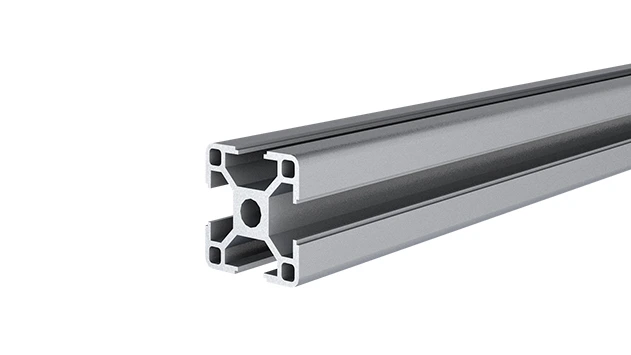
3030 is a 3.00 x 3.00CM fractional 30 series square extrusion T-slot profile with four open T-slots, each side with 3.00cm face. The profile has align-a-grooves to assist in aligning connecting profiles.
In the fast-paced world of logistics and warehousing, every second counts. Whether you're moving inventory from the receiving dock to the production line, organizing parts for assembly, or shipping out finished goods, the efficiency of your material handling setup can make or break your operations. Rigid, one-size-fits-all equipment often leads to bottlenecks: workbenches that are too low, racks that can't adapt to new product sizes, or trolleys that struggle to glide over uneven floors. What if there was a solution that could keep up with your changing needs—strong enough to handle heavy loads, flexible enough to reconfigure in hours, and durable enough to last for years? Enter the 3030a EU Standard Aluminum Profile, a quiet hero in the world of material handling that's transforming how warehouses and distribution centers operate.
What Is the 3030a EU Standard Aluminum Profile, Anyway?
Let's start with the basics. The 3030a EU Standard Aluminum Profile is a type of aluminum extrusion profile—meaning it's shaped by forcing heated aluminum through a die to create a consistent, precise cross-section. As the name suggests, it follows EU standards, ensuring strict quality control, safety compliance, and compatibility with other European-manufactured components. The "3030" refers to its dimensions: 30mm in width and 30mm in height, making it a compact yet robust choice for a wide range of applications. The "a" denotes a specific design variant, typically featuring T-slots along its length—those handy grooves that let you attach accessories like brackets, handles, or shelves without welding or drilling.
But why aluminum? Unlike steel, which is heavy and prone to rust, or plastic, which lacks strength, aluminum strikes the perfect balance. It's lightweight (about 1/3 the weight of steel), corrosion-resistant (thanks to its natural oxide layer), and surprisingly strong—especially when reinforced with the right aluminum profile accessories. And because it's an extrusion, each piece is uniform, so you never have to worry about mismatched parts or wobbly connections.
Key Features That Make the 3030a Profile a Standout
What really sets the 3030a apart isn't just its material—it's how those features translate to real-world benefits for logistics teams. Let's break down the highlights:
- T-Slot Design: The T-slots running along the profile's length are like the Swiss Army knife of material handling. They let you slide in bolts, nuts, or specialized connectors to attach almost anything—from a workbench surface to a roller track. No more drilling holes or welding; if you need to adjust a shelf height or add a new component, just loosen a few fasteners and reposition. It's customization without the hassle.
- Lightweight but Strong: Aluminum's strength-to-weight ratio is a game-changer. A 3030a rack can hold hundreds of pounds of inventory, but it's light enough for two people to move and reconfigure. This is a huge win for warehouses that need to adapt quickly to seasonal demand or new product lines.
- Corrosion Resistance: Warehouses are tough environments—moisture, dust, and occasional spills are par for the course. The 3030a's aluminum build resists rust and corrosion, so your equipment stays looking and functioning like new, even after years of use.
- EU Compliance: For businesses operating in Europe or exporting to EU markets, compliance with safety and quality standards is non-negotiable. The 3030a meets EU regulations for material strength, load capacity, and finish, giving you peace of mind that your setup is safe for workers and up to code.

Practical Applications: How 3030a Transforms Your Warehouse Floor
Now, let's get concrete. How does the 3030a profile actually solve day-to-day material handling challenges? Let's look at four common logistics tasks and how this aluminum profile makes them easier.
1. Workbenches: Ergonomic, Adaptable, and Built to Last
A workbench is the command center of any assembly or packing station. But if it's too low, workers strain their backs; if it's too narrow, tools and parts get scattered; if it's fixed in place, you can't rearrange the workflow when a new project comes in. The 3030a profile solves all these issues. By using 3030a frames with adjustable height (thanks to those T-slots), you can build workbenches that fit every operator—whether they're 5'2" or 6' tall. Add a plywood or aluminum top, and you've got a sturdy surface that can handle everything from small electronics to heavy machinery parts.
Need to add a tool rail, a bin for screws, or a monitor arm? Just slide the accessories into the T-slots and tighten. And if tomorrow you need the workbench on the other side of the warehouse? Disassemble it in minutes, move the lightweight aluminum pieces, and reassemble—no heavy lifting required. It's the opposite of those clunky, welded steel workbenches that end up collecting dust in the corner when your needs change.
2. Roller Tracks: Smooth, Silent, and Customizable Material Flow
Moving materials from point A to point B shouldn't feel like a workout. Roller tracks—those systems of wheels that let boxes, bins, or pallets glide along a path—are essential for reducing manual labor. But traditional roller tracks are often made of steel, which is noisy, heavy, and hard to modify. Enter 3030a-based roller tracks.
By mounting roller track components (like plastic or steel wheels) onto 3030a profiles, you can create custom tracks that fit your space perfectly. Need a 10-foot straight track from the shelf to the packing station? Or a curved track to navigate around a pillar? The T-slots make it easy to attach brackets, adjust wheel spacing, or add side guides to keep items from slipping off. And because aluminum is lightweight, the entire track system is easier to install and reposition than steel alternatives. Imagine pushing a 50-pound bin along a 3030a roller track—it glides so smoothly, you might forget it's even heavy.
3. Material Racks: From Chaos to Order (in Hours, Not Days)
Inventory management is all about organization. But when your product line expands or shrinks, your racks need to keep up. Traditional steel racks require tools, time, and often professional installers to adjust. With 3030a profiles, you can build modular racks that grow with you. Want a 3-tier rack for small parts today? Add a fourth tier tomorrow by sliding in new crossbars. Need to widen the shelves to fit larger boxes? Loosen the T-slot bolts, adjust the brackets, and tighten—done. It's like building with giant, industrial-grade Legos, but for adults.
And let's talk about weight. The 3030a profile can handle surprisingly heavy loads—up to 150kg per linear meter in some configurations—so you can stack pallets of electronics, automotive parts, or even raw materials without worrying about bending or collapse. Plus, since it's corrosion-resistant, you can use these racks in cold storage or humid environments without fear of rust weakening the structure.
4. Turnover Trolleys: Mobility Without the Headache
Ever tried pushing a steel trolley loaded with parts across a warehouse floor? It's loud, bumpy, and if the floor isn't perfectly smooth, you might as well be dragging a boulder. 3030a-based turnover trolleys are a game-changer here. The lightweight aluminum frame reduces the overall weight of the trolley, making it easier to maneuver, even when fully loaded. Add caster wheels (those swiveling wheels with brakes) to the base, and you've got a trolley that glides around corners, stops on a dime, and can be rolled right up to a workbench for easy loading/unloading.
Need a trolley with shelves? Build them using 3030a profiles and T-slot brackets. Want to add a handle or a locking compartment? Slide on the accessories. And when you don't need it anymore? Disassemble it and store the pieces—no more wasting space on bulky, unused equipment.
3030a vs. Traditional Materials: A Quick Comparison
Still not convinced? Let's put the 3030a profile head-to-head with common materials used in material handling. The table below breaks down how it stacks up against steel, wood, and plastic:
| Feature | 3030a Aluminum Profile | Steel | Wood | Plastic |
|---|---|---|---|---|
| Weight | Lightweight (1/3 the weight of steel) | Heavy (hard to move/reconfigure) | Moderate (prone to warping) | Light (but low strength) |
| Strength | High (supports up to 150kg/m) | Very high (but overkill for most tasks) | Low (can crack under heavy loads) | Low (bends easily) |
| Customization | Easy (T-slots allow tool-free adjustments) | Hard (requires welding/drilling) | Limited (cuts and nails, but not reusable) | Very limited (molded, not adjustable) |
| Corrosion Resistance | High (natural oxide layer) | Low (prone to rust without coating) | Low (rots with moisture) | High (but UV-sensitive) |
| Cost Over Time | High upfront, low long-term (durable and reusable) | High upfront, high maintenance (rust, repainting) | Low upfront, high replacement cost (wears quickly) | Low upfront, high replacement cost (breaks easily) |
The Power of Accessories: Making 3030a Even More Versatile
A profile is only as good as the accessories that go with it, and the 3030a shines here. Aluminum profile accessories are designed to work seamlessly with T-slot systems, turning a simple length of aluminum into a fully functional tool. Need to connect two profiles at a 90-degree angle? Use a corner bracket. Want to add a shelf? Slide in a support bracket and secure it with a T-slot nut. Need to protect the ends from sharp edges? Snap on an end cap. Even small details like handles, hinges, or cable management clips can be added in minutes.
Caster wheels are another example. By attaching heavy-duty caster wheels to a 3030a frame, you can turn almost any static structure into a mobile one—think workbenches that roll to the production line, or racks that move to the loading dock. And because the T-slots allow for precise positioning, you can place the caster wheels exactly where they'll provide the best balance, making even heavy loads easy to push.
Real-World Impact: How One Warehouse Cut Setup Time by 70%
Let's take a step back and look at a hypothetical (but realistic) example. Imagine a mid-sized electronics manufacturer that recently expanded its product line. Overnight, their old material handling setup was obsolete: the steel workbenches were too short for the new assembly process, the fixed racks couldn't fit the larger component boxes, and the plastic trolleys kept breaking under the weight of circuit boards.
They decided to switch to 3030a profiles. Within a week, they had built new, height-adjustable workbenches, reconfigured their racks to fit the new box sizes, and assembled turnover trolleys with caster wheels for moving parts between stations. The result? Setup time for new production runs dropped from 8 hours to 2 hours, and workers reported less fatigue from pushing heavy trolleys. Best of all, when the next product line launches, they won't need to buy new equipment—they'll just reconfigure the 3030a frames they already have.
Looking Ahead: The Future of Material Handling with 3030a
As logistics and warehousing continue to evolve—with trends like automation, e-commerce, and just-in-time inventory—flexibility and adaptability will only become more critical. The 3030a EU Standard Aluminum Profile isn't just a tool for today; it's an investment in tomorrow. Its compatibility with smart warehouse tech (like sensors or IoT devices mounted via T-slots), its recyclability (aluminum is 100% recyclable with no loss of quality), and its ability to scale with your business make it a sustainable, future-proof choice.
So, if you're tired of fighting with rigid, outdated material handling equipment, it might be time to give the 3030a profile a closer look. It's not just aluminum—it's a solution that moves when your business moves, adapts when your needs change, and lasts long enough to see your warehouse grow. After all, in logistics, the goal isn't just to keep up—it's to stay ahead. And with 3030a, staying ahead has never been easier.