- Company Articles
- Products and Technology
- Application Cases
- 3030a EU Standard Aluminum Profile in Mechanical Manufacturing: Case Studies

3030a EU Standard Aluminum Profile in Mechanical Manufacturing: Case Studies
Related Product
3030A EU Standard Aluminum Profile
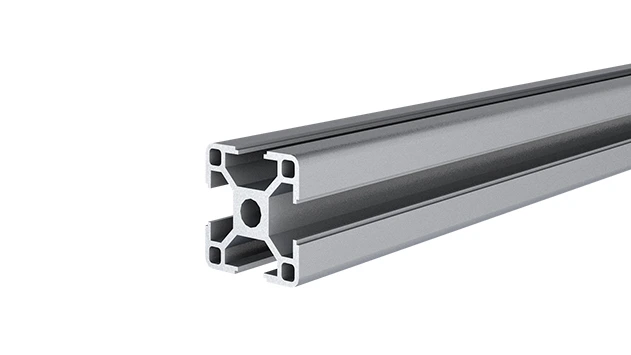
3030 is a 3.00 x 3.00CM fractional 30 series square extrusion T-slot profile with four open T-slots, each side with 3.00cm face. The profile has align-a-grooves to assist in aligning connecting profiles.
Walk into any modern manufacturing facility today, and you'll likely spot a common thread weaving through workbenches, material racks, and conveyor frames: sleek, silver aluminum profiles. These unassuming structures are the backbone of flexible production lines, quietly enabling the efficiency and adaptability that modern manufacturing demands. Among these, the 3030a EU Standard Aluminum Profile stands out as a workhorse—trusted by engineers and plant managers for its reliability, versatility, and strict adherence to European quality benchmarks. But what makes it so indispensable? How do manufacturers actually use it to solve real problems? In this article, we'll peel back the layers of this industrial staple, explore its unique advantages, and dive into case studies where it has transformed production floors from automotive parts plants to electronics assembly lines.
The Basics: What Makes 3030a EU Standard Aluminum Profile Unique?
At first glance, the 3030a might blend into the background of a factory floor—30mm wide, 30mm tall, with a clean, squared-off profile. But its simplicity is deceptive. This profile is the result of precision engineering, designed to balance strength, weight, and modularity in ways that older materials like steel or wood simply can't match. Let's start with the fundamentals: how it's made, what it's made of, and why its EU certification matters.
From Raw Alloy to Finished Profile: The Extrusion Journey
The 3030a begins as molten aluminum alloy—typically 6063-T5, a blend celebrated for its excellent extrudability and mechanical properties. Heated to around 500°C, this alloy is forced through a custom die under extreme pressure, a process known as aluminum extrusion profile manufacturing. The die shapes the alloy into the 30x30mm cross-section with precision T-slots running along its length—those slots are the profile's secret weapon. They allow for quick attachment of aluminum profile accessories like brackets, joints, and panels without welding or drilling, turning rigid structures into flexible systems.
What sets extrusion apart is consistency. Every meter of 3030a profile has identical dimensions and mechanical properties, ensuring that structures built with it are uniform and predictable. For manufacturers, this means fewer quality control headaches and greater reliability in load-bearing applications.
EU Standards: More Than a Stamp of Approval
The "EU Standard" label on the 3030a isn't just marketing—it's a promise. European standards for aluminum profiles (EN 755-9, for example) dictate strict requirements for material composition, dimensional tolerance, and mechanical performance. For instance, the 3030a must maintain a wall thickness of at least 1.5mm to ensure structural integrity, and its tensile strength must exceed 160 MPa. These standards also cover safety: profiles must be free of sharp edges, and surface treatments (like anodizing) must be non-toxic and corrosion-resistant. For manufacturers exporting to the EU or operating within it, this compliance isn't optional—it's a legal requirement that ensures products meet the highest safety and environmental standards.
Why 30x30mm? The Sweet Spot of Modularity
Why 30mm? In manufacturing, size matters, and 30x30mm hits a rare sweet spot. It's compact enough for lightweight applications like workbench frames or small material racks, yet robust enough to support heavy loads when properly braced. A 2-meter length of 3030a weighs just 1.1kg but can handle static loads up to 250kg when mounted horizontally—perfect for balancing maneuverability with strength. Compare that to a 20x20mm profile (too flimsy for heavy tools) or a 40x40mm (overkill for simple workstations), and the 3030a's appeal becomes clear: it's the Swiss Army knife of aluminum profiles, adaptable to most mid-range manufacturing needs.
Key Advantages of 3030a in Mechanical Manufacturing
Manufacturers don't choose materials lightly. Every decision impacts production speed, costs, and long-term efficiency. The 3030a has earned its place on factory floors by addressing critical pain points. Let's break down its most compelling benefits.
Lightweight Strength: Reducing Fatigue, Boosting Efficiency
Steel has long been the default for industrial structures, but its weight is a liability. A steel workbench frame might weigh 40kg, requiring multiple workers to move; a 3030a frame of the same size weighs just 12kg, movable by one person. This lightness reduces strain on workers and lowers energy costs for automated systems like AGVs (Automated Guided Vehicles) that transport materials. A German automotive parts supplier reported a 15% reduction in AGV energy consumption after switching from steel to 3030a frames—savings that added up to €24,000 annually.
But lightness doesn't mean weakness. The 3030a's alloy and extrusion process create a profile with a tensile strength of 180 MPa—strong enough to support power tools, heavy components, and even small assembly robots without bending or warping.
Modularity: Adapting to Changing Production Needs
In today's manufacturing landscape, product lifecycles are shorter than ever. A factory might produce 10,000 units of one product this month and switch to a new model next month. Rigid, welded steel structures can't keep up—reconfiguring them means cutting, welding, and repainting, often taking days. The 3030a, with its T-slots and aluminum profile accessories, changes the game. Using simple bolts and connectors, workers can disassemble, reconfigure, or expand structures in hours. Need to add a shelf to a material rack? Slide an aluminum joint into the T-slot and tighten a screw. Want to raise a workbench by 10cm? Swap out a section of profile. This flexibility is invaluable for small to medium manufacturers, who often operate on tight schedules and limited budgets.
Corrosion Resistance: Longevity in Harsh Environments
Manufacturing floors are tough on materials. Oils, coolants, cleaning agents, and humidity can corrode steel, leading to rust, contamination, and frequent replacements. The 3030a's aluminum alloy naturally forms a protective oxide layer, resisting corrosion even in damp or chemical-exposed environments. For added protection, many manufacturers opt for anodized or powder-coated finishes, which enhance durability further. A food packaging plant in Italy, for example, uses 3030a racks to store plastic containers; after three years of daily exposure to water-based sanitizers, the racks show no signs of degradation—unlike the wooden shelves they replaced, which needed replacement every 18 months.
Comparing Aluminum Profiles: Why 3030a Stands Out
| Profile Type | Dimensions (mm) | Weight per Meter (kg) | Max Horizontal Load (kg/m) | Typical Applications | Key Accessories |
|---|---|---|---|---|---|
| 3030a EU Standard | 30x30 | 1.1 | 250 | Workbenches, flow racks, small conveyor frames | Aluminum joint, T-slot nuts, end caps |
| 2020 EU Standard | 20x20 | 0.6 | 120 | Light tool holders, machine guards | Plastic brackets, magnetic mounts |
| 4040 EU Standard | 40x40 | 2.3 | 500 | Heavy-duty racks, robotic arms | Reinforced joints, cross-braces |
The table above highlights why 3030a is the most versatile option for many manufacturers. It offers nearly twice the load capacity of 2020 profiles while weighing half as much as 4040 models—making it ideal for applications where balance is key.

Case Studies: 3030a in Action
Specs and benefits tell part of the story, but real impact is measured on the factory floor. Let's explore three case studies where manufacturers turned to 3030a profiles to solve pressing challenges—from reducing downtime to improving worker ergonomics.
Case Study 1: Automotive Parts Assembly Workbenches – Reducing Retooling Time by 70%
The Challenge: A Tier 1 automotive supplier in Spain producing suspension components was struggling with long retooling times. Their steel workbenches were welded in place, so switching between left-hand and right-hand drive parts required days of disassembly and rewelding. With customer demand for custom configurations rising, this downtime was costing them €15,000 per week in lost production.
The Solution: The engineering team replaced the steel benches with modular workstations built from 3030a EU Standard Aluminum Profile. Each bench frame used 3030a profiles connected with aluminum joint hardware, allowing for tool-free adjustments. T-slots along the profiles accommodated adjustable tool rails, while casters on the base made moving benches between lines easy. To support heavy suspension parts, they added cross-bracing with 3030a profiles and reinforced the corners with gusset plates.
The Results: Retooling time plummeted from 3 days to just 4 hours—a 70% reduction. Workers could now reconfigure benches using basic hand tools, and the modular design allowed the supplier to add 12 new workstations during peak season by repurposing existing profiles. The lighter benches also reduced strain on workers, leading to a 12% drop in reported ergonomic injuries. Within six months, the investment in 3030a profiles had paid for itself through increased productivity.
Case Study 2: Electronics PCB Flow Racks – Cutting Contamination by 40%
The Challenge: A Czech electronics manufacturer producing PCBs (printed circuit boards) faced a recurring issue: contamination from their existing material racks. The racks were made of painted steel, which chipped over time, sending metal flakes onto PCBs and causing costly defects. Additionally, the fixed shelving couldn't accommodate varying PCB sizes, leading to inefficient use of space and frequent picking errors.
The Solution: The company switched to 3030a profiles to build custom flow racks. The profiles were anodized to create a smooth, non-porous surface resistant to chipping, and aluminum guide rail was integrated into the rack design to create gravity-fed lanes for PCBs. T-slots allowed for adjustable dividers (using aluminum profile accessories) to separate different PCB sizes, while label holders attached to the profiles reduced picking errors. To ensure ESD (electrostatic discharge) safety, the team added conductive end caps to the profiles, grounding the entire rack system.
The Results: Contamination-related defects dropped by 40% in the first quarter, saving €32,000 in rework costs. Picking efficiency improved by 25% as workers could quickly identify and access PCBs, and the adjustable dividers allowed the racks to handle 15 different PCB sizes without modification. The anodized finish also eliminated the need for repainting, reducing maintenance costs by €8,000 annually.
Case Study 3: Packaging Conveyor Frames – Slashing Shipping Costs by 35%
The Challenge: A Dutch packaging machinery company specializing in automated filling lines needed to reduce the weight of their conveyor systems. Their steel frames were heavy, making shipping expensive and on-site assembly labor-intensive. International customers were complaining about high freight costs, and the company was losing bids to competitors with lighter systems.
The Solution: The R&D team redesigned the conveyor frames using 3030a EU Standard Aluminum Profile. The aluminum extrusion profile process ensured the frames were dimensionally consistent, critical for aligning conveyor belts and rollers. The profiles were bolted together with aluminum joint connectors, creating a rigid structure that weighed 60% less than steel. For added stability, they used 3030a cross-braces and reinforced the drive motor mounts with thicker profile sections. The modular design also allowed frames to be shipped disassembled, flat-packed in boxes.
The Results: Shipping costs dropped by 35% due to reduced weight and more efficient packing. On-site assembly time fell from 8 hours to 3 hours, as workers could quickly bolt profiles together using pre-drilled holes and aluminum profile accessories. Customers reported higher satisfaction, with one noting, "The aluminum frame is so light we could move the conveyor ourselves during floor layout changes." Within a year, the company's market share in Europe increased by 9%, driven largely by the lighter, more cost-effective conveyor systems.
Future Trends: How 3030a is Evolving with Manufacturing
The 3030a isn't standing still. As manufacturing embraces Industry 4.0, sustainability, and customization, this profile is evolving to meet new demands. Here's what to watch for in the coming years:
Integration with Smart Manufacturing
Factories are getting smarter, and 3030a profiles are becoming part of the IoT ecosystem. Suppliers are developing "smart profiles" with embedded sensors that monitor temperature, vibration, or load—critical data for predictive maintenance. For example, a 3030a workbench could soon alert managers if a tool rail is overloaded, preventing equipment failure. T-slots are also being adapted to house miniaturized wiring and power rails, eliminating the need for external cables and making it easier to deploy collaborative robots (cobots) alongside human workers.
Sustainability: Recycled Alloys and Circular Design
With EU regulations on carbon emissions tightening, aluminum's recyclability is more valuable than ever. Suppliers are now producing 3030a profiles using up to 70% recycled aluminum, reducing the carbon footprint by 90% compared to using primary aluminum. Additionally, manufacturers are designing 3030a-based systems for disassembly, with clear labeling of materials to simplify recycling at the end of their lifecycle. One Austrian supplier even offers a "profile take-back" program, where old 3030a structures are recycled into new profiles—closing the loop on sustainability.
Advanced Accessories: 3D-Printed and Custom Solutions
The future of 3030a lies not just in the profiles, but in the aluminum profile accessories that expand their functionality. 3D printing is revolutionizing this space, allowing manufacturers to produce custom brackets, connectors, or tool holders in hours instead of weeks. For example, a medical device manufacturer used 3D-printed T-slot mounts to attach custom jigs to their 3030a workbenches, reducing lead times from 4 weeks to 2 days. Magnetic accessories are also gaining popularity, enabling quick attachment of lights, cameras, or small tools without bolts.
Conclusion: The 3030a – More Than a Profile, a Manufacturing Partner
The 3030a EU Standard Aluminum Profile has quietly become a cornerstone of modern manufacturing—not through flashy innovation, but through consistent performance, adaptability, and reliability. It's a material that solves real problems: reducing downtime, cutting costs, and making factories more responsive to change. From automotive assembly lines in Spain to electronics plants in the Czech Republic, it's proving that the right material choice can transform operations from the ground up.
As manufacturing continues to evolve—toward smarter, more sustainable, and more flexible systems—the 3030a will undoubtedly evolve with it. Its modular design, compatibility with new technologies, and commitment to EU quality standards ensure it will remain a go-to choice for manufacturers aiming to stay competitive in a fast-changing world. So the next time you walk through a factory, take a closer look at those aluminum profiles—they're not just metal. They're the backbone of the future of manufacturing.