- Company Articles
- Products and Technology
- Application Cases
- 3030a EU Standard Aluminum Profile in Warehousing Logistics: Space Optimization

3030a EU Standard Aluminum Profile in Warehousing Logistics: Space Optimization
Related Product
3030A EU Standard Aluminum Profile
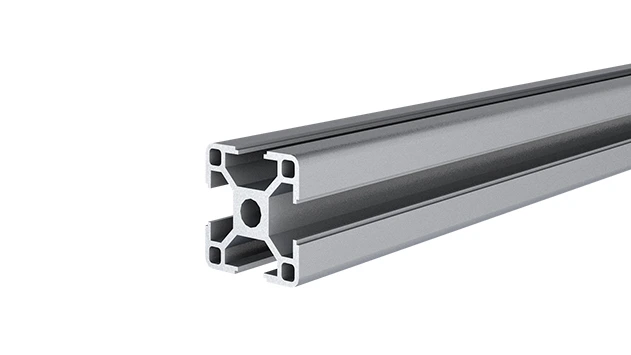
3030 is a 3.00 x 3.00CM fractional 30 series square extrusion T-slot profile with four open T-slots, each side with 3.00cm face. The profile has align-a-grooves to assist in aligning connecting profiles.
The Hidden Battle in Modern Warehouses: Space
Walk into any warehouse today, and you'll likely see a flurry of activity: workers moving pallets, robots zipping along floors, and shelves stacked high with inventory. But behind this busy scene lies a quiet challenge that keeps logistics managers up at night: space. As e-commerce booms, consumer demands for faster delivery grow, and supply chains become more complex, warehouses are under pressure to store more goods, process orders quicker, and adapt to shifting needs—all within the same four walls. Traditional storage systems, often rigid and one-size-fits-all, are struggling to keep up. Steel racks that take days to install, wooden shelves that warp under heavy loads, and fixed workbenches that can't adjust to new tasks are no longer just inefficiencies; they're barriers to staying competitive. This is where the 3030a EU Standard Aluminum Profile steps in—not as a flashy new gadget, but as a practical, adaptable solution that transforms how warehouses use every inch of available space.
What Is 3030a EU Standard Aluminum Profile, Anyway?
Let's start with the basics. The 3030a EU Standard Aluminum Profile is a modular building block made from high-grade aluminum alloy, extruded into a precise 30mm x 30mm square shape. Its defining feature? The T-slot design—longitudinal grooves running along its length—that allows accessories to snap, slide, or bolt into place without welding or complex tools. Think of it as a grown-up version of building blocks, but engineered for industrial strength. The "EU Standard" label ensures it meets strict quality and safety benchmarks, so you won't find inconsistencies in size or durability that could derail your warehouse setup.
At first glance, 30mm x 30mm might seem small, but that's part of its genius. It's compact enough to fit into tight corners yet sturdy enough to support heavy loads—up to 200kg per linear meter, depending on the application. And because it's aluminum, it's lightweight (about a third the weight of steel), making it easy to handle during installation or reconfiguration. No more straining with heavy steel beams or waiting for a crane to move a single rack section. A two-person team can assemble a basic structure in hours, not days.
At first glance, 30mm x 30mm might seem small, but that's part of its genius. It's compact enough to fit into tight corners yet sturdy enough to support heavy loads—up to 200kg per linear meter, depending on the application. And because it's aluminum, it's lightweight (about a third the weight of steel), making it easy to handle during installation or reconfiguration. No more straining with heavy steel beams or waiting for a crane to move a single rack section. A two-person team can assemble a basic structure in hours, not days.

Why Space Optimization Starts with Modularity
Warehouses aren't static. A seasonal spike might mean doubling your inventory of holiday goods; a new product line could require taller storage; or a shift to e-commerce might demand more picking stations. Rigid systems lock you into one layout, forcing you to either waste space during slow periods or cram in extra goods (and risk inefficiency) during peaks. The 3030a Aluminum Profile solves this with modularity—the ability to build, break down, and rebuild structures on the fly.
Imagine a clothing warehouse that switches from summer to winter stock. With traditional steel racks, adjusting shelf heights would mean unbolting, drilling new holes, and rebolting—hours of work. With 3030a, it's as simple as sliding off the old shelf brackets (thanks to those T-slots) and popping on new ones at the desired height. No tools, no downtime, no hassle. That's the power of a system designed to adapt, not just exist.
Imagine a clothing warehouse that switches from summer to winter stock. With traditional steel racks, adjusting shelf heights would mean unbolting, drilling new holes, and rebolting—hours of work. With 3030a, it's as simple as sliding off the old shelf brackets (thanks to those T-slots) and popping on new ones at the desired height. No tools, no downtime, no hassle. That's the power of a system designed to adapt, not just exist.
Real-World Applications: How 3030a Transforms Warehouses
Let's dive into specific ways 3030a is optimizing space in warehouses today. These aren't theoretical—they're practical setups used by logistics teams worldwide to squeeze more efficiency out of every square foot.
1. Custom Workbenches: From Cluttered to Streamlined
Picking stations and assembly areas are often the most space-hungry parts of a warehouse. A typical workbench might have a fixed height, no storage, and barely enough room for a laptop and a scanner. With 3030a, you can build a workbench that fits your team, not the other way around.
For example, a electronics manufacturer used 3030a to create adjustable-height workbenches for their assembly line. By adding aluminum profile accessories like height-adjustable legs and under-shelf tool holders, they eliminated the need for separate tool chests, freeing up 15% more floor space around each station. The T-slots let workers attach custom bins for small parts, reducing clutter and cutting picking time by 10 minutes per order. And when they introduced a new, larger product, they simply swapped out the benchtop and added extra support brackets—no need to buy new workbenches.
For example, a electronics manufacturer used 3030a to create adjustable-height workbenches for their assembly line. By adding aluminum profile accessories like height-adjustable legs and under-shelf tool holders, they eliminated the need for separate tool chests, freeing up 15% more floor space around each station. The T-slots let workers attach custom bins for small parts, reducing clutter and cutting picking time by 10 minutes per order. And when they introduced a new, larger product, they simply swapped out the benchtop and added extra support brackets—no need to buy new workbenches.
2. Material Rack B (3 Row and 3 Floor): Vertical Storage Done Right
Vertical space is the most underutilized resource in most warehouses. Too often, shelves stop at eye level, leaving feet of unused space above. Material Rack B (3 row and 3 floor)—a multi-tier storage system built with 3030a profiles—changes that.
A food distribution center recently replaced their single-level wooden racks with Material Rack B units. Each rack stands 2.5 meters tall, with three rows and three floors, doubling their storage capacity for canned goods in the same footprint. The 3030a frames are lightweight enough to install with a simple ladder, yet strong enough to hold 50kg per shelf. Best of all, the open design (thanks to slim 30mm profiles) makes it easy for workers to see and access products on the top floor without a forklift. They even added roller track along the middle floor to let boxes glide forward as stock is picked, reducing the need to reach into the back of the rack.
The result? They went from storing 500 cases per aisle to 1,000, and picking errors dropped by 20% because products were more visible.
A food distribution center recently replaced their single-level wooden racks with Material Rack B units. Each rack stands 2.5 meters tall, with three rows and three floors, doubling their storage capacity for canned goods in the same footprint. The 3030a frames are lightweight enough to install with a simple ladder, yet strong enough to hold 50kg per shelf. Best of all, the open design (thanks to slim 30mm profiles) makes it easy for workers to see and access products on the top floor without a forklift. They even added roller track along the middle floor to let boxes glide forward as stock is picked, reducing the need to reach into the back of the rack.
The result? They went from storing 500 cases per aisle to 1,000, and picking errors dropped by 20% because products were more visible.
3. Roller Track: Smooth Flow, Less Space Waste
Conveyor systems are essential for moving goods, but traditional steel conveyors are bulky and hard to reconfigure. 3030a changes that by acting as a lightweight frame for roller track—those smooth, wheeled rails that let boxes and totes glide from one station to another.
A third-party logistics (3PL) provider handling online orders needed a way to route packages from receiving to packing to shipping without cramming the warehouse with fixed conveyors. They used 3030a profiles to build a modular roller track system that could be adjusted daily. During peak hours, they extended the track to three packing stations; during lulls, they collapsed it to save space. The T-slots made it easy to add curves or elevation changes using roller track connectors, and the aluminum frames were light enough to move with a hand trolley when the warehouse layout needed a full overhaul. The result? They cut conveyor-related space usage by 30% and could scale up or down in minutes, not days.
A third-party logistics (3PL) provider handling online orders needed a way to route packages from receiving to packing to shipping without cramming the warehouse with fixed conveyors. They used 3030a profiles to build a modular roller track system that could be adjusted daily. During peak hours, they extended the track to three packing stations; during lulls, they collapsed it to save space. The T-slots made it easy to add curves or elevation changes using roller track connectors, and the aluminum frames were light enough to move with a hand trolley when the warehouse layout needed a full overhaul. The result? They cut conveyor-related space usage by 30% and could scale up or down in minutes, not days.
Aluminum vs. Steel vs. Wood: Why 3030a Wins for Space
You might be wondering: Why aluminum? Why not stick with steel or wood, which have been warehouse staples for decades? Let's break it down with a side-by-side comparison:
| Feature | 3030a Aluminum Profile | Steel | Wood |
|---|---|---|---|
| Weight | Lightweight (easy to move/reconfigure) | Heavy (requires equipment to adjust) | Moderate, but prone to warping |
| Space Efficiency | Slim 30mm profile; T-slots eliminate need for extra hardware | Thick beams; bulky connectors waste space | Thick boards; fixed dimensions limit vertical storage |
| Durability | Corrosion-resistant; withstands warehouse humidity | Prone to rust without coating | Warping, rotting, or cracking over time |
| Customization | Aluminum profile accessories snap into T-slots; no tools needed | Requires welding or drilling to modify | Limited; cutting weakens structure |
The key takeaway? Steel and wood force you to design around their limitations. Aluminum, with its lightweight strength and T-slot flexibility, lets you design around your space. That's why warehouses switching to 3030a report an average 25% increase in usable storage space within the first year.
Accessories: The Secret Sauce of 3030a's Flexibility
A profile is only as good as the accessories that go with it, and 3030a has a robust ecosystem of aluminum profile accessories to turn basic frames into fully functional systems. Here are a few standouts:
End Caps: These simple plastic or aluminum caps snap into the ends of 3030a profiles, preventing dust buildup and protecting workers from sharp edges. They're small, but they add a polished look and extend the profile's lifespan.
90° Aluminum Profile Connectors: These L-shaped brackets slide into T-slots to join two profiles at a right angle, creating sturdy corners for racks or workbenches. No screws, no glue—just a firm push, and they lock in place.
Adjustable Feet: Uneven warehouse floors? No problem. These threaded feet screw into the bottom of 3030a profiles, letting you level racks or workbenches with a quick twist.
Shelf Brackets: These slide into T-slots to support shelves, and many are height-adjustable. A single bracket can hold up to 80kg, so you can stack heavy goods without worrying about collapse.
What's remarkable is how these accessories work together. A warehouse manager could, for example, build a Material Rack B (3 row and 3 floor) using 3030a profiles, 90° connectors, shelf brackets, and end caps—all without a single power tool. And if they need to add a fourth floor later? Just grab more brackets and profiles, and you're done.
End Caps: These simple plastic or aluminum caps snap into the ends of 3030a profiles, preventing dust buildup and protecting workers from sharp edges. They're small, but they add a polished look and extend the profile's lifespan.
90° Aluminum Profile Connectors: These L-shaped brackets slide into T-slots to join two profiles at a right angle, creating sturdy corners for racks or workbenches. No screws, no glue—just a firm push, and they lock in place.
Adjustable Feet: Uneven warehouse floors? No problem. These threaded feet screw into the bottom of 3030a profiles, letting you level racks or workbenches with a quick twist.
Shelf Brackets: These slide into T-slots to support shelves, and many are height-adjustable. A single bracket can hold up to 80kg, so you can stack heavy goods without worrying about collapse.
What's remarkable is how these accessories work together. A warehouse manager could, for example, build a Material Rack B (3 row and 3 floor) using 3030a profiles, 90° connectors, shelf brackets, and end caps—all without a single power tool. And if they need to add a fourth floor later? Just grab more brackets and profiles, and you're done.
Long-Term Value: Beyond Space Savings
Space optimization is just the start. 3030a also delivers long-term value that goes beyond square footage:
Cost Efficiency: While aluminum profiles have a higher upfront cost than wood, they last 10–15 years (vs. 3–5 for wood) and require minimal maintenance. And because they're reconfigurable, you won't need to buy new racks or workbenches every time your needs change.
Sustainability: Aluminum is 100% recyclable, and most 3030a profiles are made from recycled materials. This aligns with the growing trend of green logistics, where companies are reducing their carbon footprint by choosing eco-friendly equipment.
Worker Safety: Lightweight profiles mean fewer injuries during installation. Smooth T-slots and end caps eliminate sharp edges, and the modular design reduces trip hazards from loose cables or uneven floors.
A automotive parts warehouse in Germany calculated that switching to 3030a saved them €40,000 over five years—not just from space savings, but from reduced labor costs (faster reconfigurations), lower maintenance (no rust to treat), and fewer worker compensation claims.
Cost Efficiency: While aluminum profiles have a higher upfront cost than wood, they last 10–15 years (vs. 3–5 for wood) and require minimal maintenance. And because they're reconfigurable, you won't need to buy new racks or workbenches every time your needs change.
Sustainability: Aluminum is 100% recyclable, and most 3030a profiles are made from recycled materials. This aligns with the growing trend of green logistics, where companies are reducing their carbon footprint by choosing eco-friendly equipment.
Worker Safety: Lightweight profiles mean fewer injuries during installation. Smooth T-slots and end caps eliminate sharp edges, and the modular design reduces trip hazards from loose cables or uneven floors.
A automotive parts warehouse in Germany calculated that switching to 3030a saved them €40,000 over five years—not just from space savings, but from reduced labor costs (faster reconfigurations), lower maintenance (no rust to treat), and fewer worker compensation claims.
Is 3030a Right for Your Warehouse?
If your warehouse struggles with any of these, 3030a is worth a look:
- Wasted vertical space
- Rigid layouts that can't adapt to seasonal changes
- High costs for replacing or modifying old racks/workbenches
- Slow or error-prone picking/assembly processes due to cluttered workspaces
Even if you're happy with your current setup, ask yourself: What would happen if your inventory doubled next year? Could your current system handle it without expanding your warehouse? With 3030a, the answer is likely yes.
- Wasted vertical space
- Rigid layouts that can't adapt to seasonal changes
- High costs for replacing or modifying old racks/workbenches
- Slow or error-prone picking/assembly processes due to cluttered workspaces
Even if you're happy with your current setup, ask yourself: What would happen if your inventory doubled next year? Could your current system handle it without expanding your warehouse? With 3030a, the answer is likely yes.
Final Thoughts: Space Optimization as a Competitive Edge
In warehousing logistics, space isn't just about storage—it's about speed, flexibility, and profitability. A warehouse that uses space efficiently can process orders faster, adapt to market changes quicker, and reduce overhead costs. The 3030a EU Standard Aluminum Profile isn't a magic bullet, but it's a practical, proven tool that turns underutilized square footage into a strategic advantage.
Whether you're building custom workbenches, multi-tier storage racks like Material Rack B, or modular roller track systems, 3030a and its aluminum profile accessories give you the freedom to design a warehouse that grows with your business. And in today's fast-paced logistics world, that's not just nice to have—it's essential.
Whether you're building custom workbenches, multi-tier storage racks like Material Rack B, or modular roller track systems, 3030a and its aluminum profile accessories give you the freedom to design a warehouse that grows with your business. And in today's fast-paced logistics world, that's not just nice to have—it's essential.