- Company Articles
- Products and Technology
- Product knowledge
- 3030a EU Standard Aluminum Profile: Installation Time & Labor Savings

3030a EU Standard Aluminum Profile: Installation Time & Labor Savings
Related Product
3030A EU Standard Aluminum Profile
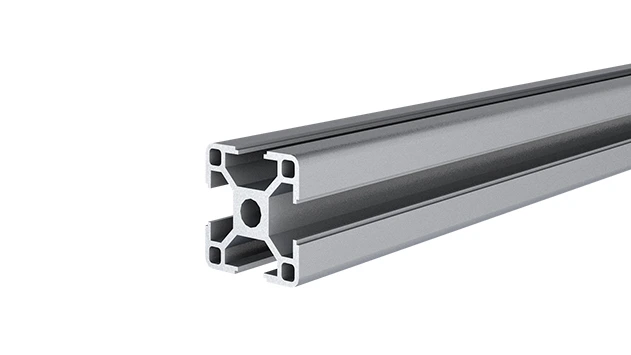
3030 is a 3.00 x 3.00CM fractional 30 series square extrusion T-slot profile with four open T-slots, each side with 3.00cm face. The profile has align-a-grooves to assist in aligning connecting profiles.
Introduction: The Race to Efficiency in Modern Manufacturing
In today's fast-paced manufacturing world, every minute counts. Whether you're running a small workshop or a large-scale production facility, the pressure to deliver more with less is constant. Teams are stretched thin, deadlines loom, and the bottom line always demands attention. That's where lean principles come into play—streamlining processes, eliminating waste, and focusing on value. But here's the thing: lean isn't just a mindset; it's a toolkit. And one of the most powerful tools in that toolkit might be something you've overlooked: the 3030a EU Standard Aluminum Profile.
You've probably seen aluminum profiles before—those sleek, modular tubes used in everything from workbenches to conveyor systems. But not all profiles are created equal. The 3030a EU Standard Aluminum Profile stands out because it's designed with one goal in mind: to save you time and labor during installation, without compromising on strength or flexibility. It's not just a material; it's a solution that transforms how your team builds, adapts, and grows.
In this article, we'll dive deep into why the 3030a profile has become a go-to choice for manufacturers who refuse to waste time on complicated installations. We'll explore its design features, walk through real-world installation scenarios, and show you how it pairs with aluminum profile accessories to cut down on labor hours. By the end, you'll understand why so many teams are swapping their old steel or wood setups for this lightweight, versatile alternative—and why you might want to too.
What Is the 3030a EU Standard Aluminum Profile, Anyway?
Let's start with the basics. The 3030a EU Standard Aluminum Profile is a extruded aluminum beam with a square cross-section, measuring 30mm by 30mm—hence the "3030" in its name. The "a" denotes a specific design variant, typically featuring standardized T-slots along all four sides. These T-slots are the secret sauce: they allow you to attach accessories, panels, and other profiles without drilling, welding, or custom fabrication. Think of it as a building block that speaks a universal language—no matter what you need to build, the 3030a profile has a way to connect.
But it's not just about size. This profile meets strict EU standards for quality and safety, meaning you can trust its durability. It's made from high-grade aluminum alloy, which strikes the perfect balance between strength and weight. Unlike steel, it won't rust or corrode, even in humid factory environments. And unlike wood, it won't warp, splinter, or require constant maintenance. It's built to last, but more importantly, it's built to be easy to work with.
One of the first things teams notice when they switch to 3030a is how lightweight it is. A 1-meter length of 3030a profile weighs just around 0.8kg, compared to a similar steel profile that might weigh 3-4kg. That might not sound like much, but when you're carrying multiple profiles up a ladder or maneuvering them into place on a workbench, every kilogram saved translates to less strain on your team—and fewer trips back and forth to the storage area.

Design Features That Slash Installation Time
So, what makes the 3030a profile so much faster to install than traditional materials? Let's break down the key design features that turn hours of work into minutes.
T-Slots: No Drilling, No Welding, Just Click-and-Go
The T-slots running along each side of the 3030a profile are a game-changer. Instead of measuring, marking, and drilling holes to attach components, you simply slide a bolt or nut into the slot and tighten it. Want to add a shelf to your workbench? drop a bracket into the T-slot, secure it with a hex key, and you're done. Need to adjust the height of a flow rack? Loosen the bolts, slide the crossbar up or down, and retighten. It's that easy.
Compare this to steel profiles, where every connection requires welding or drilling. Welding takes skill, specialized equipment, and time to set up and cool down. Drilling means measuring twice (and still worrying about mistakes), plus cleaning up metal shavings. With 3030a, even a new team member can make precise connections in seconds—no prior experience needed.
Pre-Engineered Aluminum Profile Accessories: The Perfect Partners
The 3030a profile doesn't work alone. It's part of a ecosystem of aluminum profile accessories designed to make installation even smoother. From 90° aluminum profile connectors that join two profiles at a right angle to end caps that give a clean finish, these accessories are engineered to fit the 3030a profile perfectly. There's no need to custom-make brackets or hunt for compatible parts—everything you need is ready to go.
Take the 90° aluminum profile connector, for example. It slides into the T-slots of two perpendicular 3030a profiles, and with a few turns of a wrench, you've got a sturdy corner joint. No welding, no adhesives, just a secure connection that can be disassembled and reused later. Similarly, rubber strips for T-slots not only protect wires or hoses run through the profile but also snap into place in seconds, eliminating the need for tape or zip ties.
Modularity: Build, Adapt, Repeat
Traditional structures—like a wooden workbench or a steel frame—are often built to be permanent. If you need to reconfigure your workspace, you're looking at tearing it down and starting over. The 3030a profile, though, is modular by design. Every connection is temporary yet strong, so you can take apart a workbench in the morning and reassemble it as a flow rack in the afternoon. This flexibility saves hours (or days) of demolition and reconstruction work, making your team infinitely more adaptable to changing needs.
Installation Process: A Step-by-Step Time Saver
Let's put this into perspective with a real-world example: building a basic workbench using the 3030a EU Standard Aluminum Profile. We'll compare it to building the same workbench with steel profiles to see just how much time and labor we save.
Building a Workbench with 3030a Aluminum Profile
Step 1: Gather materials. You'll need four 1.2m lengths of 3030a profile (for the legs), two 1.5m lengths (for the front and back rails), two 0.6m lengths (for the side rails), four 90° aluminum profile connectors, a sheet of plywood for the top, and a hex key set. Total time to gather: 5 minutes (assuming materials are organized).
Step 2: Assemble the frame. Attach the front and back rails to the legs using the 90° connectors. Slide the connectors into the T-slots, align the profiles, and tighten the bolts. Repeat for the side rails. Total time: 15 minutes (even for a first-timer).
Step 3: Add the top. Place the plywood sheet on top of the frame. Secure it using T-slot bolts that slide into the rails and up through the plywood. Tighten with the hex key. Total time: 10 minutes.
Total installation time: 30 minutes. And that's with a single person working at a steady pace. No special tools, no mess, no stress.
Building the Same Workbench with Steel Profiles
Step 1: Gather materials. Steel profiles, angle brackets, welding machine, grinder, drill, screws, plywood, safety gear (gloves, mask, goggles). Total time to gather: 15 minutes (more tools, more setup).
Step 2: Cut steel to length. Measure and mark the steel profiles, then cut them with a grinder. Deburr the edges to avoid sharp corners. Total time: 30 minutes (plus cleanup of metal shavings).
Step 3: Weld the frame. Set up the welding machine, clamp the steel pieces in place, and weld each joint. Let the welds cool, then grind them smooth. Total time: 2 hours (requires a skilled welder; mistakes mean rework).
Step 4: Drill holes for the top. Measure and mark where the plywood will attach, drill holes through the steel frame, then secure the plywood with screws. Total time: 45 minutes (easy to misalign holes).
Total installation time: 3.5 hours. And that's with an experienced welder. For someone less skilled, it could take twice as long. Plus, you're left with a permanent structure—if you need to move or modify it later, you'll have to cut it apart and start over.
The difference is staggering: 30 minutes vs. 3.5 hours. That's a 91% reduction in installation time for a single workbench. Multiply that by the number of workbenches, flow racks, or lean system components in your facility, and the savings add up fast.
Labor Savings in Real-World Applications
The workbench example is just the tip of the iceberg. The 3030a profile shines in a variety of manufacturing applications, each time cutting labor hours and reducing frustration for your team.
Flow Rack Setup: From Days to Afternoons
Flow racks are essential for lean material handling, allowing parts to glide from the back to the front as they're needed. Building a flow rack with traditional materials like steel or wood can take a full day. You'd need to cut lumber or steel, build frames, attach rollers, and ensure everything is level.
With 3030a profiles and roller track accessories, the process is drastically faster. The T-slots make it easy to mount roller tracks at the perfect angle, and aluminum profile connectors let you build the frame in sections. A team of two can assemble a 4-foot flow rack in under 2 hours, compared to 6+ hours with steel. And if you need to adjust the number of levels or the angle of the rollers later? Just loosen a few bolts and reposition—no rebuilding from scratch.
Lean System Integration: Adapting Without Disruption
Lean systems thrive on adaptability. As your production needs change, your workspace should too. But reconfiguring a lean system built with fixed materials (like welded steel) often means shutting down production for a day or more. With 3030a profiles, reconfiguration is part of the process.
Imagine you need to add a new workstation to your assembly line. With 3030a, you can build the new workbench offline, then roll it into place and connect it to the existing system using aluminum profile accessories. The entire process takes a morning, not a week. Your team stays productive, and you avoid costly downtime.
Case Study: How XYZ Manufacturing Cut Labor Costs by 40%
XYZ Manufacturing, a mid-sized electronics producer, was struggling with slow setup times for their assembly lines. Their old steel workbenches and flow racks took days to build and were impossible to reconfigure without welding. They decided to switch to 3030a EU Standard Aluminum Profiles and aluminum profile accessories.
Within three months, they noticed a dramatic change: new workstations that used to take 8 hours to build now took 2 hours. Flow racks that required a full day of welding were assembled in 3 hours. Best of all, when they redesigned their production line to accommodate a new product, the entire reconfiguration took just two days instead of two weeks. Labor costs for setup and reconfiguration dropped by 40%, and employee satisfaction rose—no one missed wrestling with welding equipment or cleaning up metal shavings.
Comparing Installation Time: 3030a vs. Traditional Materials
To really drive home the time savings, let's look at a side-by-side comparison of installation time and labor requirements for common manufacturing structures using 3030a aluminum profiles, steel, wood, and plastic.
| Structure Type | 3030a Aluminum Profile | Steel | Wood | Plastic |
|---|---|---|---|---|
| Basic Workbench (1 person) | 30 minutes | 3.5 hours | 2 hours (with power tools) | 1 hour (limited weight capacity) |
| 4-Level Flow Rack (2 people) | 2 hours | 6 hours | 4 hours (prone to warping) | 3 hours (not durable for heavy loads) |
| Assembly Line Station (3 people) | 4 hours | 16 hours | 10 hours (requires painting/sealing) | 8 hours (limited customization) |
| Reconfiguration (1 workstation) | 1 hour | 8 hours (welding/demolition) | 5 hours (disassembly/rebuilding) | 3 hours (risk of breaking plastic joints) |
As you can see, 3030a aluminum profiles consistently outperform traditional materials in installation time. And when you factor in labor costs—paying someone $25/hour to build a workbench takes $87.50 with steel vs. $12.50 with 3030a—the savings become even more dramatic. Over time, those savings add up to thousands of dollars that can be reinvested in your team or your business.
Long-Term Benefits: Beyond the Initial Install
The time and labor savings of the 3030a profile don't stop after installation. Its modular design and durability mean long-term benefits that keep paying off for years.
Reusability: Build Once, Use Again and Again
Unlike welded steel or glued wood, 3030a profiles and aluminum profile accessories are designed to be reused. If you no longer need a workbench, disassemble it and use the profiles to build a material rack. The connectors and bolts can be reused dozens of times without losing strength. This not only saves money on materials but also reduces waste—aligning with sustainable manufacturing practices.
Low Maintenance: More Time Producing, Less Time Repairing
Aluminum is naturally resistant to corrosion and rust, so you won't spend time painting or treating the 3030a profile to protect it. Unlike wood, it doesn't warp or rot in humid environments. Even with daily use, a 3030a structure will look and perform like new for years. When something does need adjusting (like a loose connector), a quick turn of a hex key is all it takes—no need for replacement parts or professional repairs.
Safety: Protecting Your Team, Saving Time on Accidents
Safety is always a priority, and the 3030a profile helps here too. Its smooth edges (thanks to aluminum extrusion) reduce the risk of cuts, unlike sharp steel edges or splintered wood. The lightweight design means fewer strains and injuries when moving profiles. And because installation doesn't require welding or grinding, there's less risk of fire, fumes, or flying debris. A safer workplace means fewer accidents, less downtime, and a happier, more productive team.
Conclusion: 3030a EU Standard Aluminum Profile—Your Partner in Efficiency
In the end, manufacturing is about more than just making products—it's about making progress. Every hour saved on installation is an hour your team can spend innovating, improving quality, or supporting customers. The 3030a EU Standard Aluminum Profile isn't just a material; it's a catalyst for that progress.
With its T-slot design, pre-engineered aluminum profile accessories, and modular flexibility, it turns slow, frustrating installations into quick, satisfying tasks. Whether you're building a simple workbench, a complex flow rack, or an entire lean system, 3030a cuts labor time, reduces costs, and gives you the adaptability to keep up with a changing world.
So, if you're tired of watching your team spend hours on installations that should take minutes, if you're ready to stop wasting money on labor and materials, it's time to give the 3030a EU Standard Aluminum Profile a closer look. Your team will thank you, your bottom line will thank you, and you'll wonder how you ever worked without it.