- Company Articles
- Products and Technology
- Product knowledge
- 3030a EU Standard Aluminum Profile Workbench E: Design & Functionality

3030a EU Standard Aluminum Profile Workbench E: Design & Functionality
Related Product
3030A EU Standard Aluminum Profile
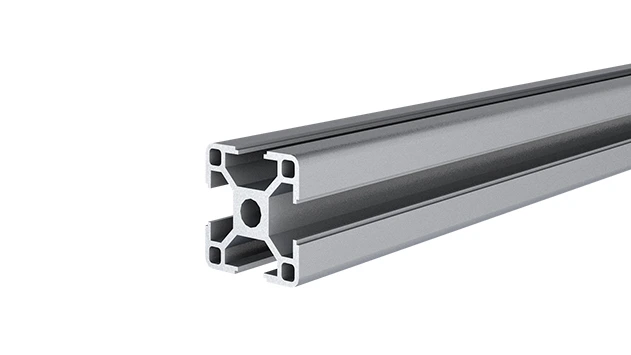
3030 is a 3.00 x 3.00CM fractional 30 series square extrusion T-slot profile with four open T-slots, each side with 3.00cm face. The profile has align-a-grooves to assist in aligning connecting profiles.
Walk into any manufacturing facility, warehouse, or workshop, and you'll quickly spot the unsung hero of daily operations: the workbench. It's where ideas take shape, parts come together, and products are born. But not all workbenches are created equal. A flimsy, ill-designed workbench can slow down workflows, frustrate workers, and even compromise product quality. On the flip side, a thoughtfully crafted workbench becomes the heartbeat of efficiency—supporting teams, streamlining tasks, and turning chaos into order. Today, we're diving deep into one such standout: the 3030a EU Standard Aluminum Profile Workbench E (Single Deck – Without Caster) . This isn't just a table; it's a productivity partner built with intention, designed around the people who use it, and engineered to grow with your business. Let's explore why it's quickly becoming the go-to choice for forward-thinking operations.
Meet the 3030a EU Standard Aluminum Profile: The Backbone of Workbench E
Before we talk about Workbench E itself, let's get to know its foundation: the 3030a EU Standard Aluminum Profile . If Workbench E is a high-performance machine, this aluminum profile is its engine. But what makes it so special? Let's start with the basics. Aluminum extrusion profiles—like the 3030a—are created by pushing heated aluminum through a precision die, shaping it into consistent, durable lengths with built-in T-slots. These T-slots are the secret sauce: they let you attach accessories, shelves, tools, or even lighting without welding, drilling, or permanent modifications. It's like building with a set of high-tech Legos, but for grown-ups who mean business.
The "3030a" in its name tells you exactly what you're getting: a profile that's 30mm wide and 30mm tall, with a specific groove design (the "a" variant) that's standardized across the EU. Why does standardization matter? It means compatibility. No matter which supplier you buy from, 3030a accessories—like brackets, connectors, or panel mounts—will fit seamlessly. This takes the guesswork out of upgrades and ensures your investment today won't become obsolete tomorrow.
But let's talk about the material itself: aluminum. Unlike steel, aluminum is lightweight, which makes (assembly) easier during setup—no need for heavy machinery to move parts into place. Yet it's surprisingly strong, with a tensile strength that holds up to daily wear and tear, from clamping tools to supporting heavy components. And let's not forget corrosion resistance. In environments where moisture, oils, or chemicals are present, aluminum's natural oxide layer acts as a shield, preventing rust and extending the workbench's lifespan. For facilities that prioritize cleanliness—like electronics or medical device manufacturing—this is a game-changer. No more unsightly rust stains or weakened structures over time.
Workbench E (Single Deck – Without Caster): Design That Puts Workers First
Now, let's turn our attention to the star of the show: Workbench E (Single Deck – Without Caster) . At first glance, you might think, "It's just a workbench with one deck and no wheels—what's the big deal?" But that simplicity is intentional. Sometimes, the most effective tools are the ones that do one job exceptionally well, and Workbench E nails the basics while adding thoughtful touches that make a world of difference for the people using it every day.
Dimensions and Layout: A Balanced Canvas for Productivity
Workbench E's single-deck design is all about focus. With a flat, uncluttered surface (typically ranging from 1200mm to 1800mm in length, depending on customization), it gives workers ample space to spread out tools, components, and documentation without feeling cramped. The width—usually around 600mm to 800mm—strikes a balance: wide enough to handle larger assemblies, narrow enough that reaching across doesn't strain shoulders or cause awkward bending. And since it's a single deck (no upper shelves unless added as an accessory), there's no visual obstruction, keeping the workspace open and reducing eye strain from looking up and down between levels.
The "without caster" detail is another intentional choice. While mobile workbenches have their place, many tasks—like precision assembly, quality inspection, or heavy-duty machining—demand stability. A workbench that stays firmly planted eliminates vibrations that could throw off measurements or damage delicate parts. It also creates a consistent, reliable workspace that workers can trust, reducing mental friction ("Will this table stay still while I torque this bolt?") and letting them focus on the task at hand.
Material Selection: Aluminum Profile and Accessories That Last
Workbench E's frame is built entirely from 3030a aluminum profiles, but the deck itself deserves a spotlight. Most models use an aluminum honeycomb panel or a solid aluminum sheet, both of which offer a smooth, flat surface that's easy to clean and resistant to scratches. Unlike wooden workbenches, which can warp, splinter, or absorb spills, aluminum decks stand up to solvents, oils, and daily scrubbing. For facilities that follow strict hygiene protocols—think food processing or pharmaceutical manufacturing—this is non-negotiable. Even in less demanding environments, a spill of lubricant or coolant won't leave a permanent stain or weaken the surface.
But what really elevates Workbench E is its compatibility with aluminum profile accessories . Need a tool rack to keep screwdrivers and pliers within arm's reach? Snap on a bracket using the T-slots. Want to add a bin for scrap materials? Slide in a panel mount and attach it in seconds. Need to raise the height for a taller worker? Swap out the legs with longer 3030a profiles—no welding, no sawing, just a few hand tools and 10 minutes of your time. This modularity means Workbench E isn't stuck in one configuration; it evolves with your team's needs, making it a long-term investment rather than a short-term fix.
Ergonomics: Because Comfort Drives Productivity
Here's a truth that's often overlooked: a tired, uncomfortable worker is a slow worker. Workbench E's design puts ergonomics front and center, starting with height. Most models are set at 750mm to 800mm—right at elbow level for the average adult—so workers can rest their forearms while assembling, packing, or inspecting. This reduces strain on wrists and shoulders, cutting down on fatigue during long shifts. And if your team has workers of varying heights? The modular legs mean you can adjust individual workbenches to fit each person, turning "one size fits all" into "one size fits everyone."
Edge design is another small detail with a big impact. Workbench E's deck edges are rounded, not sharp, so there's no risk of cuts or scrapes when reaching across. Some models even add a soft PVC strip along the edge, providing a non-slip grip for tools and preventing small parts from rolling off the table. It's the kind of thoughtfulness that doesn't show up in a spec sheet but makes workers smile (or at least sigh in relief) when they're on hour eight of a busy day.

Functionality That Drives Efficiency: What Makes Workbench E Stand Out?
Design is about how something looks and feels; functionality is about how it works. Workbench E excels here, too, with features that turn "good enough" workflows into "this is how we should have been working all along." Let's break down the key areas where it shines.
Adaptability: Grow, Change, Repeat—No Tools Required
Manufacturing isn't static. Product lines change, order volumes spike, and new processes are adopted. A workbench that can't keep up becomes a bottleneck. Workbench E, with its 3030a aluminum profile frame and T-slot system, is built for change. Let's say your team switches from assembling small circuit boards to larger medical devices. Overnight, you can add side extensions using aluminum profiles and connectors, expanding the deck surface by 50%. Or if you adopt a new lean manufacturing protocol that requires tools to be positioned in a specific "5S" layout, you can rearrange hooks, bins, and holders in minutes—no need to call in a contractor or buy a whole new workbench.
This adaptability also extends to accessories beyond the basics. Need to integrate a monitor arm for digital work instructions? There's a T-slot mount for that. Want to add a power strip to keep chargers and tools plugged in? A cable management tray that snaps onto the back of the frame. Even specialized gear, like ESD (electrostatic discharge) mats for electronics work, can be secured directly to the deck using aluminum profile clips. Workbench E doesn't just support your current workflow—it grows with your next one.
Integration into Lean Systems: Streamlining Workflows, Reducing Waste
Lean manufacturing is all about eliminating waste—whether it's time, materials, or motion. Workbench E fits seamlessly into lean systems by minimizing unnecessary movement and maximizing organization. For example, the T-slot accessories let you position tools and materials exactly where they're needed: a screwdriver within 12 inches of the assembly point, a bin for completed parts at the worker's dominant hand side, a trash can mounted underneath for quick disposal of scraps. This "within reach" setup cuts down on walking, stretching, and searching—wastes that add up to hours of lost productivity over a week.
Even the workbench's stability plays a role in lean systems. A wobbly table might require workers to recheck measurements or reposition parts, creating "rework" waste. Workbench E's solid aluminum frame eliminates that uncertainty, ensuring that once a part is placed, it stays in place. And because the deck is flat and consistent, jigs and fixtures sit evenly, reducing variation in output and improving quality control. In short, Workbench E doesn't just support lean principles—it embodies them.
Cost-Effectiveness: Investing in Long-Term Value
Let's talk numbers. At first glance, aluminum workbenches can seem pricier than wooden or particleboard alternatives. But that initial cost is misleading. A wooden workbench might last 3–5 years before warping or splintering; Workbench E, with its aluminum frame and corrosion-resistant materials, can last 10–15 years or more. And when you factor in adaptability—no need to buy a new bench when your needs change—the total cost of ownership plummets.
Consider this: A small manufacturer buys 10 wooden workbenches for $200 each ($2,000 total). After 4 years, half of them need replacing due to wear, costing another $1,000. Then, when they expand their product line, they need wider benches, so they buy 5 more for $250 each ($1,250). Total spend over 8 years: $4,250. Now, compare that to 10 Workbench E units at $400 each ($4,000 total). Over 8 years, they reconfigure the existing benches with $500 in accessories instead of buying new ones. No replacements needed. Total spend: $4,500—only slightly more, but with a workspace that's always optimized for current needs. And that doesn't include the productivity gains from a better workbench, which could save far more than the initial difference.
A Closer Look: Workbench E vs. Traditional Workspaces
To really understand Workbench E's impact, let's compare it side by side with two common alternatives: the classic wooden workbench and the budget-friendly particleboard table. The table below breaks down key factors like durability, adaptability, and ergonomics—so you can see why aluminum profile workbenches are gaining ground.
| Feature | 3030a Aluminum Profile Workbench E | Traditional Wooden Workbench | Particleboard Budget Table |
|---|---|---|---|
| Material | 3030a aluminum extrusion profile, aluminum deck | Solid wood or plywood | Particleboard with laminate coating |
| Durability | 10–15+ years; corrosion-resistant, scratch-proof | 3–5 years; prone to warping, splintering, and water damage | 1–2 years; laminate peels, particleboard swells with moisture |
| Adaptability | High: T-slots allow easy addition of accessories; reconfigurable without tools | Low: Modifications require drilling, sawing, or welding | None: No built-in mounting points; modifications damage the structure |
| Ergonomics | High: Height-adjustable legs; rounded edges; customizable layout | Medium: Fixed height; may have sharp edges; limited accessory options | Low: Fixed height; often too low/high; hard, unforgiving surface |
| Maintenance | Low: Wipe clean with soap and water; no painting or sealing needed | High: Requires sanding, painting, or sealing every 1–2 years; stains easily | Medium: Wipe clean, but laminate scratches easily; water causes permanent damage |
| Cost (Initial) | Higher ($300–$600) | Medium ($200–$400) | Low ($100–$200) |
| Cost (10-Year Total) | Low ($300–$800, including accessories) | Medium-High ($400–$1,000, including replacements) | High ($500–$1,500, frequent replacements) |
Real-World Impact: How Workbench E Transforms Daily Operations
Numbers and features tell part of the story, but nothing beats hearing from teams that use Workbench E every day. Let's look at two examples of how it's made a difference in real facilities.
Case 1: Electronics Assembly Line – Precision and Organization
A mid-sized electronics manufacturer in Germany was struggling with their assembly line workbenches. Their old wooden tables were warped, making it hard to align circuit boards, and the lack of organization meant workers spent 15–20 minutes per shift searching for tools. They also needed to reconfigure their line every 3–4 months to accommodate new product models, a process that took a full weekend and required temporary workspaces.
After switching to 12 Workbench E units, the changes were immediate. The flat aluminum decks eliminated alignment issues, cutting rework by 30%. Using aluminum profile accessories—tool hooks, bin holders, and monitor arms—workers organized their stations so everything was within arm's reach, reducing search time to less than 5 minutes per shift. And when reconfiguring for new products? What used to take a weekend now takes 4 hours: the team simply unclamped the accessories, adjusted the frame with new aluminum profiles, and reattached the tools. "It's like night and day," said the production manager. "We're not just faster—we're calmer. The workspace feels intentional, and that translates to better focus and better quality."
Case 2: Small Parts Manufacturing – Adaptability and Space Savings
A family-owned hardware manufacturer in the U.S. had a problem: their workshop was cramped, and they couldn't afford to expand. Their particleboard workbenches were bulky and fixed, taking up valuable floor space with shelves and tool racks that couldn't be adjusted. When they landed a contract for a new line of small metal brackets, they needed to add inspection stations—but there was no room.
They replaced 8 particleboard tables with Workbench E units, choosing the single-deck, without-caster model for stability during inspection. By mounting tools and bins directly to the workbench frames using T-slot accessories, they freed up 150 square feet of floor space—enough for 2 new inspection stations. The aluminum frames were also lighter than the old particleboard tables, making it easier to rearrange the workshop layout to create a smoother workflow (raw materials in, parts out). "We didn't just gain space—we gained flexibility," said the owner. "If we get another big order, we can add more Workbench E units and reconfigure again. It's like having a workshop that can shrink and grow with us."
More Than a Workbench – A Productivity Partner
At the end of the day, the 3030a EU Standard Aluminum Profile Workbench E is more than just a piece of equipment. It's a statement about how you value your team, your processes, and your future. By choosing a workbench built for durability, adaptability, and ergonomics, you're not just investing in metal and aluminum—you're investing in smoother workflows, happier workers, and a business that can keep up with whatever comes next.
Whether you're running a small workshop or a large manufacturing plant, the right workbench can transform chaos into order, frustration into focus, and wasted time into progress. Workbench E doesn't just meet those needs—it exceeds them, proving that sometimes, the most impactful innovations are the ones that support the people doing the work.
So, the next time you walk through your facility, take a look at your workbenches. Are they holding your team back, or lifting them up? If it's the former, maybe it's time to meet Workbench E. Your workers—and your bottom line—will thank you.