- Company Articles
- Products and Technology
- Product knowledge
- 3030b EU Standard Aluminum Profile for Prototyping: Rapid Assembly Benefits

3030b EU Standard Aluminum Profile for Prototyping: Rapid Assembly Benefits
Related Product
3030B EU Standard Aluminum Profile
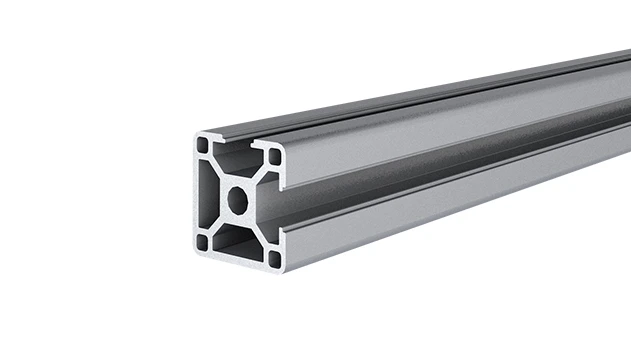
3030 is a 3.00 x 3.00CM fractional 30 series square extrusion T-slot profile with two side open T-slots, each side with 3.00cm face, 2 side with open slot, 2 side with closed face. The profile has align-a-grooves to assist in aligning connecting profiles.
In the fast-paced world of product development, prototyping isn't just a step in the process—it's the heartbeat of innovation. Whether you're designing a new manufacturing workbench, a custom testing rig, or a lean system for your production floor, the ability to quickly build, test, and refine prototypes can make or break your project timeline. Traditional prototyping methods, however, often feel like running with weights on your feet: welding steel frames, cutting wood to precise measurements, or waiting for custom parts to arrive. These processes are slow, rigid, and leave little room for the inevitable tweaks and adjustments that come with iteration. That's where the 3030b EU Standard Aluminum Profile comes in—a game-changer that's redefining what "rapid assembly" means for prototypers, engineers, and small-batch manufacturers alike.
At first glance, an aluminum profile might seem like just another building material, but the 3030b EU Standard is in a league of its own. Designed with prototyping in mind, this lightweight yet durable extrusion combines precision engineering, versatility, and a modular design that turns even the most complex assembly projects into a straightforward, tool-friendly process. In this article, we'll dive deep into why the 3030b profile has become a staple in workshops and labs worldwide, exploring its key features, the rapid assembly benefits it offers, and how it integrates seamlessly with aluminum profile accessories to bring your ideas to life faster than ever.
What Is the 3030b EU Standard Aluminum Profile?
Let's start with the basics: What exactly is the 3030b EU Standard Aluminum Profile, and why does the "EU Standard" label matter? At its core, this profile is a rectangular aluminum extrusion with a cross-section of 30mm x 30mm—hence the "3030" in its name. The "b" denotes a specific variant within the 3030 series, often characterized by its T-slot configuration, wall thickness, and compatibility with EU-manufactured accessories. But beyond the numbers, the "EU Standard" certification is a promise of quality: these profiles are produced to strict European norms for material strength, dimensional accuracy, and finish, ensuring consistency across batches and compatibility with a wide range of components.
Manufactured using an aluminum alloy (typically 6063-T5, a common choice for extrusions), the 3030b profile strikes an impressive balance between weight and strength. Aluminum's natural properties—lightweight, corrosion-resistant, and easy to machine—make it ideal for prototyping, where portability (think moving a workbench across the shop) and longevity (even in humid or industrial environments) are key. The extrusion process itself is what gives the profile its signature precision: molten aluminum is forced through a die to create the 30x30mm shape with integrated T-slots, resulting in a uniform, high-strength structure that's free of weak points.
Why 30x30mm? The 30mm width and height are a sweet spot for prototyping. It's compact enough for small-scale projects (like a desktop testing jig) but robust enough to support larger builds (such as a material rack or a section of a lean system). Unlike smaller profiles (20x20mm) that may lack stability for heavier loads, or larger ones (40x40mm or 80x80mm) that add unnecessary weight, the 3030b hits the mark for versatility.
Key Features of the 3030b Aluminum Profile: Built for Speed and Flexibility
The 3030b EU Standard Aluminum Profile isn't just about dimensions and materials—it's the thoughtful design features that make it a prototyper's dream. Let's break down the elements that set it apart:
T-Slots: The Secret to Modularity
If there's one feature that makes the 3030b profile indispensable, it's the T-slots running along its length. These grooves, cut into the profile's sides during extrusion, act as universal attachment points for accessories, fasteners, and custom components. Unlike traditional building methods that require drilling holes or welding brackets, T-slots let you slide in nuts, bolts, or specialized connectors and secure them with a simple turn of a hex key. This means you can attach a bracket at 10cm, then move it to 15cm an hour later without leaving a trace—no re-drilling, no filling holes, no wasted material.
Lightweight, Yet Surprisingly Strong
Aluminum is already known for being lighter than steel, but the 3030b profile takes this advantage further. Weighing in at roughly 0.8-1.2 kg per meter (depending on wall thickness), it's easy to handle even for solo assemblers—no need for a second pair of hands or heavy lifting equipment. Don't let the weight fool you, though: this profile can support impressive loads. Thanks to the 6063-T5 alloy and the extrusion process, it boasts a tensile strength of around 210 MPa and a yield strength of 180 MPa, making it more than capable of supporting tools, parts, or even small machinery on a workbench or material rack.
Corrosion Resistance for Longevity
Prototypes often live in less-than-ideal environments: workshops with sawdust in the air, labs with chemical spills, or production floors where moisture and oils are part of the daily grind. The 3030b profile's natural aluminum oxide layer provides inherent corrosion resistance, but many manufacturers take it a step further with anodized finishes. Anodizing thickens this oxide layer, making the profile even more resistant to scratches, chemicals, and rust. This durability ensures your prototype won't degrade mid-test, and if you decide to scale up to a permanent setup, the profile can transition seamlessly from "prototype" to "production" without replacement.
Precision Machining for Consistent Assembly
EU Standard certification isn't just about quality—it's about consistency. Every 3030b profile is extruded to tight tolerances, with T-slot dimensions, straightness, and squareness measured to within fractions of a millimeter. This precision means that a profile from one batch will fit perfectly with accessories from another, eliminating the frustration of "close enough" parts that don't align. When you're building a prototype, the last thing you want is to waste time filing down a misaligned slot or shimming a wobbly joint—with the 3030b, you can trust that every piece will work as intended, right out of the box.

Rapid Assembly Benefits: From Idea to Prototype in Hours, Not Days
Now, let's get to the heart of the matter: how does the 3030b profile actually make assembly "rapid"? For anyone who's ever spent a weekend building a steel frame with a welder, the difference is night and day. Here's how the 3030b and its ecosystem of parts transform the process:
No Welding, No Drilling, No Fuss
Traditional metal prototyping often requires specialized skills and tools: welding torches, angle grinders, drill presses. These tools are expensive, dangerous for beginners, and leave permanent marks—if you make a mistake, you're stuck with it. The 3030b profile, by contrast, is designed for "cold assembly." Using T-slot nuts, bolts, and aluminum profile accessories like 90° aluminum profile connectors or 45° aluminum profile connectors, you can join pieces in minutes. Simply slide a nut into the T-slot, align your accessory, and tighten the bolt with a hex key. No heat, no sparks, no mess. Even someone with minimal DIY experience can assemble a basic structure—like a small workbench—in under an hour.
Modularity: Build, Test, Tweak, Repeat
Prototyping is all about iteration. You build a version 1.0, realize the height is off by 5cm, and need to adjust. With wood or steel, that might mean cutting a new piece or re-welding a joint. With the 3030b profile, it's as simple as loosening a few bolts, sliding the section up or down, and re-tightening. The T-slots allow for infinite adjustability—move a shelf, add a crossbar, or swap out a bracket without disassembling the entire structure. This modularity is a lifesaver for projects where requirements evolve mid-process. For example, a startup developing a new electronics testing station might start with a basic frame, then add a shelf for tools, a cable management bar, and a monitor mount—all without changing the core structure.
Time Savings That Add Up
Let's put this in concrete terms: Suppose you need to build a prototype workbench for your lab. With wood, you'd need to measure and cut plywood, saw 2x4s to length, drill holes for screws, and sand down rough edges—easily a full day's work, assuming no mistakes. With steel, you'd spend hours welding the frame, grinding down slag, and painting to prevent rust. With the 3030b profile? You cut the profiles to length (many suppliers even offer pre-cut services), attach legs with floor flanges, add a plywood or aluminum top using T-slot bolts, and you're done. Total time: 2-3 hours. Multiply that across multiple prototypes, and the time savings become substantial—time you can reinvest in testing, refining, and innovating.
Cost-Effective for Small Batches and Iterations
Rapid assembly doesn't just save time—it saves money, too. Traditional prototyping materials often require over-ordering to account for mistakes (how many times have you cut a piece of wood too short?). Aluminum profiles, on the other hand, are reusable. If a prototype fails, you can disassemble the 3030b pieces and reuse them in the next iteration. The accessories are also reusable: connectors, end caps, and brackets can be moved from project to project without losing functionality. For small businesses or startups with tight budgets, this reusability drastically reduces material waste and lowers the cost of experimentation.
Scalability: From Prototype to Production
One of the most underrated benefits of the 3030b profile is its ability to bridge the gap between prototype and production. Unlike 3D-printed parts or wooden mockups, which are often too fragile for long-term use, aluminum profiles are robust enough to serve as permanent fixtures. If your prototype workbench proves successful, you can simply order more 3030b profiles and accessories to build identical units for your team. This scalability is a huge advantage for businesses that need to test a design in a real-world environment before committing to mass production.
Aluminum Profile Accessories: The Unsung Heroes of Rapid Assembly
A profile is only as good as the accessories that bring it to life, and the 3030b ecosystem is packed with tools designed to make assembly faster, smoother, and more versatile. These accessories—from connectors to end caps—are engineered to work seamlessly with the profile's T-slots, turning a simple extrusion into a building block for almost any structure. Let's take a closer look at some of the most essential ones:
| Accessory Type | Function | Assembly Benefit |
|---|---|---|
| 90° Aluminum Profile Connector | Joins two profiles at a right angle (e.g., vertical legs to horizontal beams) | Eliminates the need for miter cuts; secures with T-slot bolts in seconds |
| 45° Aluminum Profile Connector | Creates angled joints for slopes, ramps, or triangular structures | Adds flexibility for non-rectangular designs without custom fabrication |
| T-Slot Nuts & Bolts | Universal fasteners for attaching accessories to T-slots | Slide into any T-slot position; reusable and compatible with all accessories |
| End Caps | Covers the open ends of profiles to prevent debris buildup and add safety | Snaps on by hand; no tools needed, and protects hands from sharp edges |
| Corner Brackets | Reinforces joints for heavier loads (e.g., workbench corners) | Adds stability without welding; ideal for structures supporting tools or machinery |
These accessories aren't just add-ons—they're integral to the 3030b's rapid assembly promise. For example, the 90° aluminum profile connector is a workhorse in any build, allowing you to create square frames without measuring angles or cutting precise miters. Simply align the connector with the T-slots of two perpendicular profiles, insert bolts, and tighten. In less than a minute, you've got a secure joint that's strong enough to support hundreds of kilograms. Similarly, T-slot nuts come in various styles—floating, sliding, or flanged—to different accessory types, ensuring a snug fit no matter what you're attaching.
Another standout accessory is the end cap, a small but mighty component that often gets overlooked. Beyond giving your prototype a clean, finished look, end caps prevent dust, dirt, and small tools from falling into the T-slots—a common annoyance that can slow down assembly when you have to fish out debris before inserting a nut. They also protect hands from sharp, unfinished profile ends, making the workspace safer during iterative builds.
Real-World Applications: How the 3030b Profile Powers Innovation
To truly understand the impact of the 3030b profile, let's look at how it's being used in real-world prototyping scenarios. From small startups to established manufacturers, this profile is proving its worth across industries:
Workbench Prototyping for Electronics Labs
A mid-sized electronics company needed a custom workbench for testing circuit boards. The requirements were specific: adjustable height, built-in cable management, and a shelf for test equipment. Using 3030b profiles, they assembled the frame in a morning, adding height-adjustable legs with T-slot bolts (allowing each technician to set their preferred height), a perforated back panel for cable ties, and a sliding shelf for tools. When they later decided to add a LED light bar above the workspace, they simply attached a bracket to the T-slots—no drilling, no rewiring.
Lean System Design for a Small Manufacturer
A family-owned furniture manufacturer wanted to streamline their assembly line with a lean system to reduce waste and improve workflow. They used 3030b profiles to build material racks, flow racks, and workstations tailored to their specific product sizes. The modular design let them test different layouts—moving racks closer to the assembly area, adjusting shelf heights for different parts—and finalize the setup in weeks instead of months. When they expanded their product line six months later, they reconfigured the existing racks rather than buying new ones, saving thousands in equipment costs.
Custom Testing Jigs for Automotive Startups
An automotive startup developing electric vehicle components needed a testing jig to simulate road vibrations. The jig required precise alignment of sensors and adjustable clamps to fit different part sizes. Using 3030b profiles and aluminum profile accessories, the team built a base frame, then added sliding sensor mounts and quick-release clamps. When they needed to test a new component with a different shape, they swapped out the clamps and repositioned the sensors in under an hour—something that would have taken days with a welded steel jig.
Why Choose 3030b Over Other Prototyping Materials?
It's natural to wonder: Why not just use wood, steel, or plastic for prototyping? Each material has its place, but the 3030b profile offers a unique combination of benefits that make it the superior choice for most rapid assembly projects. Let's break down the comparison:
Wood: Cheap but Limited
Wood is affordable and easy to cut, but it's heavy, prone to warping, and lacks the precision of aluminum. A wooden prototype might work for a quick mockup, but it won't stand up to repeated use or heavy loads. Plus, once you drill a hole or cut a piece, there's no going back—making iterations costly in terms of time and material.
Steel: Strong but Slow
Steel is incredibly strong, but it's also heavy, requires welding, and is susceptible to rust. For large, permanent structures, steel makes sense—but for prototyping, its rigidity and tool requirements slow you down. A steel frame might support more weight than aluminum, but in most prototyping scenarios, the 3030b's strength-to-weight ratio is more than sufficient.
Plastic: Light but Flimsy
Plastic extrusions are lightweight and cheap, but they lack the structural integrity of aluminum. They flex under load, degrade in sunlight, and aren't compatible with the same range of accessories. For very lightweight prototypes (like a phone stand), plastic might work—but for anything involving tools, machinery, or repeated use, it's not reliable.
3030b Aluminum: The Best of All Worlds
The 3030b profile combines the best traits of each: the lightness of plastic, the strength of steel, and the workability of wood—without the drawbacks. It's strong enough to support heavy tools, light enough to move by hand, and modular enough to adapt to any design change. For prototyping, where speed, flexibility, and durability matter most, there's simply no better option.
Tips for Maximizing Rapid Assembly with 3030b Profiles
To get the most out of your 3030b EU Standard Aluminum Profile, a few best practices can help streamline your assembly process even further:
- Plan your design first. Sketch your prototype or use CAD software to map out dimensions before cutting profiles. This avoids wasting material on trial-and-error cuts.
- Invest in a good hex key set. Most accessories use metric hex bolts (M5 or M6 are common), so a high-quality set will make tightening faster and prevent stripped bolts.
- Use pre-cut profiles when possible. Many suppliers offer custom cutting services, saving you time and ensuring precise lengths.
- Label your parts. If you're building a complex structure, label profiles with numbers or letters to avoid confusion during assembly.
- Keep T-slots clean. Dust and debris can jam T-slot nuts. A small brush or compressed air can keep slots clear and accessories sliding smoothly.
Final Thoughts: The Future of Prototyping Is Modular
In a world where product cycles are shorter than ever, the ability to prototype quickly isn't just an advantage—it's a necessity. The 3030b EU Standard Aluminum Profile isn't just a building material; it's a tool that empowers innovators to turn ideas into tangible prototypes faster, cheaper, and with less hassle than ever before. Its modular design, compatibility with aluminum profile accessories, and focus on cold assembly make it the go-to choice for engineers, makers, and small manufacturers who refuse to let slow prototyping hold them back.
Whether you're building a simple workbench, a complex lean system, or a one-of-a-kind testing rig, the 3030b profile proves that rapid assembly doesn't have to mean sacrificing quality or durability. It's a reminder that sometimes, the most powerful innovations aren't flashy new technologies—they're smarter ways to build. So the next time you're gearing up for a prototyping project, ask yourself: Why build slow when you can build smart?