- Company Articles
- Products and Technology
- Application Cases
- 3030b EU Standard Aluminum Profile in Automotive Manufacturing: Workbench Applications

3030b EU Standard Aluminum Profile in Automotive Manufacturing: Workbench Applications
Related Product
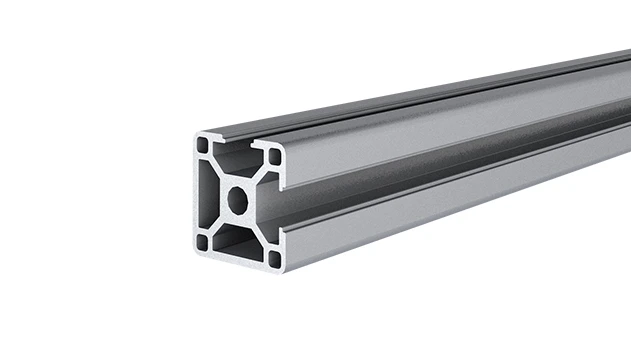
3030B EU Standard Aluminum Profile
3030 is a 3.00 x 3.00CM fractional 30 series square extrusion T-slot profile with two side open T-slots, each side with 3.00cm face, 2 side with open slot, 2 side with closed face. The profile has align-a-grooves to assist in aligning connecting profiles.
The Unsung Hero of Automotive Workbenches: Why 3030b Profiles Matter
Walk into any modern automotive manufacturing plant, and you'll immediately sense the energy—robots whirring, conveyor belts humming, and teams of workers collaborating to piece together everything from engines to dashboards. Amidst this organized chaos, there's one element that often goes unnoticed but plays a critical role in keeping production on track: the workbench. Not just any table, though. In top-tier facilities, these workbenches are built using 3030b EU standard aluminum profiles, and once you understand their design and benefits, it's easy to see why they've become the backbone of efficient automotive manufacturing.
Think about it: automotive workbenches aren't just surfaces to place tools. They're command centers. A mechanic might spend 8+ hours a day at one, assembling delicate electronics or heavy engine parts. The bench needs to be sturdy enough to support 50kg+ loads, flexible enough to adapt when production lines switch from sedans to SUVs, and safe enough to meet the strictest EU safety standards. That's where 3030b aluminum profiles come in. They're not just metal bars—they're engineered solutions designed to make automotive manufacturing smoother, safer, and more adaptable.
In this article, we'll dive into why 3030b EU standard aluminum profiles have become the go-to choice for automotive workbenches. We'll explore their unique properties, how they integrate with aluminum profile accessories to create modular workspaces, and real-world examples of how they're transforming assembly lines. Whether you're a plant manager looking to upgrade your facility or just curious about the tools that build your car, let's unpack why these profiles are quietly revolutionizing automotive manufacturing.
What Exactly Is 3030b EU Standard Aluminum Profile?
Before we get into applications, let's start with the basics: what makes 3030b different from other aluminum extrusion profiles? At first glance, it might look like a simple rectangular tube, but there's a lot of engineering packed into that 30x30mm frame.
First, the "3030" refers to its dimensions: 30 millimeters in width and 30 millimeters in height. That compact size makes it perfect for building structures that need to be both strong and space-efficient—key in automotive plants where floor space is a premium. But don't let the size fool you. Thanks to its hollow, extruded design, the 3030b profile is surprisingly rigid. Most variants have a wall thickness of 1.5mm to 2mm, which might not sound like much until you realize it can support static loads of up to 200kg per linear meter. For context, that's enough to hold a small engine block without bending—a critical feature when assembling heavy components.
Then there's the "EU standard" part. In automotive manufacturing, compliance isn't optional. The EU has strict regulations for workplace safety, material durability, and even environmental impact. 3030b profiles meet these standards head-on. They're typically made from 6063-T5 aluminum alloy, a material known for its excellent corrosion resistance (vital in plants where oil, coolant, and cleaning agents are everywhere) and high strength-to-weight ratio. Plus, they're fully recyclable, aligning with the automotive industry's push toward sustainability.
But what really sets 3030b apart is its T-slot design. Run your hand along the length of the profile, and you'll notice grooves (or "slots") along its sides. These slots are the secret to its versatility. They allow you to attach aluminum profile accessories—like connectors, shelves, tool hooks, or even LED lights—without drilling or welding. Just slide a bolt into the slot, tighten a nut, and you're done. This might sound minor, but in a plant where reconfiguring a workbench for a new car model can take days with traditional steel frames, being able to adjust on the fly saves countless hours.
Quick Example: Imagine a production line switching from assembling electric vehicle (EV) batteries to hybrid systems. The workbench needs to hold larger battery packs, so you need to add a second shelf. With 3030b profiles, a worker can grab a few 90° aluminum profile connectors, an extra length of 3030b, and secure it all using T-slot bolts—no power tools, no welding, no waiting for maintenance. The whole process takes 15 minutes, not days. That's the flexibility EU standard aluminum extrusion profiles bring to the table.
To put it simply, 3030b is the Goldilocks of aluminum profiles: not too big, not too weak, and perfectly engineered to meet the demands of automotive manufacturing. It's the foundation upon which modern, adaptable workbenches are built.

Aluminum Profile Accessories: The Building Blocks of Modular Workbenches
A 3030b profile on its own is just a piece of metal. But pair it with the right aluminum profile accessories, and it becomes a chameleon—able to transform into any workbench configuration you need. These accessories are the unsung partners of the 3030b, turning rigid metal into flexible workspaces that adapt to automotive manufacturing's ever-changing needs.
Let's start with the most basic but essential accessory: connectors. If 3030b profiles are the bones of the workbench, connectors are the joints. And just like human joints, they come in all shapes to allow different movements and configurations. Take the 90° aluminum profile connector, for example. As the name suggests, it joins two 3030b profiles at a right angle—perfect for building the corners of a workbench frame. Then there are 45° connectors for angled supports, three-way connectors for adding shelves, and even swivel connectors that let parts of the bench rotate (handy for accessing hard-to-reach components).
One accessory you'll find on nearly every automotive workbench is the gusset. Specifically, the gusset alp 3030 (a common EU-standard gusset designed for 30x30 profiles). Gussets are triangular metal plates that reinforce joints, preventing the workbench from wobbling when heavy tools are dropped or parts are clamped down. In high-vibration areas—like near stamping machines—gussets aren't just optional; they're critical for safety. A loose workbench could lead to misaligned parts or, worse, tools sliding off and causing injuries. The gusset alp 3030 bolts directly into the T-slots of 3030b profiles, adding rigidity without adding bulk.
Then there are the finishing touches: end caps and T-slot rubber seal covers. End caps are small plastic or metal caps that snap onto the ends of 3030b profiles, covering sharp edges and preventing dust, oil, or debris from getting inside the hollow tube. In automotive plants, where cleanliness is key (especially when assembling electronics), this might seem trivial—until you realize a single grain of dirt in a connector could cause a short circuit in a car's wiring harness. T-slot rubber seal covers, on the other hand, fit into the T-slots when they're not in use, keeping them clean and ready for future accessory additions. They also add a subtle anti-slip surface, which is helpful when tools or parts are placed directly on the profile.
Another must-have is the adjustable leveling foot. Automotive floors are rarely perfectly flat, especially in older plants. Leveling feet screw into the bottom of the workbench's 3030b legs, letting workers tweak each corner by a few millimeters to ensure the bench is stable and even. Look for anti-slip adjustable leveling feet, which have rubber bases to prevent the bench from sliding during use—vital when applying torque to bolts or using power tools.
What makes these accessories so powerful is their universality. EU standard aluminum profile accessories are designed to work seamlessly with 3030b profiles, regardless of the manufacturer. That means a plant in Germany can order connectors from a supplier in Poland and know they'll fit perfectly with 3030b profiles from Italy. This interoperability reduces downtime and keeps costs low, since you don't have to source proprietary parts.
Real-Life Scenario: A mid-sized automotive plant in Spain recently switched from steel workbenches to 3030b aluminum ones. Their old steel benches required welding to add a new shelf, which meant shutting down the line for half a day. With the new setup, when they needed to add a bin for small screws and washers, a worker grabbed a 3030b profile, two three-way connectors, and a gusset alp 3030. Using a hex key, they attached the shelf in 10 minutes—no welding, no shutdown. The line kept running, and the worker was back to assembling door panels before their next break. That's the power of modular accessories.
Designing the Perfect Automotive Workbench with 3030b Profiles
Now that we understand the "what" (3030b profiles) and "how" (accessories), let's talk about the "why" for automotive workbenches. What makes a 3030b-based workbench better than, say, a wooden table or a steel frame? The answer lies in how it's designed to solve specific automotive manufacturing pain points.
First, ergonomics. Automotive workers often spend hours bent over workbenches, which can lead to back strain and repetitive motion injuries. 3030b profiles make it easy to build height-adjustable workbenches. By using telescoping 3030b legs with locking pins or motorized actuators (attached via T-slots, of course), workbenches can be raised or lowered to fit workers of different heights. A 5'2" mechanic assembling dashboards can set their bench to 80cm, while a 6' tall engineer inspecting engines can crank it up to 110cm. This isn't just about comfort—it's about reducing workplace injuries, which saves plants millions in workers' compensation and downtime.
Then there's tool integration. A typical automotive workbench needs to hold everything from torque wrenches to soldering irons, not to mention computers for accessing build instructions. 3030b's T-slots make it a breeze to attach tool holders, monitor arms, and even power strips. Need a place to hang your cordless drill? Screw a hook into the T-slot. Want to mount a tablet to display wiring diagrams? Use a clamp-on arm designed for 3030b profiles. No more drilling holes or using adhesives that damage the bench—everything is temporary and reversible.
Material handling is another area where 3030b shines. Automotive workbenches often need to interface with conveyor systems or material racks, and 3030b profiles play well with these. For example, you can attach roller tracks (another EU-standard accessory) to the edge of the workbench, allowing parts to slide smoothly from the conveyor onto the bench. Or, build a small material rack b (3 row and 3 floor) using 3030b profiles right next to the bench, keeping frequently used parts within arm's reach. Since the rack uses the same profiles and connectors as the bench, it matches in height and stability, creating a seamless workflow.
Cleanliness is also a priority in automotive manufacturing, especially when working with electronics or precision parts. 3030b profiles are easy to clean—just wipe them down with a damp cloth. Unlike wood, they don't absorb oil or grease, and unlike painted steel, their anodized finish resists scratches and corrosion. This is a big deal in plants where spills happen daily; a workbench that stays clean reduces the risk of contamination on sensitive components like airbag sensors or circuit boards.
Let's not forget about weight. Aluminum is significantly lighter than steel, which makes 3030b workbenches easier to move when needed. Even a large 2m x 1m workbench built with 3030b profiles might weigh 50kg, compared to 150kg for a steel equivalent. This means if the production line needs to be reconfigured (say, to accommodate a new model), two workers can lift and move the bench, whereas steel benches would require a forklift. Again, this saves time and reduces disruption.
| Feature | 3030b Aluminum Workbench | Traditional Steel Workbench | Wooden Workbench |
|---|---|---|---|
| Weight (2m x 1m) | ~50kg | ~150kg | ~80kg |
| Assembly Time | 1-2 hours (modular) | 4-6 hours (welding required) | 2-3 hours (screws/nails) |
| Reconfiguration | 10-15 minutes (tools: hex key) | Half-day (requires welding) | Permanent (difficult to modify) |
| Cleaning | Wipe with damp cloth; corrosion-resistant | Requires degreaser; prone to rust if scratched | Absorbs oil/grease; hard to sanitize |
| EU Safety Compliance | Meets CE, ISO standards | May require additional testing | Unlikely to meet load-bearing standards |
As the table shows, 3030b aluminum workbenches outperform traditional options in nearly every category that matters to automotive manufacturing. They're lighter, faster to build, easier to modify, and safer—all while meeting EU standards. It's no wonder they're becoming the default choice for forward-thinking plants.
Lean System Integration: How 3030b Profiles Support Efficient Manufacturing
If you've spent any time in automotive manufacturing, you've probably heard of "lean manufacturing"—the philosophy of minimizing waste while maximizing productivity. Lean systems focus on reducing everything from excess inventory to unnecessary motion, and 3030b aluminum profiles are practically tailor-made to support these goals. Let's break down how they align with key lean principles.
First, "just-in-time" (JIT) production. In JIT, parts arrive exactly when they're needed, reducing the need for large storage areas. 3030b workbenches support this by allowing plants to build compact, customized storage solutions right at the point of use. For example, a workbench assembling brake calipers can have a small flow rack (built with 3030b profiles and roller tracks) attached to its side, holding just enough brake pads and pistons for the next hour of production. No more walking to a distant warehouse—parts are right there, when needed.
Then there's "kaizen," or continuous improvement. Lean manufacturing isn't a one-time setup; it's about constantly tweaking processes to work better. 3030b profiles thrive here because they're infinitely reconfigurable. Suppose workers notice that a workbench is too wide, causing them to stretch for tools. With 3030b, you can shorten the bench by removing a section and reattaching the accessories—no need to buy a new bench. Or if a new tool is introduced, you can add a holder in minutes. This ability to adapt on the fly makes it easy to implement small, daily improvements that add up to big efficiency gains.
"5S" is another lean principle—sort, set in order, shine, standardize, sustain. 3030b workbenches excel at "set in order" (organizing tools and materials for easy access). With T-slots, you can mount tool boards, label bins, and position everything so that the most frequently used items are within arm's reach. A mechanic assembling steering wheels might have their torque wrench hung at shoulder height, screws in a bin below the bench, and a waste bin for packaging attached to the side—all secured via 3030b accessories. This reduces "motion waste," as workers spend less time searching for tools and more time building cars.
Waste from "overproduction" is another target of lean, and 3030b helps here too. Because workbenches are modular, plants don't need to overbuild. If a production line is scaled back, you can disassemble excess workbenches and reuse the profiles elsewhere. Unlike steel benches, which often end up in scrap when no longer needed, 3030b profiles can be repurposed to build material racks, tool carts, or even temporary storage shelves. This reduces waste and lowers long-term costs.
Lean in Action: A major automaker in France implemented a lean initiative using 3030b workbenches. Before the switch, workers spent an average of 15 minutes per shift walking to retrieve tools or parts. After reconfiguring workbenches with 3030b-based tool holders and side racks, that time dropped to 3 minutes. Over a year, that added up to 240 extra hours of productive work per worker—enough to assemble 120 more cars. And because the workbenches were easy to adjust, the team could test different layouts until they found the most efficient one, embodying the "continuous improvement" spirit of lean.
Perhaps the biggest lean benefit of 3030b profiles is their role in "flexible manufacturing." Automotive plants rarely produce the same car model forever; they need to switch between sedans, SUVs, electric vehicles, and more. 3030b workbenches can adapt to these changes without requiring a complete overhaul. For example, when a plant starts producing electric vehicles, the battery assembly workbench can be reconfigured with ESD (electrostatic discharge) accessories (like conductive end caps) to protect sensitive battery components. No need to buy new benches—just swap out a few accessories and adjust the layout. This flexibility is crucial in an industry where model cycles get shorter every year.
Real-World Applications: 3030b Workbenches on the Factory Floor
Enough theory—let's look at how 3030b EU standard aluminum profile workbenches are being used in actual automotive plants today. These examples show the versatility of the profiles and how they solve specific, day-to-day challenges in manufacturing.
1. Engine Assembly Workbenches
Building an engine requires precision and access to a wide range of tools—from torque wrenches to feeler gauges. A leading German automaker uses 3030b workbenches for their engine assembly lines, and here's why: the benches are built with adjustable height legs (using anti-slip adjustable leveling feet) to accommodate workers of different statures. The top surface is a thick aluminum honeycomb panel (attached via T-slot bolts) that's both lightweight and rigid, providing a stable base for engine blocks. Along the back of the bench, they've mounted a tool rail (made from 3030b profiles) with hooks for each tool, color-coded by function. This ensures tools are always in the same place, reducing errors. Even better, when the plant introduced a new hybrid engine, they added a second tier to the workbench using three-way connectors and extra 3030b profiles, creating space for battery-specific tools—all in a single shift.
2. Quality Control Stations
After assembly, cars go through rigorous quality control (QC) checks. A QC workbench needs to hold inspection tools, cameras, and lighting, while providing
The Unsung Hero of Automotive Workbenches: Why 3030b Profiles Matter
Walk into any modern automotive manufacturing plant, and you'll immediately sense the energy—robots whirring, conveyor belts humming, and teams of workers collaborating to piece together everything from engines to dashboards. Amidst this organized chaos, there's one element that often goes unnoticed but plays a critical role in keeping production on track: the workbench. Not just any table, though. In top-tier facilities, these workbenches are built using 3030b EU standard aluminum profiles, and once you understand their design and benefits, it's easy to see why they've become the backbone of efficient automotive manufacturing.
Think about it: automotive workbenches aren't just surfaces to place tools. They're command centers. A mechanic might spend 8+ hours a day at one, assembling delicate electronics or heavy engine parts. The bench needs to be sturdy enough to support 50kg+ loads, flexible enough to adapt when production lines switch from sedans to SUVs, and safe enough to meet the strictest EU safety standards. That's where 3030b aluminum profiles come in. They're not just metal bars—they're engineered solutions designed to make automotive manufacturing smoother, safer, and more adaptable.
In this article, we'll dive into why 3030b EU standard aluminum profiles have become the go-to choice for automotive workbenches. We'll explore their unique properties, how they integrate with aluminum profile accessories to create modular workspaces, and real-world examples of how they're transforming assembly lines. Whether you're a plant manager looking to upgrade your facility or just curious about the tools that build your car, let's unpack why these profiles are quietly revolutionizing automotive manufacturing.
What Exactly Is 3030b EU Standard Aluminum Profile?
Before we get into applications, let's start with the basics: what makes 3030b different from other aluminum extrusion profiles? At first glance, it might look like a simple rectangular tube, but there's a lot of engineering packed into that 30x30mm frame.
First, the "3030" refers to its dimensions: 30 millimeters in width and 30 millimeters in height. That compact size makes it perfect for building structures that need to be both strong and space-efficient—key in automotive plants where floor space is a premium. But don't let the size fool you. Thanks to its hollow, extruded design, the 3030b profile is surprisingly rigid. Most variants have a wall thickness of 1.5mm to 2mm, which might not sound like much until you realize it can support static loads of up to 200kg per linear meter. For context, that's enough to hold a small engine block without bending—a critical feature when assembling heavy components.
Then there's the "EU standard" part. In automotive manufacturing, compliance isn't optional. The EU has strict regulations for workplace safety, material durability, and even environmental impact. 3030b profiles meet these standards head-on. They're typically made from 6063-T5 aluminum alloy, a material known for its excellent corrosion resistance (vital in plants where oil, coolant, and cleaning agents are everywhere) and high strength-to-weight ratio. Plus, they're fully recyclable, aligning with the automotive industry's push toward sustainability.
But what really sets 3030b apart is its T-slot design. Run your hand along the length of the profile, and you'll notice grooves (or "slots") along its sides. These slots are the secret to its versatility. They allow you to attach aluminum profile accessories—like connectors, shelves, tool hooks, or even LED lights—without drilling or welding. Just slide a bolt into the slot, tighten a nut, and you're done. This might sound minor, but in a plant where reconfiguring a workbench for a new car model can take days with traditional steel frames, being able to adjust on the fly saves countless hours.
Quick Example: Imagine a production line switching from assembling electric vehicle (EV) batteries to hybrid systems. The workbench needs to hold larger battery packs, so you need to add a second shelf. With 3030b profiles, a worker can grab a few 90° aluminum profile connectors, an extra length of 3030b, and secure it all using T-slot bolts—no power tools, no welding, no waiting for maintenance. The whole process takes 15 minutes, not days. That's the flexibility EU standard aluminum extrusion profiles bring to the table.
To put it simply, 3030b is the Goldilocks of aluminum profiles: not too big, not too weak, and perfectly engineered to meet the demands of automotive manufacturing. It's the foundation upon which modern, adaptable workbenches are built.
Aluminum Profile Accessories: The Building Blocks of Modular Workbenches
A 3030b profile on its own is just a piece of metal. But pair it with the right aluminum profile accessories, and it becomes a chameleon—able to transform into any workbench configuration you need. These accessories are the unsung partners of the 3030b, turning rigid metal into flexible workspaces that adapt to automotive manufacturing's ever-changing needs.
Let's start with the most basic but essential accessory: connectors. If 3030b profiles are the bones of the workbench, connectors are the joints. And just like human joints, they come in all shapes to allow different movements and configurations. Take the 90° aluminum profile connector, for example. As the name suggests, it joins two 3030b profiles at a right angle—perfect for building the corners of a workbench frame. Then there are 45° connectors for angled supports, three-way connectors for adding shelves, and even swivel connectors that let parts of the bench rotate (handy for accessing hard-to-reach components).
One accessory you'll find on nearly every automotive workbench is the gusset. Specifically, the gusset alp 3030 (a common EU-standard gusset designed for 30x30 profiles). Gussets are triangular metal plates that reinforce joints, preventing the workbench from wobbling when heavy tools are dropped or parts are clamped down. In high-vibration areas—like near stamping machines—gussets aren't just optional; they're critical for safety. A loose workbench could lead to misaligned parts or, worse, tools sliding off and causing injuries. The gusset alp 3030 bolts directly into the T-slots of 3030b profiles, adding rigidity without adding bulk.
Then there are the finishing touches: end caps and T-slot rubber seal covers. End caps are small plastic or metal caps that snap onto the ends of 3030b profiles, covering sharp edges and preventing dust, oil, or debris from getting inside the hollow tube. In automotive plants, where cleanliness is key (especially when assembling electronics), this might seem trivial—until you realize a single grain of dirt in a connector could cause a short circuit in a car's wiring harness. T-slot rubber seal covers, on the other hand, fit into the T-slots when they're not in use, keeping them clean and ready for future accessory additions. They also add a subtle anti-slip surface, which is helpful when tools or parts are placed directly on the profile.
Another must-have is the adjustable leveling foot. Automotive floors are rarely perfectly flat, especially in older plants. Leveling feet screw into the bottom of the workbench's 3030b legs, letting workers tweak each corner by a few millimeters to ensure the bench is stable and even. Look for anti-slip adjustable leveling feet, which have rubber bases to prevent the bench from sliding during use—vital when applying torque to bolts or using power tools.
What makes these accessories so powerful is their universality. EU standard aluminum profile accessories are designed to work seamlessly with 3030b profiles, regardless of the manufacturer. That means a plant in Germany can order connectors from a supplier in Poland and know they'll fit perfectly with 3030b profiles from Italy. This interoperability reduces downtime and keeps costs low, since you don't have to source proprietary parts.
Real-Life Scenario: A mid-sized automotive plant in Spain recently switched from steel workbenches to 3030b aluminum ones. Their old steel benches required welding to add a new shelf, which meant shutting down the line for half a day. With the new setup, when they needed to add a bin for small screws and washers, a worker grabbed a 3030b profile, two three-way connectors, and a gusset alp 3030. Using a hex key, they attached the shelf in 10 minutes—no welding, no shutdown. The line kept running, and the worker was back to assembling door panels before their next break. That's the power of modular accessories.
Designing the Perfect Automotive Workbench with 3030b Profiles
Now that we understand the "what" (3030b profiles) and "how" (accessories), let's talk about the "why" for automotive workbenches. What makes a 3030b-based workbench better than, say, a wooden table or a steel frame? The answer lies in how it's designed to solve specific automotive manufacturing pain points.
First, ergonomics. Automotive workers often spend hours bent over workbenches, which can lead to back strain and repetitive motion injuries. 3030b profiles make it easy to build height-adjustable workbenches. By using telescoping 3030b legs with locking pins or motorized actuators (attached via T-slots, of course), workbenches can be raised or lowered to fit workers of different heights. A 5'2" mechanic assembling dashboards can set their bench to 80cm, while a 6' tall engineer inspecting engines can crank it up to 110cm. This isn't just about comfort—it's about reducing workplace injuries, which saves plants millions in workers' compensation and downtime.
Then there's tool integration. A typical automotive workbench needs to hold everything from torque wrenches to soldering irons, not to mention computers for accessing build instructions. 3030b's T-slots make it a breeze to attach tool holders, monitor arms, and even power strips. Need a place to hang your cordless drill? Screw a hook into the T-slot. Want to mount a tablet to display wiring diagrams? Use a clamp-on arm designed for 3030b profiles. No more drilling holes or using adhesives that damage the bench—everything is temporary and reversible.
Material handling is another area where 3030b shines. Automotive workbenches often need to interface with conveyor systems or material racks, and 3030b profiles play well with these. For example, you can attach roller tracks (another EU-standard accessory) to the edge of the workbench, allowing parts to slide smoothly from the conveyor onto the bench. Or, build a small material rack b (3 row and 3 floor) using 3030b profiles right next to the bench, keeping frequently used parts within arm's reach. Since the rack uses the same profiles and connectors as the bench, it matches in height and stability, creating a seamless workflow.
Cleanliness is also a priority in automotive manufacturing, especially when working with electronics or precision parts. 3030b profiles are easy to clean—just wipe them down with a damp cloth. Unlike wood, they don't absorb oil or grease, and unlike painted steel, their anodized finish resists scratches and corrosion. This is a big deal in plants where spills happen daily; a workbench that stays clean reduces the risk of contamination on sensitive components like airbag sensors or circuit boards.
Let's not forget about weight. Aluminum is significantly lighter than steel, which makes 3030b workbenches easier to move when needed. Even a large 2m x 1m workbench built with 3030b profiles might weigh 50kg, compared to 150kg for a steel equivalent. This means if the production line needs to be reconfigured (say, to accommodate a new model), two workers can lift and move the bench, whereas steel benches would require a forklift. Again, this saves time and reduces disruption.
| Feature | 3030b Aluminum Workbench | Traditional Steel Workbench | Wooden Workbench |
|---|---|---|---|
| Weight (2m x 1m) | ~50kg | ~150kg | ~80kg |
| Assembly Time | 1-2 hours (modular) | 4-6 hours (welding required) | 2-3 hours (screws/nails) |
| Reconfiguration | 10-15 minutes (tools: hex key) | Half-day (requires welding) | Permanent (difficult to modify) |
| Cleaning | Wipe with damp cloth; corrosion-resistant | Requires degreaser; prone to rust if scratched | Absorbs oil/grease; hard to sanitize |
| EU Safety Compliance | Meets CE, ISO standards | May require additional testing | Unlikely to meet load-bearing standards |
As the table shows, 3030b aluminum workbenches outperform traditional options in nearly every category that matters to automotive manufacturing. They're lighter, faster to build, easier to modify, and safer—all while meeting EU standards. It's no wonder they're becoming the default choice for forward-thinking plants.
Lean System Integration: How 3030b Profiles Support Efficient Manufacturing
If you've spent any time in automotive manufacturing, you've probably heard of "lean manufacturing"—the philosophy of minimizing waste while maximizing productivity. Lean systems focus on reducing everything from excess inventory to unnecessary motion, and 3030b aluminum profiles are practically tailor-made to support these goals. Let's break down how they align with key lean principles.
First, "just-in-time" (JIT) production. In JIT, parts arrive exactly when they're needed, reducing the need for large storage areas. 3030b workbenches support this by allowing plants to build compact, customized storage solutions right at the point of use. For example, a workbench assembling brake calipers can have a small flow rack (built with 3030b profiles and roller tracks) attached to its side, holding just enough brake pads and pistons for the next hour of production. No more walking to a distant warehouse—parts are right there, when needed.
Then there's "kaizen," or continuous improvement. Lean manufacturing isn't a one-time setup; it's about constantly tweaking processes to work better. 3030b profiles thrive here because they're infinitely reconfigurable. Suppose workers notice that a workbench is too wide, causing them to stretch for tools. With 3030b, you can shorten the bench by removing a section and reattaching the accessories—no need to buy a new bench. Or if a new tool is introduced, you can add a holder in minutes. This ability to adapt on the fly makes it easy to implement small, daily improvements that add up to big efficiency gains.
"5S" is another lean principle—sort, set in order, shine, standardize, sustain. 3030b workbenches excel at "set in order" (organizing tools and materials for easy access). With T-slots, you can mount tool boards, label bins, and position everything so that the most frequently used items are within arm's reach. A mechanic assembling steering wheels might have their torque wrench hung at shoulder height, screws in a bin below the bench, and a waste bin for packaging attached to the side—all secured via 3030b accessories. This reduces "motion waste," as workers spend less time searching for tools and more time building cars.
Waste from "overproduction" is another target of lean, and 3030b helps here too. Because workbenches are modular, plants don't need to overbuild. If a production line is scaled back, you can disassemble excess workbenches and reuse the profiles elsewhere. Unlike steel benches, which often end up in scrap when no longer needed, 3030b profiles can be repurposed to build material racks, tool carts, or even temporary storage shelves. This reduces waste and lowers long-term costs.
Lean in Action: A major automaker in France implemented a lean initiative using 3030b workbenches. Before the switch, workers spent an average of 15 minutes per shift walking to retrieve tools or parts. After reconfiguring workbenches with 3030b-based tool holders and side racks, that time dropped to 3 minutes. Over a year, that added up to 240 extra hours of productive work per worker—enough to assemble 120 more cars. And because the workbenches were easy to adjust, the team could test different layouts until they found the most efficient one, embodying the "continuous improvement" spirit of lean.
Perhaps the biggest lean benefit of 3030b profiles is their role in "flexible manufacturing." Automotive plants rarely produce the same car model forever; they need to switch between sedans, SUVs, electric vehicles, and more. 3030b workbenches can adapt to these changes without requiring a complete overhaul. For example, when a plant starts producing electric vehicles, the battery assembly workbench can be reconfigured with ESD (electrostatic discharge) accessories (like conductive end caps) to protect sensitive battery components. No need to buy new benches—just swap out a few accessories and adjust the layout. This flexibility is crucial in an industry where model cycles get shorter every year.
Real-World Applications: 3030b Workbenches on the Factory Floor
Enough theory—let's look at how 3030b EU standard aluminum profile workbenches are being used in actual automotive plants today. These examples show the versatility of the profiles and how they solve specific, day-to-day challenges in manufacturing.
1. Engine Assembly Workbenches
Building an engine requires precision and access to a wide range of tools—from torque wrenches to feeler gauges. A leading German automaker uses 3030b workbenches for their engine assembly lines, and here's why: the benches are built with adjustable height legs (using anti-slip adjustable leveling feet) to accommodate workers of different statures. The top surface is a thick aluminum honeycomb panel (attached via T-slot bolts) that's both lightweight and rigid, providing a stable base for engine blocks. Along the back of the bench, they've mounted a tool rail (made from 3030b profiles) with hooks for each tool, color-coded by function. This ensures tools are always in the same place, reducing errors. Even better, when the plant introduced a new hybrid engine, they added a second tier to the workbench using three-way connectors and extra 3030b profiles, creating space for battery-specific tools—all in a single shift.
2. Quality Control Stations
After assembly, cars go through rigorous quality control (QC) checks. A QC workbench needs to hold inspection tools, cameras, and lighting, while providing a flat, stable surface for examining parts. A plant in the Czech Republic uses 3030b profiles for their QC stations, and it's a game-changer. The benches are built with aluminum guide rail a along the edges, allowing workers to slide parts across the surface without scratching them. They've also added small shelves (using 3030b and 45° connectors) to hold magnifying glasses and digital calipers. Since QC standards vary by car model, the team can quickly reposition the shelves or add new ones using gusset alp 3030 brackets, ensuring the bench always matches the task at hand.
3. Electronics Assembly Workbenches
Modern cars are packed with electronics—from infotainment systems to driver-assistance sensors. Assembling these components requires static-free environments to prevent damage from electrostatic discharge (ESD). A Spanish automotive supplier specializing in car cameras uses 3030b profiles for their ESD workbenches. The profiles are anodized with a conductive coating, and all aluminum profile accessories (connectors, end caps) are also ESD-safe. Even the leveling feet have conductive rubber bases to ground the bench. When a new camera model with different dimensions came in, the team simply adjusted the bench's width by removing a section of 3030b profile and reattaching the ESD mat—no need for a custom-built bench.
4. Material Handling Trolleys
While not technically workbenches, material handling trolleys built with 3030b profiles are a common sight in automotive plants, often working alongside benches to transport parts. A French automaker uses these trolleys to move door panels from the painting line to the assembly line. The trolleys have 3030b frames with swivel caster wheels (another EU-standard accessory) for easy maneuvering, and adjustable shelves to fit different door sizes. When the plant started producing larger SUV doors, they added extra 3030b crossbars and reinforced the corners with three-way connectors—strengthening the trolley without replacing it.
The Future of 3030b Profiles in Automotive Manufacturing
As automotive manufacturing evolves—with trends like electric vehicles, automation, and smart factories—3030b EU standard aluminum profiles are poised to play an even bigger role. Let's look at what the future might hold for these versatile building blocks.
One trend is the rise of "smart workbenches." Imagine a 3030b workbench equipped with sensors that track tool usage, monitor vibration to predict maintenance needs, or even alert workers if a part is placed in the wrong bin. Because 3030b profiles have T-slots, adding these sensors is as simple as attaching a mounting bracket—no drilling or rewiring. For example, a sensor could be mounted using a 90° connector to measure how often a torque wrench is used, helping managers optimize tool inventory. As Industry 4.0 (the smart factory revolution) accelerates, 3030b profiles will be the physical backbone that connects these digital tools.
Sustainability is another key trend. Automotive manufacturers are under increasing pressure to reduce their carbon footprints, and 3030b profiles align with this goal. Aluminum is 100% recyclable, and recycling it uses just 5% of the energy needed to produce new aluminum. As plants adopt circular economy models, old 3030b workbenches can be disassembled, melted down, and turned into new profiles—closing the loop on waste. Some suppliers are even experimenting with recycled aluminum in 3030b production, further reducing environmental impact without sacrificing strength.
Automation is also changing the game. Collaborative robots ("cobots") are becoming common on factory floors, working alongside human workers. 3030b profiles are ideal for building cobot workstations because they can support the robot's weight while remaining lightweight enough to reposition. For example, a cobot arm mounted on a 3030b frame can be moved to different workbenches as needed, thanks to swivel caster wheels and modular design. As cobots become more compact and powerful, 3030b profiles will provide the flexible, sturdy bases they need.
Finally, customization will continue to grow. With consumer demand for personalized cars on the rise, plants need workbenches that can handle small-batch production runs. 3030b profiles make this feasible by allowing rapid reconfiguration. A workbench assembling custom steering wheels for luxury cars can switch from leather-wrapped to carbon-fiber in minutes, just by changing the tool holders and part bins. This level of flexibility wasn't possible with traditional workbenches, but with 3030b, it's standard.
Conclusion: Why 3030b Profiles Are Here to Stay
From engine assembly lines to electronics workstations, 3030b EU standard aluminum profiles have proven themselves as indispensable tools in automotive manufacturing. They're not just about holding tools—they're about creating workspaces that adapt, evolve, and support the lean, flexible, and sustainable practices that define modern automotive production.
What makes them stand out? It's the combination of strength, flexibility, and compliance. Their 30x30mm frame is compact enough to save space but rigid enough to handle heavy loads. The T-slot design and aluminum profile accessories turn static benches into modular systems that can be reconfigured in minutes, not days. And their adherence to EU standards ensures safety, durability, and interoperability across borders.
As automotive manufacturing continues to evolve—embracing electric vehicles, automation, and smart factories—3030b profiles will evolve with it. They'll support new technologies, adapt to changing production needs, and help plants reduce waste and improve efficiency. So the next time you see a car on the road, take a moment to appreciate the unsung hero behind its assembly: the 3030b aluminum profile workbench, quietly working to build better, safer, and more efficient cars.
In the end, it's simple: automotive manufacturing demands the best, and 3030b EU standard aluminum profiles deliver. They're not just metal—they're the future of how cars are built.