- Company Articles
- Products and Technology
- Application Cases
- 3030b EU Standard Aluminum Profile in Battery Production Lines: Chemical Resistance

3030b EU Standard Aluminum Profile in Battery Production Lines: Chemical Resistance
Related Product
3030B EU Standard Aluminum Profile
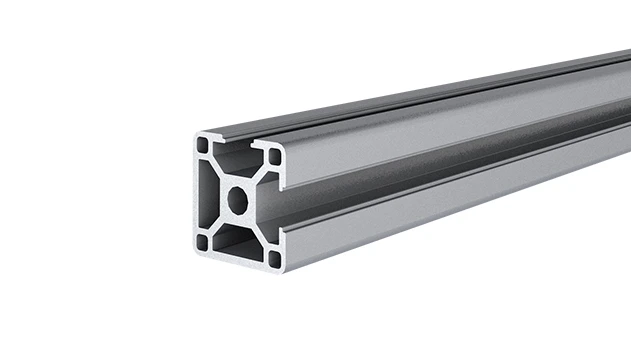
3030 is a 3.00 x 3.00CM fractional 30 series square extrusion T-slot profile with two side open T-slots, each side with 3.00cm face, 2 side with open slot, 2 side with closed face. The profile has align-a-grooves to assist in aligning connecting profiles.
In the fast-paced world of battery manufacturing, where precision, durability, and safety are non-negotiable, every component in the production line plays a silent but critical role. From the machines that assemble cells to the racks that hold materials, each part must withstand harsh conditions—especially the chemical exposure that comes with battery production. Among these unsung heroes is a material that's quietly revolutionizing how production lines are built: the 3030b EU standard aluminum profile. More than just a metal frame, this aluminum extrusion profile has become a cornerstone in creating resilient, long-lasting battery manufacturing environments. Let's dive into why it's become the go-to choice for engineers and plant managers alike, focusing on its standout feature: chemical resistance.
The Unforgiving Environment of Battery Production
Battery production isn't for the faint of heart—literally or metaphorically. Walk into any lithium-ion battery plant, and you'll find an environment teeming with substances that can corrode, degrade, or compromise even the toughest materials. Think about it: electrolytes (often containing lithium hexafluorophosphate), cleaning agents with strong acids or alkalis, solvents like N-methyl-2-pyrrolidone (NMP), and even residual moisture that can accelerate corrosion. Add in temperature fluctuations—from the heat of drying ovens to the cool of storage areas—and mechanical stress from constant material movement, and you've got a perfect storm for material failure.
Traditional materials have struggled here. Stainless steel, while strong, is heavy and expensive, making it hard to reconfigure production lines as battery designs evolve. Plastic might resist some chemicals but lacks the structural integrity to support heavy battery components. steel? It rusts at the first sign of moisture and chemicals, leading to frequent replacements and downtime. So, what's the alternative? For many manufacturers, the answer lies in aluminum—and specifically, the 3030b EU standard aluminum profile.
Why Aluminum Profiles? A Quick Primer
Aluminum has long been favored in manufacturing for its winning combo of strength, light weight, and natural corrosion resistance. Unlike steel, aluminum forms a thin, protective oxide layer when exposed to air, acting as a built-in shield against rust. But not all aluminum profiles are created equal. The 3030b EU standard aluminum profile, part of the broader family of aluminum extrusion profiles, takes these benefits a step further by adhering to strict European standards for quality, consistency, and performance. Its name gives a clue: "3030" refers to its cross-sectional dimensions (30mm x 30mm), making it versatile enough for everything from workbenches to material racks, while "EU standard" ensures it meets rigorous safety and durability criteria set by European regulatory bodies.
But what really sets the 3030b apart is its composition and manufacturing process. Most 3030b profiles are made from 6063 aluminum alloy, a heat-treatable alloy known for its excellent extrudability (meaning it can be shaped into complex profiles with precision) and superior surface finish. When combined with anodization—a process that thickens the natural oxide layer—this alloy becomes a powerhouse of chemical resistance, making it ideal for battery production lines.

3030b EU Standard Aluminum Profile: What Makes It Special?
Let's get technical for a moment, but don't worry—I'll keep it simple. The 3030b profile isn't just a square tube of aluminum. Its design is the result of careful engineering to balance strength, weight, and functionality. The 30mm x 30mm cross-section provides a stable base for mounting accessories like brackets, shelves, or conveyor components, while internal T-slots (a hallmark of aluminum extrusion profiles) allow for easy assembly and reconfiguration without welding. This modularity is a game-changer in battery production, where lines often need to adapt to new cell sizes or production methods.
But back to the star of the show: chemical resistance. The 6063 alloy in 3030b profiles contains magnesium and silicon, which not only boost its strength but also enhance its ability to resist chemical attack. When anodized, the surface becomes a dense, porous layer that can be sealed to create an almost impenetrable barrier. This barrier doesn't just repel water—it stands up to the acids, solvents, and electrolytes common in battery manufacturing. Let's put this to the test: how does the 3030b perform against specific chemicals?
Testing Chemical Resistance: The 3030b in Action
To truly understand the 3030b's chemical resistance, let's look at real-world scenarios. Imagine a material rack in a battery electrode coating area, where NMP solvent vapors are present. NMP is a strong organic solvent that can dissolve plastics and even degrade some metals over time. A 3030b profile rack, with its anodized surface, remains unaffected—no discoloration, no pitting, no loss of structural integrity. Why? The anodized layer is inert to most organic solvents, preventing them from reaching the underlying aluminum.
Or consider electrolyte spills, a common occurrence during battery cell assembly. Lithium hexafluorophosphate, a key component in lithium-ion electrolytes, is highly reactive with moisture, producing hydrofluoric acid—a corrosive substance that can eat through steel in hours. But on anodized 3030b aluminum? The acid might etch the surface slightly over time, but the damage is superficial. The oxide layer slows down the reaction, giving operators time to clean up spills before they cause significant harm. In contrast, a steel rack would start corroding immediately, leading to flaking metal that could contaminate battery cells—a disaster in an industry where even tiny impurities can ruin a batch.
Even cleaning agents, which are often overlooked, pose a threat. Many battery plants use alkaline cleaners to remove grease and debris from production equipment. These cleaners can break down some aluminum alloys, but the 3030b's 6063 alloy, with its controlled magnesium content, resists alkalinity better than other alloys like 6061. This means the profile can withstand regular cleaning without weakening over time.
Applications in Battery Production Lines: Where 3030b Shines
Now that we understand why the 3030b profile is chemically resistant, let's explore how it's used in battery production lines. Its versatility means it pops up in almost every corner of the plant, from the moment raw materials arrive to the final packaging of battery packs.
Aluminum Workbenches: The Heart of Assembly
Assembly stations are where battery cells come together, and they need workbenches that can handle tools, components, and occasional chemical spills. Enter the aluminum workbench built with 3030b profiles. These workbenches are lightweight enough to move (with the help of casters, another aluminum profile accessory) but sturdy enough to support heavy battery modules. The anodized surface is easy to clean—just wipe away electrolyte spills or solvent splatters with a damp cloth—and resists staining, ensuring a hygienic workspace. Plus, the T-slots in the 3030b profiles let operators attach accessories like tool holders, ESD (electrostatic discharge) mats, or LED task lights, customizing the bench to their needs.
Material Racks and Flow Racks: Keeping Production Moving
Battery production relies on a steady flow of materials—electrode sheets, separators, casings, and finished cells. Material racks built with 3030b profiles are the backbone of this flow. Unlike traditional wooden or steel racks, these aluminum racks are corrosion-resistant, so they can be used in humid storage areas or near cleaning stations without rusting. Take flow racks, for example: these racks use gravity to move materials from the back to the front, reducing the need for manual lifting. The 3030b profiles form the frame of these racks, while roller track components (another key accessory) are mounted to the T-slots. Even if electrolyte or cleaning agents drip onto the rack, the aluminum profile holds strong, ensuring the rack stays functional for years.
Conveyor Systems: Smooth Transport, Even in Harsh Conditions
Conveyors are the arteries of battery production lines, moving cells and modules between stations. They need to be reliable, low-maintenance, and resistant to the chemicals they might encounter along the way. 3030b profiles are often used to build the frames of these conveyors, providing a stable base for roller tracks or belt systems. The lightweight nature of aluminum makes the conveyor easier to drive (reducing energy costs), while its chemical resistance ensures the frame doesn't degrade when exposed to spills from passing battery components. Even better, if the production line needs to be reconfigured—say, to accommodate a new battery size—the 3030b profiles can be disassembled and reassembled quickly, thanks to aluminum profile accessories like connectors and end caps.
Aluminum Profile Accessories: The Unsung Partners
A profile is only as good as the accessories that go with it, and the 3030b EU standard aluminum profile has a robust ecosystem of aluminum profile accessories to enhance its functionality. Take end caps, for example: these plastic or aluminum caps fit snugly into the ends of the profile, preventing dust, moisture, or chemicals from getting inside and causing internal corrosion. Then there are the joints and connectors—like the 90° aluminum profile connector or the internal straight aluminum joint—that allow profiles to be joined at angles without welding, making assembly a breeze. Even small details, like T-slot nuts and bolts, ensure that accessories (shelves, brackets, etc.) stay securely attached, even under the vibration of a busy production line.
One accessory that deserves a special mention is the aluminum profile rubber strip. These strips fit into the T-slots of the 3030b profile, providing a cushion for delicate battery components and preventing scratches. They also act as a secondary barrier against chemicals, ensuring that spills don't seep into the slots and cause buildup over time. It's these little touches that make the 3030b system so effective in battery production.
3030b vs. Other Materials: A Head-to-Head Comparison
To really appreciate the 3030b's value, let's compare it to other common materials used in battery production lines. I've put together a quick table to highlight the key differences:
| Material | Chemical Resistance | Weight | Cost | Reconfigurability |
|---|---|---|---|---|
| 3030b EU Standard Aluminum Profile | Excellent (anodized surface resists acids, solvents, electrolytes) | Light (1/3 the weight of steel) | Moderate (more affordable than stainless steel) | High (modular with T-slots and accessories) |
| Stainless Steel | Good (but prone to pitting in chloride environments) | Heavy | High | Low (requires welding to reconfigure) |
| Steel (Uncoated) | Poor (rusts quickly with moisture/chemicals) | Heavy | Low | Low |
| Plastic (PVC/PP) | Good (resists some chemicals but not all solvents) | Light | Low to Moderate | Moderate (but less strong) |
| Other Aluminum Profiles (Non-EU Standard) | Variable (may lack consistent anodization or alloy quality) | Light | Low (but higher long-term costs due to replacement) | Moderate |
As the table shows, the 3030b profile strikes a balance that's hard to beat. It offers better chemical resistance than steel and plastic, is lighter and more affordable than stainless steel, and is far more reconfigurable than any of its competitors. For battery manufacturers looking to reduce downtime, lower costs, and future-proof their production lines, this is a no-brainer.
Real-World Success: A Battery Plant's Experience with 3030b
Let's wrap up with a real story. A mid-sized lithium-ion battery manufacturer in Germany was struggling with frequent breakdowns in their electrode coating area. Their old steel racks were corroding from NMP solvent exposure, leading to rust flakes contaminating electrode sheets. Replacing the racks every 6 months was costing them time and money. After consulting with an aluminum profile supplier, they switched to 3030b EU standard aluminum profile racks with anodized finishes. Two years later, the racks still look brand new. There's no sign of corrosion, even in the solvent-heavy environment, and the modular design has allowed them to add extra shelves as production increased. The plant manager estimates they've saved over €50,000 in replacement costs and downtime—all thanks to the 3030b profile.
Conclusion: The Future of Battery Production Lines is Aluminum
The 3030b EU standard aluminum profile isn't just a material choice—it's a strategic investment in the reliability and flexibility of battery production lines. Its chemical resistance, combined with light weight, modularity, and compliance with EU standards, makes it the ideal solution for the harsh environments of battery manufacturing. Whether it's supporting an aluminum workbench in a cell assembly station, forming the frame of a flow rack in material storage, or providing the backbone for a roller track conveyor, the 3030b profile delivers where it matters most: durability, cost-effectiveness, and peace of mind.
As battery technology continues to evolve—with higher energy densities, faster charging times, and new chemistries—the production lines that build these batteries will need to keep pace. The 3030b EU standard aluminum profile, with its adaptability and resilience, is poised to be a key player in this evolution. So, the next time you pick up a battery-powered device, take a moment to appreciate the silent strength of the aluminum extrusion profile that helped bring it to life. It might not be glamorous, but in the world of battery production, reliability is everything—and the 3030b delivers that in spades.