- Company Articles
- Products and Technology
- Product knowledge
- 3030b EU Standard Aluminum Profile in Consumer Electronics Assembly

3030b EU Standard Aluminum Profile in Consumer Electronics Assembly
Related Product
3030B EU Standard Aluminum Profile
3030 is a 3.00 x 3.00CM fractional 30 series square extrusion T-slot profile with two side open T-slots, each side with 3.00cm face, 2 side with open slot, 2 side with closed face. The profile has align-a-grooves to assist in aligning connecting profiles.
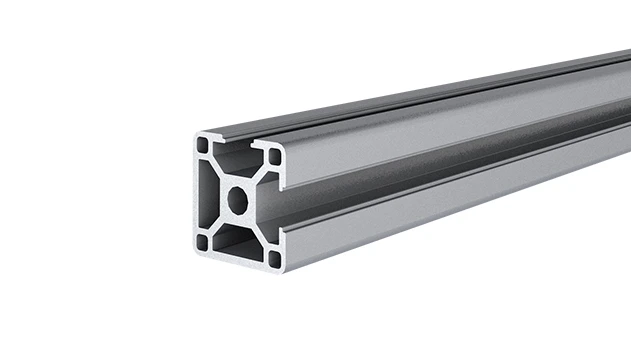
Walk into any consumer electronics assembly plant, and you'll feel it immediately—the hum of precision. Conveyor belts whisper as circuit boards glide by; technicians' hands move in practiced rhythms, placing microchips no larger than a grain of rice onto smartphone motherboards. In this world, where a single production line might switch from assembling smartwatches to tablets overnight, flexibility isn't just a nice-to-have—it's the heartbeat of survival. Enter the 3030b EU Standard Aluminum Profile : a quiet workhorse that's redefining how these assembly lines adapt, endure, and thrive. More than just metal extrusion, it's the backbone that turns chaotic change into calm, controlled progress.
What Makes 3030b "EU Standard"—And Why It Matters
First things first: let's demystify the name. "3030b" refers to its dimensions—30mm by 30mm, a sweet spot of size that balances strength and versatility. "EU Standard" isn't just a label; it's a promise. Manufactured to strict European union guidelines, this profile undergoes rigorous testing for material quality, dimensional accuracy, and durability. Made from aluminum extrusion profile —specifically 6063-T5 aluminum alloy, a favorite in manufacturing for its lightweight yet robust nature—it's extruded under high pressure to form its signature T-slot design. The result? A profile that's not just strong enough to support delicate electronics but light enough to reconfigure without heavy machinery.
Why 30mm? Consumer electronics assembly doesn't involve the brute force of automotive or aerospace manufacturing. Phones, tablets, and wearables are lightweight, but their assembly demands stability. A 30x30mm frame offers just enough heft to keep workstations steady during precision tasks—like soldering tiny components—without adding unnecessary weight. And that T-slot? It's the secret to its flexibility. Those grooves running along the profile's length are like a universal language, letting aluminum profile accessories (brackets, connectors, end caps) snap or bolt into place with minimal effort. No welding, no drilling—just quick, tool-free adjustments that keep lines moving when deadlines loom.
Building the Perfect Workbench: 3030b at the Core
Ask any assembly technician what makes or breaks their day, and they'll likely mention their workbench. It's their office, their lab, their command center. A poorly designed workbench means awkward reaches, tangled cables, and wasted time hunting for tools. A great one? It feels like an extension of their hands. That's where 3030b profiles shine.
Take a typical workbench on a smartphone assembly line. The frame is built from 3030b profiles, connected by 90° aluminum profile connectors for sharp, stable corners. The might be an aluminum honeycomb panel—light, rigid, and easy to clean—mounted using bracket accessories that slide into the T-slots. Need a shelf for tool organizers? Add a crossbar with a few 45° connectors. Want to route cables neatly? Snap a T-slot rubber seal cover into the grooves to hide wires, keeping the surface clutter-free. Even the height can be adjusted by swapping out leg sections—critical when technicians of different statures share the same station.
What about mobility? Many lines use workbenches on casters for quick repositioning. 3030b's light weight (about 1.4kg per meter) means even a fully loaded bench can be moved by two people without strain. And when the line switches to a new product—say, from a 6-inch phone to a 10-inch tablet? No need to build a new bench. Just swap out the shelf heights, add a wider, or reposition the tool holders. In an industry where product cycles last 6–12 months, that adaptability isn't just convenient—it's cost-saving.

Lean Systems Love 3030b—Here's Why
Lean manufacturing isn't just a buzzword in electronics; it's a survival strategy. The goal? Eliminate waste—whether it's time, materials, or motion—and keep workflows smooth as silk. 3030b profiles are like a lean manager's dream tool, designed to support every pillar of lean system principles.
Take "just-in-time" material delivery, a cornerstone of lean. Instead of piling components on the workbench (waste of space) or storing them in distant warehouses (waste of time), 3030b makes it easy to build compact material racks right at the line. Picture a three-tier rack (similar to the "Material Rack B" in many catalogs) built from 3030b profiles and aluminum guide rails. Each tier holds bins of resistors, capacitors, or screws, positioned exactly at the technician's elbow. No more walking to fetch parts—everything they need is right there. And when a new component is introduced? Adjust the rack's height or add a new tier in minutes.
Then there's "5S"—sort, set in order, shine, standardize, sustain. 3030b thrives here too. "Set in order" becomes a breeze when tools and materials have dedicated spots on a 3030b-mounted pegboard or shelf. "Shine" (cleanliness) is simpler because aluminum's smooth, anodized surface resists dust and grime—just a quick wipe with a cloth, and it's spotless. "Standardize"? Since 3030b profiles and accessories are identical across batches, every workbench in the plant can follow the same layout, reducing confusion when technicians rotate shifts. And "sustain"? The profile's durability means these systems last for years, turning temporary fixes into long-term habits.
Accessories: The Unsung Heroes of 3030b's Flexibility
A profile is only as good as the accessories that bring it to life. Aluminum profile accessories are the puzzle pieces that turn 3030b rails into workbenches, racks, or even mobile carts. Let's break down the must-haves:
- End Caps: Those small, unassuming 3030 aluminum profile end caps aren't just for looks. They seal the profile's ends, preventing dust buildup and protecting technicians from sharp edges—critical when hands are moving fast around delicate parts.
- Connectors: 90° connectors for right angles, 45° for slopes, and 135° for odd corners—these let you build frames in any shape. Many use a cam lever design, so you can tighten or loosen them with a simple twist, no wrenches needed.
- Gussets: Think of gusset alp 3030 as reinforcement for your frame. These triangular brackets add rigidity to joints, ensuring your workbench doesn't wobble during precision tasks like microscope-aided soldering.
- Rubber Strips: T-slot rubber seal covers slide into the T-slots, hiding cables or providing a non-slip surface for resting tools. They also dampen vibrations—handy when using sensitive equipment like oscilloscopes.
The beauty? These accessories are interchangeable across brands. Buy a connector from one supplier, an end cap from another—they'll still fit, thanks to the EU standard. That means no vendor lock-in, and no panic when a part breaks mid-shift. Just swap it out and keep going.
Real-World Impact: From Factory Floor to Finished Product
Let's ground this in reality with a story. A major electronics manufacturer recently launched a new smartwatch line. Their old assembly line, built with rigid steel frames, took three days to reconfigure—days lost to production. This time, they'd outfitted the line with 3030b-based workstations and material racks. The result? The team stripped down the old setup, repositioned the profiles, and had the new line up and running in four hours . "It felt like rearranging furniture," one supervisor joked. But the numbers were no joke: they met their launch deadline with zero production loss.
Another example: ESD (electrostatic discharge) protection. Electronics are sensitive to static, and even a tiny spark can fry a $500 circuit board. 3030b profiles can be paired with ESD-safe accessories—like conductive end caps or grounding brackets—to turn a regular workstation into an ESD workstation. One plant reported a 70% drop in static-related defects after switching to 3030b-based ESD setups. "We used to lose a batch a week to static," a quality control manager said. "Now? Maybe one a month, if that."
How 3030b Stacks Up: A Quick Comparison
Still wondering why 3030b stands out? Let's compare it to common alternatives:
| Feature | 3030b EU Aluminum Profile | Steel Tubing | 2020 Aluminum Profile | 4040 Aluminum Profile |
|---|---|---|---|---|
| Weight (per meter) | ~1.4kg | ~4.5kg | ~0.8kg | ~2.2kg |
| Max Load Capacity (per meter) | 150kg | 300kg (but heavier to move) | 80kg (too light for some tools) | 250kg (overkill for small electronics) |
| Reconfiguration Time | Minutes to hours | Days (requires welding/cutting) | Minutes (but less stable) | Hours (bulkier to maneuver) |
| Corrosion Resistance | High (anodized finish) | Low (prone to rust without paint) | High | High |
| Best For | Consumer electronics assembly (balance of strength/weight) | Heavy machinery | Light-duty shelving | Industrial workbenches |
Sustainability: Building Greener Assembly Lines
In an era where sustainability is more than a trend, 3030b delivers here too. Aluminum is 100% recyclable, and recycling it uses just 5% of the energy needed to produce new aluminum. When a production line is retired, those 3030b profiles don't end up in a landfill—they're melted down and turned into new profiles, accessories, or even car parts. One supplier reports that over 30% of their 3030b production comes from recycled aluminum, cutting carbon footprints without sacrificing quality.
And let's not forget longevity. A well-maintained 3030b system can last 10+ years, outliving multiple product cycles. Compare that to disposable plastic or flimsy steel setups that need replacement every 2–3 years. Less waste, less cost, more peace of mind.
The Bottom Line: 3030b Isn't Just a Profile—It's a Partner
Consumer electronics assembly is a high-stakes game. Markets shift overnight, customers demand faster upgrades, and margins grow tighter by the quarter. In that chaos, the 3030b EU Standard Aluminum Profile is the steady hand on the wheel. It doesn't just hold up workbenches or racks—it holds up the promise of adaptability, efficiency, and resilience.
So the next time you unbox a new smartphone or smartwatch, take a moment to appreciate the unseen: the 3030b profiles that helped build it. Quiet, reliable, and ready for whatever comes next—because in consumer electronics, the only constant is change. And with 3030b, change doesn't have to be scary. It can be exciting.