- Company Articles
- Products and Technology
- Solution
- 3030b EU Standard Aluminum Profile in Custom Lean Solutions: Tailored for Your Industry

3030b EU Standard Aluminum Profile in Custom Lean Solutions: Tailored for Your Industry
Related Product
3030B EU Standard Aluminum Profile
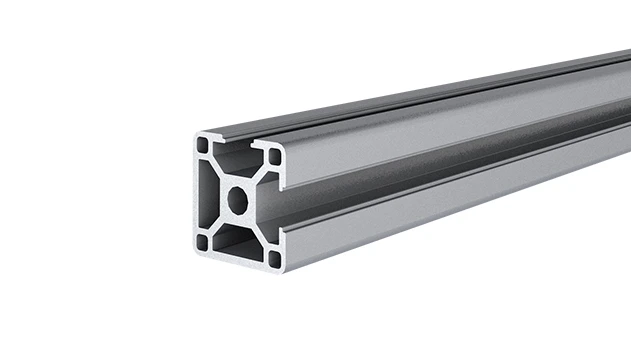
3030 is a 3.00 x 3.00CM fractional 30 series square extrusion T-slot profile with two side open T-slots, each side with 3.00cm face, 2 side with open slot, 2 side with closed face. The profile has align-a-grooves to assist in aligning connecting profiles.
Walk into any modern manufacturing plant, warehouse, or research lab, and you'll notice a common challenge: the need for spaces that adapt as quickly as operations do. A production line that assembles small electronics one month might shift to larger components the next. A warehouse handling seasonal inventory needs storage that expands in peak times and contracts when demand slows. Even labs require workstations that can reconfigure for new experiments or equipment. In these dynamic environments, "one-size-fits-all" setups don't just underperform—they hold businesses back. That's where custom lean solutions come in, and at the heart of many of these solutions lies a quiet workhorse: the 3030b EU Standard Aluminum Profile.
Far more than just a length of metal, the 3030b profile is the backbone of modular, flexible systems designed to grow, change, and evolve with your industry. Whether you're building a workbench that needs to adjust height for ergonomic comfort, a flow rack that streamlines material handling, or a full production line that reconfigures in hours (not weeks), this aluminum extrusion profile brings together durability, versatility, and cost-effectiveness in a way few materials can. Let's dive into why the 3030b has become a go-to choice for lean system suppliers and businesses aiming to stay agile in a fast-paced world.
What Makes the 3030b EU Standard Aluminum Profile Special?
First, let's get the basics right: the 3030b is a European standard aluminum extrusion profile, meaning it adheres to strict dimensional and quality guidelines set by EU regulations. At its core, it's a rectangular tube measuring 30mm by 30mm—compact enough for tight spaces but robust enough to handle the demands of industrial use. But its true strength lies in the details: the material, the design, and how it plays well with others (we're talking about aluminum profile accessories here).
Aluminum, as a base material, is a standout choice. It's lightweight, so even large structures built with 3030b frames are easy to move or reposition when needed. Yet it's surprisingly strong—its strength-to-weight ratio outperforms many metals, making it ideal for supporting tools, materials, or equipment on workbenches or racks. Unlike steel, it resists corrosion, so it holds up in humid warehouses, cleanrooms, or outdoor loading docks without rusting. And thanks to its smooth, anodized finish (a surface treatment that hardens the aluminum and adds a protective layer), it's scratch-resistant and easy to clean—critical for industries like food processing or pharmaceuticals where hygiene matters.
But the 3030b's most game-changing feature? Its T-slots. Running along all four sides of the profile, these grooves are like built-in "attachment points" that let you add, remove, or reposition accessories without drilling, welding, or specialized tools. Need to mount a shelf? Slide a T-nut into the slot, bolt on a bracket, and you're done. Want to add a light bar above a workbench? Use a hinge accessory to attach it, and adjust the angle later if needed. This modularity is what turns a simple aluminum profile into a canvas for custom lean solutions.
The Power of Modularity: Aluminum Profile Accessories That Expand Possibilities
A profile is only as useful as the accessories it works with, and the 3030b shines here thanks to a vast ecosystem of aluminum profile accessories. These small but mighty components turn static frames into dynamic systems. Let's break down some of the most common (and most useful) ones, and how they transform the 3030b into tailored solutions:
| Accessory Type | Function | Common Use Case |
|---|---|---|
| 90° Aluminum Profile Connector | Joins two 3030b profiles at a right angle, creating corners for frames or shelves. | Building the vertical and horizontal rails of a workbench frame. |
| Gusset Plate (e.g., Gusset Alp 3030) | Reinforces joints, adding stability to high-load areas like rack corners. | Strengthening the base of a flow rack that holds heavy cartons. |
| End Cap | Covers the open ends of the profile, preventing dust buildup and reducing sharp edges. | Safety upgrades for workbenches or walkway railings. |
| T-Slot Nut & Bolt | Slides into T-slots to secure accessories without pre-drilled holes. | Attaching a monitor arm to a workbench or a tool holder to a production line. |
| Aluminum Hinge | Allows sections of a profile frame to pivot, adding foldable or adjustable elements. | Creating a workbench with a fold-down side shelf for extra workspace. |
What's remarkable is how these accessories work together. For example, a lean system supplier might combine 90° connectors, gusset plates, and T-slot bolts to build a sturdy frame, then add hinges and end caps to refine safety and functionality. This mix-and-match approach means you're never locked into a single design—if your needs change, you can swap out accessories or add new ones without replacing the entire structure.

From Workbench to Flow Rack: Real-World Applications of the 3030b Profile
The 3030b isn't just theoretical—it's a practical solution that solves everyday challenges across industries. Let's look at two common applications where it truly shines: workbenches and flow racks.
Workbenches: Ergonomic, Adaptable, and Built to Last
A workbench is the heartbeat of many operations—whether it's where assembly line workers spend their shifts, where lab technicians analyze samples, or where warehouse staff pack orders. A poorly designed workbench leads to fatigue, inefficiency, and even injuries. The 3030b profile changes that by enabling workbenches tailored to your team's needs.
Take height adjustability, for example. With 3030b frames and telescoping aluminum tube sections, a workbench can raise or lower by several inches, ensuring workers of different heights can stand comfortably (no more hunching or straining). Add a plywood or aluminum honeycomb panel top, and you've got a sturdy surface for tools, laptops, or equipment. Need storage? Attach shelves using T-slots—adjust their height as tools or materials change. Even add accessories like LED light strips (mounted via T-slot brackets) for better visibility, or cable management clips to keep cords organized and out of the way.
In electronics manufacturing, where static electricity can damage components, 3030b workbenches can integrate ESD (electrostatic discharge) features—like conductive tops or grounding clips attached via T-slots. In labs, where chemicals might spill, the anodized aluminum resists corrosion, and the modular design lets you replace a damaged section (like a shelf) instead of the entire bench. For warehouses, add casters (via caster accessories) to make the workbench mobile, so it can roll right to where inventory is being packed.
Flow Racks: Streamlining Material Handling, One Roller at a Time
In warehouses and production lines, moving materials efficiently is key to reducing waste—a core principle of lean management. Flow racks (also called gravity racks) use inclined shelves with roller tracks to let products "flow" from the back (where they're stocked) to the front (where they're picked), minimizing manual lifting and cutting down on retrieval time. And the 3030b profile is the perfect frame for these systems.
Here's how it works: A lean system supplier will use 3030b profiles to build the vertical supports and horizontal rails of the rack. Then, they'll attach roller tracks (another type of aluminum profile accessory) to the rails at a slight angle. Boxes, bins, or components placed on the back of the track glide forward as items are picked from the front, ensuring FIFO (first-in, first-out) inventory management and reducing the risk of expired or obsolete stock.
The beauty of using 3030b here is flexibility. Need more lanes for small parts? Add extra horizontal rails with T-slot bolts. Handling heavier items? Reinforce the frame with gusset plates. Adjust the angle of the roller tracks by raising or lowering one end of the horizontal rail—all without welding or cutting. Even better, if your inventory mix changes (e.g., shifting from small boxes to larger totes), you can swap out the roller tracks for wider ones or adjust the shelf spacing. It's a system that grows with your needs, not against them.
Case Study: How a Small Electronics Manufacturer Scaled with 3030b
The Challenge: A family-owned electronics assembly company in Germany was struggling with a rigid production line. Their fixed steel workbenches couldn't adjust for new, larger circuit boards, and their static shelving meant workers wasted time walking to retrieve components. They needed a solution that could grow with their order volume (up 40% in six months) and adapt to new product sizes.
The Solution: Working with a local lean system supplier, they replaced their steel workbenches with 3030b-based workstations. Each bench featured adjustable height, modular shelves for tools, and integrated ESD mats. They also added a 3030b flow rack with roller tracks to feed components directly to the assembly line. The supplier used aluminum profile accessories like 90° connectors and gusset plates to ensure stability, and T-slot nuts to make future adjustments easy.
The Result: Within weeks, assembly time per unit dropped by 15% as workers no longer wasted time reaching for tools or components. When a new, larger circuit board was introduced, the team adjusted the workbench height and shelf spacing in under an hour using basic tools. The flow rack expanded with additional 3030b sections and roller tracks as order volume grew, avoiding the cost of a brand-new system. Today, the company estimates the 3030b setup saved them over €20,000 in equipment costs and labor in the first year alone.
Why Lean System Suppliers Choose the 3030b for Custom Solutions
At this point, you might be wondering: Why do lean system suppliers keep coming back to the 3030b? The answer lies in three key benefits that make it a win-win for both suppliers and their clients: cost-effectiveness, compatibility, and sustainability.
Cost-Effectiveness: Aluminum extrusion profiles like the 3030b are surprisingly affordable, especially when you factor in their lifespan. Unlike steel, which can rust and require replacement, or wood, which warps and splinters, 3030b profiles last for decades with minimal maintenance. Plus, their modularity means you only pay for what you need upfront—and can add on later. A supplier might start with a basic workbench frame and expand it with shelves or roller tracks as your budget allows, avoiding large upfront investments.
Compatibility: The 3030b is part of the EU standard aluminum profile family, which includes sizes like 2020, 4040, and 4080. This means it works seamlessly with other EU-standard profiles and accessories. A lean system supplier can mix 3030b with 4040 profiles for a heavier-duty rack or pair it with 2020 for lightweight shelving, ensuring you get the right strength-to-weight ratio for every part of your system. No more mismatched components or proprietary parts that lock you into one supplier.
Sustainability: In an era where businesses are under pressure to reduce their carbon footprint, aluminum is a standout choice. It's 100% recyclable, and recycling it uses just 5% of the energy needed to produce new aluminum. When a 3030b-based system reaches the end of its useful life (which, with proper care, could be 20+ years), the profiles can be melted down and reused—unlike steel, which often ends up in landfills. For suppliers and clients alike, this aligns with sustainability goals and reduces environmental impact.
Is the 3030b Right for Your Industry?
The short answer: If you need flexibility, durability, and cost-effectiveness, chances are yes. The 3030b has found homes in industries as diverse as automotive manufacturing (for assembly line workstations), pharmaceuticals (for cleanroom storage), logistics (for flow racks and picking stations), and even education (for lab setups in technical schools). Its ability to adapt to unique needs makes it a chameleon of sorts—equally at home in high-volume production facilities and small workshops.
To know for sure, start by asking your lean system supplier these questions: What are my biggest workflow pain points? (e.g., "Workers strain to reach tools" or "Material handling is slow.") What might my needs look like in 1–3 years? (e.g., "We plan to add a second shift" or "We'll be introducing a new product line.") A good supplier will use the answers to design a 3030b-based solution that solves today's problems and leaves room to grow tomorrow.
Final Thoughts: Building a Future-Proof Workspace with 3030b
In a world where change is the only constant, the spaces we work in can't afford to stay static. The 3030b EU Standard Aluminum Profile isn't just a material—it's a mindset. It's about building systems that don't fight change but embrace it. It's about empowering teams to work smarter, not harder, by giving them tools (and workbenches, and flow racks) that adapt to their needs. And it's about partnering with lean system suppliers who understand that your success depends on flexibility, durability, and innovation.
Whether you're a small business just starting to optimize your workflow or a large enterprise looking to scale, the 3030b profile offers a path forward. It's a reminder that the best solutions aren't just built—they're crafted to grow with you. So why settle for a workspace that holds you back? Invest in a foundation that propels you forward: start with the 3030b, and build the custom lean solution your industry deserves.