- Company Articles
- Products and Technology
- Product knowledge
- 3030b EU Standard Aluminum Profile in Furniture Manufacturing: Industrial Workbench Bases

3030b EU Standard Aluminum Profile in Furniture Manufacturing: Industrial Workbench Bases
Related Product
3030B EU Standard Aluminum Profile
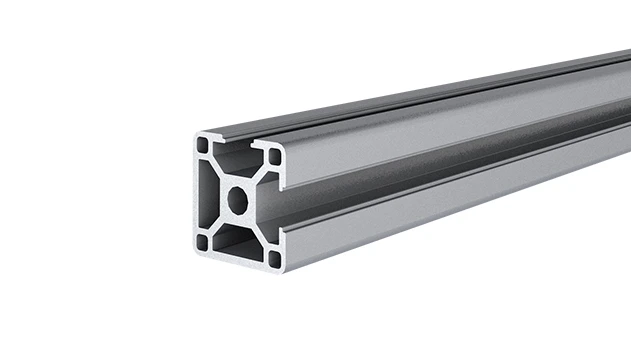
3030 is a 3.00 x 3.00CM fractional 30 series square extrusion T-slot profile with two side open T-slots, each side with 3.00cm face, 2 side with open slot, 2 side with closed face. The profile has align-a-grooves to assist in aligning connecting profiles.
Walk into any manufacturing workshop, assembly line, or even a busy garage, and you'll notice something fundamental: the workbench. It's not just a table—it's the silent backbone of productivity. Every nut tightened, every component assembled, every measurement taken happens here. But what often gets overlooked is what's holding that workbench up: the base. A wobbly, flimsy base can turn a smooth workflow into a frustrating battle with instability, wasted time, and even safety risks. That's where the 3030b EU Standard Aluminum Profile steps in. In the world of industrial furniture manufacturing, this unassuming piece of metal has quietly become a game-changer for workbench bases, blending strength, flexibility, and practicality in a way that few materials can match.
Why the Base Matters: More Than Just a "Legs" Job
Before diving into the specifics of the 3030b profile, let's take a moment to appreciate why workbench bases deserve attention. Think about a typical day in a factory: workers are moving heavy tools, placing bulky materials, and leaning into tasks that require stability. If the base shifts even a little, a precision cut might go off track, a delicate part could slip, or worse, someone could lose balance. Over time, a low-quality base might warp, rust, or simply give out, leading to costly replacements and downtime. On the flip side, a well-designed base does more than just hold up the tabletop—it supports the entire workflow. It needs to handle weight without bending, resist the wear and tear of daily use, and adapt as needs change (like adding shelves, adjusting height, or reconfiguring the workspace). That's a tall order, and it's why manufacturers are increasingly turning to aluminum profiles, specifically the 3030b EU standard, to get the job done.
Meet the 3030b EU Standard Aluminum Profile: What Makes It Tick?
First things first: what exactly is the 3030b EU Standard Aluminum Profile? Let's break it down. The "3030" refers to its dimensions: 30 millimeters in width and 30 millimeters in height, forming a square cross-section. The "b" denotes a specific variation within the 3030 series, often differing in groove design, wall thickness, or weight capacity—details that might seem minor but make a big difference in real-world use. And "EU Standard" means it adheres to strict European manufacturing guidelines for quality, safety, and consistency, ensuring that no matter where you source it, you're getting a product that meets rigorous benchmarks.
But numbers and standards only tell part of the story. What truly sets this profile apart is the material itself: aluminum. Not just any aluminum, though—most 3030b profiles are made from 6063-T5 aluminum alloy, a popular choice in extrusion for its winning combo of strength, lightweight properties, and corrosion resistance. The "T5" refers to the tempering process, which involves cooling the extruded aluminum rapidly and then artificially aging it to enhance its mechanical properties. The result? A profile that's strong enough to support heavy loads but light enough to make installation and reconfiguration a breeze.

From Raw Material to Profile: The Extrusion Advantage
Aluminum extrusion is the process that gives the 3030b profile its shape, and it's a big reason why this material is so versatile. Here's how it works: heated aluminum billets (think thick, cylindrical blocks) are forced through a die—a custom-shaped tool that molds the metal into the desired cross-section (in this case, the 30x30mm square with its characteristic T-slots). This method allows for complex, consistent shapes to be produced efficiently, which is why aluminum extrusion profile has become a staple in manufacturing. Unlike welding or bending individual pieces, extrusion creates a seamless, uniform profile with no weak points, ensuring that every inch of the 3030b is just as strong as the next.
The T-slots are another key feature. These grooves running along the length of the profile act like built-in channels for attaching accessories—think brackets, shelves, casters, or even other profiles. This isn't just a design quirk; it's what makes the 3030b so adaptable. Need to add a lower shelf to your workbench base? Slide a bracket into the T-slot and secure it with a bolt. Want to mount a tool holder on the side? No problem—just use a T-nut and screw. This modularity is a far cry from traditional steel bases, which often require drilling holes or welding to make changes, a process that's time-consuming, permanent, and prone to errors.
Strength Without the Bulk: Why Aluminum Beats Steel (and Wood) for Bases
You might be thinking, "Why not just use steel? It's strong, right?" It's true—steel is undeniably tough, but it comes with trade-offs. Steel is heavy, which makes moving or reconfiguring workbenches a two-person job (or more). It's also prone to rust if not properly coated, a big issue in humid workshops or environments where spills are common. Wood, on the other hand, is cheap and easy to work with, but it warps with moisture, dents under heavy loads, and doesn't stand up to chemicals or repeated use. The 3030b aluminum profile hits a sweet spot between these extremes.
Let's talk numbers. A typical 3030b profile has a weight capacity of around 150-200 kg per linear meter when used as a vertical support—more than enough for most workbench applications, where the base is spread across four or more legs. Compare that to a similar steel profile, which might handle more weight but at twice the heft. For a workbench that needs to be moved occasionally (say, to reconfigure the workshop layout), that extra weight adds up fast. And unlike steel, aluminum doesn't rust. Even if it gets wet or exposed to chemicals, it forms a thin oxide layer that protects the underlying metal, keeping your base looking and performing like new for years.
Aluminum Profile Accessories: The Unsung Heroes of Customization
A profile is only as good as the accessories that go with it, and the 3030b ecosystem is packed with options that turn a simple square tube into a fully functional workbench base. Let's start with connectors—the pieces that join profiles together. 90° aluminum profile connectors are a staple, allowing you to build right angles for the legs and cross-braces of your base. These come in various designs, from simple corner brackets that bolt into the T-slots to internal connectors that fit inside the profile for a cleaner look. Then there are gussets, like the gusset alp 3030, which reinforce joints by adding triangular support—perfect for bases that need to handle extra weight or vibration.
End caps might seem like a small detail, but they're essential for safety and aesthetics. These plastic or aluminum caps snap or screw into the ends of the profile, covering sharp edges and preventing dust, debris, or small tools from falling inside. Leveling feet are another must-have. Workshops rarely have perfectly flat floors, so adjustable feet let you tweak each leg of the base to ensure the workbench is stable and level—no more rocking or wobbling mid-task. And if mobility is key, casters (wheels) can be attached via caster mounts that slide into the T-slots, turning a stationary base into a mobile workbench that can be rolled where it's needed most.
The beauty of these accessories is that they're designed to work together seamlessly. You don't have to hunt for compatible parts or modify pieces to make them fit—everything from the bolts to the brackets is engineered for the 3030b profile. This not only saves time during setup but also means you can easily swap out accessories later if your needs change. Want to add a shelf halfway up the base? Just grab some brackets and screws. Need to replace a worn caster? Unscrew the old one and pop in a new one. It's this flexibility that makes the 3030b such a favorite among manufacturers who value adaptability.
Building a Workbench Base with 3030b: A Step-by-Step (Simplified) Guide
You might be wondering, "Is building a workbench base with 3030b profiles complicated?" The short answer: not at all. In fact, it's surprisingly straightforward, even if you're not a seasoned DIYer. Here's a rough outline of how it might go:
- Plan the design: Start by sketching your base. How tall do you need it? Will it have cross-braces for stability? Do you want shelves or casters? Measure twice, cut once (though with extrusions, you'll likely cut the profiles to length with a saw).
- Gather materials: You'll need 3030b profiles (cut to your desired lengths), connectors (90° brackets, gussets), end caps, leveling feet or casters, and T-slot bolts/nuts to secure everything.
- Assemble the frame: Start with the legs—attach the horizontal cross-braces near the top and bottom using 90° connectors. Add diagonal braces if extra stability is needed (gussets help here).
- Add feet or casters: Screw leveling feet into the bottom of each leg, or attach caster mounts if you want mobility.
- Finish with end caps: Snap end caps onto any exposed profile ends to clean up the look and prevent injuries.
The whole process can often be done with basic tools: a miter saw (for cutting profiles), a hex key (for tightening T-slot bolts), and maybe a rubber mallet to gently seat connectors. No welding, no specialized equipment, and no need to hire a professional. That's a huge plus for small manufacturers or workshops that need to build or modify bases on a budget.
Real-World Impact: A Case Study in Lean System Efficiency
Case Study: How a Small Electronics Manufacturer Boosted Productivity with 3030b Bases
Let's put this into context with a real example. Take "TechWorks," a hypothetical small electronics manufacturer with a team of 10 workers assembling circuit boards. A few years back, their workbenches had wooden bases that were starting to show their age—warped legs, loose joints, and no way to add storage or adjust height. Workers often complained about instability, and the team was spending hours each month replacing damaged bases or shimming wobbly legs with pieces of cardboard (not ideal for precision work).
TechWorks decided to switch to 3030b aluminum profile bases after hearing about their durability and flexibility. They designed simple, 80cm tall bases with cross-braces for stability and added lower shelves using aluminum profile accessories to store tools and components. Within a week of installation, the difference was noticeable. Workers reported less eye strain (no more squinting to compensate for wobbly tables), fewer dropped parts, and more organized workspaces thanks to the added shelves. Best of all, when TechWorks expanded their assembly line six months later, they were able to reconfigure the bases by adding extra legs and extending cross-braces—no need to buy new ones. Over two years, they estimate saving $5,000 in replacement costs and reducing downtime by 15%—a huge win for a small business.
This story highlights a key point: the 3030b isn't just a material choice—it's a lean system investment. Lean manufacturing is all about minimizing waste (time, money, space) and maximizing value, and a flexible, durable workbench base fits right into that philosophy. By choosing a base that can adapt to changing needs, TechWorks avoided the waste of constantly replacing rigid, one-size-fits-all bases, and instead invested in a solution that grew with them.
Comparing Profiles: 3030b vs. Other Aluminum Options
The 3030b isn't the only aluminum profile out there, so how does it stack up against others? Let's take a quick look at a few common alternatives:
| Profile Type | Dimensions (mm) | Typical Load Capacity (per leg) | Best For | Downsides |
|---|---|---|---|---|
| 2020 EU Standard | 20x20 | 50-100 kg | Light-duty workbenches, shelving, small carts | Too narrow for heavy loads; limited accessory options |
| 3030b EU Standard | 30x30 | 150-200 kg | Medium-to-heavy-duty workbenches, assembly lines, mobile bases | Slightly heavier than 2020; overkill for very light tasks |
| 4040 EU Standard | 40x40 | 250-300 kg | Heavy machinery bases, industrial workstations | Bulky; more expensive; overkill for most small workshops |
As the table shows, the 3030b hits the "goldilocks zone" for many industrial workbench bases—not too small, not too big, but just right for most medium-to-heavy tasks. It's strong enough to support tools, materials, and workers leaning into tasks, but not so bulky that it takes up unnecessary space or drives up costs. For TechWorks and many other manufacturers, this balance is exactly what makes it the go-to choice.
Sustainability: Aluminum's Green Edge
In today's world, sustainability isn't just a buzzword—it's a business imperative. Here again, the 3030b aluminum profile shines. Aluminum is 100% recyclable, and recycling it uses just 5% of the energy required to produce new aluminum from raw ore. That means when a workbench base eventually reaches the end of its life (which, with aluminum, could be decades), the profiles can be melted down and reused, reducing waste and environmental impact. Many manufacturers now source 3030b profiles made from recycled aluminum, further lowering their carbon footprint.
Compare that to wood, which requires cutting down trees, or steel, which is also recyclable but has a higher carbon footprint in production. For companies looking to meet sustainability goals or appeal to eco-conscious clients, choosing aluminum bases is a simple yet impactful step.
Future-Proofing Workspaces: Why 3030b Will Stick Around
So, what does the future hold for the 3030b EU Standard Aluminum Profile in workbench bases? If current trends are any indication, it's here to stay. As manufacturing becomes more agile and workshops need to adapt quickly to new projects, the modularity of aluminum profiles will only grow in value. We're already seeing innovations like integrated cable management (T-slots can hide wires and hoses, reducing clutter) and smart accessories (sensors that monitor weight distribution to prevent overloading). Even as new materials emerge, aluminum's combination of strength, flexibility, and sustainability is hard to beat.
Another trend is the rise of "leaner" workspaces—smaller, more efficient areas where every square inch counts. The 3030b's compact size (30x30mm) makes it ideal for these setups, allowing for sturdy bases that don't take up excess floor space. Add in the ability to reconfigure on the fly, and it's easy to see why manufacturers are hesitant to switch to less adaptable materials.
Final Thoughts: The Quiet Hero of Workbench Bases
At the end of the day, the 3030b EU Standard Aluminum Profile might not be the most glamorous part of a workbench. It doesn't have the flash of a high-tech tool or the shine of a polished tabletop. But without it, none of that other stuff matters. It's the quiet hero that keeps workbenches stable, workflows smooth, and workers productive. Whether you're running a small workshop or a large manufacturing plant, investing in a base made from 3030b profiles is an investment in efficiency, durability, and adaptability—three things no business can afford to overlook.
So the next time you walk into a workshop and see a sturdy, well-organized workbench, take a closer look at the base. Chances are, you'll spot those familiar 30x30mm aluminum profiles, hard at work, doing what they do best: supporting the people and processes that keep the world moving. And that, in a nutshell, is why the 3030b EU Standard Aluminum Profile has become an indispensable tool in furniture manufacturing—one base at a time.