- Company Articles
- Products and Technology
- Product knowledge
- 3030b EU Standard Aluminum Profile in Laboratory Equipment Frames: Stability & Safety

3030b EU Standard Aluminum Profile in Laboratory Equipment Frames: Stability & Safety
Related Product
3030B EU Standard Aluminum Profile
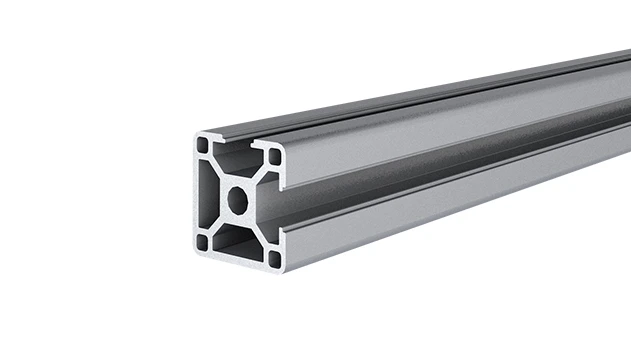
3030 is a 3.00 x 3.00CM fractional 30 series square extrusion T-slot profile with two side open T-slots, each side with 3.00cm face, 2 side with open slot, 2 side with closed face. The profile has align-a-grooves to assist in aligning connecting profiles.
Walk into any modern laboratory—whether it's a bustling research facility, a pharmaceutical lab, or a university science department—and you'll quickly realize that the unsung heroes of its functionality are the equipment frames. These structures hold everything together: workbenches where precise experiments are conducted, material racks storing sensitive samples, and conveyor systems moving reagents between stations. But not all frames are created equal. When it comes to labs, two factors rise above all others: stability and safety. A wobbly frame could compromise an experiment's accuracy; a material that reacts with chemicals could endanger researchers. This is where the 3030b EU Standard Aluminum Profile shines. More than just a piece of metal, it's a backbone designed to meet the rigorous demands of lab environments, blending strength, adaptability, and peace of mind.
What Is the 3030b EU Standard Aluminum Profile?
Before diving into its lab-specific benefits, let's start with the basics: What exactly is the 3030b EU Standard Aluminum Profile? At its core, it's a type of aluminum extrusion profile—a product of forcing heated aluminum through a die to create a consistent, predefined shape. The "3030b" refers to its dimensions: 30mm in width and 30mm in height, with a "b" designation that denotes specific tolerances, wall thickness, and slot configurations set by EU standards. Think of it as a building block, but one engineered with precision.
Aluminum extrusion profiles like the 3030b are prized for their T-slot design—longitudinal grooves running along their length that allow accessories (like brackets, connectors, or panels) to be attached without welding. This isn't just a convenience; it's a game-changer for labs that need to reconfigure their setups as projects evolve. The EU standard tag ensures that every piece meets strict quality benchmarks for material purity, mechanical strength, and safety—critical for environments where compliance isn't optional.
But what makes this specific profile stand out? Unlike generic aluminum bars, the 3030b is crafted from high-grade aluminum alloy (typically 6063-T5, known for its excellent strength-to-weight ratio and corrosion resistance). Its wall thickness, often around 1.5mm to 2mm, strikes a balance: thick enough to support heavy loads, yet lightweight enough to make assembly and repositioning manageable. For labs, where every square inch counts, this balance is invaluable.
Stability: The Foundation of Lab Precision
In a lab, "stable" isn't just a nice-to-have—it's a requirement. Imagine a researcher pipetting a 0.1ml sample into a test tube; a frame that shifts by even a millimeter could lead to an incorrect dosage, invalidating hours of work. Or consider a material rack holding vials of volatile chemicals; a swaying structure could result in spills, contamination, or worse. The 3030b profile is engineered to eliminate these risks, starting with its structural design.
The 30x30mm cross-section is no accident. This square shape distributes weight evenly across all four sides, minimizing flex even under heavy loads. Unlike round tubes, which can twist under pressure, the 3030b's flat surfaces and sharp corners create a rigid framework. Pair this with its aluminum alloy composition—stronger than plastic, yet lighter than steel—and you get a profile that can support everything from a 50kg workbench to a multi-tier material rack without bending.
Another stability-boosting feature is the T-slot system. When used with compatible aluminum profile accessories—like 90° aluminum profile connectors or three-way joints—the slots lock accessories into place with precision. Unlike bolted steel frames, which can loosen over time, the T-slot connection maintains tension, ensuring the frame stays tight even after repeated adjustments. This is especially important in labs where equipment is frequently reconfigured; you don't want to spend time retightening bolts every month.
Real-World Example: A biomedical lab in Berlin recently upgraded its cell culture workstations to 3030b frames. Previously, their wooden workbenches would warp slightly in the lab's humid environment, causing microscopes to vibrate during cell imaging. After switching to 3030b aluminum frames with aluminum honeycomb panels, the workbenches remained stable even at 95% humidity. Researchers reported a 20% reduction in imaging errors—all because the frame stopped moving.

Safety: Protecting People and Experiments
In labs, safety is non-negotiable. From corrosive acids to biohazardous materials, the environment is filled with substances that demand materials that won't react, degrade, or release toxins. Aluminum, by nature, is inert to most chemicals—a trait that makes it far safer than steel (which can rust) or wood (which absorbs liquids). The 3030b profile takes this a step further with its EU-standard anodized finish. Anodization creates a protective oxide layer on the aluminum's surface, making it resistant to scratches, corrosion, and chemical spills. Spill a weak acid on a 3030b frame, and it won't pit or corrode; wipe it clean, and it's as good as new.
Toxicity is another concern. Unlike some plastics that leach chemicals when exposed to heat, or untreated metals that release fumes, aluminum is non-toxic and heat-resistant. This is critical for labs using ovens, hot plates, or incubators mounted on aluminum frames. Even at high temperatures, the 3030b profile remains stable, posing no risk of contaminating samples or endangering staff.
Edge safety is often overlooked, but not with the 3030b. When paired with aluminum profile end caps—small plastic or rubber covers that snap onto the ends of the profile—sharp edges are eliminated. This might seem minor, but in a busy lab where researchers rush between stations, a rounded end cap can prevent cuts and bruises. It's these small details that make the 3030b feel designed with people, not just equipment, in mind.
Why Aluminum Over Other Materials? A Lab-Centric Comparison
To truly appreciate the 3030b's value, it helps to compare it to common alternatives used in lab frames. Let's break down how it stacks up against steel, wood, and plastic:
| Material | Weight (kg/m) | Corrosion Resistance | Max Load Capacity (kg/m) | Safety (Toxicity) | Cost (Relative) |
|---|---|---|---|---|---|
| 3030b EU Aluminum Profile | 1.2–1.5 | Excellent (Anodized) | 200–300 | Non-toxic | Moderate |
| Mild Steel | 7.8–8.0 | Poor (Rusts without coating) | 400–500 | Low toxicity, but coatings may off-gas | Low |
| Pine Wood | 0.5–0.7 | Poor (Absorbs moisture/chemicals) | 50–80 | Non-toxic, but can harbor mold | Low |
| PVC Plastic | 0.8–1.0 | Good (Resists acids, but not solvents) | 30–50 | May leach phthalates at high temps | Low–Moderate |
Steel, for example, is stronger on paper, but its weight makes it hard to reconfigure—critical in labs where setups change with projects. It also rusts unless painted or coated, and the coatings can chip, exposing the steel to chemicals. Wood is cheap but absorbs moisture, warps over time, and can't withstand heavy loads. Plastic is lightweight but softens at high temperatures and lacks the rigidity needed for precision work. The 3030b, by contrast, hits the sweet spot: lightweight enough to move, strong enough to support heavy equipment, and safe enough to coexist with sensitive experiments.
Aluminum Profile Accessories: Turning Frames into Systems
A profile is only as good as the accessories that bring it to life. The 3030b's T-slot design is useless without compatible parts, and here again, EU standards ensure a wide range of aluminum profile accessories that enhance its functionality in labs. Let's look at a few key ones:
Aluminum Profile End Caps
As mentioned earlier, these small caps snap onto the ends of the 3030b profile, covering sharp edges and preventing dust or liquids from getting inside the T-slots. In a lab where cleanliness is paramount—think PCR labs or sterile cell culture rooms—keeping slots free of debris is essential. End caps also add a polished look, turning a functional frame into a professional workspace.
90° Aluminum Profile Connectors
These L-shaped brackets slide into the T-slots of two 3030b profiles, joining them at a right angle. What makes them lab-friendly is their adjustability: loosen the bolts, reposition the profile, and retighten—no welding required. This is a lifesaver when a lab needs to expand a workbench or add a shelf to a material rack. Unlike fixed steel brackets, these connectors grow with the lab's needs.
Workbench Integration
The 3030b isn't just for frames—it's the backbone of lab workbenches themselves. Pair the profile with an aluminum honeycomb panel (lightweight, yet strong) and you get a work surface that's stable, chemical-resistant, and easy to clean. Add caster wheels (another aluminum profile accessory) and the workbench becomes mobile, allowing researchers to move it where it's needed most. This flexibility is why so many lab designers now specify 3030b for workbench frames.
Case Study: How a Pharma Lab Improved Safety with 3030b Frames
To put this in perspective, let's look at a real-world example: a mid-sized pharmaceutical lab in France that specializes in developing cancer treatments. Before 2022, their compounding area used steel frames for material racks and wooden workbenches. The steel racks, while strong, began to rust in the lab's humid environment (necessary for certain drug stability tests), and the wooden workbenches absorbed spilled solvents, creating a fire risk. worst of all, reconfiguring the setup to accommodate new equipment required hiring welders—a costly and time-consuming process.
In 2023, they switched to 3030b EU Standard Aluminum Profile frames with aluminum honeycomb workbenches. The results were immediate: the anodized aluminum racks resisted rust even at 85% humidity. The workbenches, easy to wipe clean, no longer retained solvents. Best of all, when they added a new HPLC machine, the lab team reconfigured the material rack themselves using 90° aluminum profile connectors and extra 3030b lengths—no welders needed. "It's like building with giant Lego bricks," one lab manager joked. But the real win was safety: incident reports related to frame instability or chemical reactions dropped to zero in the first year.
EU Compliance: More Than a Label
The "EU Standard" label on the 3030b profile isn't just marketing—it's a guarantee. To meet EU standards, the profile must pass rigorous tests: tensile strength (to ensure it doesn't bend under load), corrosion resistance (per EN ISO 9227), and toxicity (no heavy metals or harmful coatings). For labs in the EU or those exporting to EU markets, this compliance is non-negotiable. Regulatory bodies like the European Medicines Agency (EMA) or ISO (International Organization for Standardization) require lab equipment to meet these standards, and using non-compliant frames could lead to failed audits or halted research.
Beyond regulations, EU compliance offers peace of mind. When a lab specifies 3030b, they know the profile was made in a facility with strict quality controls, using materials that meet health and safety benchmarks. This is especially important for labs working with human samples or developing pharmaceuticals; every component must be traceable and safe.
Installation and Maintenance: Designed for Busy Labs
Labs don't have time for complicated installations. Researchers are busy with experiments; lab managers are juggling budgets. The 3030b profile addresses this with a "tool-less" design (or minimal tools, at most). Most aluminum profile accessories—connectors, end caps, brackets—can be installed with a hex key or even by hand. This means a small team can assemble a complete workbench or material rack in hours, not days.
Maintenance is equally straightforward. Unlike steel, which needs repainting, or wood, which requires sealing, aluminum frames just need occasional cleaning. A quick wipe with a mild detergent removes dust and spills; the anodized finish does the rest, preventing corrosion. Even if a bracket loosens over time, tightening it takes seconds with a hex key. For labs with tight schedules, this low-maintenance design is a huge advantage.
The Future of Lab Frames: Why 3030b is Here to Stay
As labs evolve—adopting automation, increasing focus on sustainability, and demanding more flexible spaces—the 3030b profile is poised to keep up. Its lightweight design aligns with green initiatives (less energy needed to transport and install), and its recyclability makes it eco-friendly (aluminum can be recycled indefinitely without losing strength). The T-slot system also pairs well with lab automation: add a sensor bracket to monitor temperature, or a conveyor track to move samples—all without rebuilding the frame.
Manufacturers are also innovating with the 3030b, adding features like integrated cable management (channels within the profile to hide wires) and antimicrobial coatings for biolabs. These advancements ensure that the profile will remain a top choice for labs long into the future.
Conclusion: The Right Frame for the Job
In labs, where precision and safety can't be compromised, the 3030b EU Standard Aluminum Profile isn't just a material choice—it's a strategic one. It's stable enough to support critical experiments, safe enough to coexist with hazardous materials, and flexible enough to grow with a lab's needs. Paired with the right aluminum profile accessories—end caps, connectors, workbench panels—it transforms from a simple extrusion into a complete lab system.
So the next time you walk into a lab, take a closer look at the frames. Chances are, if they're stable, clean, and adaptable, they're built with 3030b aluminum. And for good reason: in a world where every detail matters, this profile delivers exactly what labs need most: reliability. After all, when the frame is solid, researchers can focus on what they do best: pushing the boundaries of science.