- Company Articles
- Products and Technology
- Product knowledge
- 3030b EU Standard Aluminum Profile in Logistics: Custom Material Handling Carts

3030b EU Standard Aluminum Profile in Logistics: Custom Material Handling Carts
Related Product
3030B EU Standard Aluminum Profile
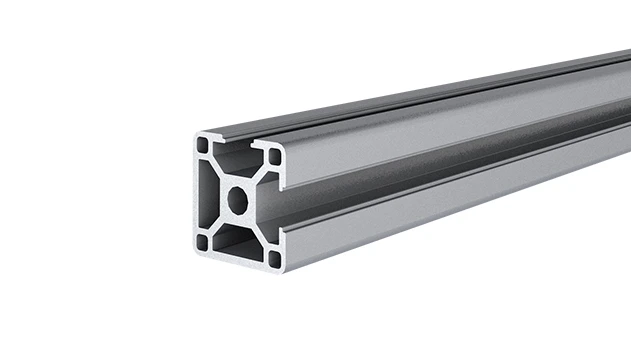
3030 is a 3.00 x 3.00CM fractional 30 series square extrusion T-slot profile with two side open T-slots, each side with 3.00cm face, 2 side with open slot, 2 side with closed face. The profile has align-a-grooves to assist in aligning connecting profiles.
How a Versatile Aluminum Solution is Revolutionizing Warehouse Efficiency and Adaptability
The Unsung Hero of Logistics: Why Material Handling Carts Matter
In the fast-paced world of logistics, where every second counts and efficiency is the bottom line, there's an unsung hero working behind the scenes: the material handling cart. These humble tools—often overlooked amid high-tech automation and robotics—are the backbone of daily operations in warehouses, distribution centers, and manufacturing facilities. They move inventory from storage to shipping, transport tools to assembly lines, and keep workflows running like well-oiled machines. But not all carts are created equal. Traditional options, like steel-framed trolleys or wooden racks, often come with trade-offs: they're heavy, hard to customize, prone to rust, or too rigid to adapt to changing needs.
Enter the 3030b EU Standard Aluminum Profile —a game-changing material that's redefining what material handling carts can do. Lightweight yet incredibly strong, modular by design, and built to last, this aluminum profile is quickly becoming the go-to choice for logistics managers who refuse to compromise on flexibility, durability, or cost-effectiveness. In this article, we'll dive deep into how 3030b aluminum profile is transforming custom material handling carts, explore its key benefits, and show why it's the ideal solution for modern logistics challenges.
What is 3030b EU Standard Aluminum Profile, Anyway?
Before we jump into its applications, let's start with the basics: what exactly is 3030b EU Standard Aluminum Profile? At its core, it's an extruded aluminum product defined by its dimensions (30mm x 30mm cross-section) and compliance with strict EU manufacturing standards. But those numbers and certifications only tell part of the story. What makes this profile special is its unique combination of design, material properties, and adaptability.
First, the material itself: aluminum. Unlike steel, aluminum is naturally lightweight—about one-third the weight of steel—yet it boasts impressive strength-to-weight ratios. This means carts built with 3030b profile are easy to push, maneuver, and transport, reducing worker fatigue and the risk of injuries. Aluminum is also corrosion-resistant, thanks to its protective oxide layer, making it ideal for environments where moisture, humidity, or chemicals are present (think food warehouses or pharmaceutical facilities). And unlike wood, it won't warp, splinter, or harbor bacteria, making it a hygienic choice for cleanroom operations.
But the real magic of the 3030b profile lies in its design: the T-slot system. Running along the length of the profile are continuous, recessed slots (the "T-slots") that act as built-in connection points for aluminum profile accessories —think joints, brackets, casters, and roller tracks. This means no welding, drilling, or special tools are needed to assemble a cart. Instead, you can slide bolts, nuts, or connectors into the T-slots and tighten them, creating a secure, stable structure in minutes. It's like building with industrial-grade Legos, but for grown-ups solving real logistics problems.
Compliance with EU standards is another key advantage. The "EU Standard" label ensures the profile meets rigorous criteria for quality, safety, and performance. This includes consistent wall thickness (typically 1.5mm to 2mm, depending on the variant), precise dimensional tolerances, and material purity. For logistics managers, this translates to reliability: you can trust that 3030b profile will perform consistently, even under heavy loads or repeated use.

Building Blocks of Customization: Aluminum Profile Accessories
A profile is only as good as the accessories that bring it to life. The 3030b system shines here, thanks to a vast ecosystem of aluminum profile accessories designed to turn a simple length of aluminum into a fully functional material handling cart. Let's break down the most essential accessories and how they work together:
Joints and Connectors: The Glue That Holds It All Together
Without the right joints, even the strongest profile is just a pile of metal. For 3030b carts, the most common connectors include
90° aluminum profile connectors
(for right-angle corners),
45° aluminum profile connectors
(for slopes or angled shelves), and three-way or four-way joints (for branching structures like multi-level racks). These connectors slide into the T-slots and lock in place with set screws, creating rigid connections that can withstand the bumps and vibrations of daily use. Some joints even allow for rotation, making it easy to adjust shelf angles or fold carts for storage when not in use.
Caster Wheels: Mobility Redefined
What's a cart without wheels?
Caster wheels
and their accompanying
caster accessories
(like brakes, mounting plates, and swivel locks) are critical for maneuverability. For 3030b carts, caster options range from lightweight plastic wheels for smooth warehouse floors to heavy-duty rubber wheels for rough concrete or outdoor use. Many casters come with integrated brakes, ensuring carts stay put when loading or unloading, and swivel designs allow for 360° movement—perfect for navigating tight aisles or around obstacles.
Roller Tracks: Let Gravity Do the Work
For carts designed to transport boxes, packages, or small parts,
roller tracks
are a game-changer. These accessories—typically made of aluminum or plastic—feature a series of free-spinning rollers that let items glide smoothly from one end of the cart to the other.
Roller track connectors
attach the tracks to the 3030b frame, and options like side guides or stoppers prevent items from sliding off during transport. Roller tracks are especially useful for "pick and pack" operations, where workers need to quickly load and unload inventory without heavy lifting.
Workbench Tops and Shelves: The Surface Matters
Many material handling carts double as mobile workstations, so a sturdy, functional top is essential. Options include aluminum honeycomb panels (lightweight and strong), plywood (cost-effective), or anti-static surfaces (for electronics manufacturing). These tops attach to the 3030b frame using brackets or clamps, and some are adjustable—allowing workers to set the height to reduce strain. Shelves, too, can be added at different levels using angle brackets or slide-in rails, maximizing storage space without sacrificing accessibility.
What makes these accessories truly powerful is their compatibility. Because they're all designed for T-slot profiles, you can mix and match components from different manufacturers (as long as they adhere to EU standards) to create a cart tailored to your exact needs. Need a cart with a roller track on top, a shelf below, and locking casters? No problem. Want to add a tool holder or a bin for small parts? Just slide in a bracket and tighten a screw. It's customization without the custom price tag.
From Design to Reality: Building a Custom 3030b Material Handling Cart
So, how do you go from an idea to a fully functional 3030b aluminum profile cart? The process is surprisingly straightforward, thanks to the system's modular design. Let's walk through the key steps:
Step 1: Define Your Needs
Before picking up a single piece of aluminum, start by asking: What will the cart carry? How much weight does it need to support? Will it be used indoors, outdoors, or in a cleanroom? How many shelves or layers does it need? Do you need roller tracks for sliding items, or a flat workbench top? Answering these questions will determine the profile length, wall thickness (heavier loads require thicker walls), caster type, and accessories you'll need. For example, a cart carrying 50kg of electronics might use 1.5mm wall 3030b profile and lightweight casters, while a cart hauling 200kg of automotive parts would need 2mm walls and heavy-duty rubber wheels.
Step 2: Choose Your Components
With your needs defined, it's time to select components. Start with the 3030b profile itself—most suppliers sell it in standard lengths (1m, 2m, 3m) that can be cut to size. Next, pick your joints: 90° connectors for the frame, three-way joints for shelves, and maybe a few swivel joints if you need adjustable angles. For mobility, choose casters based on your floor type and load (remember: larger wheels roll more easily over cracks or uneven surfaces). Add roller tracks if you need sliding functionality, and don't forget accessories like brakes, shelf brackets, or end caps to protect the profile ends from sharp edges.
Step 3: Assemble (No Welding Required!)
Here's where the T-slot design shines: assembly is tool-friendly and requires no specialized skills. Start by cutting the 3030b profile to your desired lengths (most suppliers offer cutting services, or you can use a hacksaw or miter saw). Then, attach the joints: slide a connector into the T-slot of one profile, align it with another, and tighten the set screw with an Allen wrench. Repeat until the frame is built, then add casters to the bottom (using mounting plates that bolt into the T-slots), shelves, and roller tracks. The whole process can take as little as an hour for a simple cart—and if you make a mistake? Just loosen the screws and reposition the parts. No welding, no drilling, no irreversible errors.
| Cart Type | Key 3030b Components | Typical Use Case | Load Capacity |
|---|---|---|---|
| Basic Transport Cart | 3030b profile (frame), 90° connectors, caster wheels (with brakes), plywood top | General warehouse inventory transport | 100–200kg |
| Roller Track Cart | 3030b profile, roller tracks, roller track connectors, side guides, swivel casters | Pick-and-pack operations, sliding box transport | 80–150kg |
| Multi-Shelf Workbench Cart | 3030b profile, three-way joints, aluminum honeycomb top, adjustable shelves, locking casters | Mobile assembly stations, tool storage | 150–300kg (distributed across shelves) |
| Turnover Trolley and Rack | 3030b profile, heavy-duty joints, wire mesh shelves, reinforced casters, stackable design | Long-term inventory storage, batch transport | 200–400kg |
Step 4: Test and Adapt
Once assembled, test the cart with a representative load to ensure it rolls smoothly, doesn't tip, and holds up to use. If you find the shelves are too high, or the roller track needs a steeper angle, just adjust the joints—no need to rebuild from scratch. This adaptability is what makes 3030b carts so valuable in logistics, where workflows and inventory needs can change overnight.
Real-World Impact: 3030b Carts in Action
To understand the true value of 3030b EU Standard Aluminum Profile carts, let's look at how they're solving real problems in logistics environments:
Case Study: E-Commerce Warehouse Reduces Worker Fatigue by 40%
A mid-sized e-commerce fulfillment center in Germany was struggling with high turnover and worker complaints about heavy steel carts. The facility handled thousands of small packages daily, and workers were pushing 50kg steel trolleys up and down aisles for 8–10 hours. Fatigue was common, and injuries from strained backs or trips were on the rise.
The solution? Switching to custom 3030b aluminum carts. The new carts, built with lightweight 3030b profile and ergonomic handles, weighed 60% less than the steel versions. They added roller tracks to the top shelf, allowing workers to slide packages on and off without lifting, and installed swivel casters for easy navigation around tight corners. Within three months, the warehouse reported a 40% drop in fatigue-related absences and a 25% increase in cart usage (since workers no longer avoided using them due to weight).
Manufacturing: Adapting to Just-In-Time Production
In automotive manufacturing, where "just-in-time" (JIT) production demands constant changes to assembly line setups, rigid steel carts were a bottleneck. A factory in Poland needed a way to quickly reconfigure carts to transport different parts (e.g., engine components one week, door panels the next). With 3030b profile, they built modular carts with adjustable shelves and removable roller tracks. When production lines changed, workers simply repositioned the joints and swapped out accessories—no need to buy new carts. The result? Setup time for new production runs dropped from 8 hours to 2 hours, and cart costs were reduced by 35% over three years (since they reused components instead of replacing entire carts).
Pharmaceutical Logistics: Hygiene and Compliance
In pharmaceutical warehouses, where cleanliness and compliance with EU regulations are non-negotiable, traditional steel carts were a problem: they rusted easily, harbored bacteria in weld seams, and were hard to sanitize. A Swiss pharmaceutical distributor switched to 3030b aluminum carts with stainless steel accessories and anti-microbial workbench tops. Aluminum's natural corrosion resistance and smooth T-slot design (no crevices for dirt to hide) made cleaning faster and more effective, and the EU-standard profile ensured compliance with strict material safety regulations. Auditors praised the change, and the facility saw a 50% reduction in time spent on cart sanitization.
Why 3030b Beats Traditional Cart Materials
Still on the fence about switching to 3030b aluminum profile? Let's compare it to traditional cart materials to see why it stands out:
vs. Steel: Lighter, Easier to Maneuver
Steel is strong, but it's heavy—often twice the weight of aluminum for the same strength. This makes steel carts harder to push, increasing worker fatigue and slowing down workflows. Steel also rusts, requiring regular maintenance (like painting or coating) to prevent corrosion. 3030b aluminum, by contrast, is rust-proof and lightweight, making carts easier to handle and cheaper to maintain over time.
Steel is strong, but it's heavy—often twice the weight of aluminum for the same strength. This makes steel carts harder to push, increasing worker fatigue and slowing down workflows. Steel also rusts, requiring regular maintenance (like painting or coating) to prevent corrosion. 3030b aluminum, by contrast, is rust-proof and lightweight, making carts easier to handle and cheaper to maintain over time.
vs. Wood: Durable and Hygienic
Wooden carts are cheap but short-lived. They warp in humidity, splinter with heavy use, and absorb liquids—making them a breeding ground for bacteria. Aluminum 3030b carts are moisture-resistant, easy to clean, and won't degrade over time, making them ideal for food, pharmaceutical, or cleanroom environments.
Wooden carts are cheap but short-lived. They warp in humidity, splinter with heavy use, and absorb liquids—making them a breeding ground for bacteria. Aluminum 3030b carts are moisture-resistant, easy to clean, and won't degrade over time, making them ideal for food, pharmaceutical, or cleanroom environments.
vs. Plastic: Stronger and More Versatile
Plastic carts are lightweight but lack the strength to handle heavy loads. They also bend or crack under stress, and their fixed designs make customization impossible. 3030b aluminum combines the best of both worlds: lightweight like plastic, but strong enough to carry hundreds of kilograms, with endless customization options via T-slot accessories.
Plastic carts are lightweight but lack the strength to handle heavy loads. They also bend or crack under stress, and their fixed designs make customization impossible. 3030b aluminum combines the best of both worlds: lightweight like plastic, but strong enough to carry hundreds of kilograms, with endless customization options via T-slot accessories.
vs. Non-Standard Aluminum Profiles: Consistent Quality
Not all aluminum profiles are created equal. Cheap, non-standard aluminum can have inconsistent wall thickness or weak T-slots, leading to wobbly carts or failed connections. The 3030b EU Standard profile ensures strict quality control, so you know every piece will perform as expected—critical for safety and reliability in logistics.
Not all aluminum profiles are created equal. Cheap, non-standard aluminum can have inconsistent wall thickness or weak T-slots, leading to wobbly carts or failed connections. The 3030b EU Standard profile ensures strict quality control, so you know every piece will perform as expected—critical for safety and reliability in logistics.
The Future of Material Handling: 3030b and Beyond
As logistics continues to evolve—with trends like e-commerce growth, labor shortages, and the rise of smart warehouses—the demand for adaptable, efficient tools will only increase. 3030b EU Standard Aluminum Profile is poised to play a central role in this future, thanks to its compatibility with emerging technologies:
Smart Cart Integration
Imagine a 3030b cart equipped with IoT sensors that track inventory levels, monitor cart location in real time, or alert managers when maintenance is needed. The T-slot design makes it easy to attach sensors, batteries, or RFID tags—turning a simple cart into a data-collecting tool that improves visibility across the supply chain.
Sustainability Focus
Aluminum is 100% recyclable, and 3030b profile carts are built to last—reducing waste from frequent replacements. Many suppliers also use recycled aluminum in their profiles, making this a greener choice than steel (which requires more energy to produce) or plastic (which often ends up in landfills).
AI-Driven Customization
As AI tools become more accessible, logistics managers may soon use software to design 3030b carts tailored to their exact needs—inputting load capacity, dimensions, and use case, and receiving a 3D model and parts list in minutes. This will make customization even faster and more precise, ensuring every cart is optimized for its role.
Final Thoughts: Investing in Adaptability for the Long Haul
In logistics, adaptability isn't just a nice-to-have—it's a survival skill. Markets change, customer demands shift, and workflows evolve, and the tools you use must keep up. 3030b EU Standard Aluminum Profile material handling carts offer exactly that: adaptability, durability, and efficiency in a single, lightweight package. Whether you're running a small warehouse or a large distribution center, these carts can transform how you move, store, and manage inventory—reducing costs, improving worker satisfaction, and future-proofing your operations.
So, if you're tired of rigid, heavy, or outdated material handling carts, it's time to consider the 3030b difference. With its modular design, endless customization options, and proven track record in real-world logistics, it's not just a cart—it's an investment in the future of your business.