- Company Articles
- Products and Technology
- Product knowledge
- 3030b EU Standard Aluminum Profile in Packaging Machinery: Structural Applications

3030b EU Standard Aluminum Profile in Packaging Machinery: Structural Applications
Related Product
3030B EU Standard Aluminum Profile
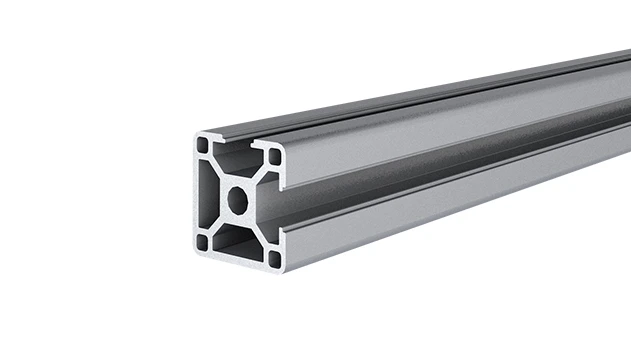
3030 is a 3.00 x 3.00CM fractional 30 series square extrusion T-slot profile with two side open T-slots, each side with 3.00cm face, 2 side with open slot, 2 side with closed face. The profile has align-a-grooves to assist in aligning connecting profiles.
Introduction: The Backbone of Modern Packaging Machinery
In the fast-paced world of manufacturing, packaging machinery stands as a silent workhorse, ensuring products are sealed, sorted, and shipped with precision and speed. From food and beverages to electronics and pharmaceuticals, these machines handle a staggering variety of items daily, demanding reliability, flexibility, and efficiency. Yet, behind every smooth operation lies a critical decision: the choice of materials that form the machine's structure. Enter the 3030b EU Standard Aluminum Profile—a material that has quietly revolutionized how packaging machinery is designed, built, and maintained.
Gone are the days when heavy steel frames dominated factory floors, limiting adaptability and driving up costs. Today's packaging lines require modular solutions that can be reconfigured as production needs change, all while withstanding the rigors of continuous use. The 3030b profile, with its unique blend of strength, lightweight design, and modularity, has emerged as the go-to choice for engineers and manufacturers alike. In this article, we'll explore why this specific aluminum extrusion profile has become indispensable in packaging machinery, diving into its structural applications, key benefits, and how it integrates seamlessly with aluminum profile accessories to create robust, flexible systems.
Understanding 3030b EU Standard Aluminum Profile: More Than Just a Metal Bar
At first glance, the 3030b might look like any other aluminum extrusion, but its design is the result of meticulous engineering tailored to meet the demands of industrial applications—especially packaging machinery. Let's start with the basics: the "3030" in its name refers to its cross-sectional dimensions, measuring 30mm by 30mm, a size that strikes the perfect balance between structural stability and space efficiency. The "b" denotes a specific variant within the EU standard series, characterized by its T-slot configuration, which features grooves along its length to accommodate connectors, fasteners, and accessories without the need for welding or drilling.
Manufactured through an aluminum extrusion process, the 3030b profile is shaped by forcing heated aluminum alloy through a die, creating a uniform cross-section with consistent mechanical properties. Most commonly made from 6063-T5 aluminum alloy—a material prized for its excellent strength-to-weight ratio and corrosion resistance—the profile undergoes heat treatment to enhance its hardness and durability. The result is a lightweight yet robust structure that can support heavy loads, resist wear from daily use, and stand up to the occasional bumps and vibrations common in factory environments.
| Parameter | Details |
|---|---|
| Cross-Section Dimensions | 30mm x 30mm |
| Material | 6063-T5 Aluminum Alloy |
| Tensile Strength | ≥215 MPa |
| Weight per Meter | Approx. 1.4 kg/m |
| Surface Treatment | Anodized (natural or colored options) |
| T-Slot Configuration | 4 slots (one per side), 8mm width |
What truly sets the 3030b apart, however, is its compatibility with a vast array of aluminum profile accessories. From 90° aluminum profile connectors that join sections at right angles to end caps that protect edges and reduce noise, these accessories transform the profile from a standalone component into a building block for complex structures. This modularity is a game-changer for packaging machinery, where customization is often the key to meeting unique production requirements.

Key Benefits: Why 3030b Stands Out in Packaging Machinery
To appreciate the 3030b's role in packaging machinery, we must first understand its core advantages over traditional materials like steel or lower-grade aluminum. Let's break down the benefits that make it a standout choice:
Lightweight Without Sacrificing Strength
Packaging machinery often requires moving parts or adjustable components—think conveyor systems that shift between product lines or workbenches that need repositioning. Steel frames, while strong, add significant weight, making manual adjustments labor-intensive and increasing energy costs for motorized systems. The 3030b profile, by contrast, weighs roughly one-third of steel while offering comparable strength for most industrial loads. This reduction in weight not only eases handling during installation and reconfiguration but also reduces stress on motors and drivetrains, extending the machinery's lifespan.
Corrosion Resistance for Clean, Long-Lasting Operation
Many packaging environments are harsh: food packaging lines may involve moisture or cleaning chemicals, while pharmaceutical settings demand strict hygiene standards. Steel, prone to rust, requires frequent painting or coating to prevent degradation, adding maintenance costs. The 3030b profile, with its anodized surface treatment, forms a protective oxide layer that resists corrosion, ensuring the frame remains intact even in damp or chemical-exposed areas. This not only cuts down on upkeep but also maintains a clean, professional appearance—critical for industries with strict sanitation requirements.
Modularity: Adapt to Change in Minutes, Not Days
In today's manufacturing landscape, flexibility is non-negotiable. A packaging line that produces bottled water this month might need to switch to juice cartons next month, requiring adjustments to conveyors, guides, or sorting mechanisms. The 3030b's T-slot design allows for quick modifications using aluminum profile accessories like brackets, hinges, and sliding nuts. Unlike welded steel, which requires cutting and re-welding to alter, the 3030b system lets operators add or remove components in minutes using basic hand tools. This agility reduces downtime and allows manufacturers to respond swiftly to market demands.
Precision Engineering for Seamless Integration
Packaging machinery relies on tight tolerances to ensure products are aligned, filled, and sealed correctly. The extrusion process used to make the 3030b profile guarantees consistent dimensions across every meter, eliminating the "wobble" or misalignment that can plague poorly manufactured materials. This precision ensures that components like roller tracks or guide rails fit together seamlessly, reducing jams and improving product quality. When paired with high-quality aluminum profile accessories—such as 90° connectors or end caps—the system becomes a model of reliability.
Structural Applications in Packaging Machinery: Where 3030b Shines
Now that we've explored the "why" behind the 3030b profile, let's turn to the "how"—its practical applications in packaging machinery. From machine frames to conveyor systems, this profile forms the backbone of some of the most critical components on the factory floor.
Machine Frames: The Foundation of Stability
Every packaging machine, whether a filling station, capping unit, or labeling machine, needs a stable base to house its motors, sensors, and mechanical parts. The 3030b profile excels here, providing a rigid framework that minimizes vibration—essential for precision tasks like applying labels or filling containers to exact volumes. Engineers often combine multiple 3030b sections with corner brackets and gusset plates to create custom frames tailored to the machine's footprint. For example, a small bottle-labeling machine might use a compact 3030b frame measuring 1.2m x 0.8m, while a large palletizing system could feature an extended frame with reinforced joints to support heavier loads.
Workbenches: Ergonomic, Durable, and Adaptable
Beyond the machinery itself, packaging lines rely on workbenches where operators inspect products, assemble components, or load materials. The 3030b profile is ideal for building these workstations, offering a perfect blend of height adjustability and durability. By combining 3030b legs with aluminum honeycomb panels or plywood tops, manufacturers create workbenches that resist scratches, stains, and impacts. The T-slot design allows for easy attachment of tool holders, bins, or monitor arms, keeping tools within reach and reducing clutter. For example, a quality control workbench might include a 3030b frame with integrated LED lighting and a shelf for inspection tools, all adjustable to suit operators of different heights.
Roller Tracks: Smooth Material Flow for Efficient Conveying
Conveyor systems are the arteries of packaging lines, moving products from one station to the next. Roller tracks, a key component of these systems, require a stable, low-friction base to ensure smooth movement. The 3030b profile, with its precise T-slot grooves, serves as an excellent foundation for mounting roller track placon mounts and connectors. Whether using steel wheel roller tracks for heavy cartons or aluminum roller tracks for lightweight packages, the 3030b frame provides a level, secure surface that prevents misalignment. For instance, a snack packaging line might use 3030b-supported roller tracks to transport bags from the filling machine to the sealing station, with adjustable guides to accommodate different bag sizes—all made possible by the profile's modular T-slot design.
Material Racks and Trolleys: Organized Storage, Easy Access
Packaging lines generate a constant need for storage—raw materials like packaging film, labels, and cartons must be kept close at hand to avoid delays. The 3030b profile shines in building material racks and turnover trolleys, offering a lightweight yet sturdy solution. A typical material rack might feature multiple shelves constructed from 3030b sections and aluminum brackets, with adjustable heights to fit various box sizes. Trolleys built with 3030b frames and caster wheels (another aluminum profile accessory) allow operators to transport heavy loads across the factory floor with minimal effort. For example, a pharmaceutical packaging line could use a 3030b trolley with lockable casters to safely move sterile packaging materials between cleanrooms, ensuring compliance with hygiene standards.
The Role of Aluminum Profile Accessories: Completing the System
A profile is only as good as the accessories that bring it to life, and the 3030b is no exception. Aluminum profile accessories are the unsung heroes that transform basic extrusion into functional systems, enabling everything from simple connections to complex adjustments. Let's explore some key accessories and how they enhance the 3030b's applications in packaging machinery:
Connectors and Joints: The Glue That Holds It All Together
No frame or structure can stand without secure joints, and 3030b systems rely on a variety of connectors to ensure stability. 90° aluminum profile connectors, for instance, join two 3030b sections at right angles, ideal for building frame corners. For more complex angles, 135° or 45° connectors allow for custom geometries, such as sloped conveyor sides to prevent product spillage. Internal rotatary aluminum joints add flexibility, enabling components like adjustable guides to pivot as needed. These connectors, often made from high-strength aluminum or steel, lock into the T-slots with bolts or sliding nuts, creating a tight, wobble-free connection that withstands vibration.
End Caps and Covers: Protecting Profiles and People
Sharp edges on aluminum profiles pose a safety risk, especially in busy packaging environments where operators move quickly. End caps—small plastic or aluminum pieces that snap onto the ends of 3030b sections—eliminate this hazard, creating smooth, rounded edges. Additionally, T-slot rubber seal covers fill the grooves in unused slots, preventing dust, debris, or liquids from accumulating and making cleaning easier. In food packaging lines, for example, these covers are critical for maintaining sanitary conditions, ensuring no crumbs or spills get trapped in the profile's T-slots.
Casters and Leveling Feet: Mobility and Stability in One
Many packaging systems need both mobility and stability: think of a workbench that must be moved for cleaning but remain steady during operation. Casters, mounted to 3030b frames via castor installation bases, provide the mobility, with locking mechanisms to keep the unit in place. Leveling feet, on the other hand, allow for precise height adjustment on uneven floors, ensuring the machinery remains level and stable. For instance, a mobile labeling station might use 3030b legs with swivel casters for easy movement and leveling feet to stabilize the unit once in position, preventing wobbling during label application.
Case Study: How a Snack Manufacturer Boosted Efficiency with 3030b
To put these applications into context, let's look at a real-world example: a mid-sized snack manufacturer struggling with outdated packaging machinery. Their existing line used steel frames for conveyors and workbenches, which were heavy, prone to rust, and impossible to reconfigure without hiring a welder. Production delays were common when switching between product sizes, and maintenance crews spent hours each week painting rust spots and tightening loose bolts.
The solution? A complete overhaul using 3030b EU Standard Aluminum Profiles andaluminum profile accessories. The manufacturer replaced steel conveyor frames with 3030b-supported roller tracks, allowing quick adjustments to guide rails using T-slot connectors. Workbenches were rebuilt with 3030b legs and adjustable shelves, reducing operator fatigue with ergonomic height settings. Even material racks were upgraded, using 3030b sections and casters for easy material transport.
The results were striking: reconfiguration time between product runs dropped from 8 hours to just 45 minutes, maintenance costs fell by 30% due to reduced rust and wear, and operator satisfaction improved thanks to lighter, more comfortable workstations. "We used to dread product changeovers," said the plant manager. "Now, with the 3030b system, we can adjust the line in under an hour, and the frames still look brand-new after a year of use."
Conclusion: The Future of Packaging Machinery is Modular and Lightweight
As packaging machinery continues to evolve, driven by demand for faster production, greater flexibility, and stricter hygiene standards, the materials that build these systems will only grow more important. The 3030b EU Standard Aluminum Profile, with its unmatched combination of strength, lightweight design, and modularity, has proven itself as more than just a trend—it's a foundational material that empowers manufacturers to build smarter, more efficient lines.
Whether used in machine frames, workbenches, roller tracks, or material racks, the 3030b profile, paired with aluminum profile accessories, offers a level of adaptability that steel or lower-grade aluminum simply can't match. It reduces costs, cuts downtime, and ensures machinery can keep pace with changing production needs—all while maintaining the durability and precision required for modern packaging.
For manufacturers looking to stay ahead in a competitive market, the message is clear: invest in materials that grow with your business. The 3030b EU Standard Aluminum Profile isn't just a component; it's a strategic choice that unlocks new levels of efficiency and innovation. As the snack manufacturer discovered, sometimes the strongest solutions come in lightweight packages.