- Company Articles
- Products and Technology
- Product knowledge
- 3030b EU Standard Aluminum Profile in Renewable Energy Manufacturing: Solar Panel Frames

3030b EU Standard Aluminum Profile in Renewable Energy Manufacturing: Solar Panel Frames
Related Product
3030B EU Standard Aluminum Profile
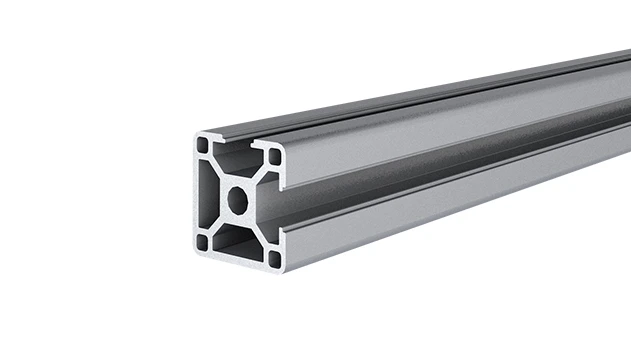
3030 is a 3.00 x 3.00CM fractional 30 series square extrusion T-slot profile with two side open T-slots, each side with 3.00cm face, 2 side with open slot, 2 side with closed face. The profile has align-a-grooves to assist in aligning connecting profiles.
In the global shift toward sustainable energy, solar power stands as a cornerstone of progress. Behind every efficient, durable solar panel lies a network of components working in harmony—none more critical than the frame that holds it all together. Today, we're diving into how the 3030b EU Standard Aluminum Profile is revolutionizing solar panel frame manufacturing, blending strength, sustainability, and precision to meet the demands of a greener future.
The Renewable Energy Boom and the Need for Reliable Solar Components
The past decade has seen an unprecedented surge in renewable energy adoption, with solar power leading the charge. According to the International Energy Agency (IEA), solar photovoltaic (PV) capacity is projected to grow by over 1,000 GW by 2030—enough to power more than 1.3 billion homes. This rapid expansion isn't just about installing more panels; it's about building systems that can withstand decades of exposure to harsh weather, maintain efficiency, and align with circular economy principles.
Solar panels themselves are marvels of engineering, but their performance hinges on the structural integrity of their frames. A solar frame does more than just hold the panel in place: it protects delicate photovoltaic cells from wind, hail, and temperature fluctuations, ensures proper alignment for maximum sunlight absorption, and simplifies installation. In short, the frame is the unsung hero that turns a fragile collection of cells into a robust energy generator.
Traditionally, solar frames were crafted from materials like steel or wood, but these options came with trade-offs. Steel, while strong, is heavy and prone to corrosion, especially in coastal or humid climates. Wood, though renewable, lacks the durability needed for 25+ year lifespans. Enter aluminum—a material that has quickly become the gold standard for solar frame manufacturing, thanks to its unique blend of properties. And among aluminum profiles, the 3030b EU Standard stands out as a versatile, reliable choice.
Why Aluminum? The Case for Aluminum Extrusion Profiles in Solar Frames
Aluminum's rise in solar manufacturing isn't accidental. Its natural advantages make it uniquely suited for the job. First, it's lightweight—about one-third the density of steel—reducing transportation costs and simplifying on-site installation. A lighter frame also means less stress on rooftops or mounting structures, expanding the range of viable installation locations.
Corrosion resistance is another key benefit. Unlike steel, aluminum forms a protective oxide layer when exposed to air, preventing rust and degradation over time. This is critical for solar panels, which spend their lives outdoors, braving rain, snow, and UV radiation. For coastal areas, where salt spray accelerates corrosion, aluminum's durability becomes even more valuable.
But perhaps most importantly, aluminum is inherently sustainable. It's 100% recyclable, with recycled aluminum requiring just 5% of the energy needed to produce new aluminum from bauxite ore. This aligns perfectly with the renewable energy sector's mission to minimize carbon footprints. When a solar panel reaches the end of its life, its aluminum frame can be melted down and reformed into new products, closing the loop on resource use.
Not all aluminum profiles are created equal, though. The 3030b EU Standard Aluminum Profile, in particular, has emerged as a favorite among manufacturers. Let's break down what makes this profile stand out.

Understanding the 3030b EU Standard Aluminum Profile
The "3030b" designation refers to the profile's dimensions: 30mm in width and 30mm in height, with a "b" variant indicating specific tolerances and design features defined by EU standards. These standards, set by organizations like the European Committee for Standardization (CEN), ensure consistency in quality, safety, and performance across manufacturers. For solar frame producers, compliance with EU standards means access to global markets, as the 3030b profile meets stringent criteria for load-bearing capacity, material purity, and dimensional accuracy.
At its core, the 3030b profile is an aluminum extrusion profile—a product of the extrusion process, where heated aluminum billets are forced through a die to create complex cross-sectional shapes. This process allows for precise control over the profile's geometry, including T-slots, grooves, and reinforcement ribs that enhance structural strength. The 3030b's design includes standardized T-slots along its length, which serve as connection points for accessories like brackets, fasteners, and panels. This modularity is a game-changer for manufacturers, as it simplifies customization and speeds up assembly.
Material grade is another critical factor. Most 3030b profiles are made from 6063-T5 aluminum alloy, a heat-treated grade known for its excellent extrudability, corrosion resistance, and moderate strength. This alloy strikes the perfect balance: it's strong enough to support the weight of solar panels (typically 15–20 kg per square meter) while remaining lightweight enough for easy handling. The T5 tempering process—artificial aging at moderate temperatures—further enhances its mechanical properties, ensuring the profile retains its shape and strength even under thermal stress.
From Raw Material to Finished Profile: The Aluminum Extrusion Process
To truly appreciate the 3030b profile, it helps to understand how it's made. The aluminum extrusion process is a marvel of industrial engineering, transforming raw aluminum into highly precise, functional components. Here's a step-by-step look at how 3030b profiles come to life:
1. Raw Material Preparation: The process starts with aluminum billets—cylindrical logs of 6063 alloy, typically 6–12 meters long. These billets are inspected for purity, as even small impurities can weaken the final product. They're then preheated to around 480–520°C (900–970°F), a temperature that softens the aluminum without melting it, making it malleable for extrusion.
2. Extrusion: The heated billet is loaded into a hydraulic press, where a ram pushes it through a steel die. The die is custom-engineered with a cross-section matching the 3030b profile, including T-slots and ribs. As the billet passes through the die, it takes on the die's shape, emerging as a long, continuous profile. This process is surprisingly fast: modern presses can extrude profiles at speeds of 1–10 meters per minute, depending on the profile's complexity.
3. Cooling and Stretching: After extrusion, the hot profile is cooled rapidly using water sprays or air fans to lock in its shape. Once cooled, it's stretched slightly (typically 1–3%) to correct any warping and ensure straightness—a critical step for solar frames, which require precise alignment. The profile is then cut to standard lengths (often 3–6 meters) using saws or shears.
4. Heat Treatment (T5 Tempering): The cut profiles are placed in an aging oven, where they're heated to 175–185°C (347–365°F) for 6–8 hours. This artificial aging process causes alloying elements (like magnesium and silicon) to form fine precipitates within the aluminum matrix, strengthening the material without compromising ductility.
5. Surface Finishing: Finally, the profiles undergo surface treatment to enhance corrosion resistance and appearance. Common finishes include anodizing (creating a hard, protective oxide layer), powder coating (applying a colored polymer layer), or chromate conversion coating (for added chemical resistance). For solar frames, anodizing is particularly popular, as it creates a matte, durable finish that withstands UV radiation and salt spray.
The result? A 3030b profile that's not just a piece of metal, but a precision-engineered component ready to take on the demands of solar panel manufacturing.
Aluminum Profile Accessories: The Building Blocks of Modular Solar Frames
A profile is only as useful as the accessories that connect it. Aluminum profile accessories are the unsung heroes of solar frame assembly, turning basic 3030b profiles into customized, functional structures. These accessories are designed to work seamlessly with the T-slots in the 3030b profile, allowing for tool-free adjustments and quick reconfiguration. Let's explore some key accessories and their roles:
Essential Accessories for 3030b Solar Frames
- Corner Brackets: These L-shaped brackets connect two 3030b profiles at 90-degree angles, forming the corners of the frame. Made from aluminum or stainless steel, they're secured using T-slot nuts and bolts, ensuring a tight, wobble-free joint.
- T-Slot Nuts and Bolts: The backbone of T-slot connections, these nuts slide into the profile's T-slots and lock in place when tightened. They're available in various sizes (M5, M6, M8) to accommodate different load requirements.
- End Caps: Plastic or aluminum caps that fit over the ends of 3030b profiles, preventing water, dust, and debris from entering the T-slots. They also add a clean, finished look to the frame.
- Panel Mounts: Specialized brackets designed to secure solar panels to the frame. They often include rubber gaskets to dampen vibration and prevent scratching the panel's surface.
- Adjustable Feet: Threaded feet that attach to the bottom of the frame, allowing for height adjustment on uneven surfaces. Critical for ensuring the frame is level, which maximizes sunlight absorption.
What makes these accessories so valuable is their standardization. Because the 3030b profile adheres to EU standards, accessories from different manufacturers are interchangeable. This reduces supply chain risks and gives manufacturers the flexibility to source components from multiple suppliers, keeping costs competitive.
| Accessory Type | Material | Key Function | Load Capacity |
|---|---|---|---|
| Corner Bracket (90°) | Aluminum Alloy | Connect profiles at right angles | Up to 500 N (per bracket) |
| T-Slot Nut (M6) | Steel (Zinc-Plated) | Secure brackets and panels to T-slots | Up to 300 N (per nut) |
| End Cap | PVC or Nylon | Seal profile ends; prevent debris ingress | N/A (non-structural) |
| Adjustable Foot (M10) | Aluminum with Rubber Base | Level frame on uneven surfaces | Up to 1,000 N (per foot) |
By combining 3030b profiles with these accessories, manufacturers can build frames tailored to specific panel sizes (from small residential panels to large commercial ones) and installation environments (rooftop, ground-mounted, or even floating solar farms).
Lean System Integration: Streamlining Solar Frame Production
In today's fast-paced manufacturing landscape, efficiency is everything. Lean system principles—focused on minimizing waste, optimizing workflows, and maximizing value—have become a cornerstone of successful production lines. The 3030b EU Standard Aluminum Profile aligns perfectly with lean manufacturing, thanks to its modularity, standardization, and compatibility with lean tools like workbenches and assembly stations.
Lean systems thrive on repeatability and flexibility, and the 3030b profile delivers both. For example, manufacturers can pre-configure workbenches using 3030b profiles and accessories, creating dedicated stations for cutting, drilling, and assembling frames. These workbenches are easily reconfigurable: if a new panel size requires a longer frame, operators can quickly add or remove profiles without redesigning the entire station. This adaptability reduces downtime and allows for rapid response to changing customer orders.
Another lean benefit is reduced inventory. Because 3030b profiles and accessories are standardized, manufacturers can stock a small number of components that work across multiple frame designs. Instead of keeping hundreds of custom parts, they can rely on a few core profiles and accessories to meet diverse needs—cutting storage costs and minimizing waste from obsolete inventory.
Quality control is also simplified with 3030b profiles. EU standards ensure consistent dimensions, so every profile fits with every accessory, reducing errors during assembly. This consistency translates to fewer reworks, lower scrap rates, and higher overall productivity—all hallmarks of a lean operation.
One solar manufacturer in Germany, for instance, reported a 25% reduction in assembly time after switching to 3030b profiles. By using modular workbenches and standardized accessories, they eliminated the need for custom jigs and fixtures, allowing operators to assemble frames in half the time. "The 3030b profile turned our production line from a rigid system into a flexible, responsive one," said their production manager. "We can now switch between residential and commercial frame designs in under an hour, compared to a full day before."
Real-World Performance: 3030b Frames in Action
Numbers and processes tell part of the story, but real-world performance is the ultimate test. Let's look at how 3030b EU Standard Aluminum Profiles hold up in different solar applications:
Residential Rooftop Systems
Residential solar installations demand lightweight, easy-to-install frames that don't overload rooftops. A typical residential panel (1.6m x 1m) paired with a 3030b frame weighs just 22–25 kg, making it manageable for small installation crews. In a case study from Spain, a installer noted that 3030b frames reduced rooftop load by 15% compared to steel frames, allowing them to install panels on older roofs that previously couldn't support the weight. The frames also withstood 120 km/h winds during a severe storm, with no signs of deformation or corrosion after three years.
Commercial Solar Farms
Commercial solar farms cover vast areas, requiring frames that can scale efficiently and withstand harsh conditions. A 50 MW solar farm in France, built using 3030b frames, features over 100,000 panels arranged in long rows. The modular design of the frames allowed the project to be completed in just 12 weeks—three weeks ahead of schedule. Maintenance crews also appreciate the frames' durability: after five years in the field, inspections showed minimal wear, even in regions with high humidity and frequent rainfall.
Coastal and Marine Environments
Corrosion resistance is critical in coastal areas, where salt spray can degrade metal frames. A floating solar farm in the Netherlands, installed in the North Sea, uses anodized 3030b frames. After two years of exposure to saltwater and high winds, the frames showed no signs of rust or pitting, outperforming steel frames that typically require replacement every 10 years. The aluminum frames are projected to last 25+ years, matching the lifespan of the solar panels themselves.
Sustainability and the Circular Economy: Closing the Loop
Solar power is often hailed as a clean energy source, but its environmental impact extends beyond electricity generation. The materials used in solar components—including frames—play a crucial role in the industry's sustainability credentials. Here, the 3030b EU Standard Aluminum Profile shines, thanks to aluminum's unmatched recyclability.
Aluminum is infinitely recyclable, meaning it can be melted down and reused without losing quality. Recycling one ton of aluminum saves 95% of the energy needed to produce new aluminum from bauxite—equivalent to taking 16 cars off the road for a year. For solar manufacturers, this circularity is a selling point: by using 3030b profiles, they can market their frames as "cradle-to-cradle" products, appealing to eco-conscious customers and meeting strict sustainability regulations.
End-of-life management is also simplified with aluminum frames. When a solar panel reaches the end of its life (after 25–30 years), the frame can be easily separated from other components (glass, silicon cells) and sent to a recycling facility. Unlike steel, which requires energy-intensive cleaning to remove coatings, aluminum frames are often recyclable as-is, further reducing their environmental footprint.
Looking ahead, the 3030b profile is poised to evolve with new EU sustainability standards. Manufacturers are experimenting with recycled aluminum content (currently up to 70% in some profiles) and exploring bio-based surface coatings to further reduce environmental impact. These innovations ensure that the 3030b profile will remain at the forefront of sustainable solar manufacturing for years to come.
The Future of Solar Frames: Innovation in 3030b Design
As solar technology advances, so too will the demand for smarter, more efficient frames. The 3030b EU Standard Aluminum Profile is already adapting to these trends, with manufacturers exploring new designs and features to meet emerging needs:
Integrated Cable Management: Future 3030b profiles may include built-in channels for wiring, eliminating the need for external cable ties and reducing installation time. This feature would be especially valuable for bifacial solar panels, which require wiring on both sides.
Thermal Expansion Control: Extreme temperature fluctuations can cause frames to expand and contract, potentially damaging panels. New 3030b designs may incorporate expansion joints or flexible accessories to accommodate thermal movement, ensuring long-term stability.
Lightweight Reinforcements: By optimizing rib patterns and wall thicknesses, engineers are developing 3030b profiles that are 10–15% lighter while maintaining the same strength. This reduces material use and transportation costs, further lowering the carbon footprint.
These innovations, paired with the profile's existing strengths, ensure that the 3030b EU Standard Aluminum Profile will remain a cornerstone of solar frame manufacturing as the industry grows.
Conclusion: Building a Greener Future, One Profile at a Time
The 3030b EU Standard Aluminum Profile is more than just a piece of metal—it's a symbol of the renewable energy industry's commitment to quality, sustainability, and innovation. By combining the strength of aluminum, the precision of extrusion, and the flexibility of modular accessories, it has become the backbone of modern solar panel frames.
As solar power continues to expand, the demand for reliable, efficient frames will only grow. The 3030b profile, with its EU-standardized quality, lean manufacturing compatibility, and circular economy credentials, is ready to meet that demand. Whether on a rooftop in Berlin, a solar farm in Arizona, or a floating installation in the Netherlands, the 3030b profile is helping turn sunlight into clean energy—one frame at a time.
In the end, the story of the 3030b profile is the story of solar energy itself: a blend of science, sustainability, and practicality, working together to build a better future for our planet.