- Company Articles
- Products and Technology
- Product knowledge
- 3030b EU Standard Aluminum Profile in Telecommunications Equipment Racks

3030b EU Standard Aluminum Profile in Telecommunications Equipment Racks
Related Product
3030B EU Standard Aluminum Profile
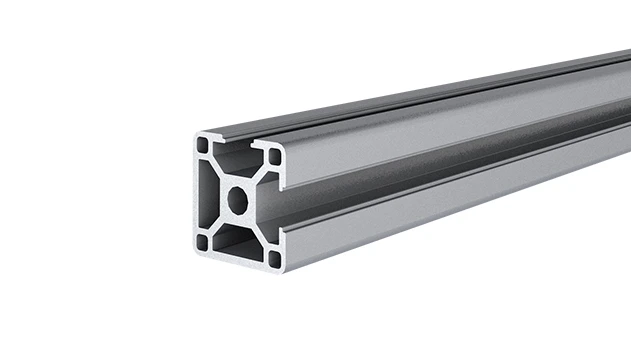
3030 is a 3.00 x 3.00CM fractional 30 series square extrusion T-slot profile with two side open T-slots, each side with 3.00cm face, 2 side with open slot, 2 side with closed face. The profile has align-a-grooves to assist in aligning connecting profiles.
The Backbone of Modern Telecom: Why Equipment Racks Matter
Walk into any telecom data center or network operations hub, and you'll be met with a symphony of soft hums and blinking lights. Rows of tall, sturdy racks stand like silent sentinels, each crammed with routers, servers, switches, and fiber optic panels—the unsung heroes that keep our calls connected, our videos streaming, and our businesses online. These racks aren't just metal frames; they're the backbone of our digital world. They must support hundreds of pounds of sensitive equipment, withstand constant temperature fluctuations, and adapt quickly to new technologies. In this high-stakes environment, the choice of materials for these racks isn't just a detail—it's a decision that impacts efficiency, reliability, and long-term cost.
For decades, steel dominated the telecom rack market. It's strong, affordable, and familiar. But as telecom networks grow denser and more dynamic, steel's limitations have become harder to ignore: it's heavy, making reconfiguration a two-person job; prone to rust in humid data centers; and rigid, requiring welding or drilling to modify. Enter the 3030b EU Standard Aluminum Profile —a lightweight, versatile alternative that's quietly transforming how telecom engineers design and maintain their equipment racks. Let's dive into why this unassuming aluminum extrusion has become a favorite in telecom circles, and how it integrates with essential components like aluminum profile accessories , ESD workstations , and lean systems to meet the industry's evolving needs.
What Is 3030b EU Standard Aluminum Profile?
At first glance, the 3030b EU Standard Aluminum Profile might look like a simple rectangular tube—but there's more to it than meets the eye. Let's break down its specs and what makes it "EU Standard."
Dimensions and Design
The "3030" in its name refers to its cross-section: 30mm by 30mm (about 1.18 inches square). This compact size strikes a sweet spot for telecom racks, offering enough structural rigidity to support heavy equipment without wasting valuable space. The "b" denotes a specific variant within the 3030 series, typically featuring thicker walls (1.5mm–2mm) than lighter-duty 3030 profiles, balancing strength and weight. Unlike solid steel bars, aluminum profiles are hollow, reducing weight while maintaining structural integrity—a key advantage in tight data center aisles where every inch (and pound) counts.
EU Standards: More Than a Stamp of Approval
The "EU Standard" label isn't just marketing. It means the 3030b profile meets strict European union guidelines for material quality, dimensional accuracy, and safety. EU standards (EN 755-9 for aluminum extrusions, for example) ensure consistent wall thickness, straightness, and tolerance levels across batches. For telecom companies operating across borders, this consistency is critical—imagine installing racks in Paris, Berlin, and Madrid and needing parts that fit perfectly, no matter where they're sourced. EU-compliant profiles also undergo rigorous testing for corrosion resistance, thermal conductivity, and mechanical strength, ensuring they hold up in the harsh conditions of telecom facilities.

Why Aluminum? The Material Advantage in Telecom
Aluminum has long been prized in aerospace and automotive industries for its strength-to-weight ratio, but its benefits are equally compelling in telecom. Let's unpack why it's becoming the go-to material for modern equipment racks.
Lightweight, Yet Surprisingly Strong
Aluminum is about one-third the weight of steel. A 6-foot 3030b aluminum profile weighs roughly 1.2kg per meter, compared to 3.5kg for a steel profile of the same dimensions. This might not sound like much, but multiply it by hundreds of racks in a data center, and the difference is game-changing. Technicians can reposition a 3030b-based rack alone, not with a forklift. Shipping costs drop, and installation time is cut in half—critical when rolling out a new 5G hub or expanding a data center.
Don't let the weight fool you: 3030b aluminum profiles are surprisingly strong. Thanks to their hollow, ribbed design (engineered via extrusion), they can support static loads of up to 250kg per meter—more than enough for most telecom equipment. Telecom engineers often pair them with aluminum profile accessories like reinforced brackets or corner connectors to boost load capacity for heavier gear, such as battery backups or large routers.
Corrosion Resistance: A Lifesaver in Humid Environments
Data centers are hotbeds of humidity. Cooling systems work overtime to keep equipment at 18–21°C, but condensation is inevitable. Steel racks, even when painted, eventually rust at the joints, weakening their structure and creating flaky debris that can damage sensitive electronics. Aluminum, by contrast, forms a natural oxide layer when exposed to air—a thin, invisible shield that prevents further corrosion. In coastal areas, where salt air accelerates rust, aluminum racks last 2–3 times longer than steel equivalents, reducing replacement costs and downtime.
Thermal Conductivity: Keeping Equipment Cool
Heat is the enemy of electronics. A router overheating by just 10°C can reduce its lifespan by 50%. Aluminum's high thermal conductivity (about 237 W/m·K, compared to steel's 45 W/m·K) helps dissipate heat away from equipment. When paired with perforated panels (another aluminum accessory), 3030b racks act like passive cooling systems, reducing reliance on energy-hungry fans. In a industry where energy costs account for 30% of data center expenses, this is no small win.
The 3030b Difference: Key Features for Telecom Flexibility
Not all aluminum profiles are created equal. The 3030b EU Standard stands out for features tailored to telecom's unique demands—most notably, its T-slot design and compatibility with a universe of accessories.
T-Slot Design: Modularity at Its Finest
Look closely at a 3030b profile, and you'll notice narrow, parallel slots running the length of each side. These T-slots are the secret to its flexibility. Instead of welding or drilling holes to attach shelves, cable management arms, or brackets, you simply slide a T-nut into the slot and tighten a screw. It's quick, clean, and reversible. Need to add a new shelf for a 5G router? Loosen the screws, adjust the height, and retighten—no power tools required. This modularity is a lifesaver in telecom, where equipment is constantly updated. A 3030b rack installed today can adapt to tomorrow's 6G hardware with just a few new aluminum profile accessories .
Precision Engineering: Consistency Across the Board
EU standards ensure that every 3030b profile is dimensionally accurate to within ±0.1mm. This precision matters when building large racks or integrating components from different suppliers. A 90° connector from one brand will fit a 3030b profile from another, eliminating the "will this part work?" headaches that plague steel rack projects. Telecom companies operating across Europe (or globally) can source profiles locally while maintaining consistency in their designs—a huge advantage for standardized operations.
Sustainability: Aligning with Green Telecom Goals
Telecom giants like Verizon and BT have pledged to reach net-zero emissions by 2030. Aluminum's recyclability makes 3030b profiles a sustainable choice: 75% of all aluminum ever produced is still in use today, and recycling it requires just 5% of the energy needed to mine new ore. When a 3030b rack reaches the end of its life, it can be melted down and reused, reducing landfill waste. Steel, while recyclable, is often contaminated with coatings or rust, making it harder to repurpose.
Beyond the Profile: Aluminum Profile Accessories That Make It Work
A 3030b profile is only as good as the accessories that bring it to life. Telecom racks rely on a ecosystem of connectors, brackets, and panels to become functional workhorses. Let's explore the most essential aluminum profile accessories and how they enhance rack performance.
Connectors: Building Strong, Flexible Joints
Joints are the weak points of any rack—unless you use the right connectors. 3030b profiles pair with a range of EU-standard connectors designed for quick assembly:
- 90° Aluminum Profile Connectors : These L-shaped brackets slide into T-slots to create sturdy right-angle joints, perfect for connecting vertical uprights to horizontal shelves. They're adjustable, so you can fine-tune angles for uneven floors.
- Three-Way Connectors : Ideal for adding cross-braces or extra support beams, these connectors join three profiles at once, reinforcing racks against side-to-side movement (critical in earthquake-prone areas).
- End Caps : Simple but essential, these plastic or rubber caps snap onto profile ends, protecting technicians from sharp edges and preventing dust from collecting inside hollow profiles.
Cable Management: Taming the "Spaghetti Monster"
Telecom racks are infamous for cable clutter—dozens of Ethernet, power, and fiber optic cables snaking between devices. Unmanaged cables block airflow, slow troubleshooting, and increase fire risk. 3030b's T-slots make cable management a breeze with accessories like:
- Cable Trays : Slotted metal trays that attach to T-slots, routing cables neatly along the sides or back of the rack.
- Cable D-rings : Small, circular brackets that hold bundles of fiber optic cables, preventing kinks that degrade signal quality.
- Label Holders : Snap-on holders for cable labels, making it easy to trace a rogue Ethernet cable back to its switch.
Adjustable Shelves and Panels
Not all telecom equipment is the same size. A small modem might need a 6-inch shelf, while a server requires 18 inches. 3030b racks use adjustable shelf brackets that slide along T-slots, letting technicians set heights in 10mm increments. For fiber optic panels or patch bays, there are perforated aluminum panels that snap into T-slots, providing a secure, ventilated surface.
Protecting Sensitive Gear: 3030b and ESD Workstations
Telecom equipment is delicate. A single electrostatic discharge (ESD)—like the spark you get when touching a doorknob—can fry a router's circuit board or corrupt a server's memory. That's why telecom workstations and racks must comply with ESD standards (ANSI/ESD S20.20). Here's how 3030b aluminum profiles contribute to safer ESD workstations .
Conductive Pathways for Static Dissipation
Aluminum is a conductor, which means it can channel static electricity away from sensitive equipment. When properly grounded, a 3030b rack acts as a Faraday cage, dissipating static charges harmlessly into the earth. Technicians can enhance this by adding ESD-specific accessories:
- ESD-Safe End Caps : Made from conductive plastic, these caps prevent static buildup on profile ends.
- Grounding Straps : Braided copper straps that connect the rack to a grounding rod, ensuring even static dissipation.
- ESD Mats : Rubber mats with conductive layers that attach to T-slots, providing a safe surface for handling equipment during maintenance.
Compare this to steel racks, which often have non-conductive paint or coatings that trap static. With 3030b, there's no need to strip paint or drill grounding holes—just attach a strap to the T-slot and connect to ground. It's simpler, cheaper, and more reliable.
Lean Systems: 3030b's Role in Telecom Efficiency
Telecom networks are under constant pressure to do more with less. Lean system principles—minimizing waste, maximizing value—have become a cornerstone of modern telecom operations. 3030b aluminum profiles align perfectly with these goals, enabling "leaner" racks and workflows.
Reducing Waste: From Over-Engineering to Just-in-Time Design
Traditional steel racks are over-engineered for worst-case scenarios, resulting in excess material and weight. 3030b profiles let engineers design racks to exact specifications: use lighter profiles for small modems, beefier ones with reinforced brackets for servers. This "right-sizing" reduces material waste by up to 30%. Plus, since aluminum is infinitely recyclable, scrap from cutoffs can be melted down and reused, closing the loop on waste.
Maximizing Space: Denser Racks, More Capacity
Data center real estate is expensive—up to $1,000 per square foot in urban areas. 3030b's slim 30mm width lets engineers build narrower racks, squeezing more units into the same space. A typical steel rack is 600mm deep; a 3030b rack can be 450mm deep (without sacrificing strength), increasing aisle space or allowing an extra row of racks in the same footprint. For telecom companies racing to expand 5G coverage, this density is a competitive edge.
Speeding Up Changeovers: Adapt or Get Left Behind
Telecom technology evolves at breakneck speed. A rack designed for 4G equipment might be obsolete in 3 years. With steel racks, retrofitting for 5G often means cutting new holes or welding new brackets—a time-consuming, error-prone process. 3030b racks? Swap out a few brackets, add a new shelf, and you're done. A team can reconfigure 20 racks in a day, not a week, keeping networks ahead of demand.
Profile Comparison: How 3030b Stacks Up Against Other Sizes
Not all aluminum profiles are the same. Telecom engineers choose sizes based on load, space, and equipment type. Here's how 3030b compares to two common alternatives: 2020 EU (smaller) and 4040 EU (larger) profiles.
| Profile Type | Dimensions (mm) | Weight per Meter (kg) | Max Static Load (kg/m) | Best For | Common Accessories |
|---|---|---|---|---|---|
| 3030b EU Standard | 30x30 | 1.2 | 250 | Mid-sized routers, switches, fiber panels, ESD workstations | 90° connectors, 3030 end caps, cable trays |
| 2020 EU Standard | 20x20 | 0.8 | 150 | Light-duty gear (modems, small IoT hubs), cable management | 45° angle brackets, 2020 end caps, T-slot nuts |
| 4040 EU Standard | 40x40 | 2.0 | 400 | Heavy servers, battery backups, industrial equipment | Three-way connectors, 4040 end caps, reinforced shelf brackets |
For most telecom applications—think router racks, fiber distribution frames, or ESD workstations—3030b hits the sweet spot: not too big, not too small, just right.
Real-World Impact: A Telecom Case Study
Let's put this all into context with a real example. In 2023, a regional telecom provider in Germany faced a challenge: upgrade 50 data center racks to support new 5G core equipment while minimizing downtime. Their existing steel racks were 5 years old, rusting at the joints, and too heavy to reconfigure without shutting down entire aisles.
The solution? They replaced the steel racks with 3030b EU Standard Aluminum Profile racks, paired with aluminum profile accessories like adjustable shelves, cable trays, and ESD grounding straps. The results were striking:
- Installation Time Cut by 60% : A two-person team installed 5 racks per day, compared to 2 with steel.
- Weight Reduction of 40% : Racks were light enough to move with a hand truck, eliminating the need for forklifts.
- Corrosion-Free After 1 Year : No signs of rust, even in the humid data center environment.
- ESD Incidents Dropped to Zero : Grounded 3030b racks prevented static damage to sensitive 5G chips.
Most importantly, when the provider added new edge computing servers 6 months later, they reconfigured the racks in hours, not days—proving 3030b's long-term value.
Maintaining 3030b Racks: Simple Steps for Longevity
3030b aluminum racks are low-maintenance, but a little care goes a long way. Here's how to keep them performing for decades:
- Inspect Joints Quarterly : Tighten any loose screws on connectors—vibration from equipment can loosen them over time.
- Clean Profiles Annually : Wipe down profiles with a damp cloth and mild detergent to remove dust (which traps heat). Avoid abrasive cleaners that scratch the oxide layer.
- Check Grounding : For ESD workstations, test grounding straps monthly with a multimeter to ensure resistance below 30 ohms.
- replace Worn Accessories : End caps or cable trays that crack should be replaced promptly to prevent sharp edges or cable damage.
The Future of Telecom Racks: Why 3030b Is Here to Stay
As telecom networks grow more complex—with 5G, edge computing, and AI-driven traffic management—the demand for flexible, durable, and sustainable racks will only rise. 3030b EU Standard Aluminum Profiles check all these boxes. They're lightweight enough for quick reconfigurations, strong enough for heavy equipment, and green enough to align with net-zero goals. Paired with aluminum profile accessories, ESD workstation integration, and lean system principles, they're not just a material choice—they're a strategic investment in the future of connectivity.
So the next time you make a call, stream a movie, or video-chat with a colleague, spare a thought for the quiet 3030b racks holding it all together. In the fast-paced world of telecom, sometimes the most innovative solutions are the ones that simply… work—strong, smart, and ready for whatever comes next.