- Company Articles
- Products and Technology
- Solution
- 3030b EU Standard Aluminum Profile in Warehouse Automation: Conveyor Integration

3030b EU Standard Aluminum Profile in Warehouse Automation: Conveyor Integration
Related Product
3030B EU Standard Aluminum Profile
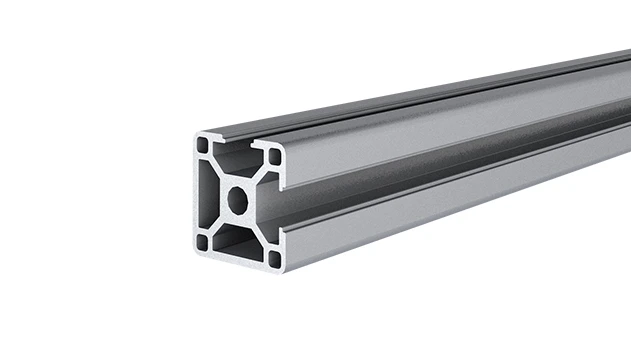
3030 is a 3.00 x 3.00CM fractional 30 series square extrusion T-slot profile with two side open T-slots, each side with 3.00cm face, 2 side with open slot, 2 side with closed face. The profile has align-a-grooves to assist in aligning connecting profiles.
In the fast-paced world of modern logistics, warehouse efficiency isn't just a goal—it's a necessity. As consumer demands shift, product lines expand, and supply chains grow more complex, warehouses are under constant pressure to move goods faster, reduce errors, and adapt to new workflows. At the heart of this transformation lies automation, and one of the most critical components of automated warehousing is the conveyor system. But here's the catch: traditional conveyor setups often feel like relics of a bygone era—heavy, rigid, and notoriously hard to modify. Enter the 3030b EU Standard Aluminum Profile, a game-changing solution that's redefining how warehouses design, build, and adapt their conveyor systems. In this article, we'll explore how this unassuming aluminum extrusion profile is becoming the backbone of flexible, efficient conveyor integration, and why it's quickly becoming a favorite among warehouse managers and automation engineers alike.
Understanding the 3030b EU Standard Aluminum Profile: More Than Just Metal
Before diving into conveyor integration, let's take a moment to get to know the star of the show: the 3030b EU Standard Aluminum Profile. At first glance, it might look like just another piece of industrial metal, but its design and properties make it uniquely suited for warehouse automation. Let's break it down.
What Makes It "3030b EU Standard"?
The "3030" in its name refers to its dimensions: 30mm in width and 30mm in height, creating a square cross-section that's both sturdy and versatile. The "b" denotes a specific variation within the EU standard series, typically characterized by its T-slot configuration—the grooves that run along its length, allowing for easy attachment of accessories without welding or drilling. EU standards ensure consistency in dimensions, material quality, and performance, meaning that no matter which supplier you source it from, the 3030b profile will fit seamlessly with other EU-standard components. This interoperability is a huge win for warehouses that need to mix and match parts from different vendors.
The Power of Aluminum Extrusion Profile
The 3030b isn't just any aluminum—it's an aluminum extrusion profile. Extrusion is a manufacturing process where aluminum is pushed through a die to create complex cross-sectional shapes, and it's this process that gives the profile its unique advantages. Extruded aluminum is lightweight (about 1/3 the weight of steel) but surprisingly strong, with a high strength-to-weight ratio that makes it ideal for supporting conveyor systems, roller tracks, and even heavy loads. It's also corrosion-resistant, thanks to aluminum's natural oxide layer, which means it holds up well in the dusty, sometimes humid environments of warehouses. Unlike steel, it won't rust, reducing maintenance costs over time. And perhaps most importantly for automation: extrusion allows for the precise, consistent creation of T-slots. These slots are the secret sauce—they let you attach brackets, connectors, roller tracks, and other accessories with simple fasteners, turning a static frame into a dynamic, reconfigurable system.
Conveyors in Modern Warehouses: The Backbone of Material Flow
To appreciate why the 3030b profile is so revolutionary, we first need to understand the role conveyors play in today's warehouses. Conveyors aren't just "moving belts"—they're the circulatory system of a facility, transporting everything from small electronic components to large pallets of goods. They reduce manual labor, minimize handling errors, and ensure a steady, predictable flow of materials between stations: from receiving and storage to picking, packing, and shipping. But traditional conveyor systems have long been a source of frustration. Many are built with steel frames, which are heavy and require welding or bolting to the floor. If your warehouse needs to reconfigure its layout—say, to accommodate a new product line or seasonal demand spike—you're looking at days (or even weeks) of downtime, not to mention the cost of cutting, welding, and repainting steel. This rigidity is a major barrier to agility, and in an era where warehouses need to pivot quickly, it's a problem that can't be ignored.

Integrating 3030b Aluminum Profile with Conveyor Systems: A Match Made in Efficiency
So, how does the 3030b EU Standard Aluminum Profile solve these problems? It starts by replacing traditional steel frames with lightweight, modular aluminum structures that are designed for flexibility. Let's walk through how this integration works, step by step.
Step 1: Building the Conveyor Frame—Lightweight, Strong, and Adaptable
The first step in any conveyor system is the frame—the skeleton that supports the rollers, belts, motors, and other components. With 3030b profiles, building this frame is a breeze. Instead of welding steel beams, you simply cut the aluminum extrusion profiles to length (most suppliers offer custom cutting services) and connect them using aluminum profile accessories like corner brackets, T-joints, or internal rotary aluminum joints. These joints slide into the T-slots and are secured with bolts, creating a rigid connection that's strong enough to support heavy conveyor loads but easy to disassemble if needed. For example, a simple roller conveyor frame might consist of two parallel 3030b profiles running the length of the conveyor, connected by cross-braces every few feet for stability. The lightweight nature of aluminum means that even large frames can be assembled by a small team, without the need for heavy lifting equipment. And if you later need to extend the conveyor by 10 feet? Just add another section of 3030b profile and a few more brackets—no welding required.
Step 2: Attaching Roller Track—Precision Without the Headache
Once the frame is up, the next step is installing the roller track—the part of the conveyor that actually moves the goods. Roller track comes in many forms, from steel wheels for heavy loads to plastic rollers for lighter items, and the 3030b profile is designed to work with all of them. Thanks to its T-slot design, attaching roller track is as simple as sliding a mounting bracket into the slot and tightening a screw. For example, roller track placon mounts (flat or high versions) are specifically designed to connect roller tracks to aluminum profiles. These mounts fit snugly into the T-slot, providing a secure base for the track. Some even come with adjustable angles, allowing you to tilt the conveyor slightly for gravity-fed systems. Compare this to steel frames, where attaching roller track often requires drilling holes in the steel (a time-consuming, error-prone process) or welding brackets (which permanently fixes the track in place). With 3030b, if you need to adjust the roller spacing or replace a damaged track section, you just loosen the bolts, make your changes, and retighten—done in minutes, not hours.
Step 3: Adding Motors and Drives—Flexible Power Integration
Motorized conveyors need power, and integrating motors and drives into the frame is another area where the 3030b profile shines. Motor mounts, gearbox brackets, and cable management accessories can all be attached to the T-slots, keeping wiring organized and protected. For example, aluminum profile accessories like cable carriers or conduit holders can be clipped into the slots, preventing wires from getting tangled in moving parts. This not only makes installation cleaner but also simplifies maintenance—if a motor needs to be replaced, you don't have to disconnect a maze of wires; just detach the mount, swap the motor, and reattach. And because the frame is modular, you can easily add motors to specific sections of the conveyor (like inclines or declines) without redesigning the entire system.
Step 4: Mobility and Adjustability—Conveyors That Move with Your Needs
Many warehouses need conveyors that can be moved around—for example, to temporary packing stations during peak seasons or to loading docks for special shipments. The 3030b profile makes mobility easy by allowing the addition of casters and accessories. Caster mounts can be bolted directly to the bottom of the frame's 3030b profiles, turning a stationary conveyor into a mobile unit. Swivel casters with brakes let you position the conveyor precisely and lock it in place, ensuring safety during operation. And when you no longer need mobility? Just remove the casters and replace them with leveling feet—another accessory that fits neatly into the T-slots. This kind of adaptability is unheard of with steel frames, which are typically bolted to the floor and impossible to move without cutting them apart.
Real-World Applications: How Warehouses Are Using 3030b Conveyor Systems
To put this into perspective, let's look at a real-world example. A mid-sized electronics warehouse outside Berlin was struggling with inefficiencies in its picking and packing process. Their existing steel conveyor system was over 10 years old, and reconfiguring it to handle a new line of smaller components was going to cost €20,000 and take three weeks of downtime. Instead, they opted to replace the steel frame with a 3030b aluminum extrusion profile system. The new frame was assembled in just two days by a team of three workers, using pre-cut profiles and aluminum joints. They reused their existing roller track by attaching it to placon mounts, added mobile casters for flexibility, and even integrated a small sorting station by adding a side branch with 3030b cross-braces. Total cost? €8,000, and downtime was just two days. Six months later, when they introduced a larger product, they extended the conveyor by 5 meters in a single afternoon by adding two more profile sections. The warehouse manager reported a 30% reduction in labor costs for material handling and a 40% faster response time to layout changes. This is the power of 3030b integration—it turns "impossible" or "too expensive" into "done by Friday."
Comparing Traditional Steel vs. 3030b Aluminum Conveyor Frames
To further illustrate the benefits, let's compare traditional steel conveyor frames with 3030b aluminum extrusion profile frames side by side:
| Feature | Traditional Steel Frame | 3030b Aluminum Extrusion Profile Frame |
|---|---|---|
| Weight | Heavy (requires lifting equipment for installation) | Lightweight (can be handled by 2-3 workers) |
| Installation Time | Weeks (welding, cutting, painting) | Days (bolt-together assembly with hand tools) |
| Reconfigurability | Very low (requires cutting/welding; often permanent) | High (easily disassembled and reassembled with new parts) |
| Maintenance | High (prone to rust; requires repainting) | Low (corrosion-resistant; no painting needed) |
| Cost (Initial) | Lower (steel is cheaper per pound) | Higher (aluminum is pricier, but offset by labor savings) |
| Cost (Long-Term) | Higher (maintenance, downtime, replacement costs) | Lower (fewer repairs, faster reconfigurations, longer lifespan) |
| Mobility | None (bolted to floor) | High (easily add casters for mobility) |
The Future of Warehouse Automation: Why 3030b Is Here to Stay
As warehouses continue to embrace automation, flexibility and scalability will only grow in importance. The 3030b EU Standard Aluminum Profile isn't just a trend—it's a foundational technology that aligns with the future of warehousing. Its modular design fits perfectly with the "plug-and-play" ethos of modern automation, where systems need to adapt to robots, IoT sensors, and changing order volumes. For example, adding a barcode scanner or a weight sensor to a 3030b conveyor is as simple as attaching a mounting bracket to the T-slot and plugging in the device. No drilling, no welding, no reengineering. This ease of integration makes it ideal for smart warehouses, where technology is constantly evolving. Additionally, aluminum is a sustainable material—100% recyclable, and the energy required to produce aluminum extrusion profiles has dropped by 50% in the last 30 years. As warehouses focus more on sustainability, the 3030b profile's green credentials will become another key selling point.
Choosing the Right 3030b Profile and Accessories
If you're considering integrating 3030b aluminum profiles into your conveyor system, there are a few things to keep in mind. First, work with a reputable supplier who specializes in EU-standard aluminum extrusion profiles—this ensures you get the correct dimensions, material quality (look for 6063-T5 aluminum, the industry standard for structural applications), and access to a wide range of accessories. Second, plan for future growth. When designing your frame, leave extra T-slots open for future accessories (like additional roller tracks or sensors) and choose profiles that can support heavier loads than you currently need—aluminum's strength means you won't regret the extra capacity. Finally, don't overlook the small stuff: aluminum profile accessories like end caps (to protect workers from sharp edges), rubber strips (to reduce noise), and cable clips (to keep wiring tidy) might seem minor, but they make a big difference in safety and usability.
Conclusion: 3030b Aluminum Profile—The Conveyor Integration Revolution
In the world of warehouse automation, the 3030b EU Standard Aluminum Profile is more than just a component—it's a catalyst for change. By replacing rigid, heavy steel with lightweight, modular aluminum extrusion profiles, warehouses are unlocking new levels of efficiency, flexibility, and cost savings. Whether you're building a new conveyor system from scratch or retrofitting an old one, 3030b integration offers a path to faster installation, easier reconfiguration, and lower long-term costs. It's a solution that doesn't just meet today's needs but anticipates tomorrow's challenges, turning warehouses into agile, adaptable hubs ready to thrive in the age of automation. So, the next time you walk through a warehouse and see a sleek, quiet conveyor system that seems to effortlessly adjust to every new task, take a closer look—chances are, it's built on the backbone of 3030b aluminum profiles. And that's a trend that's only going to grow.