- Company Articles
- Products and Technology
- Product knowledge
- 3030b EU Standard Aluminum Profile Joining Methods: Riveting vs Bolting vs Adhesives

3030b EU Standard Aluminum Profile Joining Methods: Riveting vs Bolting vs Adhesives
Related Product
3030B EU Standard Aluminum Profile
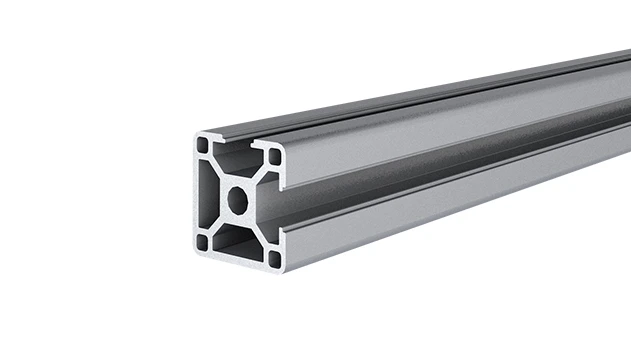
3030 is a 3.00 x 3.00CM fractional 30 series square extrusion T-slot profile with two side open T-slots, each side with 3.00cm face, 2 side with open slot, 2 side with closed face. The profile has align-a-grooves to assist in aligning connecting profiles.
Walk into any modern factory, workshop, or manufacturing plant, and you'll likely spot the sleek, silver frames of aluminum profiles hard at work. From workbenches and material racks to conveyor systems and assembly lines, these versatile structures are the backbone of efficient operations. But here's the thing: even the best aluminum extrusion profile is only as strong as the joints holding it together. That's where choosing the right joining method becomes critical—especially when you're working with a profile as popular as the 3030b EU standard aluminum profile.
If you've ever assembled a shelving unit or built a DIY project, you know the frustration of wobbly connections or parts that just won't stay put. Now imagine that on an industrial scale, where a weak joint could slow down production, compromise safety, or even derail a entire workflow. For manufacturers, engineers, and facility managers, the choice between riveting, bolting, or adhesives isn't just about putting pieces together—it's about balancing durability, flexibility, cost, and practicality.
In this article, we're diving deep into these three methods, breaking down how they work with 3030b profiles, their pros and cons, and when to use each one. Whether you're building a fixed workbench, a modular material rack, or a lightweight trolley, by the end, you'll have the insights to pick the method that keeps your operations running smoothly. Let's get started.
If you've ever assembled a shelving unit or built a DIY project, you know the frustration of wobbly connections or parts that just won't stay put. Now imagine that on an industrial scale, where a weak joint could slow down production, compromise safety, or even derail a entire workflow. For manufacturers, engineers, and facility managers, the choice between riveting, bolting, or adhesives isn't just about putting pieces together—it's about balancing durability, flexibility, cost, and practicality.
In this article, we're diving deep into these three methods, breaking down how they work with 3030b profiles, their pros and cons, and when to use each one. Whether you're building a fixed workbench, a modular material rack, or a lightweight trolley, by the end, you'll have the insights to pick the method that keeps your operations running smoothly. Let's get started.
Understanding the 3030b EU Standard Aluminum Profile
Before we jump into joining methods, let's take a quick look at why the 3030b EU standard aluminum profile is such a staple in industrial settings. First off, it's part of the EU standard series, which means consistent dimensions, quality, and compatibility with a wide range of aluminum profile accessories—think end caps, connectors, and brackets. The "3030" refers to its cross-section: 30mm by 30mm, making it sturdy enough for medium-duty tasks but not overly bulky. And the "b" variant typically denotes specific T-slot dimensions, those handy grooves running along the edges that make attaching components a breeze.
What really sets this profile apart is its versatility. It's used in everything from simple workbenches (like the aptly named Workbench E, a single-deck, caster-free model) to complex material handling systems such as Material Rack B, a 3-row, 3-floor storage solution designed to keep parts organized and accessible. Its aluminum construction means it's lightweight yet strong, resistant to corrosion, and easy to modify—all traits that make it a favorite for lean manufacturing setups where efficiency and adaptability are key.
Method 1: Bolting – The Modular Workhorse
If there's a "gold standard" for joining aluminum profiles, bolting is it. Walk through any factory using lean system principles, and you'll see bolts holding together everything from conveyor frames to assembly stations. Why? Because bolting is all about flexibility—and when your operations need to evolve (which they almost always do), flexibility is king.
How Bolting Works with 3030b Profiles
The 3030b's T-slots are the secret here. These slots run the length of the profile, allowing bolts, nuts, and aluminum profile connectors to slide into place without pre-drilling holes. Here's the typical process: you insert a bolt into the T-slot, add a nut (often a T-nut that locks into the slot), and tighten it with a wrench. For right-angle joints, you might use a 90° aluminum profile connector, a small, L-shaped piece that bridges two profiles and provides a stable mounting point for bolts. It's simple, straightforward, and requires minimal tools—just a hex key or socket wrench.
Pros of Bolting
- (Removability) and Reusability: Unlike permanent methods, bolts can be loosened and removed, making it easy to reconfigure or expand structures. Need to add a shelf to your Material Rack B? Just unbolt a crossbar, slide in a new one, and tighten—no fuss.
- High Strength: When properly torqued, bolts create a tight, rigid joint that can handle heavy loads. This is crucial for applications like supporting toolboxes on workbenches or holding up stacks of materials on racks.
- Compatibility with Accessories: The 3030b's T-slots play well with almost all aluminum profile accessories. From caster wheels for mobile trolleys to roller tracks for sliding bins, bolts let you attach just about anything without modifying the profile itself.
Cons of Bolting
- Risk of Loosening: Over time, vibration from machinery or frequent use can cause bolts to loosen. This isn't a dealbreaker—lock washers or thread-locking fluid can help—but it does mean periodic checks are necessary, especially on high-vibration equipment like conveyor systems.
- Tool Access: Tightening bolts requires space for a wrench or driver. In tight corners or complex assemblies, this can be tricky. For example, if you're building a narrow turnover trolley, reaching bolts deep inside the frame might require angled tools or extra patience.
- Visible Hardware: Let's be honest: bolts and nuts aren't the most aesthetically pleasing. If you're building something that needs a clean, finished look (like a display stand or customer-facing workstation), the visible hardware might be a downside.
Best For: Modular Systems and Reconfigurable Setups
Bolting shines in environments where change is constant. Think lean manufacturing facilities that update their workflows seasonally, or warehouses that need to adjust material racks to fit new inventory. It's also ideal for temporary or semi-permanent structures, like project-specific workbenches or event setups. And if you're using aluminum profile accessories like adjustable shelves or movable bins, bolts ensure those components stay secure but can still be shifted as needed.

Method 2: Riveting – The Permanent Powerhouse
If bolting is about flexibility, riveting is about permanence. When you rivet two pieces of 3030b profile together, you're creating a bond that's meant to last—no ifs, ands, or buts. This makes it a go-to for applications where stability and vibration resistance are non-negotiable.
How Riveting Works with 3030b Profiles
Riveting is a mechanical joining method: you drill a hole through the profiles, insert a rivet (a cylindrical metal pin with a head on one end), and then use a rivet gun or hammer to deform the other end, creating a second head that locks the pieces together. For 3030b aluminum extrusion profiles, you'll typically use aluminum or steel rivets, depending on the load. The key here is that the rivet fills the hole completely, creating a tight, solid connection.
Pros of Riveting
- No Loosening Over Time: Unlike bolts, rivets don't vibrate loose. This is a huge advantage in high-vibration environments, like near heavy machinery or conveyor rollers. Once set, they stay put—no need for periodic retightening.
- Quick Installation (Once You're Set Up): While drilling the initial holes takes time, the actual riveting process is fast, especially with a pneumatic rivet gun. For large-scale projects, this can speed up assembly compared to bolting, where each bolt needs careful torquing.
- Good for Thin or Delicate Profiles: The 3030b is sturdy, but some aluminum profile accessories (like thin brackets or lightweight panels) might warp or crack under the pressure of bolt tightening. Rivets distribute force more evenly, making them gentler on fragile components.
Cons of Riveting
- Permanent (for Better or Worse): This is the big one. If you make a mistake, need to replace a damaged profile, or want to reconfigure your structure, you'll have to drill out the rivets. This can leave behind enlarged holes, weakening the profile and making it harder to rejoin later.
- Requires Access to Both Sides: Most rivets need access to both ends of the hole to set properly. If you're working with a closed frame (like the legs of a Workbench E), reaching the backside of a joint can be impossible, limiting where you can place rivets.
- Less Strength Than Bolts (in Some Cases): While rivets are strong, they don't match the shear strength of high-grade bolts. For extremely heavy loads—like supporting multiple tiers of heavy machinery parts—bolting might be the safer bet.
Best For: Fixed, High-Stress Structures
Riveting is perfect when you need a joint that's built to last. Think permanent workbenches (like the aforementioned Workbench E, which stays put in one spot), fixed conveyor supports, or safety barriers that can't afford to shift. It's also a good choice for outdoor applications, where exposure to the elements might cause bolts to corrode or loosen over time. Just be sure you're happy with the design—once those rivets are in, changing your mind means starting over.
Method 3: Adhesives – The Invisible Bond
Now, let's talk about the underdog of joining methods: adhesives. When done right, structural adhesives can create bonds that are strong, lightweight, and virtually invisible. They're not for every situation, but in the right hands, they can solve problems that bolts and rivets can't touch.
How Adhesives Work with 3030b Profiles
Adhesives bond aluminum profiles by creating a chemical or mechanical link between surfaces. For 3030b profiles, you'll typically use structural adhesives like epoxy, acrylic, or polyurethane—formulas designed to handle shear, tensile, and impact stress. The process starts with surface prep: aluminum oxidizes quickly, so you'll need to clean the profiles with a solvent (like isopropyl alcohol) to remove grease, dirt, and oxide layers. Some adhesives also require a primer to boost adhesion. Once the surfaces are prepped, you apply the adhesive, clamp the profiles together, and let it cure (which can take anywhere from 30 minutes to 24 hours, depending on the product).
Pros of Adhesives
- Invisible Joints: No bolts, no rivets, no holes—just a smooth, seamless bond. This is a game-changer for applications where aesthetics matter, like display racks, consumer products, or aluminum honeycomb panels used in lightweight enclosures.
- Even Stress Distribution: Bolts and rivets create stress points at the hole, but adhesives spread stress evenly across the entire bonded area. This reduces the risk of cracking or deformation, especially in thin-walled profiles like some aluminum profile accessories.
- No Holes, No Weak Points: Drilling holes for bolts or rivets can weaken aluminum profiles, especially in load-bearing areas. Adhesives let you join profiles without compromising their structural integrity—a big plus for lightweight or delicate designs.
Cons of Adhesives
- Curing Time: Unlike bolts (which are tight in minutes) or rivets (which set instantly), adhesives need time to cure. This can slow down production, especially if you're working on a tight schedule.
- Surface Prep is Critical: Skip the cleaning step, and your bond will fail. Even a tiny bit of oil or dirt can weaken the adhesive, making it unreliable for high-stress applications.
- Hard to Repair: If an adhesive joint fails, fixing it isn't as simple as tightening a bolt or drilling out a rivet. You'll need to remove the old adhesive (which can be messy and time-consuming) and reapply a new layer—assuming the surfaces are still in good shape.
- Not Ideal for Heavy Loads: While modern adhesives are strong, they generally can't match the sheer strength of bolts or rivets for heavy, dynamic loads. If you're building a material rack that holds hundreds of pounds, adhesives alone might not cut it (though they can be used alongside bolts for extra reinforcement).
Best For: Lightweight, Aesthetic, or Delicate Applications
Adhesives shine when you need a clean look or want to avoid weakening the profile with holes. Think aluminum honeycomb panels for lightweight work surfaces, decorative trim on display units, or small components like aluminum profile end caps that need to stay in place without visible fasteners. They're also useful for bonding dissimilar materials—like attaching plastic or rubber components to aluminum profiles—where bolts or rivets might cause galvanic corrosion.
Riveting vs Bolting vs Adhesives: The Ultimate Comparison
| Method | Strength | (Removability) | Installation Time | Best For | Cost |
|---|---|---|---|---|---|
| Bolting | High (excellent shear strength) | Easy (loosen/tighten with tools) | Moderate (faster than adhesives, slower than rivets for large projects) | Modular systems, reconfigurable racks, temporary setups | Low to moderate (bolts/connectors are affordable) |
| Riveting | High (good vibration resistance) | Hard (requires drilling out rivets) | Fast (once holes are drilled) | Permanent structures, high-vibration environments, outdoor use | Low (rivets are cheap; tools have upfront cost) |
| Adhesives | Moderate to high (depends on adhesive type) | Very hard (bond must be cut/ground) | Slow (includes curing time) | Lightweight designs, aesthetic applications, dissimilar materials | Moderate to high (adhesives and primers can be pricey) |
Putting It All Together: Choosing Your Method
So, how do you decide which method to use for your 3030b EU standard aluminum profile project? Start by asking yourself these questions:
1. Will this structure need to change?
If yes, go with bolting. If no, riveting or adhesives could work.
2. How much weight will the joint bear? For heavy loads, bolting or riveting is safer than adhesives alone.
3. Is aesthetics important? Adhesives offer invisible bonds; bolts/rivets are visible.
4. Do I need to work in tight spaces? Rivets need two-sided access; adhesives and bolts (with T-slots) can work with one side.
5. What's my timeline? Rivets are fastest for permanent setups; adhesives require curing time.
2. How much weight will the joint bear? For heavy loads, bolting or riveting is safer than adhesives alone.
3. Is aesthetics important? Adhesives offer invisible bonds; bolts/rivets are visible.
4. Do I need to work in tight spaces? Rivets need two-sided access; adhesives and bolts (with T-slots) can work with one side.
5. What's my timeline? Rivets are fastest for permanent setups; adhesives require curing time.
And remember: there's no rule that says you have to pick just one method. Many engineers mix and match—like using bolts for primary strength and adhesives to reduce vibration, or riveting critical joints and bolting others for adjustability. The key is to prioritize your needs and test the joint under real-world conditions before scaling up.
At the end of the day, the 3030b EU standard aluminum profile is a tool, and like any tool, its performance depends on how you use it. Bolting gives you flexibility, riveting gives you permanence, and adhesives give you invisibility. By understanding the strengths and weaknesses of each method, you can build structures that are not just strong and reliable, but also tailored to the unique needs of your operation.
So, whether you're assembling a Material Rack B to organize parts, building a Workbench E for assembly work, or designing a custom trolley, take the time to choose your joining method wisely. After all, the best joints are the ones you never have to think about—they just work, day in and day out, keeping your operations running like clockwork.
So, whether you're assembling a Material Rack B to organize parts, building a Workbench E for assembly work, or designing a custom trolley, take the time to choose your joining method wisely. After all, the best joints are the ones you never have to think about—they just work, day in and day out, keeping your operations running like clockwork.