- Company Articles
- Products and Technology
- Product knowledge
- 3030b EU Standard Aluminum Profile Weight Savings: Benefits for Mobile Workstations

3030b EU Standard Aluminum Profile Weight Savings: Benefits for Mobile Workstations
Related Product
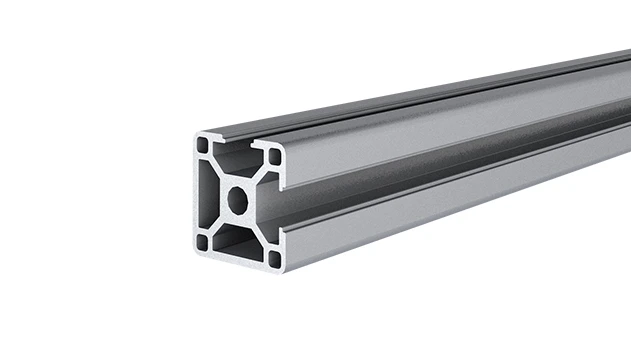
3030B EU Standard Aluminum Profile
3030 is a 3.00 x 3.00CM fractional 30 series square extrusion T-slot profile with two side open T-slots, each side with 3.00cm face, 2 side with open slot, 2 side with closed face. The profile has align-a-grooves to assist in aligning connecting profiles.
Walk into any busy manufacturing plant, warehouse, or assembly facility, and you'll notice a common challenge: workstations that feel like they're anchored to the floor. Heavy, clunky, and frustratingly hard to move, these setups can slow down operations, strain workers, and make it nearly impossible to adapt to shifting production needs. But what if there was a way to keep the strength and durability of industrial-grade workstations while cutting down on the weight that holds teams back? Enter the 3030b EU Standard Aluminum Profile—a game-changer for anyone who relies on mobile workstations to keep their workflow flexible and efficient.
In this article, we'll dive into why weight matters when it comes to mobile workstations, how the 3030b aluminum profile delivers impressive weight savings without sacrificing performance, and the real-world benefits this brings to your team, your operations, and your bottom line. Whether you're reconfiguring a factory floor, setting up a lean manufacturing cell, or simply looking to make daily tasks easier for your workers, understanding the advantages of this lightweight aluminum solution could be the key to unlocking a more agile, productive workspace.
Why Weight Matters in Mobile Workstations
Let's start with the basics: mobile workstations are supposed to be… well, mobile. But all too often, "mobile" ends up being a misnomer. Traditional workstations built with steel pipes or heavy wood frames might be sturdy, but their weight turns "moving" into a Herculean task. Picture this: a team of two workers struggling to push a loaded workstation across the shop floor, wheels squeaking, muscles straining, and precious minutes ticking by as they navigate around machinery. Or worse, a single employee trying to reposition a workstation alone, risking injury or damage to equipment in the process.
Weight isn't just about physical effort, though. It impacts everything from ergonomics to operational flexibility. A heavy workstation is harder to adjust, harder to clean around, and harder to repurpose when production needs change. In today's fast-paced manufacturing environments—where batch sizes shrink, customization demands grow, and lean principles reign supreme—being able to quickly rearrange workstations, assemble temporary cells, or reallocate tools can make or break your ability to meet deadlines.
That's where the 3030b EU Standard Aluminum Profile comes in. By prioritizing weight savings without compromising on strength, this profile transforms what mobile workstations can do—turning them from cumbersome obstacles into agile assets that adapt to your team's needs, not the other way around.
The 3030b Aluminum Profile: Lightweight by Design
Aluminum has long been celebrated for its strength-to-weight ratio, and the 3030b EU Standard Aluminum Profile takes full advantage of that. But what exactly makes this profile stand out? Let's break it down. First, the "3030b" designation refers to its dimensions: 30mm x 30mm, with a specific cross-sectional design optimized for both strength and lightness. Unlike generic aluminum extrusions, the 3030b is engineered to meet strict EU standards, ensuring consistency in thickness, tolerances, and material quality across every piece.
But the real magic is in the material itself. Aluminum is about 1/3 the weight of steel, which means a 3030b aluminum profile section weighs significantly less than a comparable steel pipe of the same size. For example, a 1-meter length of 3030b aluminum profile typically weighs around 0.8–1.2 kg, depending on wall thickness, while a steel pipe of similar dimensions could weigh 3–4 kg or more. That might not sound like much on paper, but when you multiply it by the dozens of profiles needed to build a workstation, the total weight difference becomes dramatic.
Don't let the lightness fool you, though. The 3030b profile is far from flimsy. Its extrusion process creates a rigid, uniform structure with internal reinforcing ribs that distribute weight evenly, making it strong enough to support tools, materials, and even heavy equipment. This balance of lightness and strength is what makes it ideal for mobile workstations—you get the durability you need without the bulk that holds you back.
| Feature | 3030b EU Standard Aluminum Profile | Traditional Steel Pipe (30mm x 30mm) |
|---|---|---|
| Weight per Meter | 0.8–1.2 kg | 3.0–4.5 kg |
| Tensile Strength | 200–250 MPa (depending on alloy) | 370–450 MPa |
| Corrosion Resistance | High (natural oxide layer; can be anodized for extra protection) | Low (requires painting/coating to prevent rust) |
| Installation Time | Faster (lighter, easier to handle; compatible with quick-connect accessories) | Slower (heavier, may require tools for cutting/welding) |
| Recyclability | 100% recyclable with minimal energy loss | Recyclable but with higher energy costs |
As the table shows, while steel may have a higher raw tensile strength, the 3030b aluminum profile holds its own in real-world applications—especially when you factor in its weight advantage. For mobile workstations, which rarely need to support extreme loads (think: tools, parts bins, or small machinery, not cars), the 3030b's strength is more than sufficient. And when paired with the right aluminum profile accessories—like corner brackets, T-slot nuts, or internal straight aluminum joints—it becomes even more versatile, allowing you to build custom workstations that are both strong and surprisingly light.

Key Benefits of Weight Savings for Mobile Workstations
So, what does all this weight savings actually mean for your day-to-day operations? Let's get specific. Here are four critical benefits that workers, supervisors, and facility managers will notice from day one.
1. Maneuverability: Workstations That Move When You Need Them To
Imagine a workstation that one person can move with ease. No more rounding up a team, no more struggling with stuck caster wheels, no more delays when a last-minute order requires a quick floor plan change. That's the reality with 3030b aluminum profiles. Because the frame is lighter, the entire workstation—even when loaded with tools and materials—becomes far easier to push, pull, or reposition.
Take caster wheels, for example. A typical mobile workstation uses four caster wheels to roll across the floor. With a heavy steel frame, those wheels have to work harder, leading to more wear and tear, squeaking, or even flat spots over time. But with a lighter aluminum frame, the caster wheels bear less stress, roll smoother, and last longer. It's a small detail, but it adds up to fewer maintenance headaches and more reliable mobility.
This maneuverability also unlocks new levels of flexibility. Need to shift a workstation from one assembly line to another? No problem. Want to create a temporary packing station for a rush order? Just wheel it into place. In lean manufacturing setups, where "just-in-time" production relies on minimizing waste (including time wasted moving equipment), this agility is priceless.
2. Safety: Reducing the Risk of Strains and Accidents
Heavy workstations aren't just inconvenient—they're a safety hazard. According to OSHA, overexertion injuries (like strains and sprains) are among the most common workplace accidents, often caused by lifting, pushing, or pulling heavy objects. A steel workstation weighing 150 kg or more requires significant force to move, increasing the risk of back injuries, muscle pulls, or even slips and falls if the workstation lurches unexpectedly.
By cutting the weight of the workstation frame by 50% or more, the 3030b aluminum profile drastically reduces that risk. A lighter workstation is easier to control, so even if it hits an uneven spot on the floor, the person moving it is less likely to lose balance. And because one person can handle it alone, there's no need for awkward team lifts or reliance on forklifts for short moves—simplifying workflows and reducing the chance of miscommunication or coordination errors.
Plus, aluminum's natural corrosion resistance means less rust and deterioration over time. Rusty caster wheels or weakened steel joints can cause workstations to tip or collapse, but aluminum profiles stay strong and stable, even in humid or dusty environments. That's one less thing to worry about when it comes to keeping your team safe.
3. Ergonomics: Making Workstations Work for People, Not Against Them
Ergonomics is all about designing tools and workspaces that fit the human body, reducing fatigue and boosting productivity. Heavy workstations fail this test miserably. When a workstation is hard to move, workers are more likely to tolerate a suboptimal position—like staying hunched over a table that's too low or reaching across a cluttered surface—rather than taking the time to adjust it. Over weeks and months, this leads to chronic pain, reduced focus, and lower output.
Lightweight 3030b aluminum workstations change that. Workers can tweak the position of their workstation throughout the day—sliding it closer to a conveyor, rotating it to face a different direction, or even raising/lowering it (with adjustable height accessories) to match their posture. This level of customization keeps workers comfortable, engaged, and less prone to the small aches and pains that add up to big productivity losses.
Consider a scenario in a electronics assembly plant: an operator spends 8 hours a day assembling circuit boards. With a heavy steel workstation, they might set it up once in the morning and leave it, even if the angle causes neck strain. With a lightweight aluminum workstation, they can shift it slightly every hour, aligning it with their body's natural movements. The result? Happier workers, fewer sick days, and higher-quality output.
4. Cost Efficiency: Saving Money in Unexpected Ways
At first glance, aluminum profiles might seem pricier than steel, but the long-term savings tell a different story. Let's break down the costs:
- Lower labor costs: Lighter workstations mean faster installation, easier reconfiguration, and less time spent moving equipment. A team that once took 30 minutes to rearrange workstations might now do it in 10—freeing up time for more valuable tasks.
- Reduced maintenance: Aluminum resists corrosion, so you won't spend money on painting or rust treatments. Caster wheels and aluminum profile accessories last longer under less stress, cutting down on replacement parts.
- Fewer injuries: Workplace injuries cost companies billions annually in medical bills, workers' compensation, and lost productivity. By lowering the risk of strains and accidents, lightweight workstations help avoid these costs.
- Energy savings: While it might not seem obvious, lighter workstations require less energy to move—whether manually or with powered equipment like forklifts. Over time, this adds up to lower energy bills and a smaller carbon footprint.
And let's not forget about scalability. As your business grows, you'll need to add or modify workstations. Aluminum profiles are easy to cut, extend, or repurpose with basic tools and aluminum profile accessories like internal straight aluminum joints or T-slot nuts. This means you won't have to replace entire workstations when you need to expand—just add a few extra profiles and keep going.
Practical Applications: Where 3030b Aluminum Shines
To put this all in context, let's look at a few real-world scenarios where 3030b EU Standard Aluminum Profile has made a tangible difference. These aren't just theoretical benefits—they're outcomes that teams are experiencing right now.
Case Study: Automotive Parts Manufacturer
A mid-sized automotive parts plant was struggling with a common problem: their production lines needed to switch between different part models multiple times a day, but their steel workstations were too heavy to reconfigure quickly. Each changeover took 45 minutes, leading to missed deadlines and frustrated workers.
They replaced their steel workstations with custom setups built using 3030b aluminum profiles and compatible accessories. The result? Changeover time dropped to 15 minutes—less than a third of what it was before. Workers could now move individual workstations alone, and the lighter frames made it easy to add or remove shelves, tool holders, and conveyor attachments as needed. Within six months, the plant saw a 20% increase in daily output and a 35% reduction in workplace injury reports.
Case Study: Electronics Assembly Workshop
An electronics workshop specializing in custom circuit boards had a small, tight floor plan. Their heavy wooden workbenches made it impossible to rearrange the space for larger projects, and workers complained about back pain from leaning over fixed-height tables.
They switched to 3030b aluminum workstations with adjustable height legs and caster wheels. Overnight, the workshop became flexible: workstations could be rolled into a U-shape for team projects or lined up in rows for individual tasks. The adjustable height feature let workers tailor their tables to their height, cutting down on complaints of soreness. Best of all, the lightweight frames meant the workshop could add new workstations without reinforcing the floor—saving on renovation costs.
Optimizing Your Setup: Accessories That Enhance Performance
The 3030b aluminum profile is powerful on its own, but to get the most out of its weight savings, you'll want to pair it with the right accessories. Here are a few key components that can take your mobile workstation from good to great:
Internal Straight Aluminum Joints
These joints connect two 3030b profiles end-to-end, creating longer sections without adding bulk. Unlike welding or heavy bolts, they're easy to install and disassemble, making it simple to adjust the length of your workstation as needed. Plus, they're lightweight themselves—so they don't undo the profile's weight-saving benefits.
High-Quality Caster Wheels
Not all caster wheels are created equal. Look for heavy-duty, swivel caster wheels with brake locks to ensure your workstation stays put when you need it to. Since the aluminum frame is light, you can opt for smaller, more maneuverable wheels without sacrificing stability—perfect for tight spaces.
Adjustable Height Legs
Ergonomics matter, and adjustable legs let you raise or lower your workstation to match different workers or tasks. Look for legs with easy-to-turn knobs or levers—no tools required. This adds versatility without adding significant weight.
T-Slot Aluminum Profile Accessories
The T-slot design of the 3030b profile is a game-changer for customization. T-slot nuts, brackets, and tool holders slide into the slots, letting you attach shelves, bins, lights, or even small machinery without drilling holes. This keeps the frame clean, lightweight, and ready for quick changes.
Conclusion: Lightweight, Strong, and Ready to Transform Your Workspace
At the end of the day, the 3030b EU Standard Aluminum Profile isn't just about saving weight—it's about saving time, reducing stress, and creating a workspace that adapts to your team's needs. By combining the natural advantages of aluminum with thoughtful engineering and EU-standard quality, this profile turns mobile workstations from static obstacles into dynamic tools that drive productivity, safety, and satisfaction.
Whether you're running a large manufacturing plant, a small workshop, or anything in between, the benefits are clear: workstations that are easier to move, safer to use, and cheaper to maintain. And with a wide range of aluminum profile accessories to choose from, you can build a setup that's as unique as your workflow.
So, the next time you look at your current workstations and think, "There has to be a better way," remember: there is. It's called the 3030b EU Standard Aluminum Profile, and it's ready to lighten your load—literally and figuratively.