- Company Articles
- Products and Technology
- Product knowledge
- 3030r EU Standard Aluminum Profile for Turnover Carts in Electronics Manufacturing

3030r EU Standard Aluminum Profile for Turnover Carts in Electronics Manufacturing
Related Product
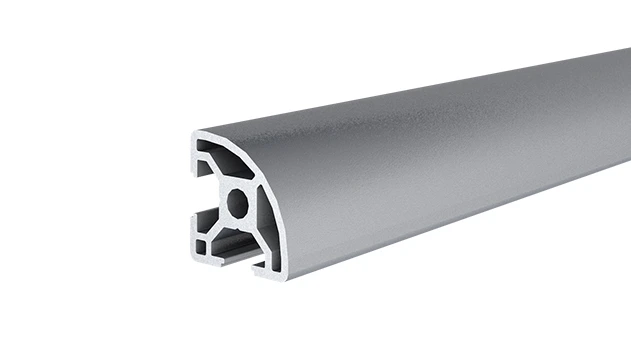
3030R EU Standard Aluminum Profile
3030R is a 3.00 x 3.00CM fractional 30 series square extrusion T-slot profile with four open T-slots, two side with 3.00cm face, the other side with round face. The profile has align-a-grooves to assist in aligning connecting profiles.
Walk into any electronics manufacturing facility, and you'll quickly notice the unsung heroes keeping production lines moving: turnover carts. These humble workhorses glide between assembly stations, carrying delicate circuit boards, tiny capacitors, and fully assembled devices with equal care. But what makes a turnover cart reliable, efficient, and adaptable enough to keep up with the fast-paced demands of electronics manufacturing? The answer often lies in the materials that build it—specifically, the aluminum profiles that form its skeleton. Today, we're diving into one profile that's become a staple in factories worldwide: the 3030r EU Standard Aluminum Profile. Let's explore why it's the backbone of the turnover carts and racks that keep electronics production humming.
The Challenge of Building Efficient Turnover Carts in Electronics Manufacturing
Electronics manufacturing isn't just about precision—it's about balance. Turnover carts must be sturdy enough to protect sensitive components from jostling, light enough for workers to maneuver without strain, and flexible enough to adapt when production lines reconfigure (which they often do). Traditional materials like steel are strong but heavy, making carts cumbersome. Plastic is lightweight but lacks the durability to withstand daily use in a busy factory. And in an industry where every second counts, downtime for repairs or adjustments is simply not an option.
Then there's the issue of customization. A cart carrying large circuit boards needs wider shelves; one transporting small resistors might require dividers or bins. Electronics factories can't afford one-size-fits-all solutions. They need a system that lets them build, modify, and repair carts quickly, without specialized tools or lengthy lead times. This is where aluminum profiles step in—and why the 3030r has become a go-to choice.
Why Aluminum Profiles? A Material Made for Modern Manufacturing
Aluminum has long been favored in manufacturing for its unique blend of strength and lightness, but it's the "extruded profile" form that truly revolutionized the industry. Extruded aluminum profiles are created by forcing molten aluminum through a die, creating consistent, precise shapes with built-in features like T-slots. These T-slots are game-changers: they allow for quick, tool-free attachment of accessories like shelves, casters, and dividers, turning a simple length of aluminum into a modular building block.
Compared to steel, aluminum profiles are 30-40% lighter, reducing worker fatigue and making carts easier to move. They're naturally corrosion-resistant, so they hold up in cleanrooms or environments where moisture is a concern (critical for electronics, where rust or contamination can ruin components). And unlike plastic, aluminum doesn't warp under heat or heavy loads, ensuring carts maintain their shape and functionality for years. For electronics manufacturers, this means fewer replacements, less maintenance, and a lower total cost of ownership over time.

Meet 3030r EU Standard Aluminum Profile: The Backbone of Reliable Turnover Carts
Among the many aluminum profiles available, the 3030r EU Standard stands out for its versatility and reliability. The "3030" refers to its dimensions: 30mm by 30mm, a size that strikes the perfect balance between strength and manageability for medium-duty applications like turnover carts. The "r" often denotes a rounded edge design, which isn't just for aesthetics—those smooth edges reduce the risk of snags or scratches on components, and they're gentler on workers' hands during assembly and use.
What truly sets the 3030r apart is its adherence to EU standards. These standards ensure consistent quality, precise tolerances, and compatibility across manufacturers. For electronics factories sourcing components globally, this consistency is invaluable: a 3030r profile from one supplier will fit seamlessly with accessories from another, eliminating the frustration of mismatched parts.
| Specification | Details |
|---|---|
| Dimensions | 30mm x 30mm (width x height) |
| Material | 6063-T5 Aluminum Alloy (high strength, excellent corrosion resistance) |
| Surface Finish | Anodized (clear or black options), providing a smooth, scratch-resistant layer |
| T-Slot Design | Two parallel T-slots per side (standard 8mm slot width), compatible with most EU-standard accessories |
| Weight | Approx. 0.8-1.0 kg/m (depending on wall thickness), 30% lighter than equivalent steel profiles |
| Load Capacity | Up to 150 kg per linear meter (when properly supported), ideal for medium-duty turnover carts |
| Edge Type | Rounded edges (reduced risk of component damage, improved ergonomics) |
These specs translate to real-world benefits. The 30mm x 30mm size is large enough to support shelves and casters without being overkill, keeping carts lightweight. The 6063-T5 alloy offers the tensile strength needed to carry typical electronics loads (think: a cart stacked with circuit board trays or component bins) while remaining easy to cut and drill for custom modifications. And the anodized finish ensures the profile resists fingerprints, oils, and minor chemical exposure—critical in clean manufacturing environments.
The Power of Compatibility: 3030r and Aluminum Profile Accessories
A profile is only as good as the accessories it works with, and the 3030r excels here. Thanks to its T-slot design and EU-standard dimensions, it pairs seamlessly with a vast ecosystem of aluminum profile accessories. Let's break down the key accessories that turn 3030r profiles into fully functional turnover carts:
Connectors: From 90° angle brackets to swivel joints, these let you join 3030r profiles into frames, shelves, and cart corners. Many connectors simply slide into the T-slot and tighten with a hex key, no welding or drilling required.
Casters: Heavy-duty casters with brake mechanisms attach directly to the 3030r frame, making carts mobile yet stable when loaded. Rubber or polyurethane wheels are common in electronics facilities, as they dampen vibrations and won't scratch cleanroom floors.
Shelves and Panels: Aluminum honeycomb panels, plywood, or even (ESD)-safe materials can be mounted to 3030r frames using T-slot nuts and bolts, creating custom shelves for different component sizes.
Dividers and Bins: T-slot-compatible dividers turn a single shelf into multiple compartments, preventing small parts from mixing. Plastic bins with mounting brackets can be added or removed as needed, adapting the cart to changing inventory.
This modularity means a factory can build a basic turnover cart in hours, not days. If a production line switches to larger components, they can add extension brackets or taller shelves without rebuilding the entire cart. If a caster wears out, it's a 10-minute replacement job—no need to take the cart offline for repairs.
How 3030r Elevates Turnover Trolley and Rack Performance
Turnover trolley and rack systems are the circulatory system of electronics manufacturing, moving materials from storage to assembly to testing. The 3030r profile ensures this system runs smoothly in three key ways:
1. Customization Without Compromise: No two electronics factories are identical, and even within a single facility, needs vary. One department might need a compact cart for tight aisles; another, a tall rack for vertical storage. The 3030r's 30mm x 30mm size is versatile enough to scale—use it for small carts with 2-3 shelves or larger racks with multiple levels. And because it's compatible with other profile sizes (like 2020 for lighter components or 4040 for heavier loads), you can mix and match to create hybrid systems tailored to specific tasks.
2. Durability in Daily Grind: Turnover carts take a beating. They're pushed, pulled, loaded, and unloaded dozens of times a day. The 3030r's 6063-T5 aluminum alloy is designed for this kind of abuse. It resists bending under heavy loads, and the anodized finish protects against dents and scratches. Unlike plastic profiles, which can crack or warp over time, a 3030r cart will maintain its structural integrity for years, even in high-traffic areas.
3. Safety First: Electronics manufacturing prioritizes safety, and the 3030r contributes here too. Its rounded edges reduce the risk of cuts or scrapes during handling. The lightweight design minimizes strain on workers, lowering the risk of musculoskeletal injuries. And because carts are easy to maneuver, there's less chance of collisions with equipment or other workers—critical in fast-paced environments.
Integrating 3030r into a Lean System: Streamlining Electronics Production
Lean manufacturing principles—focused on reducing waste, improving flow, and maximizing value—are the backbone of modern electronics production. The 3030r aluminum profile aligns perfectly with these principles, making it a cornerstone of lean system implementation.
Waste in manufacturing often comes from inefficiency: waiting for tools, searching for parts, or rebuilding equipment when needs change. The 3030r's modular design eliminates much of this waste. Need a new cart for a rush order? Assemble it from existing 3030r profiles and accessories in minutes. Production line reconfigured? Disassemble the old cart and reuse the profiles to build a new one. This "reusability" reduces material waste and cuts down on lead times for new equipment.
Flow is another lean principle, and 3030r-based turnover carts excel here. Their lightweight design and smooth-rolling casters ensure materials move quickly from one workstation to the next, reducing bottlenecks. Adjustable shelves mean each cart can carry exactly what's needed—no more overloading or underutilizing space, which disrupts workflow. And because the carts are consistent in size and design, workers can intuitively navigate them, reducing errors and delays.
Perhaps most importantly, the 3030r supports "continuous improvement," a key tenet of lean systems. If a cart isn't working as well as it could—maybe the shelves are too high, or the casters aren't smooth—workers can easily modify it using T-slot accessories. This empowers teams to solve problems on the spot, rather than waiting for engineering or maintenance, fostering a culture of ownership and innovation.
Beyond the Cart: 3030r in Workbenches and Production Stations
While we've focused on turnover carts, the 3030r's utility extends far beyond mobility. It's also a popular choice for building workbenches in electronics assembly lines. A typical workbench might feature a 3030r frame with an ESD-safe top, overhead shelving for tools, and integrated lighting—all attached via T-slot accessories. This creates a cohesive, ergonomic workspace where everything a worker needs is within reach.
What's more, workbenches and turnover carts built from the same 3030r profiles share components, simplifying inventory and maintenance. A caster used on a cart can also be used to make a workbench mobile; a shelf bracket from a bench can be repurposed for a cart. This standardization reduces the number of spare parts a factory needs to stock, saving space and cost.
Comparing 3030r to Other Profiles: Why It Stands Out
With so many aluminum profiles available, why choose 3030r? Let's compare it to two common alternatives:
2020 Profiles (20mm x 20mm): Smaller and lighter, 2020 profiles are great for lightweight applications like small parts bins or display racks. But they lack the load capacity of 3030r—too flimsy for fully loaded turnover carts. The 3030r's 30mm width provides a sturdier base, making it better for medium-duty tasks.
4040 Profiles (40mm x 40mm): Larger and stronger, 4040 profiles handle heavy loads (think: industrial machinery frames). But they're overkill for most turnover carts, adding unnecessary weight and cost. The 3030r hits the sweet spot: strong enough for typical electronics components, but light enough to keep carts maneuverable.
The 3030r also benefits from its rounded edges, a feature not always found in square 3030 profiles. In electronics manufacturing, where even a small scratch on a circuit board can cause defects, those rounded edges add an extra layer of protection.
Future-Proofing Manufacturing: Sustainability and Innovation with 3030r
As electronics manufacturing moves toward greener practices, the 3030r's sustainability credentials shine. Aluminum is 100% recyclable, and recycling it requires just 5% of the energy needed to produce new aluminum. When a 3030r cart reaches the end of its life, the profiles can be melted down and reused, reducing waste and lowering a factory's carbon footprint.
Looking ahead, the 3030r is also poised to integrate with smart manufacturing technologies. Imagine turnover carts with embedded sensors that track load weight or location, helping factories optimize material flow. The T-slot design makes adding these sensors easy—simply mount a sensor bracket into the slot and connect it to the factory's IoT system. As Industry 4.0 evolves, the 3030r's modularity will make it a flexible platform for innovation.
Conclusion: 3030r as a Catalyst for Efficiency in Electronics Manufacturing
In the high-stakes world of electronics manufacturing, where precision, speed, and adaptability are everything, the tools you choose matter. The 3030r EU Standard Aluminum Profile isn't just a material—it's a catalyst for efficiency. It transforms simple turnover carts into agile, durable, and customizable assets that keep production lines moving, reduce waste, and empower workers to do their best.
Whether you're building a basic turnover trolley, a complex rack system, or an ergonomic workbench, the 3030r delivers the strength, versatility, and compatibility modern factories need. It's a profile designed not just for today's challenges, but for tomorrow's innovations. For electronics manufacturers looking to stay competitive, the 3030r isn't just a choice—it's a smart investment in the future of production.