- Company Articles
- Products and Technology
- Product knowledge
- 3030r EU Standard Aluminum Profile: How to select the Right Alloy for Your Project

3030r EU Standard Aluminum Profile: How to select the Right Alloy for Your Project
Related Product
3030R EU Standard Aluminum Profile
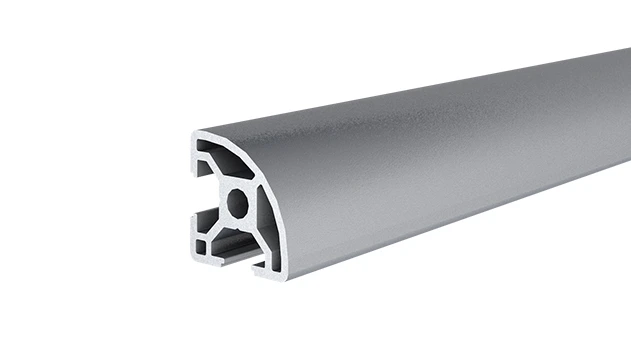
3030R is a 3.00 x 3.00CM fractional 30 series square extrusion T-slot profile with four open T-slots, two side with 3.00cm face, the other side with round face. The profile has align-a-grooves to assist in aligning connecting profiles.
If you've ever stepped into a modern workshop, a bustling manufacturing plant, or even a well-organized garage, you've likely encountered the unsung heroes of modular design: aluminum profiles. These sleek, versatile structures form the backbone of workbenches, material racks, conveyor systems, and lean manufacturing setups. Among the most popular options in European markets is the 3030r EU standard aluminum profile—a workhorse known for its balance of strength, flexibility, and compatibility with EU quality standards. But here's the thing: not all 3030r profiles are created equal. The alloy used to make them can make or break your project, affecting everything from durability to cost to how well it pairs with aluminum profile accessories. In this guide, we'll walk through how to choose the right alloy for your 3030r profile, ensuring your build stands the test of time and meets your unique needs.
What Even Is the 3030r EU Standard Aluminum Profile?
Before diving into alloys, let's make sure we're all on the same page about the star of the show: the 3030r EU standard aluminum profile. First, the numbers: "3030" refers to its cross-sectional dimensions—30mm by 30mm. That square shape is intentional; it provides symmetry, making it easy to connect from any angle, whether you're building a vertical frame or a horizontal shelf. The "r" in 3030r typically denotes a rounded edge design (think soft, curved corners instead of sharp 90-degree angles), which adds safety (no more scraped knuckles!) and a cleaner aesthetic.
Then there's the "EU standard" part. This isn't just a marketing buzzword. EU standards for aluminum profiles (often outlined in EN 755 specifications) ensure strict tolerances for dimensions, surface finish, and mechanical properties. For example, a 3030r profile meeting EU standards will have consistent wall thickness (usually 1.5mm to 2mm, depending on the alloy), minimal warping, and a surface free of cracks or defects. This consistency is why EU-standard profiles are trusted in industries where precision matters—like automotive, electronics, and aerospace.
But what makes the 3030r so popular? It's all about versatility. At 30x30mm, it's large enough to support heavy loads (think toolboxes, machinery, or stacks of materials) but not so bulky that it's overkill for smaller projects, like a garage workbench or a home DIY shelf. And because it's an aluminum extrusion profile—meaning it's formed by pushing heated aluminum through a die to create its shape—it can be mass-produced with tight tolerances, keeping costs reasonable while maintaining quality.
Why Alloy Selection Matters More Than You Think
Here's a common misconception: "Aluminum is aluminum, right?" Wrong. Aluminum alloys are mixtures of pure aluminum and other elements (like copper, magnesium, silicon, or zinc) that tweak the metal's properties. For 3030r profiles, the alloy determines how strong the profile is, how well it resists rust, how easy it is to cut or drill, and even how it looks. Choose the wrong alloy, and you might end up with a workbench that sags under weight, a material rack that corrodes in a humid warehouse, or a lean system that can't handle the wear and tear of daily use.
Let's break it down with an example. Suppose you're building a lean system for a food processing plant. The environment is damp, and there's occasional exposure to water and cleaning chemicals. If you opt for a low-corrosion alloy, the profile might start pitting or discoloring within months. On the flip side, if you're building a lightweight display shelf for a retail store, a high-strength alloy might be overkill—adding unnecessary cost and weight. The key is to match the alloy to your project's specific demands.
Another reason alloy matters? Compatibility with aluminum profile accessories. Things like brackets, connectors, and end caps are designed to work with specific profile strengths and thicknesses. A soft alloy might not hold screws well, while an overly hard alloy could crack when drilling holes for accessories. It's a balancing act, and getting the alloy right ensures your entire setup—profile, accessories, and all—works as a cohesive unit.

Key Properties to Consider When Choosing an Alloy
So, what should you look for in an alloy for your 3030r profile? Let's break down the critical properties and how they impact your project:
1. Strength: How Much Weight Can It Handle?
Strength is often the first thing people think about, and for good reason. You need your profile to support the load you're putting on it—whether that's a 50kg toolbox on a workbench or a series of heavy bins on a material rack. Two metrics matter here: tensile strength (how much force it takes to pull the metal apart) and yield strength (how much it can bend before it permanently deforms). For 3030r profiles, most alloys fall into the 100-300 MPa (megapascals) range for tensile strength. For reference, 1 MPa is roughly the pressure of 145 pounds per square inch—so a 200 MPa alloy can handle a lot of stress.
But don't just chase the highest numbers. A higher strength alloy is usually stiffer, which can make it harder to cut, drill, or shape. If your project requires a lot of customization (like adding notches or holes for accessories), a slightly lower-strength alloy might be easier to work with.
2. Corrosion Resistance: Will It Stand Up to the Elements?
Aluminum naturally forms a thin oxide layer that resists rust, but some environments are tougher than others. Humid warehouses, outdoor setups, or areas with chemicals (like factories using cleaning agents) demand better corrosion resistance. Alloys with added magnesium or silicon (like the 6000 series) tend to perform well here, as they form a stronger oxide layer. For extreme cases—like marine environments—you might even see stainless steel or aluminum-zinc alloys, but those are less common for 3030r profiles due to cost.
3. Machinability: Can You Work With It?
Unless you're buying pre-cut, pre-drilled profiles (which is an option!), you'll probably need to modify your 3030r profile. Machinability refers to how easy it is to saw, drill, mill, or tap the metal. Softer alloys (like 6063) are a dream here—they cut cleanly, don't clog saw blades, and drill holes without cracking. Harder alloys (like 6061-T6, where "T6" means heat-treated for extra strength) can be trickier; they might require specialized tools or slower cutting speeds to avoid damaging the profile.
4. Surface Finish: Does It Look the Part?
For some projects, aesthetics matter. A retail display or a customer-facing workbench needs a smooth, consistent finish. Alloys with lower iron content tend to have brighter, more uniform surfaces after anodizing (a common finishing process that adds color and protection). The 3030r's rounded edges already help with appearance, but the right alloy ensures the finish holds up over time—no discoloration or blotchiness.
5. Cost: Balancing Quality and Budget
Let's be real: budget is always a factor. High-performance alloys (like 7000 series, which includes zinc) are strong but expensive. For most DIY or small-scale projects, mid-range alloys (like 6063 or 6061) offer the best bang for your buck. They're affordable, widely available, and meet the needs of 90% of applications. Save the premium alloys for projects where failure isn't an option—like aerospace or heavy industrial use.
Common Alloys for 3030r EU Standard Aluminum Profiles
Now that we know what to look for, let's dive into the most popular alloys used for 3030r profiles. These are the ones you'll see most often from suppliers, and they cover a range of needs from basic to heavy-duty.
1. 6063 Alloy: The All-Rounder for Everyday Use
If there's a "default" alloy for 3030r profiles, it's 6063. Part of the 6000 series (aluminum-magnesium-silicon alloys), 6063 is loved for its excellent extrudability (meaning it shapes easily into complex profiles like the 3030r's rounded edges), good corrosion resistance, and smooth surface finish. It has a tensile strength of around 110-150 MPa—enough for most light to medium loads, like workbenches, small material racks, or display shelves.
Why is 6063 so popular? It's affordable, easy to work with, and takes anodizing well (so you can get it in colors like silver, black, or blue). It's also the go-to for projects where aesthetics matter, thanks to its uniform surface. If you're building a home workshop bench or a lean system for a small office, 6063 is probably your best bet.
2. 6061 Alloy: The Heavy-Duty Workhorse
Need a bit more strength? Enter 6061. Also in the 6000 series, 6061 has a higher magnesium content than 6063, pushing its tensile strength up to 200-310 MPa (depending on heat treatment). That makes it ideal for heavier loads—think industrial workbenches, large material racks, or conveyor systems in manufacturing plants. It's also more corrosion-resistant than 6063, thanks to its silicon content, making it a good choice for humid or semi-outdoor environments.
The tradeoff? 6061 is stiffer and harder to machine than 6063. Drilling holes or cutting it might require more effort (or sharper tools), and it's slightly more expensive. But if your project needs to support serious weight or withstand harsh conditions, the extra cost is worth it. Pro tip: Look for 6061-T6, which is heat-treated for maximum strength.
3. 6005A Alloy: The Lightweight Performer
For projects where weight is a concern—like mobile carts or temporary lean systems—6005A is a solid choice. It has a tensile strength similar to 6061 (around 220-260 MPa) but is lighter, thanks to a slightly different chemical composition. It's also highly extrudable, making it easy to produce complex profiles like the 3030r with tight tolerances. You'll often see 6005A in automotive parts or aerospace components, but it's gaining popularity in modular systems too, especially where portability matters.
Comparing the Options: A Quick Reference Table
| Alloy Type | Tensile Strength (MPa) | Corrosion Resistance | Machinability | Best For | Cost Range* |
|---|---|---|---|---|---|
| 6063 | 110-150 | Good | Excellent | Light loads, aesthetics, DIY projects | Low-Medium |
| 6061-T6 | 200-310 | Very Good | Fair | Heavy loads, industrial use, humid environments | Medium-High |
| 6005A | 220-260 | Good | Very Good | Lightweight, mobile systems, high-tolerance profiles | Medium |
*Cost ranges are relative to 6063 (e.g., "Low-Medium" means slightly more expensive than basic 6063 but not as costly as 6061-T6).
Matching Alloy to Application: Real-World Scenarios
To make this concrete, let's walk through a few common projects and which alloy would work best for each:
Scenario 1: Home Workshop Workbench
You're building a workbench for your garage to hold tools, a vice, and maybe a small drill press. Loads are moderate (50-100kg), and the environment is dry (no extreme humidity or chemicals). You want it to look clean and be easy to assemble with aluminum profile accessories like brackets and a wooden top. For this, 6063 is perfect. It's affordable, easy to cut and drill, and the smooth finish will look great in your garage. Plus, it pairs well with standard accessories—no need for specialized connectors.
Scenario 2: Industrial Material Rack in a Food Processing Plant
Your plant needs a material rack to hold heavy bins of ingredients (200-300kg per shelf). The area is cleaned daily with water and mild detergents, so corrosion resistance is key. Here, 6061-T6 is the way to go. Its high strength handles the weight, and its corrosion resistance stands up to the damp environment. Yes, it's pricier, but replacing a rusted rack in a year would cost more in downtime and repairs.
Scenario 3: Mobile Lean System for a Warehouse
You need a modular lean system on wheels to transport goods between stations. The system needs to be lightweight (so it's easy to push) but strong enough to hold 150kg of products. 6005A fits the bill here. Its high strength-to-weight ratio keeps the system mobile, while its extrudability ensures the 3030r profiles connect smoothly with caster wheels and other accessories. It's a bit more expensive than 6063, but the portability is worth it.
The Role of Aluminum Profile Accessories in Alloy Performance
We've talked a lot about the profile itself, but let's not forget the unsung heroes: aluminum profile accessories. These small parts—connectors, brackets, end caps, and even caster wheels—play a big role in how well your alloy performs. Here's why:
First, compatibility. Some accessories are designed for softer alloys, while others need harder ones. For example, a bolt-on bracket might rely on the profile's ability to hold a screw. A soft alloy like 6063 can strip if over-tightened, so you might need self-tapping screws or thread inserts. A harder alloy like 6061-T6 holds screws better but might require pre-drilled holes to avoid cracking.
Second, load distribution. Accessories like corner brackets or center support brackets help spread weight across the profile, reducing stress on any single point. A strong alloy is great, but without the right accessories, even the toughest profile can fail at the connections. For example, a 3030r rack using 6061-T6 but cheap, flimsy brackets might still sag because the brackets bend before the profile does.
Finally, installation ease. Softer alloys like 6063 make installing accessories a breeze—you can drill holes on-site without worrying about cracking. Harder alloys might require pre-drilled profiles from the supplier, which adds lead time but ensures a secure fit. Always check that your accessories are rated for your alloy's strength—most suppliers list this info in their product specs.
Mistakes to Avoid When Selecting an Alloy
Even with the best intentions, it's easy to make missteps when choosing an alloy. Here are the most common mistakes and how to avoid them:
Mistake 1: Overestimating Strength Needs
It's tempting to "play it safe" and go for the strongest alloy, but that often leads to overspending. A 6061-T6 profile might be overkill for a small shelf holding 20kg of books—6063 would work just as well and cost less. Take the time to calculate your actual load (including dynamic loads, like if something is dropped on the shelf) and choose the minimum strength you need.
Mistake 2: Ignoring Environmental Factors
Humidity, chemicals, and temperature swings can destroy a profile over time. A 6063 profile might work in a dry office but corrode quickly in a coastal warehouse with salt air. Always factor in the environment—if in doubt, opt for a more corrosion-resistant alloy like 6061.
Mistake 3: Overlooking Accessory Compatibility
You buy a high-strength alloy but skimp on accessories, only to find the brackets bend under load. Or you choose a soft alloy and use self-tapping screws that strip out. Always check that your accessories (brackets, screws, connectors) are rated for your alloy's strength and thickness. Most suppliers offer compatibility charts—use them!
Mistake 4: Choosing Based on Price Alone
The cheapest alloy might save you money upfront, but it could cost more in the long run. A low-quality alloy might sag, corrode, or fail, requiring repairs or replacements. Balance cost with performance—sometimes spending 10-20% more on a better alloy saves you hundreds later.
Conclusion: Building Better with the Right Alloy
The 3030r EU standard aluminum profile is a versatile, reliable choice for modular projects—but its true potential lies in the alloy you choose. Whether you're building a home workbench, an industrial lean system, or anything in between, matching the alloy to your project's needs (strength, corrosion resistance, cost, and compatibility with aluminum profile accessories) ensures success. Remember: 6063 for everyday, lightweight, or aesthetic projects; 6061-T6 for heavy loads and harsh environments; and 6005A for lightweight, mobile setups. And don't forget the accessories—they're the glue that holds it all together.
At the end of the day, the right alloy isn't just about specs on a page—it's about building something that works for you, lasts for years, and adapts as your needs change. With the 3030r and the perfect alloy, the possibilities are endless. So go ahead—start planning that project, and build something great.