- Company Articles
- Products and Technology
- Product knowledge
- 3030r EU Standard Aluminum Profile in Robotics Workstations: Stability & Adaptability

3030r EU Standard Aluminum Profile in Robotics Workstations: Stability & Adaptability
Related Product
3030R EU Standard Aluminum Profile
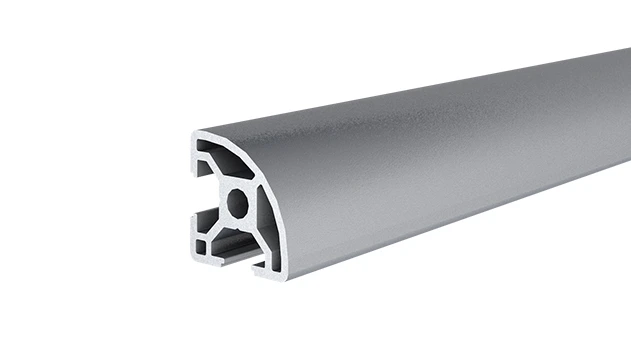
3030R is a 3.00 x 3.00CM fractional 30 series square extrusion T-slot profile with four open T-slots, two side with 3.00cm face, the other side with round face. The profile has align-a-grooves to assist in aligning connecting profiles.
Walk into any modern robotics lab or manufacturing facility, and you'll notice a quiet revolution happening at the heart of operations: the workstations. These aren't just tables or benches—they're dynamic hubs where precision, efficiency, and flexibility collide. For engineers assembling delicate robotic arms, testing sensor arrays, or prototyping autonomous systems, the right workstation can mean the difference between a smooth workflow and costly delays. Two qualities stand above all others in these spaces: stability, to keep sensitive equipment steady during intricate tasks, and adaptability, to evolve as projects shift from design to production. Enter the 3030r EU standard aluminum profile—a material that's quickly becoming the backbone of next-generation robotics workstations. Let's explore why this unassuming component is redefining how teams build, test, and innovate.
What is the 3030r EU Standard Aluminum Profile?
First, let's demystify the name: "3030r" isn't just a random code. The "3030" refers to its dimensions—30mm by 30mm—making it a mid-sized profile that strikes a balance between strength and versatility. The "r" stands for "rounded," a subtle but critical detail: its edges are curved to reduce sharpness, enhancing safety in busy work environments and minimizing the risk of damaging delicate components (like wiring or circuit boards) during handling. As part of the EU standard, it adheres to strict manufacturing guidelines for material quality, dimensional consistency, and load-bearing capacity—so you know you're working with a product built to last.
At its core, the 3030r is an aluminum extrusion, formed by forcing heated aluminum alloy through a die to create its signature T-slot structure. These T-slots—longitudinal grooves running the length of the profile—are its secret weapon. They allow for quick, tool-free attachment of accessories: brackets, panels, shelves, even sensors or lighting. Unlike traditional steel frames that require welding or drilling, the 3030r lets you customize on the fly, using nothing more than a hex key or cam lever. This blend of rigidity and flexibility is why it's become a favorite among robotics teams worldwide.
Stability: The Foundation of Precision Robotics Work
In robotics, even the smallest vibration can throw off a calibration. Imagine aligning a robotic gripper to pick up a 0.5mm circuit chip—if the workstation wobbles, the gripper misses, and the chip is damaged. That's where the 3030r's stability shines. Aluminum, by nature, offers an impressive strength-to-weight ratio: it's lighter than steel but still rigid enough to resist bending under load. The 3030r takes this further with its internal ribbing (visible in cross-section), which distributes weight evenly along the profile. This design ensures that whether you're mounting a 20kg robotic arm test rig or stacking tools on a shelf, the frame stays rock-solid.
Real-world load capacity numbers tell the story. Depending on the wall thickness (typically 1.5mm to 2mm for EU standard profiles), a single 3030r rail can support up to 150-200kg per meter when properly mounted. For context, that's enough to hold a fully assembled collaborative robot (cobot) plus its control panel and tooling. When combined into a frame—like a workbench or material rack—the load capacity multiplies, thanks to the profile's ability to distribute weight across multiple points. Robotics labs often report fewer calibration errors and faster assembly times after switching to 3030r frames, simply because their work surfaces no longer flex or shift during use.
Stability also extends to durability. Aluminum is naturally corrosion-resistant, so even in environments with coolant, lubricants, or humidity (common in industrial robotics), the 3030r won't rust or degrade. This longevity reduces downtime for frame replacements, keeping workstations operational for years—critical in fast-paced R&D settings where every hour counts.

Adaptability: Growing with Your Robotics Projects
If stability is the foundation, adaptability is the frame's ability to grow. Robotics projects rarely stay static: a team might start with a small desktop setup for prototyping, then scale to a full-size workbench for assembly, then reconfigure to a mobile cart for field testing. The 3030r thrives in this ever-changing landscape, thanks to its modular design and compatibility with a vast ecosystem of aluminum profile accessories.
Let's break down the adaptability factor with a common scenario: building a robotics workbench. Start with a basic frame using 3030r rails and 90° aluminum profile connectors (another keyword from the list). Add a plywood or aluminum honeycomb worktop—secured via T-slot bolts through the profile's grooves. Need shelves for tools? Attach angle brackets to the T-slots and slide in a shelf panel. Later, if the project requires integrating a vision system, mount a camera arm using adjustable brackets. When it's time to test the robot on the factory floor, swap out the fixed feet for caster wheels (yes, caster accessories are designed to fit 3030r profiles too), turning the stationary bench into a mobile test station. No welding, no drilling new holes—just loosen a few bolts, reposition, and tighten. It's like building with industrial-grade Legos, but for robots.
This flexibility isn't just about physical reconfiguration; it's about future-proofing. As robotics technology advances, workstations need to accommodate new tools: larger monitors, heavier 3D printers, or even collaborative robots that work alongside humans. The 3030r's T-slots make it easy to add power strips, cable management channels, or even IoT sensors (like vibration monitors or temperature trackers) down the line. Teams report saving hours—sometimes days—of rework when upgrading their setups, simply because the 3030r frame can evolve with their needs.
Beyond the Workbench: 3030r in Action Across Robotics Facilities
The 3030r isn't limited to workbenches—it's a versatile building block that powers entire robotics workflows. Let's explore a few key applications where it truly shines:
Material Racks & Roller Track Systems
Robotics assembly lines rely on smooth material flow. A material rack built with 3030r profiles can hold bins of screws, gears, and circuit boards, with adjustable shelves to fit different part sizes. Add roller track (another keyword) to the rack, and suddenly parts glide from storage to the workstation with minimal effort. Roller track guide rails—often made of plastic or aluminum—snap into the 3030r's T-slots, creating a gravity-fed system that reduces manual lifting. For example, a automotive robotics plant might use a 3-row, 3-floor material rack (sound familiar?) where each shelf is framed with 3030r and fitted with roller track, feeding parts directly to the assembly workbench below.
Mobile Test Carts
Testing a robot's mobility often requires moving it across different floor surfaces—concrete, carpet, even grated metal. A mobile cart built with 3030r and caster wheels lets teams transport the robot and its testing equipment (like power supplies or data loggers) with ease. Heavy-duty casters lock in place during testing, ensuring stability, then unlock for movement. Some teams even add swivel roller balls (1 inch or 0.5 inch, as listed) to the cart's surface, allowing the robot to rotate freely during maneuverability tests without scratching the cart.
Custom Enclosures & Safety Cages
When testing automated robots, safety is paramount. A 3030r frame can be quickly assembled into a protective cage around the test area, with clear polycarbonate panels secured via T-slot brackets. If the robot's design changes (e.g., a longer arm), the cage can be expanded by adding more profiles and panels—no need to build a new enclosure from scratch. This adaptability is a game-changer for startups and small labs where budgets for custom tooling are tight.
Comparing 3030r to Other Aluminum Profiles: Why It Stands Out
Not all aluminum profiles are created equal. To understand why the 3030r is a top choice for robotics, let's compare it to two common alternatives: the smaller 2020 EU standard profile and the larger 4040 EU standard profile. The table below breaks down their key differences:
| Profile Type | Dimensions (mm) | Max Load Capacity (kg/m) | Key Features | Ideal For |
|---|---|---|---|---|
| 2020 EU Standard | 20x20 | 50-80 | Lightweight, compact, low cost | Desktop setups, small prototyping, hobby robotics |
| 3030r EU Standard | 30x30 (rounded edges) | 150-200 | Balanced strength/flexibility, rounded edges, universal accessory compatibility | General robotics workstations, material racks, mobile carts, mid-sized assembly |
| 4040 EU Standard | 40x40 | 250-350 | Heavy-duty, high load capacity, thicker walls | Industrial robot mounting, large-scale production lines, heavy equipment |
The 3030r's sweet spot is clear: it offers enough strength for most robotics tasks without the bulk of the 4040, and enough flexibility to grow beyond the limitations of the 2020. Its rounded edges and EU-standard reliability make it a safe, consistent choice for teams that need to balance precision work with adaptability.
Choosing the Right Aluminum Profile Accessories for 3030r
A profile is only as good as its accessories, and the 3030r works with a vast array of components to unlock its full potential. Here are a few must-have aluminum profile accessories that robotics teams swear by:
- 90° Aluminum Profile Connectors: These L-shaped brackets join two 3030r profiles at right angles, forming the corners of frames, workbenches, or racks. They slide into T-slots and tighten with a hex bolt, creating a secure, rigid connection.
- Adjustable Feet: For leveling workbenches on uneven floors, these threaded feet screw into the bottom of 3030r profiles, ensuring the workstation stays stable even in old factory buildings.
- Panel Mounts: Used to attach plywood, aluminum, or polycarbonate panels to the frame—perfect for work surfaces, shelves, or safety enclosures.
- Roller Track Guide Rails: As mentioned earlier, these mount to 3030r profiles to create smooth material flow systems. Plastic or aluminum options are available, with colors like yellow or grey to match facility aesthetics.
- Caster Wheels with Brake: Transform fixed frames into mobile carts. Look for heavy-duty casters (rated for 50kg+ each) to handle loaded workstations.
The best part? Most accessories are cross-compatible with other EU standard profiles, so if you later add a 4040 section to your setup, your existing brackets and mounts will still work. This interoperability reduces costs and simplifies inventory management.
The Future of Robotics Workstations: Why 3030r Will Lead the Way
As robotics continues to evolve—with trends like collaborative robots (cobots), AI-driven automation, and miniaturized sensors—workstations will need to keep pace. The 3030r is uniquely positioned to meet these future needs. For one, its T-slot design makes it easy to integrate smart technologies: imagine mounting a vibration sensor directly to the profile to monitor workstation stability in real time, or adding LED strips for task lighting that adapts to the robot's operational mode (e.g., red for "testing," green for "idle").
Sustainability is another growing concern. Aluminum is 100% recyclable, and the 3030r's modularity means components can be reused or repurposed instead of discarded when projects change. This aligns with the circular economy goals of many modern manufacturing facilities, reducing waste and lowering carbon footprints.
Perhaps most importantly, the 3030r empowers innovation by reducing the barrier to entry. Small startups and academic labs with limited budgets can now build professional-grade workstations that rival those of large corporations, simply by combining 3030r profiles with off-the-shelf accessories. This democratization of tools is fueling faster breakthroughs in robotics, from medical automation to warehouse logistics.
Final Thoughts: Building for What's Next
Robotics workstations are more than just furniture—they're the launchpads for the next generation of automation. To build them right, you need a foundation that's stable enough to support precision work and flexible enough to grow with your ideas. The 3030r EU standard aluminum profile delivers on both counts, with its robust design, modular accessories, and adaptability to future needs. Whether you're assembling your first prototype or scaling a production line, this unassuming aluminum rail might just be the most important tool in your robotics toolkit.
So the next time you walk into a robotics lab, take a closer look at the frames, workbenches, and racks. Chances are, you'll spot the 3030r's rounded edges and T-slots—quietly supporting the innovation that's shaping our future. And when you do, you'll know: that's not just aluminum. That's progress, built one profile at a time.