- Company Articles
- Products and Technology
- Product knowledge
- 3030r EU Standard Aluminum Profile in Workbench Construction (Workbench E Design)

3030r EU Standard Aluminum Profile in Workbench Construction (Workbench E Design)
Related Product
3030R EU Standard Aluminum Profile
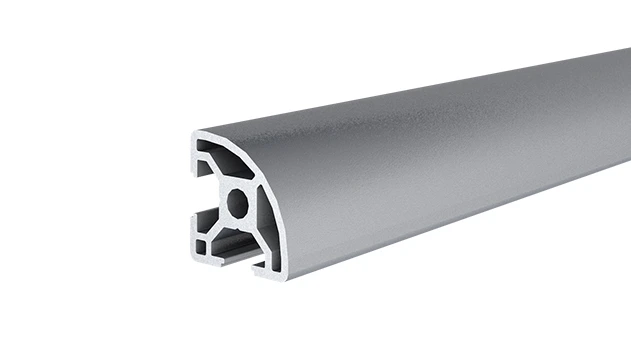
3030R is a 3.00 x 3.00CM fractional 30 series square extrusion T-slot profile with four open T-slots, two side with 3.00cm face, the other side with round face. The profile has align-a-grooves to assist in aligning connecting profiles.
Let's start with a scene we've all seen (or maybe even lived through): A small manufacturing workshop, bustling but chaotic. The workbenches are a hodgepodge of old wooden tables, metal frames that wobble when you lean on them, and surfaces scarred from years of use. Maria, who's been assembling circuit boards here for five years, pauses mid-task to adjust her posture—again. The table is just a little too low, and the edge digs into her forearms. Across the room, Juan is struggling to slide a heavy component bin across a sticky, uneven surface. "This thing hasn't rolled right since last month," he mutters, kicking the wheeled cart in frustration. Sound familiar?
For many teams, workbenches are an afterthought. We focus on the big machines, the high-tech tools, but overlook the humble surface where the actual hands-on work happens. But here's the truth: A well-designed workbench isn't just a table—it's the backbone of your workflow. It's where efficiency is built, where errors are avoided, and where your team spends hours of their day. So why settle for "good enough" when you could have something that actually works with your team, not against them?
That's where the 3030r EU Standard Aluminum Profile comes in. Paired with a design like Workbench E (single deck-without caster) , it's not just a upgrade—it's a transformation. In this article, we'll dive into why this combination matters, how it solves those everyday frustrations, and why it might just be the missing piece in your workshop puzzle.
What Even Is 3030r EU Standard Aluminum Profile, Anyway?
First, let's break down the jargon. "3030r" refers to the profile's dimensions: 30mm by 30mm, with a rounded edge (the "r" stands for "rounded"). It's part of the EU standard aluminum extrusion family, which means it's built to strict quality and safety guidelines—no cutting corners, no cheap materials. Aluminum extrusion is a process where aluminum is pushed through a die to create consistent, precise shapes, and the 3030r is a workhorse in this category.
Why aluminum? Unlike wood, it won't warp or rot. Unlike plain steel, it's lightweight but surprisingly strong—strong enough to support heavy tools, bins of parts, or even a technician leaning on it (we've all done it). And because it's extruded, every piece is identical. No more "this table leg is an inch shorter than the others" problems.
The "EU standard" part is key, too. These profiles aren't just made; they adhere to European norms for tolerances, material thickness, and finish. That means when you buy 3030r from a reputable supplier, you know it will fit with other EU-standard accessories—no guessing if that joint will snap, or if the bolt holes will line up. Consistency might not sound exciting, but ask anyone who's spent an afternoon drilling new holes to make parts fit: It's a game-changer.
But what really makes 3030r stand out is its versatility. Those T-slots running along its length? They're like built-in attachment points. You can add shelves, tool holders, lighting, or even a monitor arm—all without welding or drilling. It's modular, which means if your needs change (and they always do), you can reconfigure it instead of replacing it. Imagine Maria being able to adjust the height of her work surface with a few bolts, or Juan adding a custom bin holder right where he needs it. That's the power of aluminum profiles.
Meet Workbench E: Simple, Smart, and Built for Real Work
Now, let's zoom in on the star of the show: Workbench E (single deck-without caster) . At first glance, it might seem basic: a single flat deck, no wheels, no frills. But that simplicity is intentional. Sometimes, what you need isn't a fancy, multi-tiered contraption—it's a rock-solid, reliable surface that does one job exceptionally well.
Let's start with the "single deck" part. Unlike workbenches with shelves or drawers that can quickly become cluttered, Workbench E keeps things focused. The surface is clear, giving your team room to spread out materials without fighting for space. It's ideal for tasks that need a clean, open area—think assembling small parts, sorting components, or even packing finished products. And because there's no lower shelf, you can tuck stools or chairs under it when not in use, saving floor space in tight workshops.
Then there's the "without caster" detail. You might be thinking, "Why no wheels? Mobility is good, right?" Sometimes, yes—but not always. If your workbench stays in one spot 99% of the time (like Maria's station, which is bolted into a production line), adding casters is just adding unnecessary moving parts that can wear out or wobble. Workbench E skips the wheels to prioritize stability. No more "I was just trying to set this down and the whole bench rolled!" moments. The feet are adjustable, too, so even if your floor isn't perfectly level (and whose is?), you can tweak them to keep the surface steady.
But the real magic is in how the 3030r aluminum profile forms the frame. Let's say you need to add a light above the workbench. Instead of drilling holes in the wall or clamping a rickety lamp to the edge, you can slide a bracket into the T-slot of the 3030r frame and secure it with a bolt. Done. Need a tool rail for screwdrivers and pliers? Same process. The profile acts like a blank canvas, letting you customize the bench to your exact needs—without ruining it in the process.

It's All in the Details: Aluminum Profile Accessories That Make Workbench E Shine
A great frame is nothing without the right parts to hold it all together. That's where aluminum profile accessories come into play. These small, often overlooked components are what turn a pile of aluminum extrusion into a functional, durable workbench. Let's walk through a few that make Workbench E tick.
First up: 3030 aluminum profile end cap . Ever run your hand along a metal frame and get a nasty cut from a sharp edge? Not with these. These caps snap onto the ends of the 3030r profiles, covering the raw edges and adding a clean, finished look. They're made of tough plastic, so they stand up to bumps and scrapes, and they come in colors that can even match your workshop's theme (though let's be real, most people just stick with black or gray—practicality first).
Next, connectors. The 3030r system uses a range of joints and brackets to hold the frame together, and one of the most useful is the 90° aluminum profile connector. These little metal pieces fit into the T-slots and lock two profiles at a right angle—no welding, no glue, just a hex key and a few turns. What's great about them is their adjustability. If you measure wrong (we've all been there), you can loosen the bolt, tweak the angle, and tighten it back up. No need to start over with a new piece of metal.
Then there's the work surface itself. Workbench E typically uses a plywood or MDF top, but it's the aluminum profile frame that makes it sturdy. The 3030r rails run along the edges and crossbars underneath, distributing weight evenly so the surface doesn't sag, even with 50kg of tools and parts on it. And if the top gets too beat up? You can swap it out without replacing the entire frame. Just unscrew the brackets that hold the top to the 3030r rails, pop on a new one, and you're good to go.
Even the little things matter. Take the leveling feet, for example. These screw into the bottom of the 3030r legs and have rubber pads that grip the floor, preventing the bench from sliding. Adjusting them is as easy as twisting the foot—no tools required. Maria, who's been struggling with that low table, could raise her Workbench E by 2cm in 30 seconds flat. Problem solved.
What Makes This Combination Better Than the Rest? Let's Compare
You might be thinking, "Okay, this sounds nice, but why not just buy a cheap steel workbench from the hardware store?" Fair question. Let's put Workbench E (with 3030r aluminum profile) head-to-head with some common alternatives to see how it stacks up.
| Feature | Workbench E (3030r Aluminum) | Cheap Steel Workbench | Wooden Workbench |
|---|---|---|---|
| Weight | Light enough to move (with help), but stable when in place | Very heavy—hard to reposition | Heavy, and prone to warping over time |
| Customization | Add shelves, tool rails, lights via T-slots | Fixed design—no easy modifications | Can drill holes, but permanent and messy |
| Durability | Aluminum resists rust; frame won't bend under normal use | Prone to rust if scratched; welds can crack | Scratches easily; absorbs moisture and warps |
| Ergonomics | Adjustable height via leveling feet; smooth edges | Fixed height; sharp corners common | Often too low; uneven surfaces |
| Long-term Value | Modular—reconfigure or repair instead of replace | Disposable—replace when it breaks | Needs refinishing every few years |
The pattern here is clear: Workbench E isn't just better in one area—it's better across the board for teams that care about long-term usability. It's not the cheapest option upfront, but when you factor in how long it lasts and how easy it is to adapt, it pays for itself in reduced frustration and increased productivity.
From Frustration to Flow: A Real-Life Example
Let's bring this to life with a story. Meet Carlos, the operations manager at a small electronics assembly shop in Barcelona. A year ago, his workshop looked a lot like the chaotic scene we described earlier: old wooden benches, metal carts that didn't roll, and a team that was starting to grumble about the setup. "We were spending more time fixing workbenches than actually working," Carlos told me. "One day, a shelf collapsed and ruined $500 worth of components. That's when I knew we needed a change."
Carlos started researching, and after talking to a lean system supplier (more on that later), he decided to test Workbench E with 3030r aluminum profiles. He ordered three to start—one for Maria's circuit board station, one for Juan's component prep area, and one for the packing team.
The difference was immediate. Maria adjusted her workbench height by 3cm, and "my back doesn't ache at the end of the day anymore," she said. Juan, who'd been struggling with that sticky cart, now has a Workbench E with a roller track (another aluminum profile accessory) built into the side, letting him slide component bins effortlessly. "I used to spend 10 minutes a day just wrestling with that cart," he laughed. "Now I just push and it glides."
Six months later, Carlos has replaced all 12 workbenches with Workbench E models. "The best part? We didn't have to redesign our entire layout," he said. "The 3030r profiles are so modular that we could add shelves and tool holders exactly where we needed them. And when we expanded into a new product line last month, we just reconfigured two benches in an hour. No contractors, no downtime—we did it ourselves."
This isn't an isolated case. Across industries—from automotive repair to jewelry making—teams are finding that the right workbench setup transforms their workflow. It's not about being "fancy"; it's about respecting your team's time and effort by giving them tools that work as hard as they do.
How to Get Started: Finding the Right Lean System Supplier
Okay, you're sold. You want Workbench E with 3030r aluminum profiles. Now what? The key is finding a lean system supplier who knows their stuff. Not all suppliers are created equal—some just sell parts, while others partner with you to design a solution that fits your space and needs.
First, look for a supplier who stocks the full ecosystem: 3030r profiles, Workbench E kits, aluminum profile accessories like end caps and connectors, and even custom parts if you need them. A good supplier will also have technical support—someone who can answer questions like, "Can I add a second deck to Workbench E later?" (Spoiler: Yes, with the right brackets.)
Ask about material quality, too. The 3030r should be EU standard, which means it's made from high-grade aluminum (typically 6063-T5, for those who care about the specs) and tested for strength. Avoid suppliers who cut corners with thin-walled profiles—they might be cheaper, but they'll bend or break under heavy use.
Finally, don't underestimate the value of experience. A supplier who's been in the business for 10 years has seen it all—they'll know common pitfalls, suggest accessories you didn't even know you needed, and maybe even share case studies from businesses like yours. Carlos, for example, worked with a supplier who sent a consultant to his workshop to measure the space and recommend the best layout. "It saved us from ordering the wrong size," he said. "That personal touch made all the difference."
Wrapping Up: More Than a Workbench—It's an Investment in Your Team
At the end of the day, Workbench E and 3030r aluminum profiles aren't just about metal and bolts. They're about creating a workspace where your team feels valued, where frustration is replaced with flow, and where every tool and surface works together to make the job easier.
Think back to that chaotic workshop we started with. Imagine Maria and Juan working at benches that adjust to their height, that stay steady, that let them focus on their work instead of fighting the tools. Imagine a workspace where "I can't" turns into "I can," and "this is a hassle" turns into "this is efficient." That's the power of good design—and it starts with something as simple as a well-built workbench.
So, if you're still using workbenches that were "good enough" five years ago, maybe it's time to ask: What would my team accomplish if their workspace actually worked for them? With Workbench E and 3030r EU Standard Aluminum Profile, the answer might surprise you.