- Company Articles
- Products and Technology
- Product knowledge
- 3030r EU Standard Aluminum Profile: Surface Treatment Options (Anodizing, Powder Coating)

3030r EU Standard Aluminum Profile: Surface Treatment Options (Anodizing, Powder Coating)
Related Product
3030R EU Standard Aluminum Profile
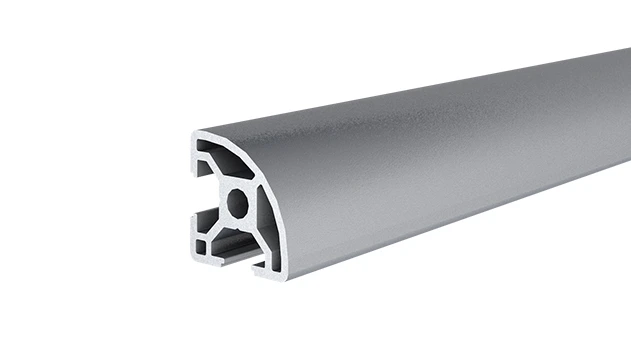
3030R is a 3.00 x 3.00CM fractional 30 series square extrusion T-slot profile with four open T-slots, two side with 3.00cm face, the other side with round face. The profile has align-a-grooves to assist in aligning connecting profiles.
In the bustling world of industrial manufacturing, where precision and efficiency are non-negotiable, the tools and components that form the backbone of production lines often go unnoticed—until they fail. Among these unsung heroes, aluminum profiles stand tall, offering the perfect blend of strength, flexibility, and cost-effectiveness. And when it comes to versatile, industry-standard profiles, the 3030r EU Standard Aluminum Profile is a name that resonates with engineers, facility managers, and lean system suppliers alike. But what makes this profile truly indispensable? Beyond its 30mm x 30mm cross-section and rounded edges (the "r" that gives it a safer, more user-friendly design), its performance hinges on a critical choice: surface treatment. Today, we're diving deep into two of the most popular options—anodizing and powder coating—to help you understand which one best fits your needs, whether you're building workbenches, material racks, or entire lean systems.
Understanding the 3030r EU Standard Aluminum Profile
Before we explore surface treatments, let's take a moment to appreciate the profile itself. The 3030r EU Standard Aluminum Profile is a type of aluminum extrusion profile, crafted through a process where aluminum alloy is forced through a die to create its distinct cross-sectional shape. Its 30mm width and height make it compact enough for tight spaces yet robust enough to support heavy loads—think of it as the Goldilocks of industrial profiles: not too big, not too small, just right for most modular applications.
What sets the "r" variant apart? The rounded edges. In fast-paced environments, sharp edges can pose safety risks—scraped knuckles, torn gloves, or damaged components sliding across the profile. The rounded edges mitigate these hazards, making assembly and daily use safer. Additionally, its T-slot design (a series of longitudinal slots along its length) is a game-changer. These slots allow for easy attachment of aluminum profile accessories: brackets, shelves, casters, or even custom components, all without welding or drilling. This modularity is why lean system suppliers often turn to the 3030r for building everything from workbenches to turnover trolleys and racks.
But raw aluminum, while strong, is vulnerable. Exposed to moisture, chemicals, or even just air, it can corrode, stain, or lose its structural integrity over time. That's where surface treatments come in. Anodizing and powder coating aren't just about making the profile look good—they're about extending its lifespan, enhancing its performance, and ensuring it meets the demands of its environment.
Anodizing: The Protective Oxide Shield
How Anodizing Works
Anodizing is often described as "growing" a protective layer on the aluminum's surface—and that's not far from the truth. Unlike painting or plating, which add a separate coating, anodizing is an electrolytic process that transforms the outermost layer of aluminum into a durable oxide film. Here's a simplified breakdown:
1. Preparation: The 3030r profile is first cleaned to remove any dirt, oil, or oxides. This usually involves degreasing and etching to ensure a uniform surface.
2. Anodizing Bath: The cleaned profile is submerged in an electrolyte solution (typically sulfuric acid) and connected to the positive terminal of a power supply (anode). A cathode is also placed in the bath. When electricity flows, oxygen ions are released at the anode, reacting with the aluminum to form aluminum oxide (Al₂O₃).
3. Oxide Layer Growth: Over time (usually 20–60 minutes, depending on desired thickness), this oxide layer grows from the surface inward. Unlike a painted layer, it's an integral part of the metal—more like a reinforced skin than a coat of paint.
4. Sealing: Finally, the profile is sealed (often in hot water or steam) to close the pores of the oxide layer, enhancing corrosion resistance and preventing staining.
Benefits of Anodized 3030r Profiles
Why choose anodizing for your 3030r EU Standard Aluminum Profile? Let's break down the advantages:
1. Unmatched Durability: The anodized layer is hard—up to three times harder than raw aluminum. This makes the profile resistant to scratches, abrasion, and wear, even in high-traffic areas like assembly lines where tools or components slide across its surface.
2. Corrosion Resistance: Aluminum naturally forms a thin oxide layer, but anodizing thickens and fortifies this layer. In humid environments, near chemicals, or even outdoors, anodized profiles resist rust and degradation far better than untreated aluminum. This is why they're a staple in food processing plants, where moisture and sanitizing agents are constant.
3. Color Stability (with Dyes): While natural anodizing leaves the profile with a silver-gray finish, the porous oxide layer can absorb dyes. This allows for a range of colors (blacks, blues, reds, and more) that are integral to the oxide layer—not just a surface coating. Unlike paint, dyed anodized colors won't fade easily under UV light, making them ideal for applications where aesthetics matter long-term.
4. No Chipping or Peeling: Since the anodized layer is part of the aluminum itself, it can't chip, peel, or flake off—even under stress. This is a stark contrast to coatings like paint or powder coating. This is a huge advantage over painted or plated finishes, which rely on adhesion. This makes anodized profiles ideal for high-wear applications, like workbenches where tools or heavy objects are placed or dragged across the surface.
Ideal Applications for Anodized 3030r Profiles
Anodized 3030r profiles shine in applications where durability is non-negotiable:
- Workbenches (especially in manufacturing, where tools and parts are constantly moved across the surface)
- Food processing equipment (resists bacteria growth, critical for hygiene)
- High-traffic areas (assembly lines, loading docks, or conveyor systems)
- Outdoor use (resists weathering)
Limitations of Anodizing
No treatment is perfect, and anodizing has its constraints: limited color options (compared to powder coating), and it can't hide surface imperfections in the original aluminum (like dents). Also, while it resists wear, it can still scratch if the aluminum is bent severely deformed, but this is rare under normal use.

Powder Coating: The Colorful Alternative
How Powder Coating Works
Powder coating takes a different approach: instead of altering the aluminum, it adds a protective, decorative layer on top. Here's how the process works:
1. Preparation: The 3030r profile is cleaned (degreased, etched) to remove contaminants, ensuring the powder adheres properly.
2. Powder Application: Dry powder (a fine, pigmented plastic resin mixed with colorants and additives) is electrostatically charged and sprayed onto the aluminum using a spray gun. The charged powder sticks to the grounded aluminum profile.
3. Curing: The powder-coated profile is baked in an oven at 180–200°C (350–390°F). The heat melts the powder, which flows into a smooth, even coating and bonds to the aluminum.
The result? A thick, durable layer that's both protective and visually striking.
Benefits of Powder Coated 3030r Profiles
Powder coating offers its own set of advantages that make it a popular choice for the 3030r EU Standard Aluminum Profile:
1. Endless Color and Texture Options: If you need bold colors, metallics, or unique textures, powder coating is unbeatable. From vibrant reds to subtle pastels, metallic finishes, or even textured "wrinkle" or "hammer" effects, the color and texture possibilities are nearly limitless. This is why it's a favorite for applications where aesthetics are front and center.
2. Thicker Protection: Powder coating typically adds 2–6 mils (50–150 microns) to the aluminum's thickness, providing extra protection against impact and wear. This is especially useful for profiles that might be bumped or scraped in daily use.
3. UV Resistance: While not as inherently UV-stable as anodizing, high-quality powder coatings are formulated to resist fading from sunlight, making them suitable for indoor and some outdoor applications.
4. Environmentally Friendly: Powder coating produces little to no volatile organic compounds (VOCs), making it a greener option than many liquid paints. Overspray can also be collected and reused, reducing waste.
Limitations of Powder Coating
Powder coating isn't without drawbacks. Since it's a separate layer, extreme bending or twisting of the aluminum can cause cracks in the coating. It's also thicker than anodizing, so while it can't peel, it can show signs of wear if the aluminum is bent beyond its limits. Additionally, while durable, it's not as scratch-resistant as anodizing—heavy impacts can mar the surface, though not as easily as paint.
Anodizing vs. Powder Coating: A Head-to-Head Comparison
Choosing between anodizing and powder coating for your 3030r EU Standard Aluminum Profile depends on your priorities: durability, aesthetics, environment, or budget. Let's break down the key differences:
| Feature | Anodizing | Powder Coating |
|---|---|---|
| Process | Electrolytically grows an oxide layer on aluminum | Electrostatic application of dry powder, then cured |
| Coating Thickness | 0.5–15 microns (part of aluminum) | 20–150 microns (added to aluminum) |
| Durability | High (scratch/peel resistant) | High (but can mar if aluminum bends) |
| Color Options | Limited (natural silver + dyed options) | Unlimited (solids, metallics, textures) |
| Scratch/Peel Resistance | Excellent (part of the metal) | Good (but can chip if aluminum bends) |
| Cost | Moderate (varies by thickness) | Moderate to high (varies by color/texture) |
| Best For | Wear, corrosion, or chemical exposure | Aesthetics, color variety, or thick protection |
Real-World Applications: When to Choose Which Treatment
To better understand how these treatments perform, let's look at common uses of the 3030r EU Standard Aluminum Profile and which treatment suits each best.
Workbenches: Anodizing for Heavy Use
Workbenches are the heart of any workshop or production line. Whether it's an electronics assembly station, a mechanic's bench, or a packaging table, the workbench surface takes a beating: tools are dropped, parts are dragged, and spills are inevitable. For these workbenches, anodized 3030r profiles are the clear choice. Imagine a workbench built with anodized 3030r frames—no matter how many times a wrench is slammed down on it. The surface remains smooth and intact, even after years of use. Lean system suppliers often recommend anodized 3030r for workbenches in automotive or aerospace facilities, where durability is non-negotiable.
Lean System Racks and Trolleys: Powder Coating for Aesthetics
Lean systems thrive on organization, and visual cues play a big role in that. Material racks, turnover trolleys, and flow racks built with 3030r profiles often use color coding to separate parts (e.g., red for defective items, green for completed ones). Here, powder coating shines. A powder-coated 3030r profile can be colored to match company branding or safety standards, making it easy for workers to identify racks at a glance. For example, a "material rack b (3 row and 3 floor)" in a warehouse might use powder-coated 3030r in blue for raw materials, yellow for work-in-progress, and black for finished goods—all while maintaining the strength needed to hold heavy loads.
Outdoor or Humid Environments: Anodizing for Longevity
If your 3030r profile will be used outdoors (e.g., as part of a shipping dock ramp) or in humid environments (like a commercial kitchen), anodizing is the safer bet. Powder coating can handle some outdoor use, but prolonged exposure to rain, salt, or humidity can cause it to degrade over time. Anodized 3030r, however, stands up to the elements, making it ideal for outdoor modular structures or food processing areas where moisture is constant.
Electronics Production: Anodizing for Cleanliness
In electronics manufacturing, even tiny particles can ruin circuit boards. Anodized 3030r profiles are a staple here because they don't shed debris. ESD workstations (though not a keyword, but relevant to the context) built with anodized 3030r frames ensure that no flakes or chips contaminate sensitive components during assembly. Powder coating, while durable, can release small particles if scratched, making it less suitable for cleanrooms.
Retail Displays: Powder Coating for Visual Appeal
Retail displays need to catch the eye, and powder-coated 3030r profiles deliver. Imagine a cosmetic display rack with sleek, black powder-coated 3030r frames and glass shelves—it looks modern and professional, and the color won't fade under store lighting. Unlike anodizing, powder coating can match brand colors exactly, making it a favorite for retail and trade show displays where aesthetics drive sales.
Integrating with Aluminum Profile Accessories
The 3030r EU Standard Aluminum Profile rarely works alone—it's part of a larger system, paired with aluminum profile accessories to create functional structures. Both anodized and powder-coated 3030r profiles play well with these accessories, but there are a few things to keep in mind.
Aluminum profile accessories like T-slot rubber seal covers, end caps, and connectors are designed to fit the T-slot of the 3030r profile, regardless of surface treatment. For example, a "4040 aluminum profile end cap" will snap into place on both anodized and powder-coated 3030r, though you'll want to ensure the end cap's material (usually plastic or rubber) matches the treatment's durability needs. Similarly, "caster and accessories" like caster wheels attached to a powder-coated 3030r trolley will move smoothly, with the coating protecting the frame from scuffs during transport.
One consideration: if you're using powder-coated 3030r with aluminum profile accessories that require drilling or cutting, the powder coating around the cut area may chip. To avoid this, lean system suppliers often pre-cut and pre-drill powder-coated profiles before shipping, ensuring clean edges.
Choosing the Right Treatment: A Guide for Buyers
Still unsure whether to anodize or powder coat your 3030r EU Standard Aluminum Profile? Ask yourself these questions:
1. What environment will the profile be in? Indoors? Outdoors? Humid? Anodizing for harsh or humid environments; powder coating for controlled indoor settings.
2. What's your top priority: durability or aesthetics? Anodizing for durability; powder coating for color variety and aesthetics.
3. Will the profile be handled roughly? If it will be bumped, scraped, or exposed to heavy wear, choose anodizing.
4. Do you need color coding or branding? Powder coating for custom colors; anodizing for natural silver or dyed (but limited) options.
When in doubt, consult a lean system supplier or aluminum extrusion expert. They can assess your specific application, from workbenches to material racks, and recommend the best treatment for your needs.
Conclusion: The 3030r Profile—Stronger with the Right Treatment
The 3030r EU Standard Aluminum Profile is more than just a piece of metal; it's a building block for efficiency, safety, and innovation in industrial and commercial settings. Whether you choose anodizing for its unbeatable durability or powder coating for its endless color options, the right surface treatment transforms this already versatile profile into a solution tailored to your needs.
For workbenches that stand up to daily abuse, anodized 3030r is the workhorse. For lean system racks that blend functionality with visual organization, powder-coated 3030r is the artist. And with aluminum profile accessories to enhance its versatility, the 3030r profile becomes more than just a component—it becomes the foundation of a system that grows with your business.
So, the next time you're designing a modular structure, remember: the 3030r EU Standard Aluminum Profile is only as strong as its surface treatment. Choose wisely, and it will serve you for years to come.