- Company Articles
- Products and Technology
- Product knowledge
- 304 vs. 316 0.8mm Stainless Steel Pipe: Choosing for Medical vs. Automotive Use

304 vs. 316 0.8mm Stainless Steel Pipe: Choosing for Medical vs. Automotive Use
Related Product
0.8mm Stainless Steel Pipe
Stainless steel pipe, lean pipe, diameter is 28mm, material is SS201 or SS304, SS201 is normally used in the market. It knows a KARAKURI, KAIZEN material for industrial plant to improve efficiency, save labor cost, standard management.
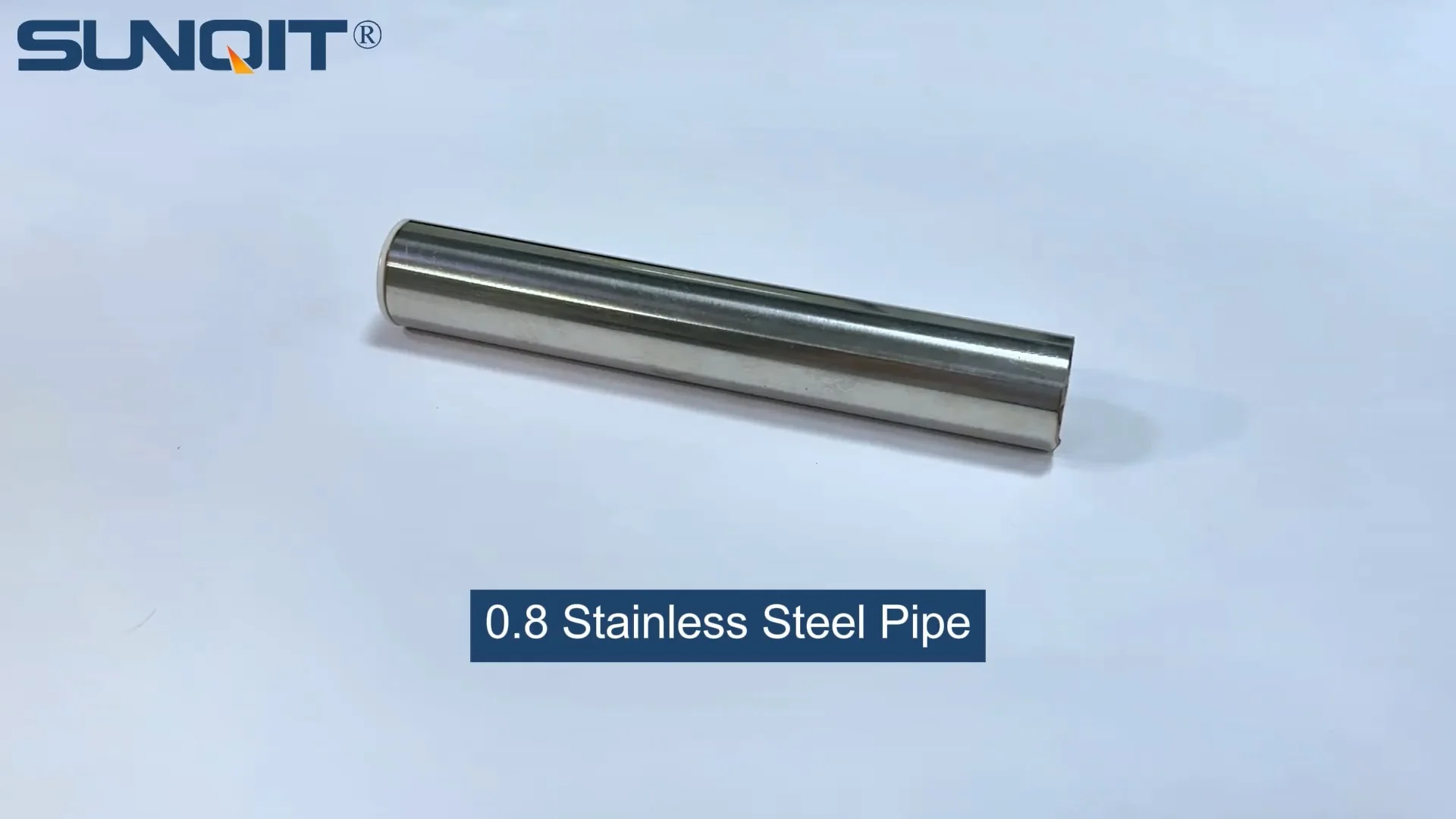
Stainless steel pipes are the unsung heroes of modern industry. They cradle surgical tools in hospitals, guide car parts through assembly lines, and support everything from lab equipment to conveyor belts. But when it comes to selecting the right pipe—especially the 0.8mm thickness that strikes a balance between strength and adaptability—two grades stand out: 304 and 316. While they might look identical to the untrained eye, their differences can make or break performance in critical environments like healthcare and automotive manufacturing. Let's dive into what sets them apart, why 0.8mm matters, and how to choose between them for your industry.
The Basics: What Are 304 and 316 Stainless Steel Pipes?
At their core, both 304 and 316 are austenitic stainless steels, meaning they're non-magnetic, highly ductile, and resistant to corrosion. But their chemical makeup is where the magic (and the differences) lie. Let's break it down simply:
304 Stainless Steel is the most common grade, often called the "workhorse" of stainless steels. It typically contains 18% chromium and 8% nickel—hence the nickname "18/8 stainless." This blend gives it excellent general corrosion resistance, making it ideal for everyday environments. Think of it as the reliable pickup truck of pipes: tough, versatile, and gets the job done without frills.
316 Stainless Steel takes things up a notch with the addition of molybdenum (usually 2-3%), along with higher nickel content (10-14%). Molybdenum is like a superpower for corrosion resistance—it helps the steel stand up to chloride-rich environments, acids, and harsh chemicals. If 304 is a pickup truck, 316 is an armored SUV: built to handle the toughest terrain (or, in this case, the harshest industrial conditions).
Now, the 0.8mm thickness : Why 0.8mm specifically? This isn't arbitrary. Thinner pipes (like 0.5mm) might bend under light loads, while thicker ones (1.2mm+) add unnecessary weight and cost. At 0.8mm, the pipe is rigid enough to support tools, parts, or equipment, yet flexible enough to be bent, cut, or assembled into custom shapes—perfect for modular setups like workbenches or material racks. It's the Goldilocks of thicknesses: not too thin, not too thick, just right for dynamic industries.
The Critical Differences: Corrosion Resistance, Strength, and Cost
To understand why 304 and 316 perform differently, let's zoom into three key areas: how they fight rust, how much punishment they can take, and how hard they hit your wallet.
Corrosion Resistance: The Molybdenum Advantage
Corrosion resistance is where 316 truly shines. In environments with chlorides—think hospital disinfectants (like bleach), saltwater, or industrial cleaners—304 can start to show pitting or staining over time. That's because chloride ions attack the passive chromium oxide layer that protects stainless steel. 316's molybdenum acts as a shield, making it up to 50% more resistant to chloride-induced corrosion than 304.
For example, wipe a 304 pipe daily with a strong disinfectant like sodium hypochlorite (common in hospitals), and you might notice tiny rust spots after a few months. Do the same with 316, and it will stay bright and intact. In dry, low-chemical environments, though, 304 holds its own—its chromium-nickel blend is more than enough to resist everyday moisture and mild detergents.
Mechanical Strength: When Every Millimeter Counts
Both 304 and 316 are strong, but their strength profiles differ slightly. At 0.8mm thickness, 304 has a tensile strength of around 515 MPa (megapascals) and a yield strength of 205 MPa, meaning it can stretch under 515 MPa of force before breaking and starts to bend permanently at 205 MPa. 316 is slightly stronger, with a tensile strength of 520 MPa and yield strength of 210 MPa—negligible differences for most applications, but enough to matter in high-stress setups.
Where 316 pulls ahead is in creep resistance —its ability to withstand long-term stress at high temperatures. This matters in environments like autoclaves (used to sterilize medical equipment) where pipes might be exposed to 132°C (270°F) steam for hours. 304 can weaken over time under such conditions, while 316 remains stable.
Cost: The Bottom-Line Factor
Here's the trade-off: 316 costs about 20-30% more than 304. Why? Molybdenum and higher nickel content are expensive additives. For large-scale projects—like outfitting an entire auto plant with conveyor pipes—those costs add up fast. 304, being more affordable, is often the go-to for budget-conscious applications where corrosion resistance isn't critical. But in industries where failure is costly (like healthcare), 316's premium is worth every penny.

Medical Use: Why 316 0.8mm Pipes Are Non-Negotiable
Hospitals and medical facilities are unforgiving environments for materials. Pipes here are bombarded with aggressive disinfectants, constant moisture, and strict sterilization protocols. Let's explore why 316 is the gold standard, and why 0.8mm thickness is the perfect fit.
Fighting Harsh Chemicals: Disinfectants and Sterilizers
Walk into any hospital, and you'll smell the sharp tang of disinfectants. From wipes soaked in quaternary ammonium compounds to spray bottles of hydrogen peroxide, medical surfaces (and the pipes supporting them) are under constant chemical attack. 304, while corrosion-resistant, can't stand up to repeated exposure to these agents. Over time, its surface may develop micro-pits, which harbor bacteria—exactly what healthcare settings need to avoid.
316, however, laughs in the face of these chemicals. Its molybdenum barrier prevents pitting, ensuring the pipe remains smooth and easy to clean. This is critical for biocompatibility —the pipe must not react with human tissue or fluids if it comes into contact (e.g., in surgical tool holders or IV stands). Organizations like the FDA and ISO (International Organization for Standardization) have strict standards for medical-grade materials, and 316 consistently meets or exceeds them, often certified under ISO 13485 for medical device manufacturing.
Sterilization Survival: Autoclaves and Beyond
Medical equipment isn't just cleaned—it's sterilized, often in autoclaves that use high-pressure steam at 134°C (273°F) for 30+ minutes. This process is brutal on materials, but 316's creep resistance ensures the 0.8mm pipe won't warp or weaken over thousands of sterilization cycles. 304, by contrast, may start to lose structural integrity after prolonged exposure to such heat, leading to bent frames or loose joints in equipment like surgical instrument trays.
0.8mm in Medical Settings: Lightweight yet Reliable
In healthcare, equipment needs to be mobile—think rolling carts for meds, portable workbenches for procedures, or adjustable IV poles. A thicker pipe would add unnecessary weight, making these tools harder to maneuver. 0.8mm hits the sweet spot: it's light enough for easy movement (a typical 1-meter 0.8mm 316 pipe weighs just 0.25 kg) but strong enough to support 10-15 kg of equipment without bending. This balance is why you'll find 0.8mm 316 pipes in everything from dental chairs to lab centrifuges.
Real-world example: A children's hospital in Chicago once switched from 304 to 316 pipes for their surgical tool carts after nurses reported frequent rust spots on 304 frames, even with daily cleaning. Within six months, the 316 carts showed zero corrosion, reducing replacement costs by 40% and eliminating infection risk from pitted surfaces.

Automotive Use: Why 304 0.8mm Pipes Are the Practical Choice
Automotive manufacturing is a world of speed, precision, and cost efficiency. Pipes here need to support heavy parts, withstand vibrations, and fit into tight, ever-changing assembly lines—all without breaking the bank. For most automotive applications, 304 0.8mm pipes are more than up to the task.
Corrosion Resistance: Enough for the Factory Floor
Automotive plants aren't chemical war zones. While there's oil, coolant, and occasional water exposure, the environment is far less corrosive than a hospital. 304's chromium-nickel blend easily resists these mild contaminants. Even in regions with high humidity, 304 pipes will stay rust-free for years with basic cleaning. Unless the pipe is exposed to saltwater (e.g., near coastal factories) or harsh degreasers daily, 316's extra corrosion resistance is overkill.
Strength for Structural Support: From Conveyors to Workbenches
Automotive factories rely on 0.8mm pipes for modular systems like roller tracks , workbenches, and material racks. These setups need to support car parts—think engine components, door panels, or wiring harnesses—that can weigh 5-10 kg. 304's tensile strength of 515 MPa at 0.8mm thickness is more than enough to handle these loads without bending. For example, a 0.8mm 304 pipe used as a crossbar in a conveyor system can support 12 kg of weight per meter without permanent deformation.
What's more, 304's ductility makes it easy to shape into custom frames. Automotive manufacturers love modular systems because production lines change frequently—today's sedan line might become tomorrow's SUV line. 0.8mm 304 pipes can be cut, bent, and reconnected with lean pipe joints in hours, allowing factories to reconfigure workstations or conveyor paths without replacing entire systems.
Cost Savings: When Every Cent Counts
Automotive manufacturing is a low-margin industry—saving $1 per pipe adds up when you're buying thousands. 304 is typically 20-30% cheaper than 316, which can translate to six-figure savings for large factories. For example, a mid-sized auto plant using 10,000 meters of 0.8mm pipe annually would save $15,000-$25,000 by choosing 304 over 316—funds better spent on robotics or quality control.
Case in point: A major automaker in Michigan switched from 316 to 304 for non-critical areas like storage racks and tool holders. After two years, they reported no increase in pipe failures, but a 22% drop in material costs. The only exception? Pipes near the paint shop, where harsh solvents required 316—proving that smart selection means matching the grade to the environment.
304 vs. 316: A Side-by-Side Comparison for Medical and Automotive
| Criteria | 304 0.8mm Pipe | 316 0.8mm Pipe | Best for Medical? | Best for Automotive? |
|---|---|---|---|---|
| Corrosion Resistance | Good (resists mild chemicals, moisture) | Excellent (resists chlorides, strong disinfectants) | 316 (needs to withstand harsh cleaners) | 304 (mild environment) |
| Chemical Compatibility | Works with water, oil, mild detergents | Works with bleach, acids, saltwater, disinfectants | 316 (frequent exposure to medical chemicals) | 304 (limited chemical exposure) |
| Mechanical Strength | Tensile: 515 MPa; Yield: 205 MPa | Tensile: 520 MPa; Yield: 210 MPa | Either (both strong enough for medical tools) | Either (both strong enough for parts handling) |
| Cost | Lower (20-30% cheaper than 316) | Higher (premium for molybdenum) | 316 (cost justified by performance) | 304 (cost savings critical) |
| Common Uses | Roller tracks, workbenches, storage racks | Surgical tool carts, IV stands, lab equipment | 316 (medical-grade equipment) | 304 (factory infrastructure) |
Choosing the Right Supplier: More Than Just a Pipe
Once you've decided between 304 and 316, the next step is finding a supplier you can trust. Not all stainless steel pipes are created equal—even within the same grade, quality can vary wildly. Here's what to look for:
Certifications: Proof of Quality
Reputable suppliers will have certifications that back their claims. For medical applications, look for ISO 13485 (specific to medical devices) and material certifications like ASTM A249 (for seamless stainless steel pipes). For automotive, ISO 9001 (quality management) and SAE J525 (automotive stainless steel standards) are musts. These certifications ensure the pipe meets strict chemical and mechanical specs.
Material Traceability: Know What You're Getting
A good supplier can trace every pipe back to its raw material. Ask for a mill test report (MTR), which shows the pipe's chemical composition (e.g., chromium, nickel, molybdenum levels) and mechanical properties (tensile strength, yield strength). This is critical for medical applications—you need to prove the pipe is biocompatible. For automotive, it ensures consistency across batches, so your conveyor systems or workbenches perform the same every time.
Thickness Consistency: Why 0.8mm Must Be 0.8mm
Even a 0.1mm deviation in thickness can affect performance. A pipe that's too thin (0.7mm) might bend under load; one that's too thick (0.9mm) adds unnecessary weight and cost. Look for suppliers with strict quality control—they should test thickness at multiple points along each pipe. For example, a reliable stainless steel pipe series supplier will have automated gauges that measure thickness to ±0.02mm accuracy.
Accessories and Support: Beyond the Pipe
Pipes don't work alone—you'll need joints, connectors, and brackets to build systems like roller tracks or workbenches. Choose a supplier that offers a full range of lean pipe and accessories , including lean pipe joints and roller track connectors. This saves time and ensures compatibility—mismatched joints can weaken your setup.
Final Thoughts: Matching Pipe to Purpose
At the end of the day, choosing between 304 and 316 0.8mm stainless steel pipes comes down to one question: What's your environment? For medical settings with harsh chemicals, frequent sterilization, and zero tolerance for corrosion, 316 is worth the investment. For automotive factories where cost, strength, and flexibility matter most, 304 is the practical choice.
And remember, 0.8mm thickness is the sweet spot for both industries—it's strong enough to support critical loads, flexible enough to adapt to changing needs, and lightweight enough to keep systems mobile. Pair it with a reputable supplier, and you'll have pipes that work as hard as you do.
So whether you're building a surgical tool cart or a car part conveyor, take the time to choose the right grade. Your equipment, your budget, and your peace of mind will thank you.