- Company Articles
- Products and Technology
- Procurement Guidelines
- 3060 Aluminum Angle Yards Buying Guide: What to Look for in a Supplier

3060 Aluminum Angle Yards Buying Guide: What to Look for in a Supplier
Related Product
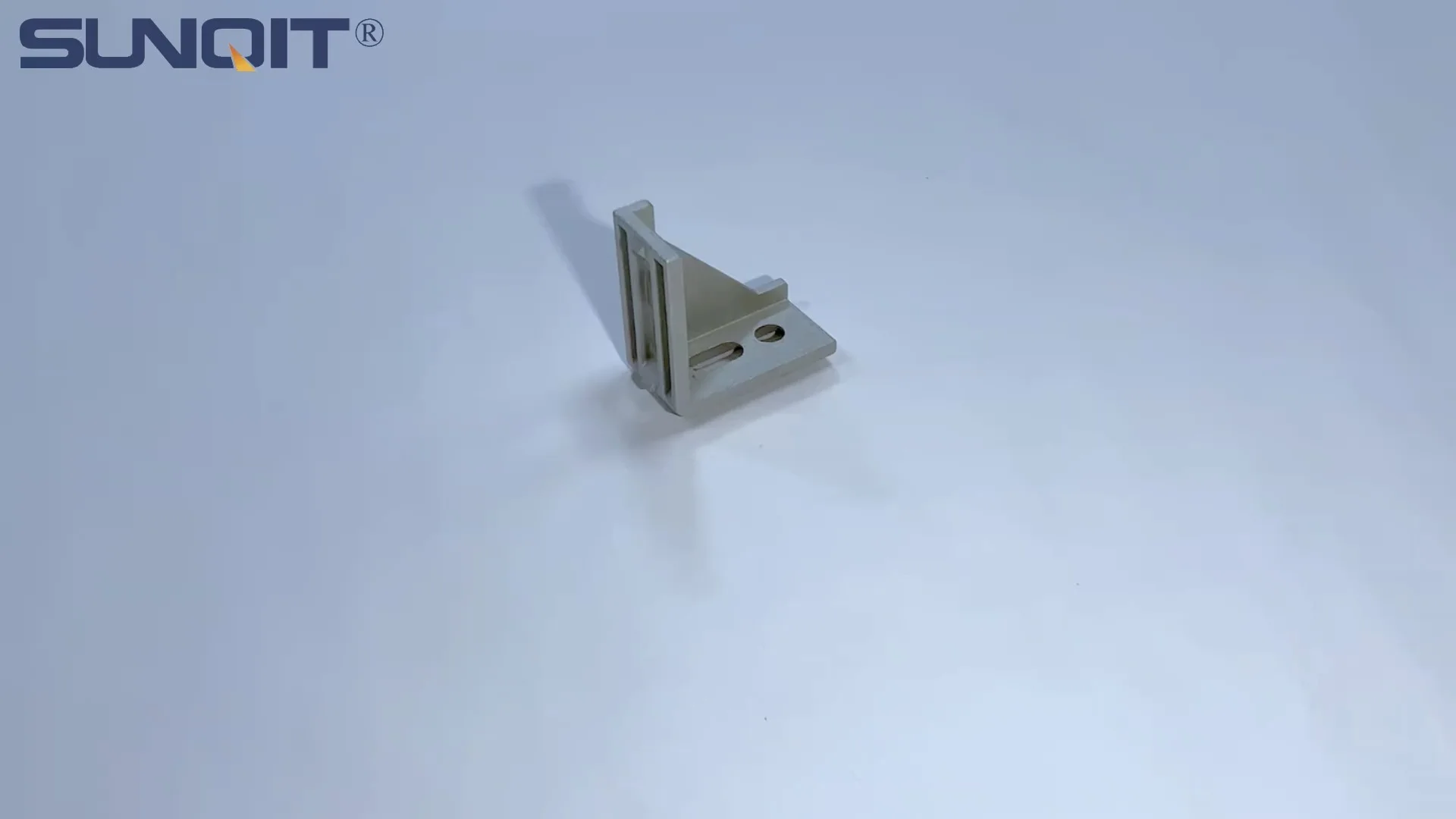
3060 Aluminum Angle Yards
It used for 90° flat connection for 20 series aluminum profile.
Let's start with a story we've all heard (or lived). Last quarter, Mike, the operations director at a small automotive parts workshop, needed to upgrade his team's assembly stations. The old workbenches were wobbly, materials kept sliding off, and his crew was wasting 20 minutes a day just readjusting tools. He'd read that switching to aluminum profile workbenches—reinforced with 3060 aluminum angle yards—could fix the problem. So he searched online, found a supplier with "the lowest prices in town," and hit "order."
Three weeks later, the shipment arrived. Mike's team unboxed the angle yards, grabbed their drills, and got to work. But as they tried to bolt the angles to the 3060 aluminum profiles, something felt off. The pre-drilled holes didn't line up. The edges were jagged, scratching a few team members' gloves. Worst of all, when they finally forced a few pieces together, the joints bent under the weight of a 20-pound toolbox. "These are supposed to be industrial-grade," Mike muttered, staring at the warped metal. Two days of delays, a frustrated crew, and a $1,200 mistake later, he realized: Choosing the right supplier for 3060 aluminum angle yards isn't just about finding a good price. It's about finding a partner who understands your workflow, your deadlines, and the difference between "good enough" and "reliable."
If you've ever felt Mike's pain—whether you're kitting out a new factory floor, upgrading a lab workspace, or building custom material racks—this guide is for you. We're breaking down what to look for in a supplier, why cutting corners on 3060 aluminum angle yards costs more in the long run, and how to spot red flags before you hit "buy now." Let's dive in.
Why 3060 Aluminum Angle Yards Matter (More Than You Think)
First, let's get clear on what 3060 aluminum angle yards are—and why they're the unsung heroes of your workspace. These L-shaped aluminum brackets are designed to connect, reinforce, or support 3060 aluminum extrusion profiles—the backbone of modern lean manufacturing setups. Think of them as the "glue" that holds your workbench steady when you're hammering, keeps your flow rack from tipping when loaded with parts, or ensures your conveyor system's rails stay aligned during a 12-hour shift.
But not all angle yards are created equal. A cheap, poorly made one might save you $5 per unit upfront, but if it bends, cracks, or misaligns, you're looking at:
- Production delays (like Mike's team, stuck waiting for replacements)
- Worker frustration (no one likes wrestling with parts that don't fit)
- Safety risks (jagged edges, unstable structures, or tools sliding off wobbly surfaces)
- Hidden costs (replacing bent brackets, repairing damaged profiles, or even losing client orders due to missed deadlines)
The good news? With the right supplier, 3060 aluminum angle yards become invisible in the best way—they do their job quietly, reliably, and for years. So how do you find that supplier? Let's break down the key factors.
Key Factor #1: Quality—It Starts with the Aluminum Itself
When evaluating a supplier, the first question to ask is: "What grade of aluminum are your angle yards made from?" Most industrial-grade angle yards use either 6061 or 6063 aluminum alloys—and there's a big difference between the two.
6061 aluminum is known for its high strength and weldability, making it ideal for heavy-duty applications (think workbenches that hold 500+ pounds or material racks stacked with metal parts). 6063 aluminum, on the other hand, is more malleable and has a smoother finish, which works well for lighter setups like lab tables or display racks. A reputable supplier will clearly state which alloy they use—and why it's the best fit for 3060 profiles.
But alloy grade is just the start. You also need to check for precision in manufacturing. 3060 aluminum extrusion profiles have standardized dimensions (30mm x 60mm, hence "3060"), and the angle yards should match those specs exactly. That means:
Hole alignment: The mounting holes should line up perfectly with the T-slots on your 3060 profiles. Even a 1mm misalignment can make assembly a nightmare. Ask the supplier for tolerance specs—look for ±0.1mm or better.
Edge finish: Rough, sharp edges are a safety hazard and a sign of shoddy manufacturing. High-quality angle yards will have deburred edges (smooth to the touch) and a consistent anodized or powder-coated finish to resist corrosion.
Load capacity: Don't just take the supplier's word for it. Ask for test reports or certifications (like ISO 9001) that verify the angle yards can handle the weight you need. For example, if you're building a workbench for automotive parts, you'll want angle yards rated for at least 300kg per joint.
Here's a pro tip: Request a sample before placing a bulk order. A good supplier will send you a few pieces (sometimes for free, sometimes for a small fee) so you can test fit, check finish, and even stress-test them. Mike skipped this step—and paid for it. Don't be Mike.

Key Factor #2: Range of Accessories (Because Your Workspace Needs More Than Just Angle Yards)
3060 aluminum angle yards rarely work alone. To build a fully functional workspace, you'll probably need other aluminum profile accessories: end caps to cover sharp profile edges, brackets to mount shelves, or connectors to join profiles at odd angles. That's why it's smart to choose a supplier who offers more than just angle yards—ideally, a full range of compatible parts.
Why does this matter? Let's say you order angle yards from Supplier A and brackets from Supplier B. If their parts aren't designed to work together, you might end up with brackets that are too loose, or angle yards that are too thick to fit into the bracket slots. Suddenly, you're stuck ordering adapters, wasting time, or even scrapping one of the orders.
A one-stop supplier, on the other hand, ensures all parts are engineered to pair seamlessly with 3060 profiles and each other. Look for suppliers who list compatible accessories like:
- End caps (to protect profiles and add a clean look)
- Corner brackets (for 90° or 45° joins beyond angle yards)
- Panel mounts (to attach plywood, metal sheets, or acrylic to profiles)
- Adjustable feet (to level workbenches on uneven floors)
Bonus points if the supplier offers custom cutting or drilling. Maybe you need angle yards 15cm long instead of the standard 20cm, or holes drilled at specific intervals for a unique setup. A flexible supplier can handle these requests without charging exorbitant fees.

Key Factor #3: Reliability—Can They Deliver When You Need It?
Imagine this: You're in the middle of a workshop upgrade, and your current workbenches are already disassembled. Your crew is working out of temporary stations, and you've promised the new setup will be ready by Monday. Then your angle yards supplier calls: "Sorry, there's a delay—we'll have them to you by next Friday."
Nightmare scenario, right? That's why reliability—specifically, on-time delivery—is non-negotiable. A supplier might have the best quality angle yards in the world, but if they can't meet your timeline, they're useless.
So how do you gauge a supplier's reliability? Start by asking:
- What's your average lead time? For standard angle yards, it should be 3–5 business days. Custom orders might take longer, but the supplier should give you a clear timeline upfront.
- How do you handle delays? Life happens—shipping issues, material shortages, etc. A good supplier will communicate proactively (not wait for you to chase them) and offer solutions, like expedited shipping or a discount on the next order.
- Do you keep stock of common sizes? If you need 3060 angle yards in 20cm and 30cm lengths, a supplier with local warehousing can ship them same-day or next-day. Suppliers who manufacture to order (with no stock) will always have longer lead times.
You can also check online reviews or ask for references. Search for phrases like "[Supplier Name] on-time delivery" or "[Supplier Name] delay" to see what other customers say. If multiple reviews mention "consistent delays" or "poor communication," take that as a red flag.

Key Factor #4: Technical Support (Because Even Pros Need Help Sometimes)
Not everyone is an expert in aluminum profiles. Maybe you're building your first flow rack and aren't sure if 3060 angle yards are strong enough, or you're trying to design a custom workstation with odd angles. That's where technical support comes in—and it's a make-or-break factor for many buyers.
A great aluminum profile supplier doesn't just sell parts—they act as a consultant. Look for suppliers who offer:
- Engineer availability: Some suppliers have in-house engineers who can review your designs, suggest better angle yard placements, or even help you calculate load capacities.
- CAD files or design guides: Digital files (like 3D models or 2D drawings) make it easier to plan your setup in software like AutoCAD or SketchUp. Bonus points for video tutorials on assembly or installation.
- Responsive customer service: If you email or call with a question, you should get a reply within 24 hours. Avoid suppliers who take days to respond or give vague answers like, "I think that'll work."
Case in point: Maria, a lab manager in California, needed to build a custom workstation for a new microscope. She wasn't sure which angle yards to use, so she called her supplier. The supplier's engineer walked her through the specs, suggested reinforced angle yards for the heavy microscope base, and even sent a CAD drawing of the setup. The result? A workstation that's been running smoothly for two years, with zero issues. That's the power of good technical support.
Comparing Suppliers: A Quick Reference Table
To make your decision easier, we've put together a comparison of three hypothetical suppliers (based on common industry players). Use this as a template when evaluating your own options:
| Factor | Supplier X (Budget Option) | Supplier Y (Mid-Range) | Supplier Z (Premium) |
|---|---|---|---|
| Aluminum Alloy | 6063 (unverified grade) | 6061-T6 (certified) | 6061-T651 (ISO 9001 certified) |
| Hole Tolerance | ±0.5mm (inconsistent) | ±0.2mm | ±0.1mm |
| Accessories Offered | Only angle yards | Angle yards, brackets, end caps | Full range: angle yards, brackets, connectors, panels, casters |
| Lead Time (Standard) | 7–10 days (no stock) | 3–5 days (local warehouse) | 1–3 days (same-day shipping for stock items) |
| Technical Support | Email only (2–3 day response) | Phone/email (24-hour response) | 24/7 phone support + engineer consultations |
| Sample Availability | No samples offered | Free samples (up to 5 pieces) | Free samples + custom sample cuts |
| Price (Per 20cm Angle Yard) | $3.50 | $5.20 | $7.80 |
Notice how Supplier X is the cheapest, but skimps on quality, support, and lead time. Supplier Z is pricier, but offers certified materials, fast shipping, and expert help. Which is right for you? If you're building a prototype or have a tight budget, Supplier Y might be the sweet spot. If you need reliability for a high-stakes production line, Supplier Z is worth the investment.
Red Flags to Watch For (Avoid These Suppliers Like the Plague)
By now, you know what to look for in a great supplier. But what about the ones to avoid? Here are five red flags that should make you hit "back" on their website:
- Vague product descriptions: If their 3060 angle yards listing says "aluminum angle bracket" with no mention of alloy grade, tolerance, or load capacity, run. They either don't know their product—or don't want you to know.
- No contact information: A supplier with only a "contact form" (no phone number, address, or email) is a red flag for fly-by-night operations. Legitimate suppliers list their physical location and direct contact details.
- Refusal to provide samples: If they say, "We don't do samples," ask why. The only good reason is if they're a tiny manufacturer with no stock—but even then, they should offer a paid sample. Most likely, they're hiding poor quality.
- Rock-bottom prices: If a supplier's angle yards are 50% cheaper than everyone else, they're cutting corners—either in material quality, manufacturing precision, or labor. Remember Mike's $1,200 mistake?
- Pushy sales tactics: If a sales rep pressures you to "buy now before prices go up" or "order 1000 units to get a discount," be wary. A good supplier lets you take your time to evaluate their product.
Final Thoughts: It's About Partnership, Not Just Parts
Choosing a supplier for 3060 aluminum angle yards isn't just a transaction—it's the start of a partnership. The right supplier will help you build a workspace that's efficient, safe, and built to last. The wrong one will cost you time, money, and headaches.
So take your time. Ask questions. Request samples. Check reviews. And remember: The best supplier isn't always the cheapest or the fanciest—it's the one who listens to your needs, delivers on their promises, and makes your job easier. After all, your team deserves a workspace that works as hard as they do.
Now go out there and find your perfect supplier. And if you ever need a sounding board? Come back and re-read this guide. We'll be here.