- Company Articles
- Products and Technology
- Product knowledge
- 3060 Aluminum Angle Yards: Custom Finishes for Industry-Specific Needs

3060 Aluminum Angle Yards: Custom Finishes for Industry-Specific Needs
Related Product
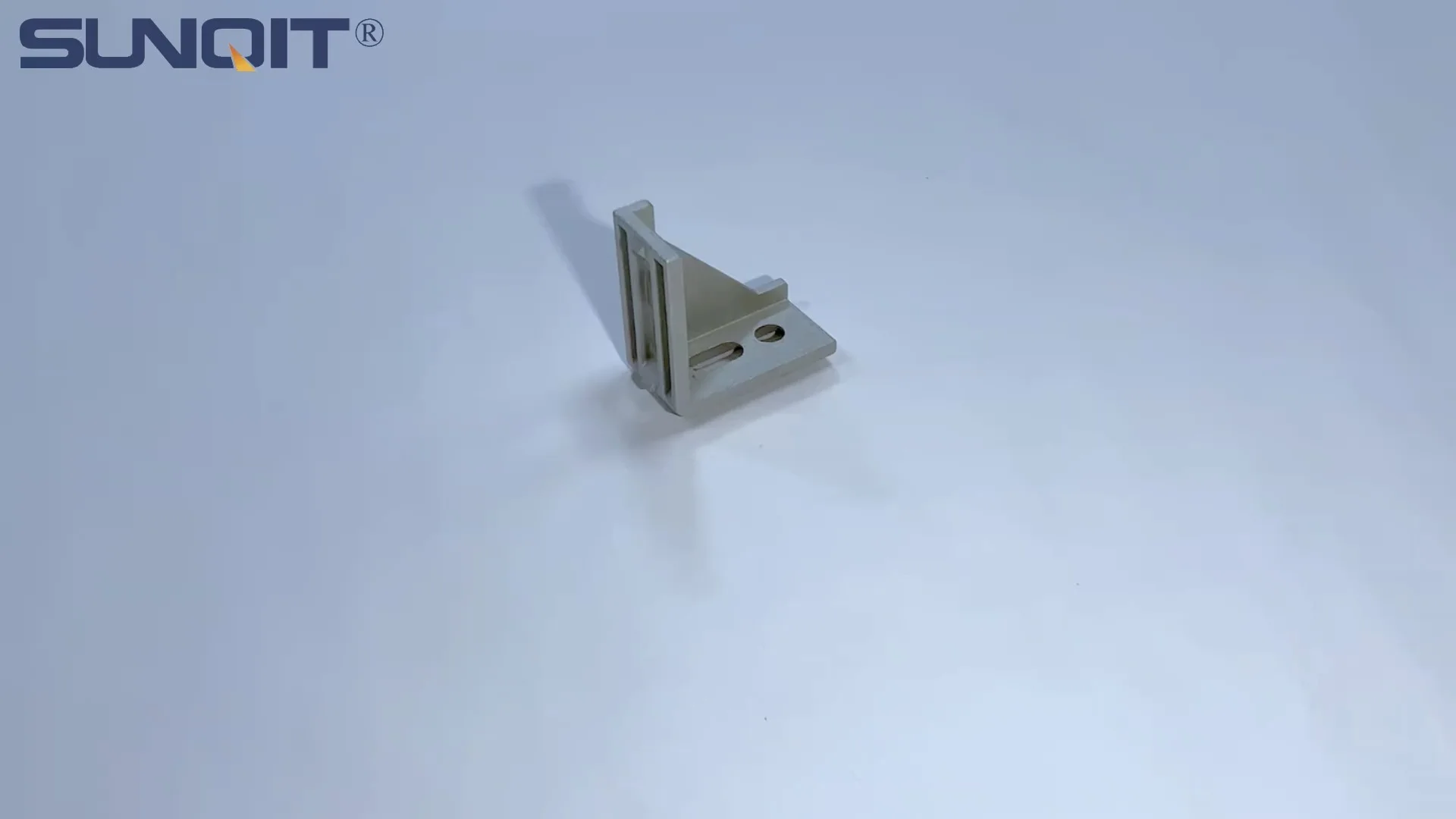
3060 Aluminum Angle Yards
It used for 90° flat connection for 20 series aluminum profile.
In the fast-paced world of modern manufacturing, where precision, adaptability, and efficiency are the cornerstones of success, the smallest components often play the biggest roles. From the assembly lines of automotive plants to the clean rooms of electronics factories, every tool, bracket, and frame must work in harmony to keep operations running smoothly. Among these unsung heroes are aluminum profiles—versatile, lightweight, and durable building blocks that form the backbone of countless industrial systems. Today, we're shining a spotlight on a specific star in this category: 3060 Aluminum Angle Yards . These L-shaped extrusion profiles are more than just structural elements; they're customizable solutions designed to meet the unique demands of diverse industries. In this article, we'll explore how custom finishes transform these angle yards from generic components into industry-specific assets, and why they've become indispensable for manufacturers aiming to stay ahead in a competitive landscape.
What Are 3060 Aluminum Angle Yards, Anyway?
Before diving into custom finishes, let's start with the basics: What exactly are 3060 Aluminum Angle Yards? At their core, they're a type of aluminum extrusion profile —meaning they're formed by pushing heated aluminum through a die to create a specific cross-sectional shape. The "3060" refers to their dimensions: 30mm in one leg and 60mm in the other, forming a right angle (L-shape). This unique size strikes a balance between strength and versatility, making them ideal for applications where moderate structural support is needed without excessive weight.
Unlike generic steel angles, aluminum angle yards bring the inherent benefits of aluminum to the table: exceptional corrosion resistance, low density (about one-third the weight of steel), and impressive strength-to-weight ratio. But what truly sets them apart is their role as modular components. They're designed to integrate seamlessly with aluminum profile accessories like brackets, connectors, and fasteners, allowing manufacturers to build everything from workbenches and material racks to conveyor frames and machine guards—all with minimal tools and maximum flexibility.
Think of them as the "building blocks" of industrial design. A furniture manufacturer might use them to frame lightweight shelving; an automotive plant could rely on them to support assembly line workstations; a pharmaceutical company might incorporate them into cleanroom storage systems. Their adaptability is unmatched, but it's their ability to be customized—especially through finishes—that elevates them from useful to essential.
Why Custom Finishes Matter: It's Not Just About Looks
At first glance, you might assume a finish is purely aesthetic—a way to make a metal component look nicer. But in industrial settings, finishes do much more than boost curb appeal. They're functional, protective, and often critical to meeting industry-specific regulations. For 3060 Aluminum Angle Yards, custom finishes can mean the difference between a component that lasts 6 months and one that endures for years, or between a system that meets safety standards and one that falls short.
Consider a food processing plant, where equipment is constantly exposed to water, cleaning chemicals, and food particles. A standard aluminum finish might corrode over time, leading to contamination risks and costly replacements. But a specialized anodized finish could create a protective barrier, resisting corrosion and making the angle yards easy to sanitize. Similarly, in an electronics manufacturing facility, static electricity is a constant threat to sensitive components. A conductive or static-dissipative finish on angle yards could prevent electrostatic discharge (ESD) damage, saving thousands in product losses.
In short, custom finishes turn 3060 Aluminum Angle Yards into problem-solvers. They address environmental challenges (moisture, chemicals, temperature), functional needs (grip, conductivity, reflectivity), and compliance requirements (hygiene, safety, sustainability). And with the rise of lean system practices—where waste reduction and process optimization are prioritized—having components tailored to specific tasks has become more important than ever. Why invest in a one-size-fits-all solution when a customized finish can make your angle yards work harder, last longer, and integrate better with your existing systems?

Common Custom Finishes for 3060 Aluminum Angle Yards: A Closer Look
Now that we understand why custom finishes are vital, let's explore the most popular options and how they serve different industries. The table below breaks down key finishes, their features, and ideal applications:
| Finish Type | Key Features | Ideal Industries | Real-World Applications |
|---|---|---|---|
| Anodized (Clear/Black) | Thin oxide layer; corrosion-resistant, scratch-resistant, non-toxic | Food processing, healthcare, marine | Cleanroom shelving, medical device workstations, boat dock framing |
| Powder Coated (Custom Colors) | Durable, chip-resistant, wide color range, UV-stable | Automotive, retail, construction | Assembly line workbenches, store display racks, outdoor signage frames |
| Electrophoretic (E-Coat) | Uniform coverage, high adhesion, corrosion protection | Heavy machinery, agricultural equipment | Tractor component frames, industrial conveyor supports |
| Chemical Conversion (Chromate/Phosphate) | Improves paint adhesion, corrosion resistance (pre-treatment) | General manufacturing, aerospace | Preparing angle yards for powder coating, aircraft interior framing |
| ESD-Safe (Conductive/Static-Dissipative) | Controls static electricity, prevents ESD damage | Electronics, semiconductor | PCB assembly workstations, server rack frames |
Let's dive deeper into a few of these finishes to understand how they work and why they're game-changers for specific sectors.

Anodizing: The Workhorse Finish for Corrosion Resistance
Anodizing is one of the most popular finishes for aluminum profiles, and for good reason. It's a electrochemical process that grows a layer of aluminum oxide on the surface of the angle yard, essentially turning the metal into its own protective coating. Unlike paint, which sits on top of the metal, anodized layers are integrated with the aluminum, making them incredibly durable and scratch-resistant.
Clear anodizing is ideal for industries where visibility or a natural aluminum look is preferred, such as architectural framing or medical equipment. Black anodizing, achieved by adding dyes during the process, offers the same protection with a sleek, professional appearance—perfect for high-end retail displays or automotive components where aesthetics matter. Both options are non-toxic, making them safe for food contact (a must for food processing plants) and easy to clean (critical in healthcare settings).
One of the biggest advantages of anodizing is its versatility. It can be done in different thicknesses, with thicker layers offering enhanced corrosion resistance for harsh environments like coastal areas or wastewater treatment plants. For 3060 Aluminum Angle Yards used in outdoor applications—such as outdoor storage racks or construction scaffolding—thick anodizing can withstand rain, salt spray, and UV rays, ensuring the angle yards remain structurally sound for decades.

Powder Coating: Color, Durability, and Brand Identity
If you've ever noticed a vibrant, uniform color on industrial equipment—think bright yellow safety rails or deep blue machinery parts—there's a good chance it's powder coated. Powder coating involves applying a dry powder (typically a thermoplastic or thermoset polymer) to the aluminum surface, then curing it in an oven to form a hard, durable finish. Unlike liquid paint, powder coating has no solvents, reducing VOC emissions and making it an eco-friendly choice.
For 3060 Aluminum Angle Yards, powder coating offers two key benefits: customization and toughness. With hundreds of colors and finishes (matte, gloss, metallic, textured), manufacturers can match angle yards to brand colors or use color-coding to improve workflow efficiency. For example, a logistics company might use red angle yards for high-priority material racks and blue for general storage, making it easier for workers to identify zones at a glance.
Durability is another major plus. Powder-coated finishes are resistant to chipping, fading, and abrasion, making them ideal for high-traffic areas like warehouse workbenches or assembly line frames. They also stand up well to chemicals, which is why you'll often see powder-coated angle yards in automotive repair shops, where oil, grease, and cleaning solvents are common. And because the powder bonds so tightly to the aluminum, the finish is less likely to peel or crack over time, reducing maintenance costs.
ESD-Safe Finishes: Protecting Sensitive Electronics
In the world of electronics manufacturing, static electricity is a silent enemy. A single electrostatic discharge can damage microchips, circuit boards, or sensors, rendering products useless. That's why ESD-safe environments require every component—including 3060 Aluminum Angle Yards—to be designed to control static.
ESD-safe finishes for angle yards typically fall into two categories: conductive and static-dissipative. Conductive finishes allow static charge to flow quickly to ground, preventing buildup. Static-dissipative finishes, on the other hand, slow the rate of discharge, reducing the risk of a sudden surge that could damage sensitive components. Both types are formulated with additives (like carbon or metal particles) that give the finish electrical conductivity.
For example, a semiconductor plant might use 3060 Aluminum Angle Yards with a conductive black powder coat to frame workstations where workers handle microprocessors. The finish would ensure any static charge from the worker's body or tools is safely grounded through the angle yards, protecting the chips from ESD damage. Similarly, in a data center, ESD-safe angle yards might support server racks, preventing static from interfering with hard drives or networking equipment.
What's impressive about these finishes is their ability to combine functionality with other benefits. An ESD-safe anodized finish, for instance, could offer both static control and corrosion resistance, making it suitable for cleanrooms where both ESD and hygiene are priorities. This versatility is why ESD-safe 3060 Aluminum Angle Yards have become a staple in electronics manufacturing, medical device production, and any industry handling sensitive technology.
Choosing the Right Finish: A Guide for Manufacturers
With so many finish options available, how do you choose the right one for your 3060 Aluminum Angle Yards? The key is to start by asking the right questions about your application, environment, and goals. Here's a step-by-step guide to help you decide:
1. Assess Your Environment
Where will the angle yards be used? Indoors or outdoors? Will they be exposed to moisture, chemicals, UV light, or extreme temperatures? For example, outdoor applications (like outdoor storage racks) need finishes that resist UV fading and corrosion (anodizing or powder coating). Indoor cleanrooms might require non-porous, easy-to-clean finishes (anodizing or ESD-safe powder coating). Write down all environmental stressors to narrow down options.
2. Identify Functional Needs
What does the finish need to do ? Do you need static control (ESD-safe), slip resistance (textured powder coating), or conductivity (conductive finishes)? If the angle yards will be part of a lean system , consider how the finish can support efficiency—like color-coding for workflow or a smooth surface for easy material handling. Don't overlook small details: even something like grip can matter. A textured finish might be essential for angle yards used as handrails, while a smooth finish could be better for surfaces where materials slide (like conveyor frames).
3. Check Industry Regulations
Many industries have strict standards for materials and finishes. For example, the food and beverage industry often requires finishes that are FDA-compliant and easy to sanitize (anodizing or certain powder coatings). Healthcare facilities may need finishes that resist bacteria growth (antimicrobial powder coatings). Always verify that your chosen finish meets relevant regulations to avoid compliance issues down the line.
4. Balance Cost and Longevity
Custom finishes come at different price points. Anodizing is generally more affordable than specialized ESD coatings, while powder coating costs can vary based on color and texture. However, it's important to think long-term: a more expensive finish that lasts 10 years might be cheaper than replacing angle yards every 2 years with a budget finish. Calculate the total cost of ownership (initial cost + maintenance + replacement) to make an informed decision.
5. Work with a Trusted Supplier
Finally, partner with a supplier who specializes in aluminum extrusion profiles and custom finishes. A reputable supplier can help you test finishes in your environment, provide samples, and ensure the finish is applied correctly. They'll also stay up-to-date on new coating technologies, so you can take advantage of innovations like self-healing finishes or super-hydrophobic coatings that repel water and dirt.
Beyond the Finish: Integrating 3060 Aluminum Angle Yards into Your System
A custom finish is just one piece of the puzzle. To get the most out of your 3060 Aluminum Angle Yards, they need to work seamlessly with other components in your system—like aluminum profile accessories , workbenches, and material racks. The good news is that aluminum extrusion profiles are designed for modularity, meaning you can mix and match angle yards with brackets, connectors, and panels to create custom solutions.
For example, a manufacturer might use 3060 Aluminum Angle Yards to build a workbench frame, then add a plywood top, LED task lighting, and ESD-safe matting (thanks to the angle yards' ESD finish) to create a complete assembly station. Or a warehouse could combine angle yards with roller tracks and casters to build mobile material carts, using powder-coated angle yards in company colors to reinforce brand identity.
This modularity is a cornerstone of lean manufacturing, where systems need to adapt quickly to changing production needs. If a product line expands, you can easily add more angle yards and accessories to extend a workbench or rack. If a process changes, you can reconfigure the angle yards into a new layout—no need to buy entirely new equipment. In this way, 3060 Aluminum Angle Yards with custom finishes become investments in flexibility, helping your operation stay agile in a dynamic market.
The Future of Custom Finishes: Innovation and Sustainability
As industries evolve, so too do the demands on aluminum components. Looking ahead, we can expect to see even more innovative finishes for 3060 Aluminum Angle Yards, driven by sustainability, technology, and changing regulations. For example, researchers are developing self-cleaning finishes that use photocatalytic technology to break down dirt and bacteria when exposed to light—ideal for healthcare and food processing. There's also growing interest in recycled and low-VOC finishes, as manufacturers strive to reduce their environmental footprint.
Another trend is smart finishes that offer more than protection. Imagine angle yards with embedded sensors in their finish that monitor temperature, humidity, or structural stress, sending real-time data to a factory management system. While still in early stages, such technologies could revolutionize predictive maintenance, allowing manufacturers to address issues before they cause downtime.
Sustainability will also play a bigger role. Aluminum is already highly recyclable, but finishes can impact recyclability. Future finishes may be designed to be easily stripped or recycled along with the aluminum, reducing waste. Additionally, water-based powder coatings and low-energy anodizing processes are emerging, cutting down on resource use and emissions.
Conclusion: Custom Finishes, Custom Solutions
3060 Aluminum Angle Yards are more than just metal angles—they're versatile, customizable components that form the backbone of modern industrial systems. And while their size, shape, and material are important, it's the custom finish that truly unlocks their potential. Whether you need corrosion resistance for a marine environment, ESD protection for electronics, or color-coding for lean manufacturing, the right finish can transform a generic profile into a tailored solution that meets your unique needs.
As manufacturing continues to evolve—with a focus on efficiency, sustainability, and innovation—investing in components like 3060 Aluminum Angle Yards with custom finishes will become increasingly critical. They're not just tools for building; they're tools for competing, adapting, and thriving in a world where every detail counts. So the next time you're designing a workbench, rack, or frame, remember: the finish isn't an afterthought. It's the key to making your system safer, more durable, and perfectly suited to your industry.
After all, in manufacturing, success is in the details—and custom finishes are one detail that can make all the difference.