- Company Articles
- Products and Technology
- Product knowledge
- 3060 Aluminum Angle Yards: Custom Lengths for Your Industry Needs

3060 Aluminum Angle Yards: Custom Lengths for Your Industry Needs
Related Product
3060 Aluminum Angle Yards
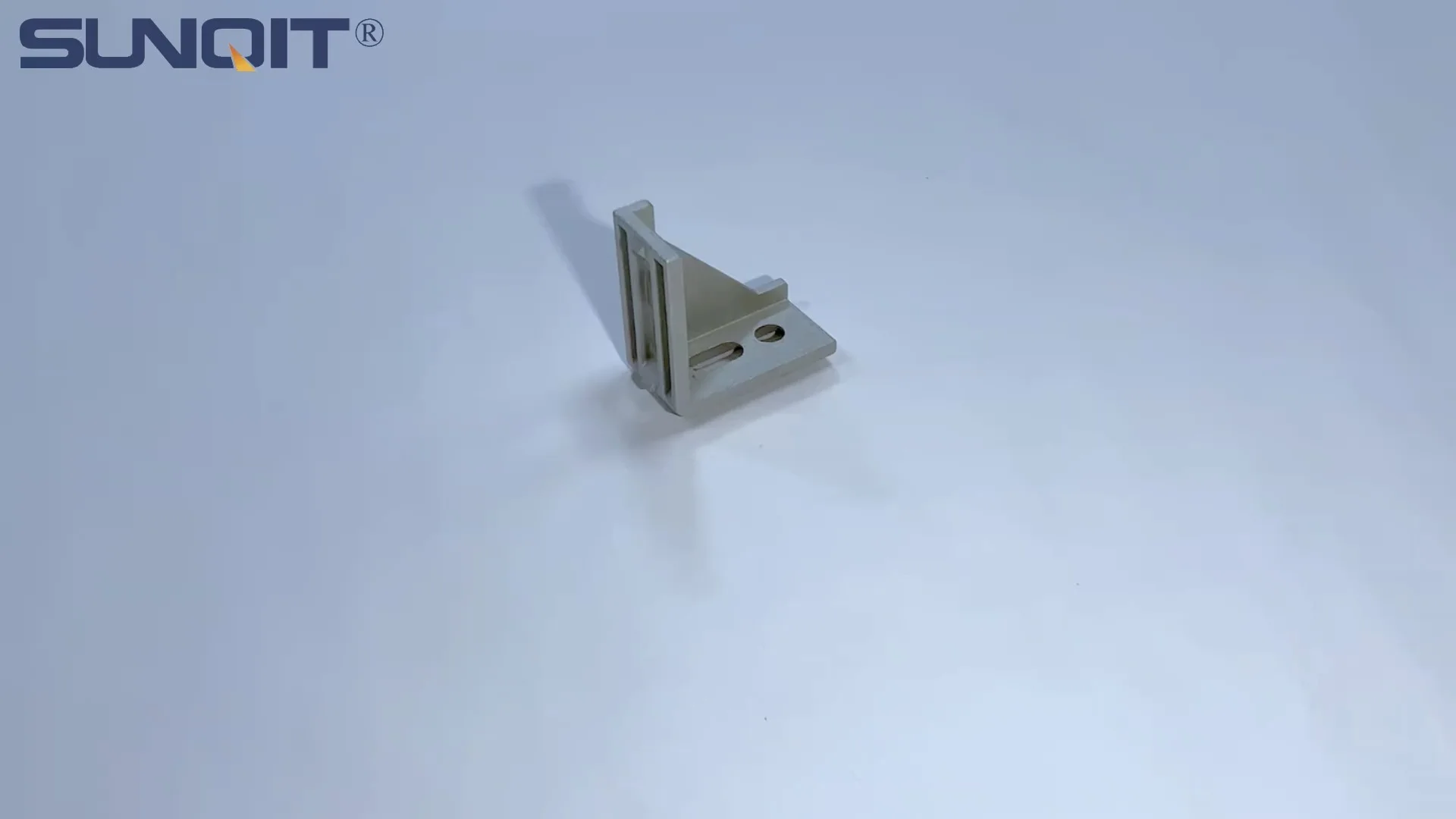
It used for 90° flat connection for 20 series aluminum profile.
In the fast-paced world of manufacturing, warehousing, and assembly, the tools and materials we use can make or break efficiency. Every inch of space, every pound of load capacity, and every minute saved on setup matters. That's where aluminum angle yards come into play—quiet workhorses that form the backbone of countless workspaces, from bustling factory floors to precision-focused electronics labs. Among these, 3060 aluminum angle yards stand out as a versatile, reliable choice, and when paired with custom lengths, they become even more powerful. Let's dive into why these unassuming profiles are transforming how industries build, organize, and optimize their operations.
What Are 3060 Aluminum Angle Yards, Anyway?
First things first: let's demystify the term. "3060" refers to the dimensions of the aluminum profile—specifically, 30mm in width and 60mm in height. These are standard measurements in the world of aluminum extrusion profiles, where numbers like 2020 (20x20mm) or 4040 (40x40mm) are common. But what makes "angle yards" different? Unlike straight T-slot profiles, angle yards have a right-angle (90-degree) shape, with one side measuring 30mm and the other 60mm. This L-shape design gives them unique structural properties: they're strong in both directions, resist bending, and provide stable support for everything from workbenches to material racks.
Made from high-grade aluminum alloy—typically 6063-T5, known for its excellent strength-to-weight ratio and corrosion resistance—3060 aluminum angle yards are lightweight yet tough. They're extruded, meaning they're formed by pushing molten aluminum through a die to create the precise L-shape, resulting in consistent quality and uniformity. Unlike steel, they won't rust, making them ideal for humid environments or cleanrooms. And because aluminum is recyclable, they align with the growing push for sustainable manufacturing practices.
But what really sets 3060 apart is its balance. It's not too small (like 2020, which is great for light-duty tasks but limited in load capacity) and not overly bulky (like 4080, which is powerful but may be overkill for smaller setups). At 30x60mm, it hits that sweet spot: sturdy enough to support heavy tools on a workbench, yet sleek enough to fit into tight spaces when building material racks or assembly line stations.
Why Custom Lengths Matter More Than You Think
Here's a scenario many facility managers know too well: you order a batch of standard-length aluminum profiles, only to realize they're either 6 inches too short for your workspace layout or a foot too long, forcing you to cut them down (and waste material) or leave awkward gaps. Standard lengths—often 1m, 2m, or 3m—are convenient for mass production, but they rarely account for the uniqueness of every industry's needs. That's where custom lengths for 3060 aluminum angle yards become a game-changer.
Custom lengths mean you get exactly what you need, no more, no less. Let's say you're setting up a new assembly line for small electronics. The workstations are compact, and a standard 2m profile would extend beyond the table edge, creating a safety hazard and wasting space. With custom cutting, you can order 1.5m lengths that fit perfectly, eliminating overhang and reducing the risk of tools or parts sliding off. On the flip side, if you're building a material rack in a warehouse with high ceilings, you might need 4m lengths to reach the upper shelves without splicing multiple shorter profiles (which weakens the structure). Custom lengths let you design for your space, not around pre-made measurements.
Waste reduction is another big win. When you cut standard profiles to size, you're left with scrap—small pieces that are too short to use for large projects but too valuable to throw away. Over time, this adds up, eating into your budget and cluttering your storage. Custom lengths minimize scrap because the profiles arrive pre-cut to your exact specifications. It's a small change that adds up to big savings, both financially and environmentally.
And let's not forget speed. Pre-cut custom lengths mean less time spent on-site cutting, deburring, and adjusting. Instead of wrestling with a saw or miter box, your team can start assembling immediately. For time-sensitive projects—like setting up a temporary production line for a seasonal product—this can shave days off the timeline.

Where 3060 Aluminum Angle Yards Shine: Real-World Applications
3060 aluminum angle yards aren't just theoretical—they're hard at work in industries across the board. Let's look at a few key applications where their custom lengths and unique design make all the difference.
Workbenches: The Heart of Every Workshop
Think about the workbench in your garage or the ones you see on factory floors. It needs to be flat, stable, and strong enough to handle tools, parts, and even the occasional lean from a worker. 3060 angle yards are perfect for this. Their L-shape provides a rigid frame, and when paired with a solid top (like plywood or aluminum honeycomb panel), they create a surface that can withstand daily use without wobbling or warping.
Custom lengths here are crucial. A mechanic's workbench might need to be 6 feet long to accommodate a car engine, while a jewelry maker's bench could be 3 feet for precision work. With 3060, you can order lengths that match your workspace exactly. Plus, the T-slot design (those grooves running along the length of the profile) lets you attach accessories like tool holders, LED lights, or monitor arms, turning a basic bench into a fully customized workstation. No more drilling holes or welding—just slide in a bracket, tighten a screw, and you're done.
Material Rack B (3 Row and 3 Floor): Organizing Chaos, One Shelf at a Time
Warehouses and stockrooms are all about organization. When parts are scattered or hard to reach, productivity plummets. That's where Material Rack B (3 Row and 3 Floor) comes in—a staple for storing everything from small components to larger assemblies. And guess what forms its skeleton? You guessed it: 3060 aluminum angle yards.
Material Rack B is designed with three rows and three floors, creating nine separate storage areas. To support the weight of boxes, bins, or parts, the vertical posts and horizontal shelves need to be strong. 3060's 60mm height provides the vertical strength to hold up multiple floors, while the 30mm width keeps the shelves from sagging under load. Custom lengths ensure the rack fits perfectly in your space—whether you need it to tuck into a corner (requiring shorter side posts) or span the length of a wall (needing longer horizontal beams). No more "close enough" racks that block walkways or leave unused gaps.
I once visited a small electronics manufacturer that had struggled with disorganized inventory. They'd been using generic steel racks that were either too tall (wasting vertical space) or too short (overflowing with parts). After switching to a Material Rack B built with custom-cut 3060 angle yards, they not only fit the rack into a previously unused nook but also adjusted the shelf heights to match their most common bin sizes. The result? A 30% reduction in time spent searching for parts. It's the kind of change that seems small until you realize how much time is lost to disorganization.
Assembly Line Frames: Building for Precision and Flexibility
Assembly lines are all about rhythm—each station needs to be in the right place, at the right height, to keep products moving smoothly. 3060 aluminum angle yards excel here, too, forming the frames for conveyors, workstations, and even tool carts. Custom lengths let you align stations perfectly: if the first station is 1.2m wide, the next can be 1.8m to accommodate a larger machine, and so on. No more forcing square pegs into round holes with standard-length frames.

Aluminum Profile Accessories: The Secret to Making 3060 Even Better
A profile is only as good as the accessories that go with it. 3060 aluminum angle yards are no exception—they shine brightest when paired with the right aluminum profile accessories. These small but mighty components turn basic frames into fully functional systems.
Take end caps, for example. 3060 aluminum profile end caps are simple plastic or rubber covers that snap onto the ends of the profile. They might seem trivial, but they prevent sharp edges from cutting workers' hands, stop dust and debris from getting into the T-slots, and give the finished product a clean, professional look. When you order custom-length profiles, end caps ensure every cut end is protected—no more ragged edges from on-site cutting.
Connectors are another must-have. 90° aluminum profile connectors, 45° connectors, and even 135° connectors let you join 3060 angle yards at any angle, creating complex structures without welding. For Material Rack B, you'd use 90° connectors to join vertical posts to horizontal shelves. For a sloped conveyor frame, 45° connectors would do the trick. And because they're designed to fit the T-slots of 3060 profiles, they're easy to install and adjust—no special tools required.
Then there are brackets, hinges, and rubber strips. T-slot rubber seal covers fill the grooves in the profile, preventing small parts from falling in and reducing noise when tools are placed on the surface. Aluminum hinges let you add doors or fold-down shelves to your workbench or rack, saving space when not in use. Even something as simple as a plastic pipe sleeve can protect the profile from scratches when moving heavy items across the surface.
The beauty of these accessories is that they're designed to work seamlessly with 3060 angle yards. You don't have to hunt for compatible parts—reputable suppliers offer a full range of accessories specifically for 3060, ensuring a perfect fit every time. It's like building with Legos for adults: the pieces click together, and the possibilities are endless.

3060 vs. Other Profiles: Why Size (and Shape) Matters
With so many aluminum profiles out there, why choose 3060 angle yards? Let's compare them to some common alternatives to see where they stand.
| Profile Type | Dimensions (WxH) | Typical Load Capacity | Common Uses | Best For |
|---|---|---|---|---|
| 3060 Aluminum Angle Yard | 30mm x 60mm (L-shape) | Medium to heavy (up to 150kg per linear meter) | Workbenches, Material Rack B, assembly line frames, shelving | Balanced strength and size; spaces needing both vertical and horizontal support |
| 2020 Aluminum Profile | 20mm x 20mm (square) | Light (up to 50kg per linear meter) | Small shelves, 3D printer frames, lightweight carts | Small-scale projects, tight spaces, low-load applications |
| 4040 Aluminum Profile | 40mm x 40mm (square) | Heavy (up to 200kg per linear meter) | Industrial racks, large workbenches, machine guards | Heavy-duty applications, large structures, high load requirements |
| 3030 Aluminum Profile | 30mm x 30mm (square) | Medium (up to 100kg per linear meter) | Small workbenches, display racks, cart frames | Medium-load tasks where space is a priority over height |
As the table shows, 3060 angle yards hit a sweet spot. They're stronger than 2020 and 3030, making them suitable for heavier loads, but not as bulky as 4040, which can be overkill for smaller setups. The L-shape design adds another layer of versatility: square profiles are great for straight frames, but angle yards excel at corners, edges, and structures where a right-angle support is needed. For example, the edge of a workbench or the corner of a rack—places where a square profile would require additional brackets, but an angle yard provides built-in support.
Another advantage is weight. 3060 is lighter than steel but stronger than many plastic alternatives. This makes it easy to transport and assemble (no need for heavy machinery to move frames around) while still supporting the loads required in industrial settings. For businesses that need to reconfigure their workspace frequently—like those in the tech industry, where product lines change often—this portability is a huge plus.
Choosing the Right Supplier: It's About More Than Just Metal
You could have the best profile in the world, but if your supplier cuts corners (literally or figuratively), you'll end up with subpar results. When it comes to 3060 aluminum angle yards—especially custom lengths—choosing a reliable supplier is just as important as the profile itself.
First, look for suppliers that specialize in aluminum extrusion profiles and have experience with custom cutting. A supplier that only offers standard lengths might not have the equipment or expertise to cut 3060 profiles cleanly and accurately. Ask about their cutting tolerance—ideally, they should be able to hit your length within ±0.5mm, ensuring a precise fit during assembly.
Quality is another key factor. Not all aluminum is created equal. Reputable suppliers use high-grade alloys (like 6063-T5) and adhere to strict manufacturing standards. They should be able to provide material certificates or test reports if requested, proving the profile's strength and corrosion resistance. Avoid suppliers that offer "too good to be true" prices—cheap aluminum is often brittle or prone to bending, which can compromise your structures.
Range of accessories is also important. As we discussed earlier, accessories make 3060 angle yards functional. A supplier that carries a full line of 3060-compatible accessories (connectors, end caps, brackets) saves you time and hassle. You won't have to source parts from multiple vendors, and you can be confident everything will work together.
Finally, customer service matters. Building with custom profiles can involve questions: "What length do I need for my Material Rack B?" "Can this connector work with a 3060 angle yard?" A good supplier will have knowledgeable staff who can guide you through the process, offer design tips, and help you avoid common mistakes. They'll treat your project as if it's their own, ensuring you get the right parts at the right time.
Wrapping Up: 3060 Aluminum Angle Yards—Small Profile, Big Impact
At the end of the day, 3060 aluminum angle yards might not be the flashiest tools in your workshop, but they're some of the most essential. Their 30x60mm dimensions strike the perfect balance between strength and versatility, and when cut to custom lengths, they adapt to your space like a tailor-made suit. Whether you're building a workbench that fits your exact workflow, a Material Rack B that maximizes storage, or an assembly line frame that keeps production moving, these profiles deliver.
Add in the right aluminum profile accessories—connectors that snap into place, end caps that protect, and brackets that add functionality—and you've got a system that grows with your needs. No more settling for "good enough" solutions that waste space, time, or money. With 3060 aluminum angle yards, you're building for efficiency, durability, and adaptability.
So, the next time you walk through your workspace, take a look around. Notice the racks, the workbenches, the frames that hold everything together. Chances are, some of them could benefit from the upgrade to 3060 aluminum angle yards. And when you do make the switch, don't forget the custom lengths—because in manufacturing, as in life, the best solutions are the ones that fit you perfectly.