- Company Articles
- Products and Technology
- Product knowledge
- 3060 Aluminum Angle Yards Explained: Material, Strength & Applications

3060 Aluminum Angle Yards Explained: Material, Strength & Applications
Related Product
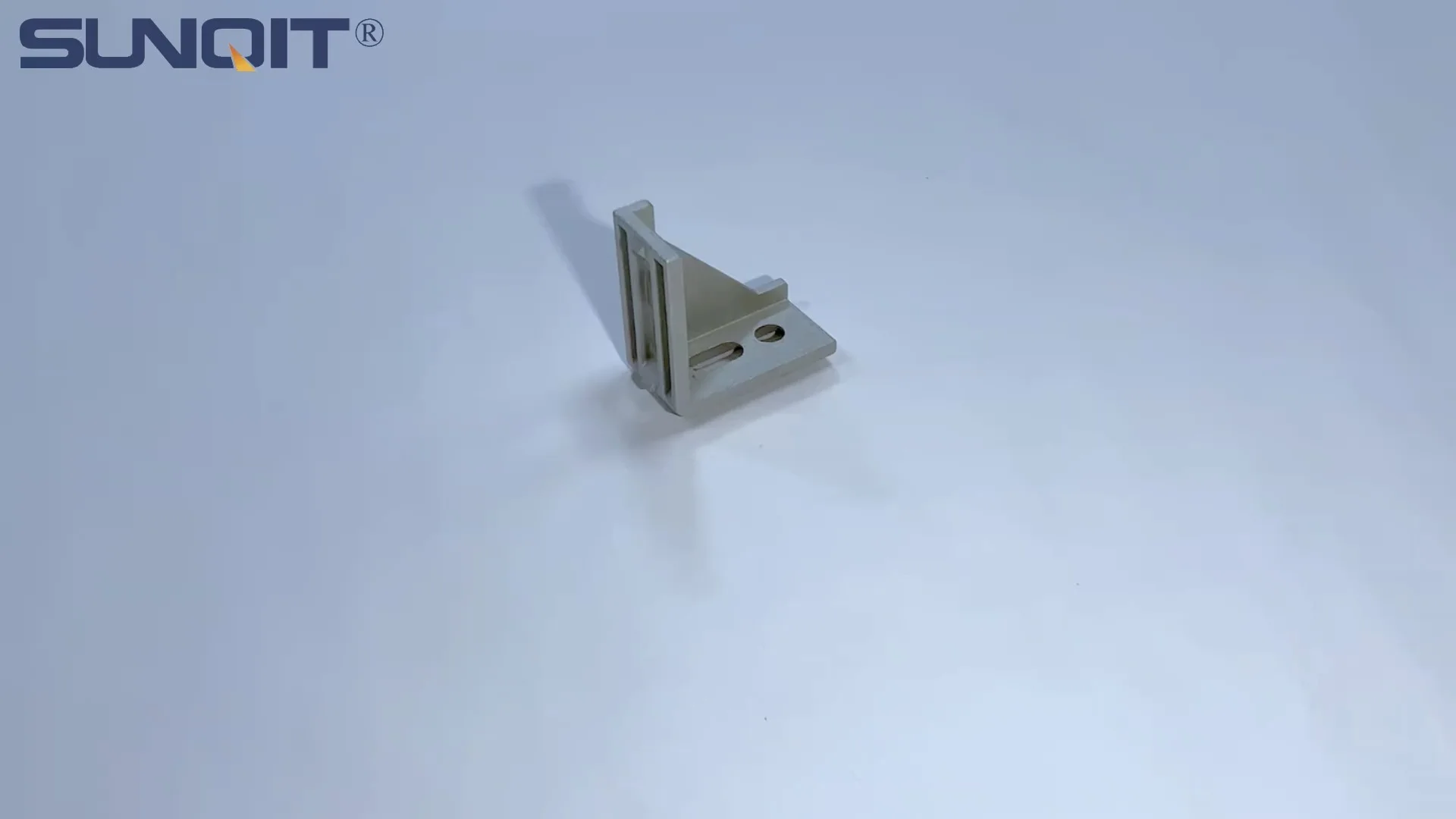
3060 Aluminum Angle Yards
It used for 90° flat connection for 20 series aluminum profile.
If you've ever stepped into a manufacturing facility, a busy warehouse, or even a well-organized home workshop, you've likely encountered the unsung heroes of modern workspace design: aluminum profiles. These sleek, modular structures form the backbone of workbenches, material racks, assembly lines, and shelving units, quietly keeping operations running smoothly. Among the most versatile and widely used of these profiles is the 3060 aluminum angle yard. But what exactly is it? Why is it so popular? And how does it stack up when it comes to material, strength, and real-world use? Let's dive in and unpack everything you need to know about this workhorse of the aluminum profile world.
What Is a 3060 Aluminum Angle Yard, Anyway?
First things first: let's clarify the terminology. An "aluminum angle yard" (sometimes called an "aluminum angle profile") refers to an extruded aluminum component with a specific cross-sectional shape—typically, a right angle or "L" shape, though variations exist. The "3060" in its name isn't arbitrary; it's a measurement that tells you the profile's dimensions. In millimeters, it means the two legs of the "L" are 30mm and 60mm wide. So, one side is 30mm, the other is 60mm, and they meet at a 90-degree angle, forming that distinctive L-shape.
But why does this shape matter? Unlike solid rectangular or square profiles, the angle design offers a unique balance of rigidity and flexibility. The right angle distributes weight and stress more evenly than a flat bar, making it ideal for structural support. At the same time, the open design (no enclosed "tube" shape) keeps it lightweight, which is a huge plus when building movable structures like workbenches or temporary assembly stations. Think of it as the Goldilocks of profiles: not too bulky, not too flimsy, but just right for a wide range of tasks.
Material Matters: The Aluminum Behind the Profile
To understand the 3060 aluminum angle yard's performance, we need to start with its DNA: the aluminum alloy used to make it. Most 3060 profiles are crafted from 6000-series aluminum alloys, with 6061 and 6063 being the most common choices. These alloys are beloved in manufacturing for a few key reasons, and once you learn their properties, it's easy to see why.
Let's break down the basics: Aluminum itself is a lightweight metal (about a third the weight of steel), but on its own, it's relatively soft. By adding small amounts of other elements—like magnesium, silicon, and copper—manufacturers create alloys that are far stronger and more durable. For 6061 and 6063, the magic lies in their blend of strength, corrosion resistance, and malleability.
6061 aluminum, often called the "workhorse alloy," is prized for its high tensile strength (around 310 MPa) and excellent weldability. It's tough enough to handle heavy loads but still flexible enough to be extruded into complex shapes—perfect for structural components like angle yards. 6063 aluminum, on the other hand, is slightly softer (tensile strength around 215 MPa) but offers superior surface finish and formability. It's the go-to for profiles where aesthetics or precise shaping matter, like visible workbench frames or shelving units where a clean look is key.
Whichever alloy is used, the result is a material that's lightweight (critical for reducing strain on floors and making structures movable), naturally resistant to rust and corrosion (no need for painting or coating, even in humid environments), and surprisingly strong for its weight. Unlike steel, which can rust and add unnecessary bulk, aluminum profiles like the 3060 angle yard offer a "less is more" approach—providing the support you need without weighing you down.

From Billet to Profile: How 3060 Angle Yards Are Made
Ever wondered how a chunk of aluminum becomes a precise, uniform profile? The process is called extrusion, and it's a bit like squeezing toothpaste out of a tube—though on a much larger (and hotter) scale. Here's a simplified look at how 3060 aluminum angle yards go from raw material to ready-to-use profile:
Step 1: The Billet Prep. It starts with an aluminum billet—a cylindrical block of the chosen alloy (6061 or 6063). The billet is heated to around 400–500°C (750–930°F), softening it just enough to be shaped without melting. This temperature is critical: too cold, and the metal won't flow; too hot, and it loses structural integrity.
Step 2: Extrusion Through the Die. The heated billet is then fed into an extrusion press, where a hydraulic ram pushes it through a custom die. The die is a steel tool with a hole cut into it that matches the desired cross-section—in this case, the 30mm x 60mm angle shape. As the billet is forced through the die, it takes on the die's shape, emerging as a long, continuous length of 3060 angle yard.
Step 3: Cooling and Stretching. Once extruded, the hot profile is cooled rapidly (usually with water or air) to lock in its shape. After cooling, it's stretched slightly to straighten it and relieve internal stresses—think of it as "tuning" the profile to ensure it's perfectly straight and dimensionally consistent.
Step 4: Aging (Heat Treatment). Finally, the profile undergoes an aging process. For 6000-series alloys, this involves heating the material again (at a lower temperature, around 120–180°C) to encourage the formation of tiny, strengthening particles within the aluminum. This step boosts the alloy's strength and hardness, turning a soft extruded profile into a rigid, load-bearing component.
The beauty of extrusion is that it creates profiles with uniform strength throughout—no weak spots or seams. The grain structure of the aluminum aligns with the direction of extrusion, making the profile stronger along its length, which is exactly where most structural stress occurs (think of a workbench leg supporting weight from above). It's this combination of precision manufacturing and material science that makes 3060 angle yards so reliable.

Strength in Numbers: How Strong Is 3060 Aluminum, Really?
At the end of the day, a profile is only as good as its strength. So, how much weight can a 3060 aluminum angle yard actually handle? Let's cut through the jargon and talk numbers. Keep in mind that exact specs can vary slightly by manufacturer and alloy, but here's a general overview:
Tensile Strength: For 6061-T6 (the most common heat-treated version), tensile strength averages around 310 MPa (megapascals), which translates to about 45,000 psi (pounds per square inch). For 6063-T5, it's slightly lower, around 215 MPa (31,000 psi). To put that in perspective: a 3060 angle yard made of 6061-T6 can withstand a pulling force of 310 million newtons per square meter before breaking. That's more than enough to support the weight of a small car—though we don't recommend testing that!
Yield Strength: This is the point at which the material starts to bend or deform permanently. For 6061-T6, yield strength is around 276 MPa (40,000 psi), and for 6063-T5, it's about 170 MPa (25,000 psi). In practical terms, this means even under heavy loads, the profile will spring back to its original shape unless pushed beyond these limits—critical for structures like workbenches that need to maintain stability over time.
Load-Bearing Capacity: When used as a vertical support (like a workbench leg), a 1-meter length of 3060 angle yard (6061-T6, 2mm wall thickness) can safely support around 200–300 kg (440–660 lbs) without bending. As a horizontal beam (e.g., a shelf or workbench top support), it can carry 50–100 kg (110–220 lbs) over a 1-meter span, depending on how it's mounted. These numbers might seem abstract, but they translate to real-world utility: a workbench frame built with 3060 angle yards can easily hold tools, parts, and even heavy machinery without wobbling or sagging.
To help visualize how 3060 stacks up against other common profiles, let's compare it to a few siblings in the aluminum profile family:
| Profile Type | Dimensions (mm) | Alloy (Typical) | Wall Thickness (mm) | Tensile Strength (MPa) | Best For |
|---|---|---|---|---|---|
| 2020 Aluminum Profile | 20x20 (square) | 6063-T5 | 1.5–2.0 | 215 | Light-duty shelves, small workbenches |
| 3030 Aluminum Profile | 30x30 (square) | 6063-T5 | 1.5–2.0 | 215 | Medium shelves, tool racks |
| 3060 Aluminum Angle Yard | 30x60 (angle) | 6061-T6 | 2.0–3.0 | 310 | Workbenches, material racks, structural supports |
| 4040 Aluminum Profile | 40x40 (square) | 6061-T6 | 2.0–3.0 | 310 | Heavy-duty assembly lines, industrial shelving |
As you can see, the 3060 angle yard sits in a sweet spot: stronger than smaller 2020 or 3030 profiles, but lighter and more flexible than the bulkier 4040 square profile. Its angle shape gives it an edge (pun intended) in applications where rigidity and weight savings are both priorities—like building a workbench that's sturdy enough for power tools but light enough to move with a few people.

Applications: Where 3060 Aluminum Angle Yards Shine
Now that we understand the "what" and "how" of 3060 angle yards, let's talk about the "where." These profiles are everywhere, but here are some of the most common (and clever) ways they're used in real-world settings:
Workbenches: The Heart of the Workshop
Walk into any manufacturing plant, electronics assembly line, or garage workshop, and you'll likely find workbenches built with 3060 angle yards. Why? Because they offer the perfect balance of strength and customization. A typical setup might use 3060 angle yards for the frame (legs, side rails, and cross-braces), topped with a plywood or metal worktop. The angle shape ensures the legs resist wobbling, even when someone leans on the bench or uses a heavy tool like a drill press. Plus, the T-slots (those grooves running along the length of the profile) make it easy to add accessories: tool hooks, monitor mounts, or even a vice. It's no wonder "workbench" is one of the most searched terms alongside 3060 profiles—they're practically made for this job.
Material Racks: Organizing Chaos, One Profile at a Time
Warehouses and factories live and die by organization, and 3060 angle yards are stars when it comes to building material racks. Take, for example, a "material rack B (3 row and 3 floor)" setup—a common design for storing boxes, components, or raw materials. The 3060 angle yards form the uprights (vertical supports) and cross-beams (horizontal shelves), with roller tracks (another key accessory) added to the shelves to let materials slide easily. The angle shape of the 3060 ensures the uprights can handle the weight of stacked boxes without bowing, while the lightweight design keeps the entire rack movable if needed. It's a lean solution (there's that "lean system" principle!) that reduces waste by maximizing storage space and making materials easy to access.
Assembly Lines: Keeping Production Moving
In manufacturing, assembly lines need to be both rigid (to keep parts aligned) and flexible (to adapt to new products). 3060 angle yards excel here, too. They're often used to build conveyor supports, guiding roller tracks that carry parts from one station to the next. The angle profile's strength ensures the conveyor stays level, preventing jams, while its modularity means lines can be extended or reconfigured in hours, not days. For example, a small electronics plant might use 3060 angle yards to build a custom assembly line for circuit boards, with adjustable height rails and tool holders—all thanks to the profile's T-slots and compatible accessories.
Retail and Display: Sleek, Strong, and Stylish
It's not just industrial settings that love 3060 angle yards. Retailers use them to build custom display shelves, pop-up stands, and product racks. The aluminum's clean, modern look fits well in stores, while its strength means shelves can hold heavy products like books or electronics. Plus, since it's lightweight, store staff can rearrange displays quickly during sales or seasonal changes—no need for a team of contractors. It's a budget-friendly, eye-catching solution that proves aluminum profiles aren't just for factories.
Aluminum Profile Accessories: The Glue That Holds It All Together
A 3060 aluminum angle yard is powerful on its own, but its true versatility comes from the army of aluminum profile accessories designed to work with it. These small but mighty components turn a single profile into a fully functional structure, and they're worth getting to know if you're planning a project. Here are some of the most useful ones:
Connectors: These are the "joints" that hold profiles together. 90° aluminum profile connectors (like corner brackets) fasten two angle yards at a right angle, while T-connectors join three profiles in a T-shape. Some connectors are bolt-on, others slide into the T-slots—either way, they're quick to install and strong enough to handle the load.
End Caps: These simple plastic or aluminum caps snap onto the ends of profiles, covering sharp edges and giving the structure a polished look. They're a small detail, but they make a big difference in safety (no more scraped hands!) and aesthetics.
Gusset Plates: For extra reinforcement, gusset plates (like gusset alp 3030 or gusset alp 4040) attach to the corners of connected profiles, distributing stress and preventing bending. They're especially useful in heavy-duty setups like workbenches or material racks with lots of weight.
Hinges and Locks: Want to build a foldable workbench or a door for a storage cabinet? Hinges (aluminum or nylon) and locks let you add moving parts to your 3060 structure, opening up even more design possibilities.
The best part? Most accessories are universal across brands, so you can mix and match to create exactly what you need. Whether you're building a simple shelf or a complex assembly line, there's an accessory that fits the bill.
Lean Systems and 3060 Profiles: A Match Made in Efficiency
If you're familiar with manufacturing or workspace design, you've probably heard of "lean systems"—the philosophy of maximizing value while minimizing waste. 3060 aluminum angle yards are a lean dream come true, and here's why:
Modularity = Less Waste: Traditional steel structures are often welded or bolted permanently, meaning if you need to reconfigure your workspace, you either live with inefficiency or cut the structure apart (wasting time and materials). 3060 profiles, with their bolt-together accessories, are fully reconfigurable. Need to expand a workbench? Add another section. No longer need that material rack? Disassemble it and use the profiles for something else. It's a zero-waste approach that aligns perfectly with lean principles.
Speed = More Productivity: Building with 3060 angle yards is fast. No welding, no special tools—just a hex key and some bolts. A small team can set up a workbench or material rack in an hour, not a day. That means less downtime and more time spent on actual production—a core tenet of lean manufacturing.
Lightweight = Lower Costs: Aluminum is lighter than steel, which means lower shipping costs for profiles and easier installation (no need for heavy machinery). Over time, that adds up to significant savings—another win for lean budgets.
In short, 3060 angle yards don't just support structures—they support a culture of efficiency. It's why so many lean system suppliers recommend them as a foundational component.
Caring for Your 3060 Aluminum Angle Yards: Maintenance Tips
Aluminum profiles are durable, but they're not indestructible. With a little care, your 3060 angle yards can last for decades. Here's how to keep them in top shape:
Keep Them Clean: Aluminum naturally resists corrosion, but dirt, grease, and chemicals can dull its finish over time. Wipe profiles down with a mild soap and water solution (avoid harsh detergents) and dry thoroughly. For tough grime, a soft-bristle brush works well—just don't use steel wool, which can scratch the surface.
Check Connections Regularly: If your structure is subject to vibration (like a workbench near heavy machinery), bolts and connectors can loosen over time. Give them a quick tighten with a hex key every few months to prevent wobbling or instability.
Avoid Overloading: Even strong profiles have limits. Check the load ratings for your specific 3060 angle yard (provided by the supplier) and stick to them. Overloading can cause permanent bending or warping, which is tough to fix.
Store Properly (If Not in Use): If you're storing extra profiles, keep them in a dry, covered area to avoid prolonged exposure to rain or snow. While aluminum doesn't rust, heavy moisture can leave water spots, and saltwater (in coastal areas) can cause pitting over time.
Final Thoughts: Why 3060 Aluminum Angle Yards Deserve a Spot in Your Toolkit
At the end of the day, the 3060 aluminum angle yard is more than just a piece of metal. It's a blank canvas for innovation—a material that empowers makers, manufacturers, and organizers to build exactly what they need, when they need it. Its unique combination of material (strong, lightweight aluminum alloy), strength (impressive tensile and yield ratings), and versatility (thanks to T-slots and accessories) makes it a go-to choice for workbenches, material racks, assembly lines, and beyond.
Whether you're a small business owner setting up a workshop, a warehouse manager organizing inventory, or a hobbyist building a custom project, 3060 angle yards offer a solution that's efficient, cost-effective, and built to last. And with the support of a reliable lean pipe supplier or aluminum profile supplier, you'll have access to not just the profiles themselves, but the expertise to bring your vision to life.
So the next time you see a sturdy workbench or a well-organized material rack, take a closer look—chances are, there's a 3060 aluminum angle yard holding it all together. And now that you know its story, you'll appreciate just how much thought, science, and innovation went into that simple "L-shaped" profile.