- Company Articles
- Products and Technology
- Product knowledge
- 3060 Aluminum Angle Yards for Automotive Parts Production Lines

3060 Aluminum Angle Yards for Automotive Parts Production Lines
Related Product
3060 Aluminum Angle Yards
It used for 90° flat connection for 20 series aluminum profile.
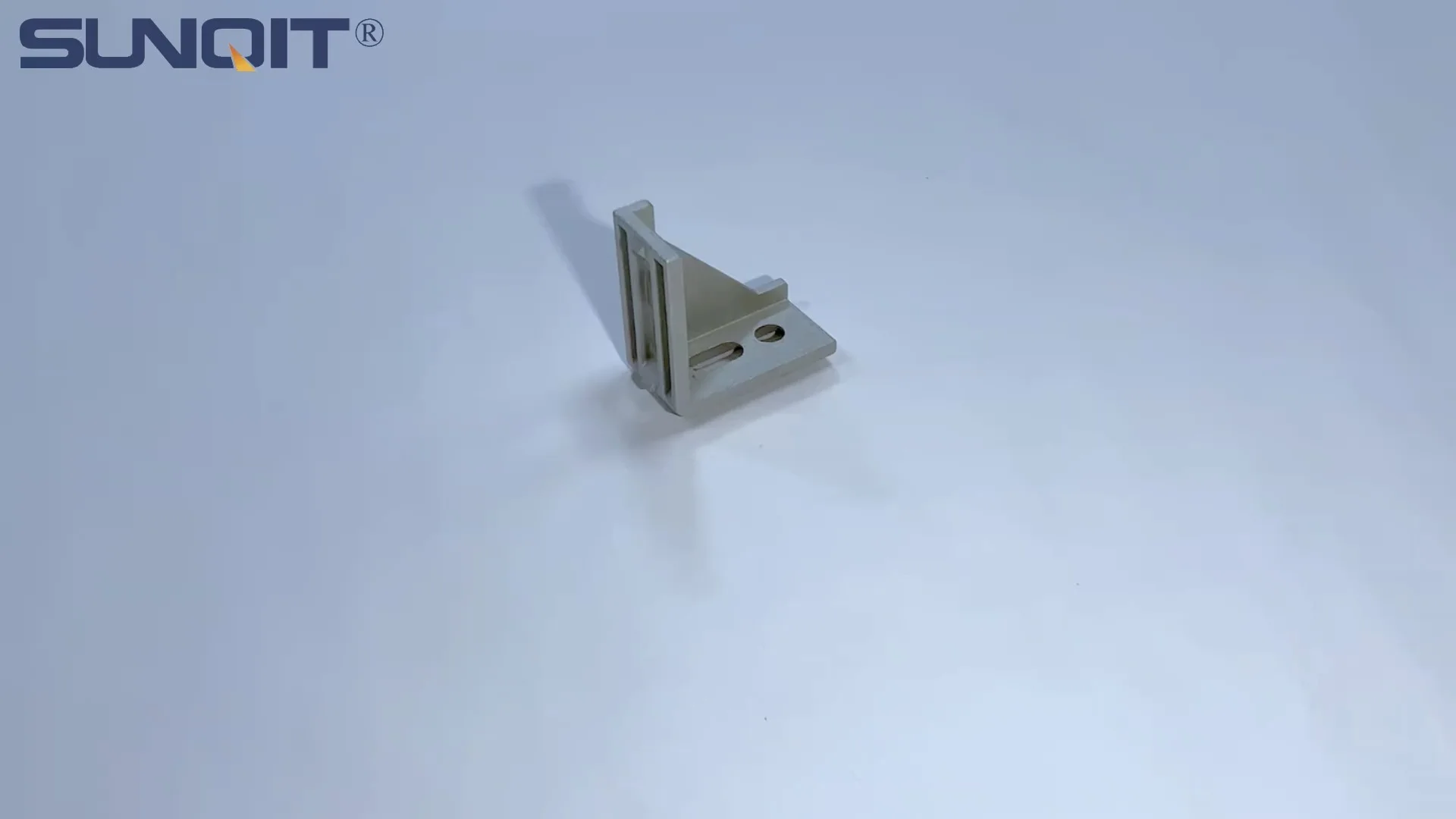
In the fast-paced world of automotive manufacturing, every component on the production line plays a silent but critical role in keeping operations running smoothly. From the conveyor belts that move parts across the factory floor to the workbenches where technicians assemble intricate components, the right tools and structures can mean the difference between meeting tight deadlines and falling behind. One such unsung hero in modern automotive production is the 3060 aluminum angle yard—a versatile, durable, and surprisingly adaptable structural element that has quietly revolutionized how production lines are designed, built, and reconfigured. Let's dive into what makes these angle yards indispensable, how they integrate with broader lean systems, and why they've become a staple for manufacturers aiming to balance efficiency, flexibility, and precision.
What Are 3060 Aluminum Angle Yards, Anyway?
First things first: let's demystify the term. 3060 aluminum angle yards are a type of aluminum extrusion profile, specifically shaped like an L (an "angle") with dimensions of 30mm by 60mm along the two legs of the L. They're created through the extrusion process, where heated aluminum alloy is forced through a die to form the desired cross-sectional shape. This method allows for consistent, precise manufacturing—critical in automotive settings where even a millimeter of misalignment can throw off an entire assembly.
But why "yards"? The term here refers to their role as modular building blocks, much like how yards (units of measurement) form the basis of larger structures. These angle yards aren't standalone products; they're part of a broader ecosystem of aluminum extrusion profiles, connectors, and accessories that let manufacturers build everything from simple workbenches to complex material handling systems. Think of them as the industrial equivalent of Lego bricks—strong enough to support heavy loads but flexible enough to be rearranged whenever production needs change.
Key Features That Make 3060 Aluminum Angle Yards a Game-Changer
At first glance, a metal angle might seem unremarkable, but 3060 aluminum angle yards pack a punch of features tailored to the demands of automotive production. Let's break down what sets them apart:
1. Structural Strength Without the Bulk
Automotive parts production lines deal with heavy loads daily—think engine blocks, transmission components, or stacks of sheet metal. 3060 angle yards are made from high-grade aluminum alloys (typically 6063-T5, a common choice for industrial extrusions) that offer an impressive strength-to-weight ratio. This means they can support hundreds of kilograms without bending or warping, yet they're significantly lighter than steel alternatives. For workers who need to adjust or move workstations, this lightness reduces fatigue and speeds up reconfiguration—no need for heavy machinery to shift a workstation when a few people can handle it.
2. T-Slot Design: The Secret to Modularity
If there's one feature that makes 3060 aluminum angle yards so versatile, it's their T-slot design. Running along the length of each leg of the L-shape is a groove (the "T-slot") that allows for easy attachment of accessories—nuts, bolts, brackets, panels, or even other profiles. This isn't just convenient; it's transformative. In traditional steel framing, modifying a structure often means welding or drilling new holes, which is time-consuming and permanent. With T-slots, you can loosen a bolt, slide a bracket into place, and tighten it back up—all in minutes. For automotive lines that frequently switch between producing different car models (each with unique part sizes and assembly steps), this flexibility is invaluable.
3. Corrosion Resistance for Longevity
Automotive factories are harsh environments. Oils, coolants, cleaning agents, and even humidity can take a toll on metal components over time. 3060 aluminum angle yards combat this with their natural corrosion resistance, enhanced by surface treatments like anodizing. Anodization creates a protective oxide layer on the aluminum, making it resistant to rust, chemicals, and wear. Unlike steel, which might start showing signs of corrosion within a year or two, anodized aluminum angle yards can last a decade or more with minimal maintenance—saving manufacturers from frequent replacements and downtime.
4. Precision Engineering for Tight Tolerances
Automotive manufacturing is all about precision. A misaligned bracket on a workbench could lead to a misassembled part, which in turn could compromise vehicle safety. 3060 aluminum angle yards are extruded with tight tolerances—often within ±0.1mm for critical dimensions. This level of precision ensures that when you connect two angle yards with a bracket, they fit together perfectly, every time. It also means that pre-designed layouts (like a workstation for assembling door handles) can be replicated across multiple production lines with consistent results.

How 3060 Aluminum Angle Yards Support Lean Systems in Automotive Production
Lean manufacturing isn't just a buzzword—it's a philosophy centered on eliminating waste, improving flow, and continuously refining processes. At its core, lean aims to create value for the customer while using fewer resources. 3060 aluminum angle yards align with this philosophy in ways that might not be obvious at first glance, but their impact on lean systems is profound.
Reducing " muda " (Waste) Through Flexibility
One of the biggest wastes in manufacturing is inflexible infrastructure. A production line built with fixed steel frames might work perfectly for one car model, but when the company introduces a new model with different part sizes, that line becomes obsolete. Rebuilding it from scratch wastes time, labor, and materials—all forms of muda. 3060 aluminum angle yards, with their modular T-slot design, turn this problem on its head. Instead of rebuilding, workers can reconfigure existing structures: adjust the height of a workbench, add a new shelf to a material rack, or extend a roller track to accommodate longer parts. This reduces downtime and keeps production lines adaptable, even as product designs evolve.
Supporting " flow ": Keeping Parts Moving Smoothly
In lean systems, "flow" refers to the continuous movement of parts from raw material to finished product, with minimal stops or delays. Bottlenecks disrupt flow, and nothing causes bottlenecks like inefficient material handling. 3060 aluminum angle yards play a key role here as the backbone of roller tracks and conveyors. By framing roller track systems with these angle yards, manufacturers create smooth, reliable paths for parts to travel. The T-slot design allows for easy integration of roller track connectors and guide rails, ensuring that parts glide from one workstation to the next without getting stuck. For example, a roller track built with 3060 angle yards can transport engine components from the machining area to the assembly station with consistent speed, reducing the need for manual lifting and cutting down on wait times.
Enabling " pull " Production with Adaptable Workstations
"Pull" production is all about making only what's needed, when it's needed—avoiding overproduction (another major waste). To do this, workstations must be able to adjust quickly based on demand signals from downstream processes. 3060 aluminum angle yards make this possible by allowing workstations to be customized for specific tasks. A workbench used for assembling small electrical components one day can be reconfigured with additional tool holders and a larger surface area the next to handle a surge in demand for dashboard assemblies. This adaptability ensures that each workstation is always set up to produce exactly what's needed, when it's needed—no more, no less.

Real-World Applications: How Automotive Lines Use 3060 Aluminum Angle Yards
Theory is one thing, but seeing these angle yards in action is where their value truly shines. Let's explore three common applications in automotive parts production lines, each highlighting a different strength of 3060 aluminum angle yards.
1. Workbenches: The Heart of Assembly Stations
Walk into any automotive assembly plant, and you'll find workbenches everywhere—they're where technicians spend most of their day, assembling everything from wiring harnesses to brake calipers. A good workbench needs to be sturdy, ergonomic (to reduce worker strain), and customizable (to fit the tools and parts used). 3060 aluminum angle yards excel here.
Take, for example, a workbench designed for assembling transmission sensors. The frame is built using 3060 angle yards, connected with internal rotary aluminum joints to form a stable base. The top surface might be an aluminum honeycomb panel (lightweight but strong) mounted to the angle yards via T-slot bolts. On one side, a shelf (also framed with 3060 angle yards) holds tools; on the other, a roller track (framed with the same angle yards) feeds small parts to the technician. If the plant switches to a larger sensor model, workers can adjust the shelf height or add an extension to the workbench surface in minutes—no welding, no drilling, just loosening a few bolts and repositioning the T-slot accessories.
Ergonomics matter too. 3060 angle yards allow workbenches to be built at variable heights (adjustable via telescoping legs or stackable angle yard sections), ensuring that technicians of different heights can work comfortably. This reduces the risk of repetitive strain injuries and keeps productivity high throughout shifts.
2. Roller Tracks: Moving Parts with Minimal Effort
Moving heavy parts across the factory floor used to require forklifts or manual carts—slow, labor-intensive, and prone to delays. Today, roller tracks (also called flow racks) are the norm, and 3060 aluminum angle yards are their unsung structural heroes. These tracks use gravity or motorized rollers to move parts from one point to another, and their frames need to be strong enough to support the weight of the parts while maintaining a consistent slope for smooth flow.
Consider a material rack B (3 row and 3 floor) used to store and transport car door panels. Each level of the rack is framed with 3060 aluminum angle yards, which support plastic roller track guide rails (yellow or grey, depending on the plant's color-coding system). The angle yards provide the rigidity needed to keep the rails aligned, even when loaded with multiple door panels. The T-slot design allows for easy adjustment of the rail spacing—critical, since door panels come in different sizes for sedans, SUVs, and trucks. If the plant starts producing a new SUV model with wider doors, workers can simply reposition the guide rails within the T-slots of the angle yards to accommodate the larger panels. No need to replace the entire rack; just a quick tweak, and the system is ready to go.
3. Assembly Cells for Complex Components
For larger, more complex assemblies—like engine blocks or suspension systems—manufacturers often use "cells" where multiple workstations are arranged in a circle or line, each handling a specific step. These cells need to be tightly coordinated, with parts moving seamlessly from one station to the next. 3060 aluminum angle yards serve as the framework for these cells, ensuring that each workstation is positioned precisely relative to the others.
Imagine an assembly cell for turbochargers. The cell includes a workbench for mounting the turbine housing, a second for attaching the compressor wheel, and a third for final testing. All three workstations are built with 3060 angle yards, and they're connected by a motorized conveyor (also framed with angle yards) that moves the turbochargers between stations. The T-slot design allows for easy integration of sensors and tool holders: a torque wrench holder here, a barcode scanner mount there. If the turbocharger design changes (e.g., a new mounting bracket is added), the workstations can be reconfigured in hours, not days, by adjusting the angle yard framing and adding new accessories. This agility is critical in an industry where car models are updated every few years, and production lines must keep pace.

Why Aluminum? Comparing 3060 Angle Yards to Steel and Plastic
You might be wondering: why not use steel angle irons instead? Or plastic? Both have their place, but aluminum—specifically 3060 aluminum angle yards—strikes a balance that's hard to beat in automotive settings. Let's break down the comparison:
Aluminum vs. Steel: Lightweight Wins the Day
Steel is strong, no doubt—but it's also heavy. A steel angle iron of the same dimensions as a 3060 aluminum angle yard would weigh roughly three times as much. This weight makes steel structures harder to move, more difficult to reconfigure, and more taxing on workers who need to adjust them. In contrast, aluminum angle yards are light enough that two workers can carry a 2-meter section without strain, and entire workstations can be repositioned with a hand truck. Over time, this reduces worker fatigue and speeds up line changes.
Steel is also prone to rust, especially in factories where oils and coolants are present. While steel can be painted or galvanized to resist corrosion, these coatings chip over time, requiring regular maintenance. Aluminum, on the other hand, forms a natural oxide layer that prevents rust, and anodized finishes enhance this protection even further. In automotive plants, where downtime for maintenance is costly, this longevity is a major advantage.
Aluminum vs. Plastic: Strength When It Matters
Plastic extrusions are lightweight and corrosion-resistant, but they lack the structural strength needed for heavy-duty applications. A plastic angle yard might work for a small parts bin, but it would bend or crack under the weight of an engine block. Aluminum 3060 angle yards, by contrast, can support loads of up to 500kg per linear meter (depending on the alloy and configuration), making them suitable for everything from workbenches to material racks.
Plastic also tends to warp under high temperatures, which can be an issue in automotive plants with welding stations or heat-treated parts. Aluminum, with its higher melting point and thermal stability, holds its shape even in warm environments. For manufacturers, this means fewer structural failures and more consistent performance.
Technical Specifications: The Nitty-Gritty of 3060 Aluminum Angle Yards
For those who love details, here's a breakdown of the key technical specifications that make 3060 aluminum angle yards suitable for automotive production. This table outlines the basics, though exact values can vary slightly by supplier:
| Parameter | Typical Specification | Why It Matters for Automotive |
|---|---|---|
| Dimensions | 30mm (leg A) x 60mm (leg B) x 2.0mm (wall thickness) | Balances strength and weight; fits standard accessories like brackets and connectors. |
| Material | 6063-T5 aluminum alloy | High strength-to-weight ratio; excellent corrosion resistance; good machinability for T-slots. |
| Surface Treatment | Anodized (clear, black, or silver) | Enhances corrosion resistance; reduces friction in T-slots; easy to clean. |
| Load Capacity (Vertical) | Up to 800kg per linear meter (when properly supported) | Supports heavy parts like engine blocks or transmission cases. |
| Load Capacity (Horizontal) | Up to 300kg per linear meter (with evenly distributed weight) | Stable enough for workbenches and roller tracks. |
| T-Slot Size | M8 or M10 (depending on supplier) | Compatible with standard T-slot nuts and bolts for easy accessory attachment. |
| Length | Standard 2m, 3m, or 6m; custom lengths available | Reduces waste by allowing manufacturers to order exact lengths needed for their layouts. |
Choosing the Right Supplier: What to Look For
Not all 3060 aluminum angle yards are created equal, and choosing the right supplier can make a big difference in performance and reliability. Here are a few key factors to consider when selecting a lean pipe supplier or aluminum profile supplier:
1. Quality Control and Certifications
Automotive manufacturing is heavily regulated, and components must meet strict quality standards (like ISO/TS 16949). Look for suppliers who can provide certification that their 3060 angle yards are manufactured to these standards, with consistent tolerances and material composition. A reputable supplier will also have quality control processes in place—like ultrasonic testing for defects or dimensional checks at every production step—to ensure each profile meets specifications.
2. Range of Accessories
The best 3060 aluminum angle yards are only as good as the accessories that go with them. Look for suppliers who offer a wide range of compatible parts: internal rotary aluminum joints, roller track placon mounts, caster wheels for mobile workstations, and end caps to protect T-slots from debris. A supplier with a comprehensive accessory lineup ensures that you won't have to source parts from multiple vendors, streamlining your supply chain and reducing the risk of compatibility issues.
3. Technical Support and Customization
Even with modular systems, designing a production line can be complex. A good supplier should offer technical support—whether it's helping you calculate load capacities, suggesting accessory combinations, or providing CAD files for your design software. Some suppliers also offer custom extrusion services, allowing you to modify the 3060 angle yard design (e.g., adding extra T-slots or adjusting wall thickness) for unique applications. This level of support can save you time and money in the long run, ensuring that your system is optimized for your specific needs.
Maintenance Tips: Keeping Your 3060 Angle Yards in Top Shape
Like any industrial equipment, 3060 aluminum angle yards require basic maintenance to stay in good working order. Fortunately, their design makes this easy:
- Clean regularly: Wipe down the angle yards with a damp cloth to remove dust, oil, or coolant buildup. For stubborn grime, use a mild detergent—avoid abrasive cleaners, which can scratch the anodized finish.
- Inspect T-slots: Check the T-slots periodically for debris (like metal shavings or dirt) that could prevent accessories from sliding smoothly. Use a soft brush or compressed air to clean them out.
- Tighten connections: Over time, bolts and brackets in T-slots can loosen due to vibration. Do a quick check every month or so and tighten any loose fasteners to prevent wobbling or misalignment.
- replace worn accessories: If a bracket or connector becomes bent or damaged, replace it promptly. A damaged accessory can put extra stress on the angle yard, leading to premature wear.
The Future of 3060 Aluminum Angle Yards in Automotive Manufacturing
As automotive manufacturing continues to evolve—with trends like electric vehicles (EVs), autonomous driving, and Industry 4.0 (smart factories)—the role of 3060 aluminum angle yards is only set to grow. Here's what we might see in the coming years:
Integration with Smart Technologies
Industry 4.0 is all about connecting machines and systems with data. 3060 aluminum angle yards could soon play a role here as mounting points for sensors, cameras, or RFID readers. Imagine a workbench framed with angle yards that has built-in sensors in the T-slots, tracking how often tools are used or how long parts spend at each station. This data could help manufacturers identify bottlenecks or optimize workflows even further.
Sustainability Improvements
Automakers are under increasing pressure to reduce their environmental footprint, and aluminum is already a sustainable choice—it's 100% recyclable, with recycling requiring just 5% of the energy needed to produce new aluminum. Future 3060 angle yards might be made with higher percentages of recycled aluminum, or with new alloys that further reduce weight without sacrificing strength, lowering transportation costs and energy use in factories.
Advanced Coatings for Specialized Environments
EV production, for example, involves working with batteries and sensitive electronics that require static control. Some suppliers are already developing 3060 angle yards with ESD (electrostatic discharge) coatings, which prevent static buildup that could damage electronic components. As EV production scales, we'll likely see more specialized coatings—like heat-resistant finishes for battery assembly areas or chemical-resistant coatings for paint shops.
Conclusion: The Quiet Revolution of 3060 Aluminum Angle Yards
In the grand scheme of automotive manufacturing, 3060 aluminum angle yards might not get the same attention as robotic arms or AI-powered quality control systems. But their impact is undeniable. By combining strength, flexibility, and precision, they've become the backbone of lean systems, enabling production lines that can adapt to changing demands, reduce waste, and keep parts moving smoothly. Whether they're framing a workbench, supporting a roller track, or forming the structure of an assembly cell, these unassuming L-shaped profiles play a critical role in keeping automotive factories running efficiently and effectively.
As the industry continues to evolve, one thing is clear: 3060 aluminum angle yards will remain a staple for manufacturers who refuse to compromise on efficiency, flexibility, or quality. They're not just building blocks—they're the foundation of the next generation of automotive production lines. And in a world where every second and every cent counts, that's a foundation worth investing in.