- Company Articles
- Products and Technology
- Product knowledge
- 3060 Aluminum Angle Yards for Computer Peripheral Assembly Lines

3060 Aluminum Angle Yards for Computer Peripheral Assembly Lines
Related Product
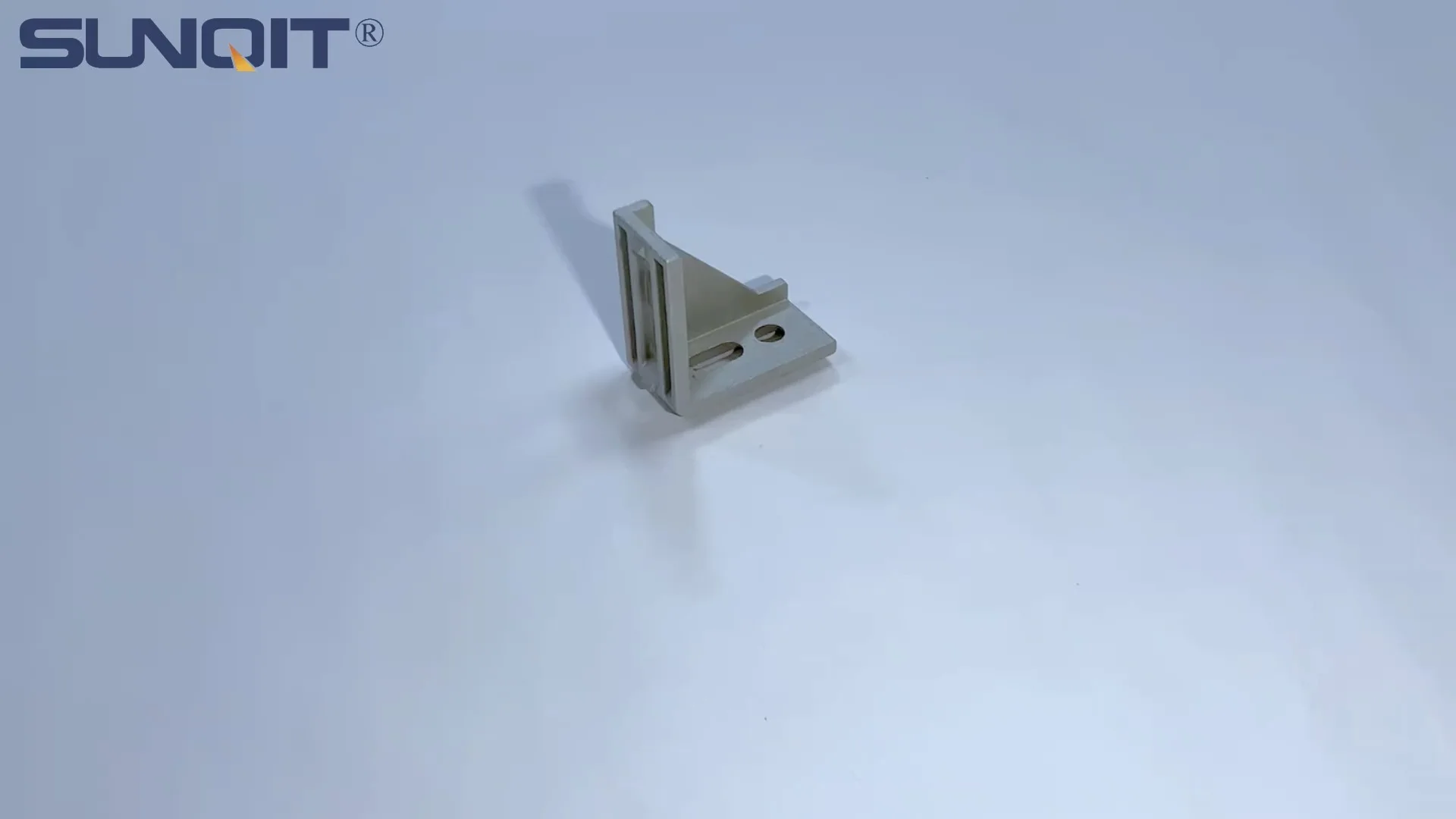
3060 Aluminum Angle Yards
It used for 90° flat connection for 20 series aluminum profile.
Walk into any computer peripheral assembly plant, and you'll hear the hum of precision: circuit boards sliding into casings, sensors aligning with microchips, and workers moving in rhythm to build the mice, keyboards, and webcams that connect us to the digital world. But behind that harmony lies a hidden challenge: flexibility . Today's consumers demand sleeker designs, faster updates, and custom features—meanwhile, assembly lines are stuck with rigid, one-size-fits-all infrastructure that resists change like a rusted bolt. Enter the 3060 aluminum angle yard : a quiet innovator that's redefining how factories adapt, thrive, and keep pace with the ever-shifting tech landscape.
The Problem with "Set It and Forget It" Assembly Lines
Traditional assembly lines rely on heavy steel frames, welded structures, and fixed workstations. They're built for one product, one process, and one era—and that's a problem when your next big order requires a completely different workflow. Imagine a factory that spent six months installing steel workbenches for wireless mouse assembly, only to get a rush order for ergonomic keyboards with twice the component count. Suddenly, those workbenches are too short, the material racks are the wrong height, and the roller tracks can't handle the bulkier casings. The result? Downtime, frustrated workers, and missed deadlines.
Waste isn't just about time, either. Steel structures are heavy, making them hard to reposition without cranes or forklifts. They corrode in humid environments, requiring constant maintenance. And when a design update renders a workstation obsolete, you're left with scrap metal that's costly to remove and replace. For computer peripheral makers—where product lifecycles can be shorter than a smartphone upgrade—this rigidity is a death sentence.
Meet 3060 Aluminum Angle Yards: More Than Just Metal
At first glance, a 3060 aluminum angle yard might look like just another piece of industrial hardware: a long, L-shaped aluminum extrusion with a 30mm x 60mm cross-section, featuring T-slots along its length for easy attachment. But that simplicity is deceptive. This unassuming profile is engineered to solve the very problems that plague traditional assembly lines. Let's break it down:
Material Matters: Made from 6063-T5 aluminum alloy—known for its strength-to-weight ratio—3060 angle yards are 70% lighter than steel but just as durable. A 1-meter length weighs roughly 1.2kg, meaning two workers can carry and reconfigure a workstation in minutes, no heavy machinery needed. The alloy also resists corrosion, making it ideal for cleanrooms or factories with strict humidity controls (critical for electronics manufacturing, where moisture spells disaster for circuit boards).
T-Slots: The Secret Sauce: The real magic lies in the T-slots—longitudinal grooves that run the length of the angle yard. These slots let you attach accessories (like brackets, shelves, or roller track guides) using simple bolts and nuts, no welding required. Need to add a tool holder? Slide a bolt into the slot, tighten, and you're done. Want to raise a workbench by 10cm? Swap out the lower brackets for taller ones. It's like building with industrial-grade Legos, but for grown-ups who need precision and reliability.
Finish for Function: Most 3060 angle yards come with an anodized finish—a process that coats the aluminum with a protective oxide layer. This isn't just for shine; it adds scratch resistance (important when tools or components slide across surfaces) and electrical insulation (a must for ESD-sensitive environments, where static electricity can fry microchips).

How 3060 Angle Yards Power Lean System Principles
The lean system isn't just a buzzword—it's a philosophy centered on eliminating waste, empowering workers, and continuous improvement. And 3060 aluminum angle yards are its perfect partner. Here's how they align:
Waste Reduction (Muda): Lean manufacturing identifies seven types of waste, and 3060 angle yards attack at least four: waiting (faster reconfigurations mean less downtime), inventory (modular design reduces the need for custom parts), motion (ergonomic, adjustable workstations cut unnecessary movement), and overprocessing (no need for welding or drilling—just bolt and go).
Flexibility (Heijunka): Heijunka, or "leveling production," is about adapting to demand fluctuations without chaos. With 3060 angle yards, a factory can switch from assembling 500 basic mice in the morning to 200 premium keyboards in the afternoon. Need to add a quality control station mid-shift? Grab a few angle yards, attach a workbench top, and you're inspecting components in 20 minutes flat. No more "we can't do that"—now it's "how soon do you need it?"
Worker Empowerment: Traditional assembly lines treat workers like cogs in a machine. 3060 angle yards flip that script. Since the system is modular, operators can tweak their workstations to fit their height, preferred tool placement, or even left/right-handedness. A study by the Manufacturing Ergonomics Institute found that adjustable workstations reduce fatigue-related errors by 23%—and when workers feel in control, morale and productivity soar.

Building Blocks: 3060 Angle Yards and the Aluminum Profile Ecosystem
A single 3060 angle yard is powerful, but its true potential shines when paired with the broader aluminum profile ecosystem. Think of it as a puzzle where every piece fits—no force, no frustration, just seamless integration. Let's look at the key players:
Joints and Connectors: Internal rotary aluminum joints, 90° crossing joints, and parallel fixation brackets turn 3060 angle yards into 3D structures. Want a Z-shaped material rack? Connect two angle yards with a 135° joint. Need a corner workstation? Use a 90° internal rotation joint. These parts lock into the T-slots with friction-fit bolts, creating a tight, wobble-free connection that's strong enough to hold 50kg per linear meter.
Accessories That Add Value: T-slot rubber seal covers keep dust out of the grooves, while aluminum honeycomb panels turn angle yards into lightweight, rigid workbench tops. Cable management clips thread through the T-slots, taming the spaghetti of wires that often clogs traditional workstations. Even small touches, like plastic end caps, prevent snags on clothing or components—because in electronics assembly, every detail matters.
Compatibility with Existing Systems: The best part? 3060 angle yards play nice with other aluminum profiles. Need a taller structure? Stack them with 4040 or 2020 profiles using multi-angle joints. Want to add a conveyor? Bolt on aluminum guide rails or roller track brackets. This interoperability means factories don't have to scrap their old setup—they can evolve it, piece by piece.

Workbench Revolution: From Static to Dynamic
The workbench is the heart of any assembly line—a worker's second home. And for too long, that home has been a static, uncomfortable space. 3060 aluminum angle yards are changing that, turning workbenches into customizable hubs that adapt to people , not the other way around.
| Feature | Traditional Steel Workbench | 3060 Aluminum Angle Yard Workbench |
|---|---|---|
| Assembly Time | 8–10 hours (requires welding/drilling) | 1–2 hours (tool-free with T-slot bolts) |
| Weight (1.2m length) | 80kg (requires forklift for repositioning) | 15kg (two workers can carry it) |
| Customization | Fixed height, no add-ons post-installation | Adjustable height, tool rails, and shelves (added in minutes) |
| ESD Protection | Requires separate grounding kits (prone to corrosion) | Anodized finish + ESD rubber mats (integrated via T-slots) |
| Long-Term Cost | High (replacement every 3–5 years due to wear) | Low (modular upgrades extend lifespan to 10+ years) |
Take the "Workbench E (Single Deck–Without Caster)" as an example—a popular model built with 3060 angle yards. It starts as a simple frame, but with a few adjustments, it becomes a specialized station for keyboard assembly: add a shelf for tool storage, attach a LED light bar via T-slots, and mount a small ESD mat to protect sensitive PCBs. Six months later, when the factory shifts to wireless headsets, swap the shelf for a component bin holder and raise the height by 15cm—no new workbench needed, just a few bolts turned.
Workers notice the difference immediately. "Before, I had to hunch over to reach the circuit boards," says Maria, a line operator at a California-based peripheral manufacturer. "Now, I adjusted my bench to my height, and my back pain is gone. Plus, I added a tool holder right where I need it—no more reaching across the table. I'm faster, and I make fewer mistakes."
Roller Track Synergy: Keeping the Flow Smooth
Assembly lines live and die by material flow. Parts need to glide from station to station without jams, delays, or damage—especially delicate computer peripherals like touch-sensitive trackpads or thin keyboard membranes. That's where roller track systems come in, and 3060 aluminum angle yards are their ideal foundation.
Traditional roller tracks are bolted to steel frames, making them hard to adjust for different component sizes. A track that works for slim wireless mice might crumple under the weight of a gaming keyboard's metal chassis. 3060 angle yards solve this with adjustable brackets and T-slot mounting, letting factories swap out roller types (plastic, steel, ESD-safe) or change angles in minutes. Need a steeper incline for heavier parts? Loosen the bolts, reposition the angle yard, and tighten—done.
Aluminum guide rails, often paired with 3060 angle yards, add another layer of precision. Their smooth, anodized surface reduces friction, so parts slide instead of sticking. Plastic roller track guide rails (yellow or grey) can be snapped into the T-slots to create custom pathways, directing components to exactly where they're needed. For example, a line assembling webcams might use yellow guide rails for PCBs (to signal "sensitive parts") and grey rails for casings—reducing mix-ups and errors.
Even the smallest details matter. Swivel roller balls (1 inch or 0.5 inch) mounted on 3060 angle yards let workers rotate components 360° without lifting, reducing the risk of dropping fragile parts. And roller track placon mounts—brackets that secure tracks to angle yards—ensure zero wobble, even when parts are moving at high speeds. In one case study, a factory using 3060-supported roller tracks reduced component damage by 32% compared to steel-mounted systems.
Beyond the Line: 3060 Angle Yards in Storage, Transport, and Beyond
The versatility of 3060 aluminum angle yards doesn't stop at assembly stations. They're transforming every corner of the factory, from storage racks to turnover trolleys:
Material Racks: "Material Rack B (3 Row and 3 Floor)"—a common setup in electronics plants—uses 3060 angle yards to create adjustable shelving. Need to store bulkier packaging? Remove a shelf and reposition the brackets. Running low on space? Fold down unused rows. It's storage that grows (or shrinks) with inventory.
Turnover Trolleys: Heavy steel trolleys are a hazard in tight aisles. 3060 angle yard trolleys are lightweight but sturdy, with casters that lock into T-slots for easy swivel. Workers can load them with circuit boards or finished products and maneuver through narrow spaces without scraping walls or injuring coworkers.
Quality Control Stations: Inspecting tiny components requires good lighting, magnification, and organization—all made possible by 3060 angle yards. Mount a magnifying lamp via T-slots, add a bin for rejected parts, and adjust the table height to reduce eye strain. It's a small change that leads to big improvements in accuracy.
The Bottom Line: ROI That Adds Up
At this point, you might be thinking: "Aluminum sounds expensive. Is it worth the switch?" Let's crunch the numbers. A typical 3060 angle yard costs $15–$25 per meter, compared to $10–$15 for steel. But the upfront difference is dwarfed by long-term savings:
- Reduced Downtime: Reconfiguring a steel workstation takes 2–3 days; with 3060 angle yards, it takes 2–3 hours. At $5,000 per day in lost production, that's $10,000 saved per changeover.
- Lower Maintenance: Steel rusts, requiring repainting or replacement every 3–5 years. Aluminum is corrosion-resistant, lasting 10+ years with minimal upkeep.
- Energy Savings: Lighter structures mean less fuel for forklifts and cranes, cutting utility costs by 8–10% annually.
- Scrap Value: When it's finally time to retire a 3060 setup, aluminum has a higher scrap value than steel—offsetting disposal costs.
A mid-sized computer peripheral manufacturer in Malaysia reported a full ROI on their 3060 angle yard investment in just 14 months. "We used to dread product launches because they meant weeks of retooling," says their operations manager. "Now, we can prototype a new workstation in a day, test it, and roll it out to the line the next week. Our time-to-market has dropped by 30%, and our customers notice the difference."
The Future of Assembly: Smart, Sustainable, and 3060-Powered
As computer peripherals grow smaller, smarter, and more complex, assembly lines need to keep up. 3060 aluminum angle yards aren't just solving today's problems—they're future-proofing factories for tomorrow's innovations. Imagine integrating IoT sensors into T-slots to monitor workstation usage, or adding solar-powered LED strips for energy-efficient lighting. With aluminum profiles, these upgrades don't require a complete overhaul—just a few new accessories.
Sustainability is another piece of the puzzle. Aluminum is 100% recyclable, and 3060 angle yards are often made from recycled material. Factories using modular aluminum systems report 25% lower carbon footprints than those with steel setups, thanks to reduced transportation costs (lighter materials) and less waste (no need to scrap entire workstations).
Final Thoughts: Why 3060 Aluminum Angle Yards Deserve a Spot in Your Line
In the world of computer peripheral assembly, where change is the only constant, the 3060 aluminum angle yard is more than a tool—it's a strategic advantage. It turns rigid lines into flexible ecosystems, empowers workers to do their best, and keeps factories competitive in a market that waits for no one. It's not flashy, it's not loud, but it's the reason your next wireless keyboard arrives on time, your gaming mouse fits perfectly in your hand, and the factory building it is ready for whatever comes next.
So the next time you unbox a new computer peripheral, take a moment to appreciate the unseen hero: the 3060 aluminum angle yard, quietly working behind the scenes to make innovation possible—one T-slot, one joint, and one perfectly adjusted workbench at a time.