- Company Articles
- Products and Technology
- Product knowledge
- 3060 Aluminum Angle Yards for Lean Pipe Workbenches (Workbench E)

3060 Aluminum Angle Yards for Lean Pipe Workbenches (Workbench E)
Related Product
3060 Aluminum Angle Yards
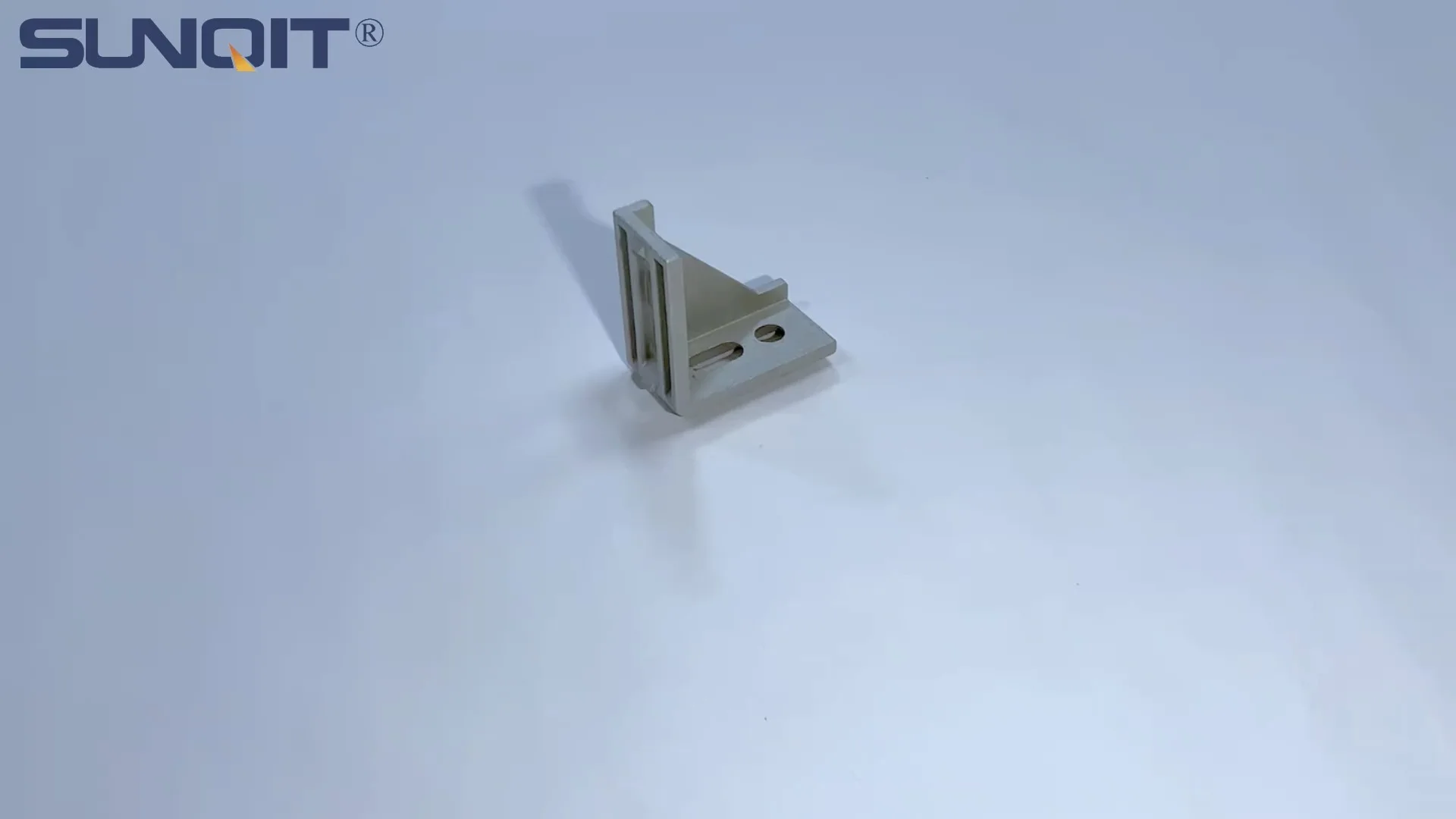
It used for 90° flat connection for 20 series aluminum profile.
In the world of lean manufacturing, every component counts. From the smallest fastener to the sturdiest workbench, each piece plays a role in creating workflows that are efficient, adaptable, and built to last. Among these essential components, the humble workbench stands as a cornerstone of daily operations—where assembly happens, parts are organized, and teams collaborate to keep production moving. Today, we're shining a spotlight on a workbench that's become a staple in factories and workshops worldwide: Workbench E (single deck-without caster). But even the most reliable workbench relies on critical accessories to deliver peak performance, and one such unsung hero is the 3060 Aluminum Angle Yard. Let's dive into how this unassuming component elevates the functionality, durability, and versatility of Workbench E, and why it's a must-have for anyone serious about lean manufacturing.
Understanding the Basics: What Are 3060 Aluminum Angle Yards?
Before we explore their role in Workbench E, let's get clear on what 3060 Aluminum Angle Yards actually are. Part of the broader category of aluminum profile accessories, these angle yards are precision-engineered components designed to connect, reinforce, and stabilize structures made from aluminum profiles. Think of them as the "glue" that holds a workbench's frame together—only far more robust and reliable than any adhesive.
The "3060" in their name refers to their dimensions: typically 30mm in one leg and 60mm in the other, forming an L-shape that fits snugly against the edges of aluminum profiles. Made from high-grade aluminum alloy, they strike an impressive balance between lightweight design and structural integrity. Unlike steel angle brackets, which can be heavy and prone to rust, 3060 Aluminum Angle Yards offer corrosion resistance (often enhanced by anodized or powder-coated finishes) and ease of handling—two traits that make them ideal for dynamic manufacturing environments.
But their value goes beyond materials. These angle yards are designed with compatibility in mind. They feature pre-drilled holes and slots that align with standard aluminum profiles (like the 3030 or 4040 series), allowing for quick, tool-friendly installation. Whether you're building a new Workbench E from scratch or reinforcing an existing one, 3060 Aluminum Angle Yards simplify the process, reducing assembly time and minimizing errors.
Workbench E: The Unsung Hero of Fixed Workstations
To appreciate the role of 3060 Aluminum Angle Yards, we first need to understand the workbench they support: Workbench E (single deck-without caster). If you've walked through a production assemble line, electronics workshop, or quality control lab, chances are you've seen this workbench in action. As its name suggests, it features a single, sturdy deck (usually made of plywood, steel, or aluminum composite) and no casters—meaning it's designed for fixed placement. This stability makes it perfect for tasks that require precision, consistency, and a dedicated workspace, such as component assembly, small-part sorting, or equipment testing.
Workbench E's simplicity is part of its appeal. Without moving parts like casters, it eliminates the risk of unintended movement during delicate operations. Its single deck maximizes usable surface area, while its frame—typically constructed from aluminum profiles or lean pipes—provides the rigidity needed to support tools, machinery, and materials. However, this rigidity doesn't come automatically. The frame's joints, where vertical and horizontal profiles meet, are critical stress points. Over time, repeated use, heavy loads, or even minor impacts can weaken these joints, leading to wobbling, deck misalignment, or worse—compromised safety.
This is where 3060 Aluminum Angle Yards step in. By reinforcing the connections between the frame's vertical supports and horizontal rails, they distribute weight evenly across the structure, preventing stress concentration at the joints. Imagine building a bookshelf without corner brackets: over time, the shelves would sag, and the frame might warp. Similarly, Workbench E without proper angle yards risks instability, which can slow down workflows, increase the chance of errors, and even create safety hazards for operators. In short, 3060 Aluminum Angle Yards are the silent guardians of Workbench E's reliability.

Why 3060 Aluminum Angle Yards Outperform Other Brackets
You might be wondering: Can't I just use any angle bracket for Workbench E? The short answer is yes—but the long answer is that not all brackets are created equal. To illustrate, let's compare 3060 Aluminum Angle Yards with two common alternatives: steel angle brackets and plastic corner clips.
| Feature | 3060 Aluminum Angle Yards | Steel Angle Brackets | Plastic Corner Clips |
|---|---|---|---|
| Weight | Lightweight (easy to handle during installation) | Heavy (adds unnecessary bulk to the frame) | Very lightweight (but prone to bending under load) |
| Corrosion Resistance | High (anodized/powder-coated finishes prevent rust) | Low (requires painting or galvanizing; still risks rust in humid environments) | High (but UV and chemical exposure can cause brittleness) |
| Strength | Excellent (supports heavy loads without deformation) | Very high (but overkill for most Workbench E applications) | Low (only suitable for light-duty, temporary setups) |
| Compatibility with Aluminum Profiles | Designed for it (pre-drilled holes align with profile slots) | Limited (may require custom drilling; risk of profile damage) | Hit-or-miss (often generic, may not fit snugly) |
| Longevity | 10+ years (with proper maintenance) | 5-8 years (if rust is managed) | 1-3 years (prone to wear and tear) |
The table speaks for itself: 3060 Aluminum Angle Yards offer the best balance of weight, strength, and compatibility for Workbench E. They're not just a "good enough" solution—they're a long-term investment in the workbench's performance and safety. For lean system managers, this translates to lower replacement costs, fewer disruptions, and a more reliable workspace for operators.

Installation 101: How to Properly Fit 3060 Aluminum Angle Yards on Workbench E
Even the best components can underperform if installed incorrectly. Installing 3060 Aluminum Angle Yards on Workbench E is straightforward, but attention to detail is key. Here's a step-by-step guide to ensure a secure, long-lasting fit:
1. Gather Your Tools and Materials
You'll need: 3060 Aluminum Angle Yards (quantity depends on the workbench size—plan for 2-4 per vertical joint), compatible bolts and nuts (typically M5 or M6, depending on profile holes), a hex key or socket wrench, a level, and a pencil for marking.
2. Identify Stress Points
Focus on the frame's vertical corners, where the legs meet the horizontal rails (front, back, and sides). These are the primary areas where 3060 Aluminum Angle Yards will add reinforcement. For extra stability, consider adding them to intermediate supports if the workbench is longer than 1.5 meters.
3. Align and Mark
Hold the angle yard against the joint, ensuring its edges are flush with the profile surfaces. Use a pencil to mark the positions of the pre-drilled holes on the profiles. This step prevents misalignment and ensures the bolts will thread smoothly.
4. Secure the Angle Yards
insert bolts through the angle yard's holes and into the profile slots. Tighten the nuts with a wrench—firmly, but not excessively. Over-tightening can strip threads or warp the angle yard, weakening its hold. A good rule of thumb: stop when you feel resistance, then give the wrench a quarter-turn more.
5. Check for Stability
After installing all angle yards, place a level on the workbench deck to ensure it's flat. Gently shake the frame to test for wobbling. If movement persists, check the tightness of the bolts or add additional angle yards to weak points.
Pro tip: For workbenches that support heavy equipment (like soldering stations or testing machinery), use lock washers with the bolts. These prevent loosening due to vibration, a common issue in high-activity environments.

Choosing the Right Lean System Supplier: Why Quality Angle Yards Start with the Source
You've learned about the benefits of 3060 Aluminum Angle Yards and how to install them—but none of this matters if you're using subpar components. The quality of your angle yards depends largely on your lean system supplier. With so many suppliers in the market, it's tempting to opt for the lowest price, but this can backfire. Cheap angle yards may use inferior aluminum alloys, have imprecise drilling (leading to misalignment), or lack proper finishing (increasing corrosion risk).
So, what should you look for in a lean system supplier? First, prioritize experience. A supplier with a track record in lean manufacturing understands the demands of Workbench E and can recommend the right angle yards for your specific use case. Second, check material certifications. Reputable suppliers will provide documentation on the aluminum alloy grade, ensuring it meets industry standards for strength and durability. Third, ask about quality control processes. Do they test their angle yards for load capacity or corrosion resistance? Finally, consider customer support. A good supplier won't just sell you components—they'll offer guidance on installation, troubleshooting, and even custom solutions if needed.
Remember, 3060 Aluminum Angle Yards are a small part of your overall lean system, but their impact is significant. Investing in high-quality components from a trusted lean system supplier ensures that your Workbench E remains a reliable, efficient workspace for years to come.
Real-World Impact: How 3060 Aluminum Angle Yards Improve Workflow
To put this all in perspective, let's look at a real-world example. A mid-sized electronics manufacturer was struggling with Workbench E wobble in their assembly line. Operators reported that delicate soldering tasks took longer due to the unstable surface, and rework rates were higher than average. After consulting with their lean system supplier, they retrofitted their workbenches with 3060 Aluminum Angle Yards at all vertical joints. Within a week, operators noticed a difference: the workbench felt solid, soldering precision improved, and rework dropped by 15%. Over six months, the manufacturer estimated that the small investment in angle yards saved them over 200 hours of rework time—proving that even the smallest components can drive meaningful efficiency gains.
Another example: a pharmaceutical lab using Workbench E for sample testing needed to comply with strict safety standards. Their existing steel angle brackets were showing signs of rust, raising concerns about contamination. Switching to 3060 Aluminum Angle Yards (with anodized finishes) eliminated the rust risk, while the lightweight design made it easier to sanitize the workbench surfaces. The lab not only met compliance requirements but also reduced cleaning time by 10%.
Conclusion: Small Component, Big Difference
In the world of lean manufacturing, success lies in the details. Workbench E (single deck-without caster) is a workhorse of fixed workstations, but its reliability hinges on components like 3060 Aluminum Angle Yards. These unassuming brackets may not grab headlines, but they play a critical role in reinforcing joints, ensuring stability, and extending the workbench's lifespan. Lightweight, corrosion-resistant, and easy to install, they embody the lean principles of efficiency and durability.
Whether you're building a new production assemble line or upgrading existing equipment, don't overlook the importance of 3060 Aluminum Angle Yards. Pair them with a reputable lean system supplier, follow proper installation practices, and you'll create a workspace that supports precision, safety, and productivity—today, tomorrow, and for years to come. After all, in lean manufacturing, every component counts—and 3060 Aluminum Angle Yards count in a big way.