- Company Articles
- Products and Technology
- Application Cases
- 3060 Aluminum Angle Yards in Communication Device Assembly: Case Studies

3060 Aluminum Angle Yards in Communication Device Assembly: Case Studies
Related Product
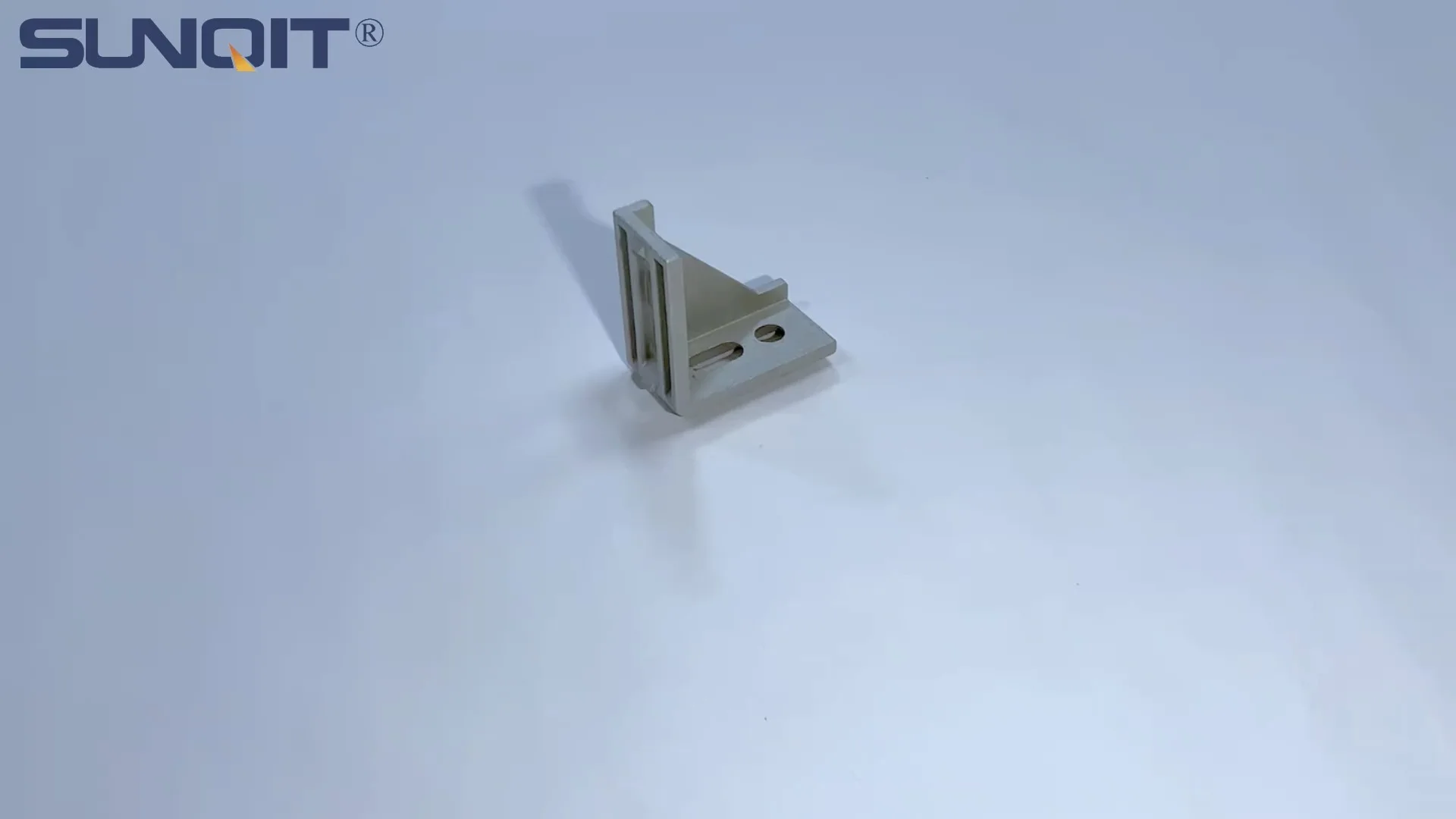
3060 Aluminum Angle Yards
It used for 90° flat connection for 20 series aluminum profile.
In the fast-paced world of communication device manufacturing, where precision, flexibility, and efficiency are the cornerstones of success, the tools and materials that shape the assembly line often go unnoticed—until they make or break production goals. From 5G routers and fiber optic modems to IoT sensors and satellite communication modules, these devices demand workspaces that can adapt to frequent design changes, support intricate assembly steps, and reduce waste in every process. Enter the 3060 aluminum angle yard: a humble yet transformative component that has quietly become a linchpin in modern assembly facilities. In this article, we'll explore how this aluminum extrusion profile, paired with thoughtful design, is revolutionizing communication device assembly through real-world case studies, and why it has become a go-to choice for manufacturers aiming to stay ahead in a competitive industry.
Understanding 3060 Aluminum Angle Yards: More Than Just Metal
Before diving into the case studies, let's clarify what makes 3060 aluminum angle yards stand out. Part of the broader family of aluminum profiles, these angle yards are extruded aluminum components with a cross-sectional dimension of 30mm x 60mm, shaped into a right angle. This specific size strikes a rare balance: it's sturdy enough to support heavy equipment (like soldering stations or testing gear) yet lightweight enough to reconfigure without specialized tools. Unlike traditional steel angles, which are heavy and prone to rust, or wooden frames, which warp and degrade over time, 3060 aluminum angle yards offer corrosion resistance, modularity, and a smooth finish that integrates seamlessly with other aluminum profile accessories—think brackets, connectors, and panels.
But their real power lies in adaptability. Communication device assembly lines rarely stay static. A manufacturer might shift from assembling 4G modems to 5G routers in a matter of months, requiring workbenches to be taller, shelves to be repositioned, or material racks to accommodate larger circuit boards. With 3060 angle yards, these changes don't mean tearing down and rebuilding entire setups. Instead, teams can loosen a few screws, adjust the angles, and lock them back in place—often in under an hour. This flexibility aligns perfectly with lean system principles, where minimizing waste (including time spent on reconfiguration) is key to maximizing productivity.
Case Study 1: Streamlining Workbench Efficiency at TechComm Solutions
Company Profile: TechComm Solutions is a mid-sized manufacturer based in Oregon, specializing in fiber optic modems and Ethernet switches. With a team of 80 assembly line workers and a product line that updates twice yearly, the company faced a recurring challenge: their fixed steel workbenches couldn't keep up with changing product dimensions. In early 2023, their latest modem design required a 15% larger circuit board, and workers were struggling to reach tools and components without overreaching—a problem that led to slower assembly times and a 12% increase in minor errors (like misaligned connectors).
The Problem: The existing steel workbenches, installed in 2018, were bolted to the floor and had fixed shelf heights. To accommodate the new modem, workers had to either crowd the bench surface (leading to clutter) or use temporary wooden risers (which were unstable and non-uniform across stations). "We were spending 45 minutes per shift just reorganizing tools," says Maria Gonzalez, TechComm's Production Manager. "And the risers kept slipping—one worker even knocked over a batch of circuit boards, costing us $3,000 in scrap."
The Solution: After researching alternatives, TechComm partnered with an aluminum profile supplier to replace 12 of their 20 workbenches with custom setups built around 3060 aluminum angle yards. The new workbenches featured adjustable height legs (using 3060 angles and telescoping aluminum pipes), modular shelves (attached via T-slot connectors), and integrated tool hooks. Crucially, the angle yards allowed the team to add a "wing" shelf on one side—extending the work surface by 18 inches for the larger circuit boards—without compromising stability.
The Results: Within six weeks of installation, the improvements were undeniable. Assembly time per unit dropped by 18% (from 12 minutes to 9.8 minutes), and error rates fell by 24% as workers had more space to organize components. The adjustable height feature also reduced worker fatigue: employees could now set their bench height to match their arm length, cutting down on shoulder strain reported in monthly safety checks. "The best part? When we launched a smaller IoT sensor line three months later, we reconfigured three of these workbenches in a morning," Gonzalez notes. "No bolts, no welding—just a hex key and a few hours. We saved $15,000 by not buying new benches."
Case Study 2: Lean System Integration at GlobalCom Assemblies
Company Profile: GlobalCom Assemblies is a global player in 5G infrastructure, with a flagship plant in Texas producing over 50,000 5G routers monthly. In 2022, the company embarked on a lean system overhaul, aiming to reduce waste in material handling—a process that was costing them $220,000 annually in excess labor and delayed shipments. Their biggest pain point? Fixed material racks that forced workers to walk 15–20 feet to retrieve components (like capacitors, resistors, and antennas) from storage, leading to "motion waste" (a key lean system target) and bottlenecks at peak production times.
The Problem: GlobalCom's existing material storage relied on steel racks with fixed shelves spaced 18 inches apart. Most components came in boxes of varying sizes: small antennae fit in shallow bins, while power supply units required deeper shelves. The one-size-fits-all racks meant workers often had to stack bins (risking damage) or leave empty space (wasting storage). Worse, when a new router model introduced a larger circuit board, the racks couldn't be adjusted to hold the new component trays, leading to temporary storage on the factory floor—a safety hazard and a productivity killer.
The Solution: The lean transformation team turned to 3060 aluminum angle yards to build modular material racks. Working with their aluminum profile supplier, they designed racks with adjustable shelf heights (using 3060 angles as vertical supports and horizontal crossbars) and integrated roller tracks (another aluminum extrusion profile accessory) to let bins glide smoothly. Each rack section could be reconfigured by loosening T-slot bolts, sliding the angle yards up or down, and locking them in place. For the new circuit board trays, they simply added extra horizontal bars using 3060 angle connectors, creating custom-sized shelves in minutes.
The Results: The impact was immediate. Material retrieval time dropped by 35%—workers now walked an average of 6 feet instead of 18 to get components. The roller tracks reduced the effort needed to pull bins, cutting down on "ergonomic waste" and lowering workers' compensation claims by 12% in the first year. Perhaps most impressively, the racks adapted seamlessly to the new router model: instead of waiting 8 weeks for custom steel racks, the team reconfigured existing ones in a weekend. "We tracked the numbers, and the 3060 angle yards paid for themselves in 4 months," says Raj Patel, GlobalCom's Lean Coordinator. "And when we expanded production to include satellite communication modules this year, we didn't need to buy new racks—we just adjusted the angles again."
Case Study 3: Precision and Compliance at NanoConnect Technologies
Company Profile: NanoConnect Technologies, based in California, specializes in ultra-small IoT communication modules used in medical devices and smart home systems. These modules are delicate: some components are smaller than a grain of rice, and assembly requires ESD (electrostatic discharge) protection to avoid frying sensitive chips. In 2023, the company faced a compliance audit requirement: their workbenches needed to maintain a flat, stable surface within ±0.5mm tolerance to ensure accurate placement of microchips. Their existing wooden workbenches, while ESD-safe, warped slightly in the factory's humidity, failing the tolerance test.
The Problem: Wooden workbenches, even with ESD mats, couldn't maintain the required flatness. When the audit revealed that 15% of benches had warped beyond the ±0.5mm limit, NanoConnect risked losing a major contract with a medical device client. Replacing them with steel benches was an option, but steel conducts electricity—posing ESD risks unless coated, which added cost. Moreover, steel benches would be heavy, making it impossible to reposition them for future production lines.
The Solution: The engineering team proposed a hybrid solution: workbenches built with 3060 aluminum angle yards as the frame, topped with an aluminum honeycomb panel (ESD-safe and rigid). The angle yards provided the structural stability needed to keep the frame flat, while the honeycomb panel added rigidity without weight. To ensure ESD compliance, they added conductive casters and grounded the aluminum frame to the factory's ESD system. The 3060 angles also allowed for integrated tool rails (to hold tweezers and microscopes) and adjustable lighting mounts—critical for precision work.
The Results: The new workbenches passed the compliance audit with flying colors, maintaining flatness within ±0.3mm even in high humidity. The ESD grounding system reduced static-related defects by 40%, and the adjustable tool rails cut down on time spent searching for tools by 25%. "We were worried aluminum might be too flexible, but the 3060 angles are rock-solid," says Dr. Elena Kim, NanoConnect's Quality Assurance Director. "And when we launched a new module with a taller circuit board, we just added a 3060 angle extension to the lighting mount—no need for a whole new bench. It's been a game-changer for both compliance and flexibility."
Why 3060 Aluminum Angle Yards Work: A Comparative Look
To understand why these case studies saw such success, let's compare 3060 aluminum angle yards to traditional materials used in assembly setups. The table below breaks down key factors like cost, adaptability, and durability—areas where communication device manufacturers often struggle.
| Factor | 3060 Aluminum Angle Yards | Steel Angle Iron | Wooden Frames |
|---|---|---|---|
| Weight (per meter) | 1.2–1.5 kg (lightweight, easy to handle) | 4.5–5.0 kg (heavy; requires 2+ workers to move) | 2.0–2.5 kg (varies by wood type; prone to splinters) |
| Reconfiguration Time | 30–60 minutes (tool-free or basic hex key) | 4–6 hours (requires welding/grinding) | 2–3 hours (sanding, drilling new holes; risk of splitting) |
| Durability | 10–15 years (corrosion-resistant; no warping) | 15–20 years (prone to rust; heavy to maintain) | 3–5 years (warping, rotting, or insect damage) |
| ESD Compatibility | Yes (can be grounded with conductive accessories) | Requires coating (adds $50–$100 per setup) | Only with ESD mats (mats wear out every 1–2 years) |
| Long-Term Cost (10-year lifespan) | $3,500–$4,500 (initial + minimal reconfiguration) | $5,000–$6,000 (initial + rust treatment + replacement parts) | $6,000–$7,000 (3–4 replacements + ESD mat replacements) |
The table tells a clear story: 3060 aluminum angle yards offer the best balance of cost, flexibility, and durability for communication device assembly. While steel might last longer, its weight and rigidity make it impractical for dynamic production lines. Wood is cheap upfront but becomes costly over time due to replacements. Aluminum, with its modular design and lean system alignment, emerges as the most pragmatic choice—especially for manufacturers that prioritize adaptability.

Beyond the Assembly Line: Future-Proofing with Aluminum Profiles
As communication technology continues to evolve—think 6G networks, AI-driven smart devices, and miniaturized sensors—manufacturers will face even greater pressure to adapt quickly. 3060 aluminum angle yards, and the broader family of aluminum profiles, are poised to play an even bigger role. For example, some manufacturers are now integrating IoT sensors directly into their aluminum workbenches (using T-slot channels to hide wiring) to track production metrics in real time. Others are combining 3060 angles with 3D-printed custom brackets to create one-of-a-kind setups for prototype assembly.
The key takeaway? 3060 aluminum angle yards are more than just building blocks—they're enablers of innovation. In an industry where the next big product could render today's assembly line obsolete, having a foundation that can evolve with you isn't just a luxury; it's a competitive advantage. As TechComm's Maria Gonzalez puts it: "We don't just build modems—we build the future of connectivity. And to do that, we need tools that can keep up. The 3060 angle yards? They're not just part of our assembly line. They're part of our strategy."

Conclusion: The Unsung Hero of Modern Assembly
Communication device assembly is a high-stakes game, where precision, speed, and adaptability determine success. In this landscape, 3060 aluminum angle yards have emerged as an unsung hero, transforming rigid workbenches into flexible hubs, static racks into dynamic material systems, and compliance headaches into seamless processes. The case studies of TechComm Solutions, GlobalCom Assemblies, and NanoConnect Technologies demonstrate that this aluminum extrusion profile isn't just a material choice—it's a strategic one. By prioritizing modularity, lean system alignment, and long-term durability, manufacturers can reduce waste, boost productivity, and stay ready for whatever the next technological leap brings.
So the next time you unbox a new router or connect to a smart device, take a moment to appreciate the invisible infrastructure that brought it to life. Chances are, somewhere in that assembly line, a 3060 aluminum angle yard played a role—quietly, reliably, and adaptably—helping build the tools that keep us connected.