- Company Articles
- Products and Technology
- Product knowledge
- 3060 Aluminum Angle Yards in Consumer Electronics: Building Sturdy Fixtures

3060 Aluminum Angle Yards in Consumer Electronics: Building Sturdy Fixtures
Related Product
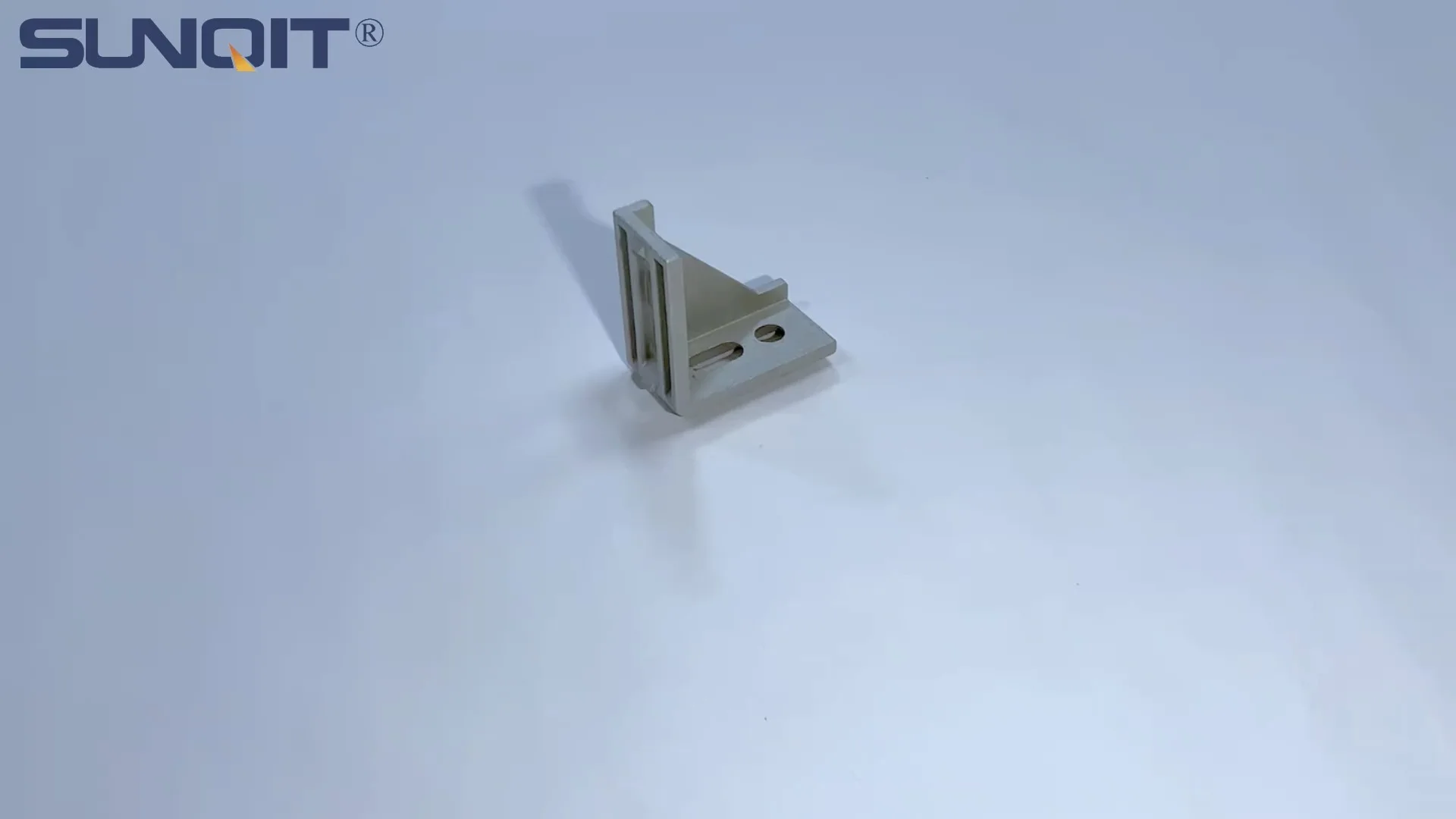
3060 Aluminum Angle Yards
It used for 90° flat connection for 20 series aluminum profile.
Walk into any consumer electronics manufacturing facility, and you'll be met with a symphony of precision: robotic arms assembling microchips, workers carefully placing delicate screens onto phone bodies, and conveyor belts gliding PCBs through testing stations. In this fast-paced world, where a single misalignment can derail production timelines or damage a $500 component, the unsung heroes often aren't the high-tech machines—but the fixtures that hold everything together. From workbenches where assemblers spend hours daily to material racks storing sensitive parts, these structures need to be more than just "sturdy." They need to be precise, adaptable, and built to keep up with the industry's relentless innovation. Enter 3060 aluminum angle yards—a humble yet transformative solution that's quietly revolutionizing how electronics manufacturers build their workspaces.
What Are 3060 Aluminum Angle Yards, Anyway?
If you're new to manufacturing jargon, "3060 aluminum angle yards" might sound like a mouthful. Let's break it down. First, they're part of the broader family of aluminum extrusion profiles —products made by forcing heated aluminum alloy through a die to create specific cross-sectional shapes. The "3060" refers to their dimensions: 30 millimeters in one leg and 60 millimeters in the other, forming a right angle (hence "angle yard"). Think of them as the building blocks of industrial furniture and fixtures, designed to be strong, lightweight, and infinitely configurable.
Unlike generic aluminum bars, these angle yards are engineered with precision in mind. The extrusion process ensures consistent dimensions across every piece—no warping, no uneven edges—so when you bolt two pieces together, they fit like puzzle pieces. This uniformity is critical in electronics manufacturing, where even a 1mm misalignment can throw off an entire assembly line. And because they're made from high-grade aluminum (often 6063-T5, a common alloy for structural applications), they strike the perfect balance between strength and weight—strong enough to hold heavy testing equipment, yet light enough to reposition when your production line needs a makeover.
Why 3060 Aluminum Angle Yards Are a Game-Changer for Electronics
Consumer electronics aren't just getting smaller—they're getting more complex. A modern smartphone, for example, contains over 3,000 components, many of which are smaller than a grain of rice. To assemble these, manufacturers need fixtures that can handle both delicacy and durability. Here's why 3060 aluminum angle yards rise to the challenge:
1. Precision That Protects Delicate Parts
Static electricity is the bane of electronics manufacturing. A single static discharge can fry a microchip, rendering an entire device useless. That's why many fixtures in these facilities are ESD (electrostatic discharge) protected. 3060 aluminum angle yards play nice with ESD modifications—whether by adding conductive coatings or pairing with ESD-safe workbench tops. But their precision matters here too: a wobbly workbench might cause an assembler's hand to slip, damaging a PCB. With 3060 angle yards, the frame stays rock-solid, reducing the risk of costly mistakes.
2. Lightweight Strength for Lean Manufacturing
The days of "set it and forget it" production lines are long gone. Today's manufacturers need to pivot quickly—whether to ramp up production for a hot new gadget or retool for a sustainability-focused redesign. Traditional fixtures, often made of steel or wood, are bulky and hard to move. 3060 aluminum angle yards, by contrast, weigh about 1.8 kg per meter (depending on wall thickness)—roughly 1/3 the weight of steel angle iron. This makes them easy to disassemble, transport, and reassemble, aligning perfectly with lean system principles that prioritize flexibility and waste reduction.
3. Corrosion Resistance for Longevity
Electronics manufacturing facilities are meticulously controlled environments, but they're not immune to wear and tear. Humidity, cleaning chemicals, and even the oils from workers' hands can take a toll on fixtures over time. Steel rusts, wood warps, and plastic cracks. Aluminum, however, forms a natural oxide layer that resists corrosion—meaning your 3060 angle yard fixtures will look and perform like new for years, even in high-traffic areas. This longevity translates to lower replacement costs and less downtime for repairs.

From Workbenches to Material Racks: Real-World Applications
3060 aluminum angle yards aren't just theoretical—they're hard at work in factories worldwide, solving real problems. Let's look at some of their most common (and most impactful) applications in consumer electronics:
Workbenches: The Heart of the Assembly Line
An assembler might spend 8 hours a day at a workbench, so it needs to be comfortable, functional, and stable. 3060 angle yards form the bench's frame, with options to add shelves, tool hooks, and even integrated lighting. For example, a workbench built with 3060 angle yards can have adjustable height (using telescoping legs and locking pins) to accommodate workers of different heights, reducing ergonomic strain. The angle yards also support ESD-safe tops (like conductive laminate or aluminum honeycomb panels) to protect sensitive components from static. And because they're modular, you can add a side shelf for bins of screws one month, then remove it to make space for a new testing device the next.
Material Racks: Organizing Chaos, One Shelf at a Time
Imagine a warehouse full of loose PCBs, smartphone screens, and battery packs—chaos, right? 3060 aluminum angle yards build the racks that turn that chaos into order. These racks are fully customizable: adjust shelf heights with a few bolts, add dividers to separate different component types, or even integrate roller tracks for easy loading/unloading. For example, a material rack built with 3060 angle yards might have 5 shelves, each rated to hold 50kg (plenty for stacks of PCBs), with labels for "iPhone 15 Screens" or "Galaxy Z Fold Hinges." And because aluminum is non-magnetic, there's no risk of interfering with sensitive electronic components stored on the shelves.
Custom Fixtures: Jigs and Stands for Specialized Tasks
Not all manufacturing tasks fit into a "one-size-fits-all" fixture. When a new product comes along—say, a foldable tablet with an unusual hinge design—you might need a custom jig to hold the parts steady during assembly. 3060 angle yards shine here because they're easy to modify. With a few aluminum profile accessories (like L-brackets, T-connectors, or corner gussets), you can build a jig that exactly matches your product's dimensions. And if the product design changes? Just take it apart and rebuild—no need to order a brand-new fixture.

How Do They Stack Up Against Other Materials? A Quick Comparison
You might be thinking: "Why not just use steel angle iron? Or wood? It's cheaper." Fair question. Let's put 3060 aluminum angle yards head-to-head with common alternatives to see why they're worth the investment:
| Material | Weight (kg/m) | Tensile Strength (MPa) | Corrosion Resistance | Modularity | Best For |
|---|---|---|---|---|---|
| 3060 Aluminum Angle Yard | 1.5–2.0 | 200–230 | High (resists rust) | Excellent (easily disassembled/reused) | Precision workbenches, material racks, custom jigs |
| Steel Angle Iron (30x30mm) | 3.7–4.2 | 370–450 | Low (prone to rust without coating) | Poor (welded joints are permanent) | Heavy-duty machinery bases, fixed shelving |
| Plywood (18mm thick) | ~12 (per m²) | 30–50 | Low (swells with moisture) | Very Low (cuts are permanent) | Temporary workspaces, low-weight storage |
| Plastic Extrusions (30x60mm) | 0.8–1.2 | 40–60 | High (resists chemicals) | Good (but weak under load) | Light-duty shelving, non-conductive applications |
The takeaway? Steel is stronger, but it's heavy and hard to reconfigure. Wood is cheap, but it's flimsy and short-lived. Plastic is light, but it can't handle heavy loads. 3060 aluminum angle yards? They're the sweet spot—strong enough for industrial use, light enough for flexibility, and durable enough to last for years.
Case Study: How a Smartphone Maker Cut Costs with 3060 Angle Yards
Let's take a look at a real example (names changed for privacy). "TechNova," a mid-sized smartphone manufacturer, was struggling with its old production setup. Their assembly line used steel workbenches and wooden material racks, which had two major issues: the steel benches were heavy and hard to move when retooling for new phone models, and the wooden racks were warping in the factory's humid environment, leading to misaligned shelves and damaged screens.
After switching to 3060 aluminum angle yards, here's what changed: First, reconfiguring the assembly line went from a 2-day project to a 4-hour task—no more hiring a crew to lift steel benches. Second, the aluminum racks stopped warping, reducing screen damage by 75%. Third, because the angle yards were compatible with their existing lean system , they could reuse old components (like shelves and brackets) when building new fixtures, cutting waste by 30%. All told, TechNova saved $45,000 in the first year alone—proof that sometimes, the smallest upgrades make the biggest difference.

Accessorize to Maximize: Making the Most of Your Angle Yards
3060 aluminum angle yards are only as good as the accessories that go with them. Fortunately, the market is flooded with tools to turn a basic angle yard into a fully functional fixture. Here are a few must-haves for electronics manufacturers:
- Aluminum Profile Connectors: These are the glue that holds your fixtures together. From simple 90° brackets to adjustable hinges, they let you join angle yards at any angle. Look for connectors with rubber gaskets to reduce vibration—critical when working with sensitive components.
- End Caps: Sharp aluminum edges can snag wires or scratch components. End caps (plastic or rubber) cover the ends of angle yards, adding safety and a polished look.
- Adjustable Feet: Not every factory floor is perfectly level. Adjustable feet screw into the bottom of your angle yard frame, letting you tweak height by a few millimeters to keep workbenches and racks stable.
- Tool Hooks and Bins: Keep screwdrivers, tweezers, and other tools within arm's reach by adding hooks or small bins to your angle yard frame. No more digging through drawers mid-assembly!
Looking Ahead: The Future of 3060 Aluminum Angle Yards in Electronics
As consumer electronics continue to evolve—think foldable screens, AI-powered devices, and even more miniaturized components—the demand for smarter, more adaptable fixtures will grow. 3060 aluminum angle yards are poised to keep up. For starters, we'll see more integration with smart manufacturing tools: imagine angle yards with built-in sensors that alert managers when a shelf is overloaded or a workbench is vibrating too much. There's also a push for sustainability—manufacturers are experimenting with recycled aluminum in angle yards, reducing their carbon footprint without sacrificing strength.
And as aluminum extrusion profile technology improves, we'll likely see even more precise tolerances and custom shapes, making 3060 angle yards suitable for even the most specialized tasks. For example, a future angle yard might have built-in cable management channels, eliminating the need for messy zip ties and keeping workbenches clutter-free.
Final Thoughts: Why "Sturdy" Isn't Enough Anymore
In consumer electronics, "good enough" fixtures just don't cut it. You need fixtures that can keep up with innovation, protect delicate parts, and adapt when your production line needs to pivot. 3060 aluminum angle yards deliver on all fronts—they're precise, durable, and flexible, making them the backbone of modern electronics manufacturing. Whether you're building a workbench for assembling smartwatches or a material rack for storing laptop motherboards, they're not just a tool—they're an investment in efficiency, reliability, and the future of your factory.
So the next time you unbox a new smartphone or tablet, take a moment to appreciate the unsung hero that helped build it: the 3060 aluminum angle yard, quietly holding everything together, one precise angle at a time.