- Company Articles
- Products and Technology
- Product knowledge
- 3060 Aluminum Angle Yards in Medical Device Manufacturing: Uses & Advantages

3060 Aluminum Angle Yards in Medical Device Manufacturing: Uses & Advantages
Related Product
3060 Aluminum Angle Yards
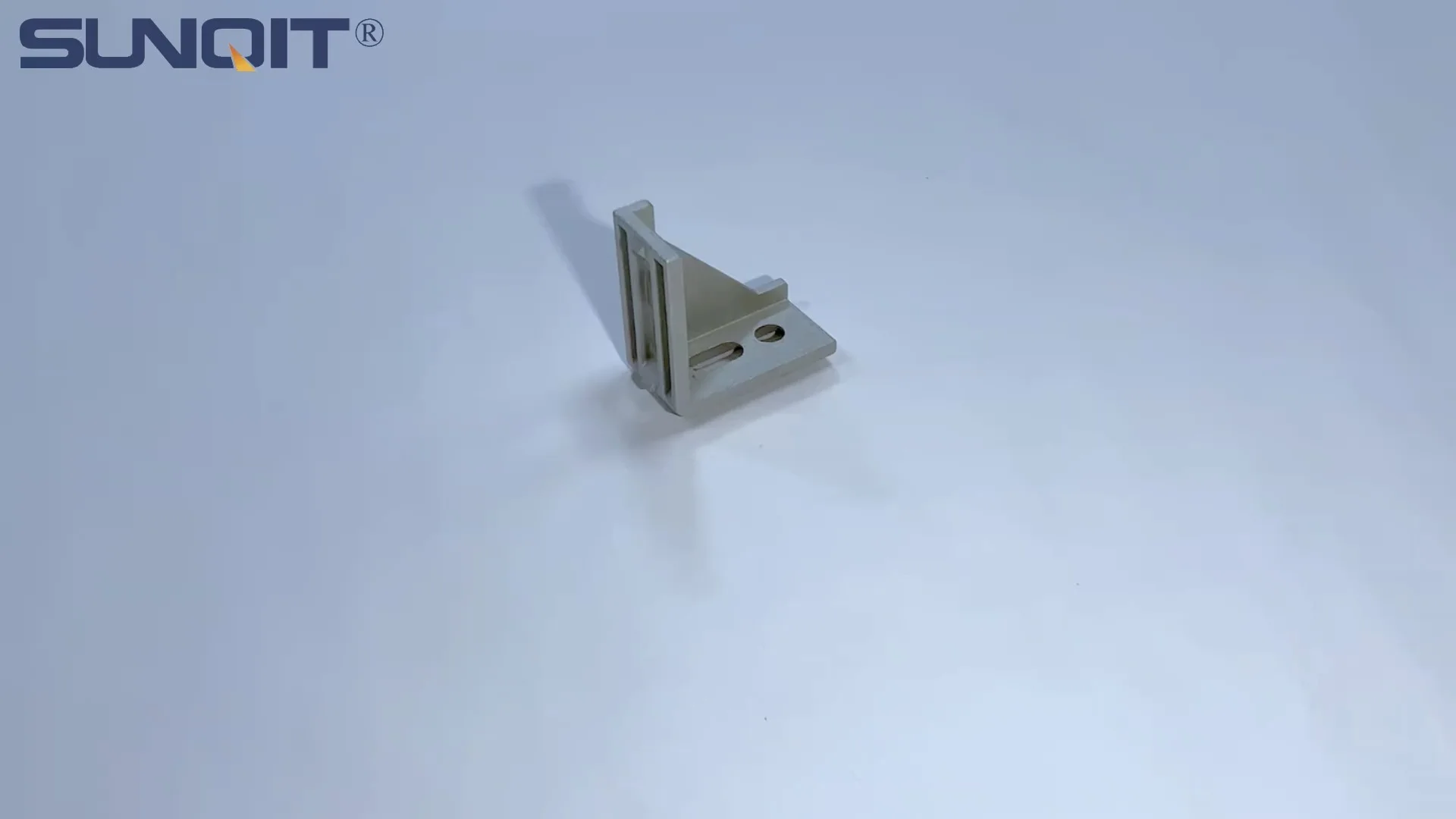
It used for 90° flat connection for 20 series aluminum profile.
Walk into any medical device manufacturing facility, and you'll quickly realize: this isn't just about building tools—it's about building trust. Every scalpel, pacemaker, and diagnostic machine must meet uncompromising standards for precision, cleanliness, and reliability. But here's the thing: those standards don't just apply to the devices themselves. They extend to every corner of the production floor, from the workbenches where components are assembled to the racks that store sensitive parts. That's where yet critical components like 3060 aluminum angle yards come into play. These unassuming brackets might not grab headlines, but they're the unsung heroes keeping medical manufacturing processes steady, efficient, and ready to adapt to the next breakthrough.
If you're new to the term, 3060 aluminum angle yards are specialized brackets forged from aluminum extrusion profiles—think of them as the "glue" that holds modular manufacturing systems together. Their name comes from their dimensions: 30mm by 60mm, a size carefully engineered to balance strength, versatility, and lightweight design. In an industry where even a fraction of a millimeter can affect device performance, these angle yards aren't just parts—they're precision tools in their own right. Let's dive into how they're transforming medical device manufacturing, one bracket at a time.
What Are 3060 Aluminum Angle Yards, Anyway?
Before we jump into their uses, let's get clear on what makes these angle yards unique. Unlike generic steel brackets or flimsy plastic supports, 3060 aluminum angle yards are born from the aluminum extrusion process—a method where aluminum alloy is forced through a die to create consistent, complex shapes. This process ensures every angle yard has uniform thickness, tight tolerances (often within ±0.1mm), and a smooth finish that resists nicks and scratches.
Most are made from 6061 or 6063 aluminum alloys, chosen for their blend of strength and malleability. These alloys can be anodized—a surface treatment that adds a protective layer, boosting corrosion resistance and making them easy to sanitize. For medical facilities, where daily wipe-downs with harsh disinfectants are the norm, this is a game-changer. Steel brackets might rust over time; wood might warp or trap bacteria. Aluminum angle yards? They stand up to the chaos of a busy production floor, day in and day out.
Fun fact: The "3060" designation isn't arbitrary. Medical device manufacturers often work with tight space constraints, so the 30x60mm profile strikes a sweet spot. It's narrow enough to fit into compact workstations but robust enough to support heavy loads—like a fully loaded workbench stacked with precision tools or a material rack holding dozens of delicate circuit boards.
Uses: Where 3060 Aluminum Angle Yards Shine in Medical Manufacturing
In medical device manufacturing, versatility isn't a luxury—it's a necessity. Production lines shift from assembling surgical tools one week to diagnostic equipment the next, and facilities need systems that can keep up. 3060 aluminum angle yards excel here, adapting to everything from workbenches to assembly lines. Let's break down their most critical roles.
1. Building Precision Workbenches
Picture this: A technician hunches over a workbench, carefully soldering wires onto a pacemaker circuit board. The tiniest could ruin hours of work. That's why the workbench itself needs to be rock-solid—no wobbling, no shifting, no gaps where debris might collect. 3060 aluminum angle yards are the backbone of these workbenches, connecting aluminum profiles to create frames that stay square and stable, even under repeated use.
What makes them ideal? Their precision-engineered design ensures that when you bolt an angle yard to an aluminum profile, there's no play—no creaking or shifting as the technician leans into their work. And because they're lightweight, these workbenches aren't permanent fixtures. Need to rearrange the floor plan to accommodate a new production line? A couple of technicians can disassemble, move, and reassemble the bench in hours, not days. For facilities running 24/7 shifts, that kind of flexibility cuts downtime and keeps projects on track.
Many medical workbenches also require specialized features: ESD (electrostatic discharge) mats to protect sensitive electronics, adjustable heights to reduce technician fatigue, or integrated shelving for tools. 3060 angle yards make adding these features a breeze. Drill a hole, bolt on a shelf bracket, and you're done—no custom fabrication required. It's modularity at its finest, letting facilities build workbenches that fit their exact needs.
2. Stabilizing Material Racks and Storage Systems
Medical device components come in all shapes and sizes: tiny screws, fragile glass vials, bulky subassemblies. Storing them safely isn't just about organization—it's about preventing damage and contamination. Steel racks are strong, but they're heavy and hard to clean; plastic racks warp under weight; wood racks harbor bacteria. 3060 aluminum angle yards offer a better way, forming the skeleton of material racks that are strong, sterile, and easy to reconfigure.
Take, for example, a rack storing insulin pumps before final testing. Each shelf must support dozens of devices without bending, and the entire unit must withstand daily wipe-downs with isopropyl alcohol. A rack built with 3060 angle yards and aluminum profiles checks all boxes: the aluminum resists corrosion from cleaning agents, the angle yards distribute weight evenly across shelves, and the modular design lets you adjust shelf heights as device sizes change. No more one-size-fits-all storage—now you can tailor racks to the components, not the other way around.
And let's talk about mobility. Many facilities use rolling racks to move materials between stations, but steel racks are so heavy that even with casters, they're tough to maneuver. Aluminum angle yards cut the weight significantly—aluminum weighs roughly 1/3 of steel—so a fully loaded rack becomes easy to push, reducing strain on workers and lowering the risk of accidents. It's a small change that adds up to big improvements in daily operations.
3. Supporting Dynamic Assembly Lines
Medical device assembly lines are living systems. One month, you're producing 500 blood glucose monitors; the next, you're scaling up to 5,000. Lines need to expand, contract, and reconfigure without missing a beat. 3060 aluminum angle yards are the unsung heroes here, anchoring everything from conveyor belts to inspection stations.
Consider a typical assembly line for a surgical stapler. Components move from station to station via roller tracks, each stop requiring precise alignment to ensure parts fit together correctly. 3060 angle yards secure these tracks to the line's frame, ensuring they stay level and straight—no jamming, no misalignment, no wasted components. And when the line needs to grow? Adding a new section is as simple as bolting on more angle yards and profiles. No need to shut down production for days while custom steel supports are welded in place.
Even better, these angle yards work seamlessly with other lean system components, like roller tracks and casters. Want to add a side station for quality checks? Use angle yards to mount a small workbench off the main line. Need to tilt a conveyor to improve part flow? Adjust the angle yards, and you're set. It's this adaptability that makes 3060 aluminum angle yards a cornerstone of lean manufacturing in medical settings—helping facilities eliminate waste and keep pace with demand.

Advantages: Why Medical Manufacturers Swear by 3060 Aluminum Angle Yards
By now, you might be thinking, "Okay, they're useful—but so are other brackets. What makes these angle yards special?" The answer lies in how they address the unique challenges of medical device manufacturing: precision, cleanliness, durability, and adaptability. Let's break down their biggest advantages.
1. Tight Tolerances for Critical Alignment
In medical manufacturing, "close enough" isn't a phrase you'll hear often. A pacemaker's leads must align within 0.01mm to ensure proper function; a diagnostic device's sensors need to sit perfectly flat to avoid calibration errors. That level of precision starts with the tools used to build them—and 3060 aluminum angle yards deliver.
Thanks to the aluminum extrusion process, these angle yards are produced with tolerances as tight as ±0.1mm. That means when you attach two profiles with an angle yard, they'll align exactly as intended, with no gaps or misalignment. Over time, this consistency reduces errors: fewer parts that don't fit, fewer assemblies that need rework, and fewer delays in getting life-saving devices to patients. It's a small detail, but in an industry where precision is everything, it's a game-changer.
2. Sanitary by Design
Medical facilities are's worst nightmare—and for good reason. A single bacterium on a workbench could contaminate a batch of surgical tools, putting patients at risk. That's why every surface must be easy to sanitize, and every component must resist corrosion from harsh cleaning agents. 3060 aluminum angle yards check both boxes.
Aluminum is naturally resistant to rust and corrosion, but when anodized (a common finish for these angle yards), it becomes even more resilient. Anodizing creates a hard, porous oxide layer on the aluminum's surface, which can be dyed (often clear or silver for medical settings) and sealed to repel liquids. This means daily wipe-downs with alcohol, hydrogen peroxide, or bleach won't eat away at the angle yards or leave behind pitted surfaces where bacteria could hide. Unlike steel, which requires constant painting to prevent rust, or wood, which absorbs moisture, aluminum angle yards stay clean and sterile for years.
Pro tip: When choosing angle yards for medical settings, look for those with a smooth, burr-free finish. Even tiny imperfections can trap debris, so opt for manufacturers that deburr and polish their brackets post-extrusion. It's a small detail that makes a big difference in maintaining sterile conditions.
3. Lightweight Strength That Reduces Fatigue and Risk
Manufacturing is physical work. Technicians lift, push, and adjust equipment daily, and heavy tools increase the risk of strains and injuries. 3060 aluminum angle yards help here by cutting weight without sacrificing strength. Aluminum has a strength-to-weight ratio that's hard to beat—about 3x that of steel—so a frame built with aluminum angle yards is just as strong as a steel one but significantly lighter.
Take a typical assembly line workbench: a steel frame might weigh 150kg, requiring two people to move. An aluminum frame with 3060 angle yards? Closer to 50kg—light enough for one person to reposition safely. This reduces the risk of back injuries and makes it easier to adjust the production floor layout, which is critical for adapting to new projects or scaling up production. For facilities prioritizing worker safety (and every medical facility should), this is a clear win.
4. Adaptability for a Fast-Changing Industry
Medical technology waits for no one. A new regulation might require changes to device design; a breakthrough material might make an existing production process obsolete; a global health crisis might spike demand for certain tools. Facilities need to pivot quickly, and rigid, one-size-fits-all equipment slows them down. 3060 aluminum angle yards, with their modular design, keep facilities agile.
Because they're compatible with standard aluminum profiles and aluminum profile accessories, these angle yards let you build, modify, and repurpose systems on the fly. Need to add a shelf to a workbench? Bolt on an angle yard and a profile. Want to convert a static rack into a rolling cart? Swap out fixed feet for casters (secured, of course, with angle yards). This modularity means you're not stuck with equipment that becomes obsolete in a year—instead, you're investing in a system that grows with your needs. For medical manufacturers racing to innovate, that's priceless.

Comparing 3060 Aluminum Angle Yards to Traditional Materials
Still on the fence? Let's put 3060 aluminum angle yards head-to-head with two common alternatives: steel angle brackets and wooden supports. The table below breaks down how they stack up in key areas for medical manufacturing.
| Feature | Steel Angle Brackets | Wooden Supports | 3060 Aluminum Angle Yards |
|---|---|---|---|
| Weight (per meter) | ~2.5kg (heavy; requires tools/machinery to move) | ~1.8kg (varies by wood type; prone to warping) | ~0.8kg (lightweight; easy to handle manually) |
| Sanitization Ease | Poor: Rusts if paint chips; hard to clean crevices | Poor: Absorbs liquids; harbors bacteria in grain | Excellent: Anodized surface resists chemicals; no pores for bacteria |
| Durability in Harsh Environments | Good, but requires regular painting to prevent rust | Poor: Warps with moisture; rots over time | Excellent: Resists corrosion, dents, and wear; lasts 10+ years |
| Customization Flexibility | Limited: Requires welding or drilling; hard to modify | Moderate: Easy to cut, but weakens structure; not reusable | Excellent: Bolt-on design; reconfigurable with basic tools; reusable |
| Cost Over Time | High: Frequent replacement due to rust; labor for painting | High: Short lifespan; frequent replacement | Low: Long lifespan; minimal maintenance; reusable |
The verdict? While steel and wood have their place in other industries, 3060 aluminum angle yards are uniquely suited to the demands of medical device manufacturing. They're not just a cost-saving measure—they're an investment in reliability, safety, and innovation.

Real-World Impact: A Case Study
To put this in perspective, let's look at a real example (names changed for privacy). MedTech Innovations, a mid-sized manufacturer of diagnostic equipment, was struggling with their production line for a new blood analyzer. Their existing steel workbenches were heavy and hard to reconfigure, and the wooden storage racks were warping under the weight of glass reagent vials, leading to frequent breakages and delays.
After consulting with a lean system specialist, they switched to 3060 aluminum angle yards and aluminum profiles. The results were striking: within three months, workbench reconfiguration time dropped from 8 hours to 2 hours, reagent vial breakages fell by 75% (thanks to stable, rust-free racks), and technician fatigue reports decreased—all while meeting stricter FDA cleanliness standards. As the plant manager put it: "We didn't just upgrade our brackets; we upgraded our entire workflow."
Choosing the Right 3060 Aluminum Angle Yards for Your Facility
Not all 3060 aluminum angle yards are created equal. To get the most out of them, keep these tips in mind:
- Look for anodized finishes: Anodizing adds a protective layer that resists corrosion and makes cleaning easier—non-negotiable for medical settings.
- Check tolerances: Opt for angle yards with tolerances of ±0.1mm or tighter to ensure alignment precision.
- Verify compatibility: Ensure the angle yards work with your existing aluminum profiles (most use standard T-slot designs, but double-check).
- Consider load capacity: Most 3060 angle yards support 50-100kg per bracket, but if you're building heavy-duty racks, look for reinforced models.
And don't hesitate to ask suppliers for samples. Testing a bracket in your facility—attaching it to a profile, cleaning it with your standard agents, putting it under load—can save headaches down the line.
Final Thoughts: The Small Component with a Big Impact
In the world of medical device manufacturing, it's easy to focus on the flashy innovations: the AI-driven quality checks, the 3D-printed components, the cutting-edge materials. But as any seasoned manufacturer will tell you, the real magic often lies in the details—the components that keep the lights on, the lines moving, and the standards high. 3060 aluminum angle yards are exactly that: quiet, reliable, and indispensable.
They're not just brackets. They're the foundation of workbenches where life-saving devices take shape. They're the racks that protect sensitive components from damage. They're the flexibility that lets facilities pivot when new challenges arise. In an industry where every decision impacts patient safety, choosing the right tools—even the small ones—matters. And for medical device manufacturers looking to build better, faster, and cleaner, 3060 aluminum angle yards are a choice that pays off, every single day.