- Company Articles
- Products and Technology
- Application Cases
- 3060 Aluminum Angle Yards in Smart Factories: IoT-Ready Applications

3060 Aluminum Angle Yards in Smart Factories: IoT-Ready Applications
Related Product
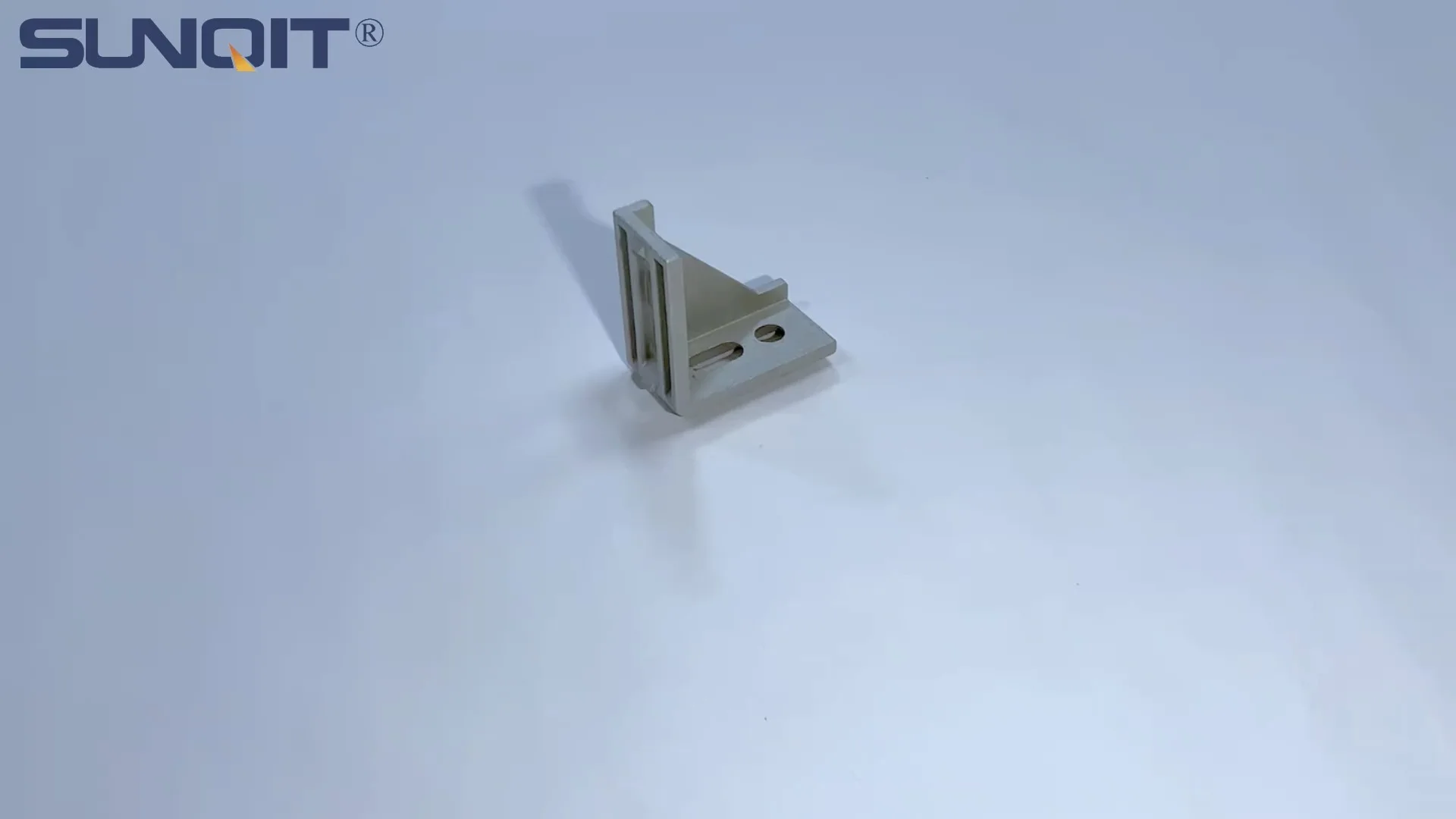
3060 Aluminum Angle Yards
It used for 90° flat connection for 20 series aluminum profile.
Walk into any modern smart factory today, and you'll likely be struck by two things: the quiet hum of machines communicating in code and the seamless adaptability of the workspace. Robots glide along tracks that weren't there last month, workstations reconfigure themselves for new products overnight, and data flows like water—all powered by a hidden hero: modular hardware. Among these unsung champions, 3060 aluminum angle yards stand out. These unassuming structural components are redefining how smart factories are built, offering a perfect blend of strength, flexibility, and connectivity that aligns with the demands of Industry 4.0. Let's dive into how these metal profiles are becoming the backbone of IoT-ready manufacturing, and why they're more than just "parts"—they're the building blocks of the factories of tomorrow.
What Are 3060 Aluminum Angle Yards, Anyway?
First things first: Let's demystify the name. "3060" refers to their dimensions—30 millimeters by 60 millimeters—making them wider than they are tall, which gives them exceptional stability for both vertical and horizontal framing. "Aluminum angle yards" describes their shape: a right-angle profile (like an L-shape) extruded from high-grade aluminum alloy, typically 6063-T5. This alloy is a favorite in manufacturing for good reason: it's lightweight (about a third the weight of steel), corrosion-resistant, and surprisingly strong—able to handle heavy loads without bending or warping.
But what really sets these angle yards apart is their design. Along their length, they feature "T-slots"—long, narrow grooves that run parallel to the edges. These slots aren't just for show; they're the secret to their versatility. Think of them as built-in "attachment points" that let you add almost any accessory imaginable: brackets, shelves, sensors, casters, or even panels. No drilling, no welding, no messy modifications—just slide a bolt or connector into the slot, tighten it, and you're done. It's like building with a giant, industrial-sized Erector Set, but for factories.
And they don't work alone. 3060 aluminum angle yards are part of a larger ecosystem of aluminum profile accessories: end caps to smooth rough edges, corner connectors to join two angle yards at 90 degrees, and even specialized brackets for mounting everything from conveyor belts to LED lights. This ecosystem means that a single length of angle yard can be repurposed a dozen times over its lifespan, adapting as your factory's needs change. That's a far cry from traditional steel framing, which is often welded in place and impossible to modify without cutting it apart—costly, time-consuming, and wasteful.
From Static Frames to IoT Hubs: How 3060 Angle Yards Enable Connectivity
In the early days of manufacturing, factory equipment was static. A workbench stayed a workbench; a shelf stayed a shelf. But smart factories aren't static—they're dynamic, data-driven environments where even the "dumbest" tools are expected to "talk." That's where 3060 aluminum angle yards shift from being just structural components to becoming IoT-ready platforms.
Here's how it works: The T-slots aren't just for physical attachments—they're perfect for housing and protecting IoT sensors and wiring. Imagine a workstation built with these angle yards. Instead of just holding circuit boards, it could have tiny vibration sensors mounted in the T-slots, tracking how often the table is jostled (a sign of potential equipment issues). Or temperature sensors to monitor heat buildup near sensitive electronics. Even RFID readers could be attached to track inventory as parts move across the bench. The aluminum itself acts as a shield against electromagnetic interference, ensuring sensor data stays accurate—a critical detail in noisy factory environments.
Wiring? No problem. The T-slots can route cables neatly from sensors to a central hub, keeping them organized and out of the way of moving parts. Need to add a new sensor? Slide it into an empty slot, run the wire through the groove, and connect it to the network. It's plug-and-play for industrial IoT, and it turns a simple workbench into a data-collecting node that feeds insights to your factory's central dashboard. Suddenly, your "dumb" hardware is contributing to predictive maintenance, efficiency tracking, and quality control—all because of the humble angle yard's design.

Key Applications: Where 3060 Aluminum Angle Yards Shine in Smart Factories
Now that we understand what they are and how they connect to IoT, let's look at where 3060 aluminum angle yards are making the biggest impact. From workstations to material handling, these profiles are proving indispensable in four key areas:
1. IoT-Enabled Workstations
Workstations are the heart of any factory, and smart factories demand workstations that do more than hold tools. Enter 3060 angle yards. A typical setup might include a frame built from these profiles, with a honeycomb panel top for lightweight durability. But add IoT sensors to the mix, and it becomes a "smart workstation." For example, a workbench in an electronics assembly line could use angle yards to mount barcode scanners that track which components are used, light sensors that dim overhead lights when no one is working (saving energy), and even pressure sensors in the tabletop that alert workers if a part is placed in the wrong spot. Because the angle yards are modular, if the factory switches to assembling a larger product, the workstation can be extended by adding more angle yards—no need to buy a whole new bench.
2. Adaptive Material Racks
Material storage is a constant challenge in factories. Parts come in all shapes and sizes, and storage racks need to keep up. 3060 aluminum angle yards excel here, especially when paired with accessories like adjustable shelves and roller tracks. Take a "Material Rack B" (a common factory term for a multi-tiered storage unit) with 3 rows and 3 floors. Built with angle yards, each shelf height can be adjusted in minutes by sliding brackets up or down the T-slots. Add IoT-enabled weight sensors under each shelf, and you've got a rack that tells you when stock is low, which items are expiring soon, or even which parts are being accessed most frequently—helping managers optimize inventory and reduce waste. It's lean system thinking in action: eliminate waste by making storage smarter, not just bigger.
3. Flexible Conveyor Systems
Conveyors are the arteries of a factory, moving parts from one station to the next. But traditional conveyors are rigid—if you need to reroute them, you're looking at days of downtime and expensive modifications. Not so with 3060 angle yards. These profiles can form the frame for modular conveyor systems, where roller tracks (another key accessory) are mounted to the angle yards. Need to add a 90-degree turn? Just build a new section with angle yards, connect it to the existing line, and you're done. Even better, IoT sensors can be mounted along the angle yard frame to track part movement—how long a component takes to reach the next station, if it's moving too slowly, or if a roller is jammed. This real-time data helps prevent bottlenecks before they happen.
4. Mobile Turnover Trolleys
Factories thrive on mobility, and turnover trolleys (used to transport parts between stations) need to be both sturdy and adaptable. 3060 angle yards make perfect trolley frames: lightweight enough to push easily, strong enough to carry heavy loads, and customizable with shelves, bins, or dividers. Add lockable casters (mounted, of course, via T-slots) and IoT trackers, and you've got a trolley that not only carries parts but also reports its location in real time. No more "Where's the trolley with the red bins?"—just check the factory dashboard, and you'll see exactly where it is. If a new part requires a taller trolley, just add extension angle yards to the frame. It's mobility with a brain.
| Application | Traditional Setup | 3060 Aluminum Angle Yards Setup | IoT Integration Benefit |
|---|---|---|---|
| Workstations | Rigid, custom-built wood/steel; hard to modify | Modular frame with T-slots; reconfigurable in hours | Sensors track tool usage, vibration, and energy use |
| Material Racks | Fixed shelf heights; no inventory tracking | Adjustable shelves via T-slot brackets; easy to expand | Weight sensors alert when stock is low; reduces overstock |
| Conveyors | Welded steel frames; difficult to reroute | Modular frames with roller track mounts; quick reconfiguration | Speed sensors prevent jams; movement data optimizes flow |
| Turnover Trolleys | Heavy steel frames; fixed design | Lightweight aluminum frame; customizable shelves/casters | GPS trackers show real-time location; reduces search time |

Why They Matter: The Benefits of 3060 Aluminum Angle Yards for Smart Manufacturing
So, what makes these angle yards a must-have for smart factories? Let's break down the benefits:
Speed of Reconfiguration
In traditional factories, changing a workstation or rerouting a conveyor could take weeks. With 3060 angle yards, it takes hours. Loosen a few connectors, adjust the frame, add new accessories, and you're back in business. For factories producing short-run, custom products (a growing trend in manufacturing), this speed is a game-changer. No more losing orders because you can't retool fast enough—angle yards let you pivot on a dime.
Cost Savings Over Time
At first glance, aluminum angle yards might cost more than basic steel or wood. But consider the long-term savings: they're reusable (you can take apart a frame and rebuild it elsewhere), require no specialized tools to modify, and last decades (aluminum doesn't rust or rot). Plus, IoT integration helps reduce waste, cut downtime, and optimize labor—savings that add up fast. One automotive supplier we spoke with reported a 22% reduction in tooling costs within a year of switching to angle yard-based workstations.
Scalability for Growth
Smart factories aren't static—they grow, shrink, and evolve. 3060 angle yards grow with them. Need to add a new production line? Just buy more angle yards and accessories—they'll connect seamlessly with your existing setup. Expanding to a new facility? Dismantle your current frames, ship them, and rebuild—no need to buy all-new equipment. It's scalability without the sticker shock.
Safety and Compliance
Factories are strict about safety, and aluminum angle yards deliver here too. Their smooth edges (thanks to end caps) reduce the risk of cuts. They're non-conductive (important for electronics manufacturing), and their corrosion resistance means they won't degrade in humid or chemical-heavy environments. Plus, because they're easy to clean, they meet strict hygiene standards for industries like food processing or pharmaceuticals.

Case Study: How One Factory Cut Downtime by 35% with 3060 Angle Yards
Let's put this into real-world context with a story. A medical device manufacturer in Texas was struggling with a common problem: their production lines were built around fixed, custom steel workstations. Every time they introduced a new device (which happened quarterly), they had to shut down the line for 3–4 days to modify the workstations. Downtime cost them $15,000 per day, and workers often complained about awkward layouts that slowed them down.
Their solution? They replaced all workstation frames with 3060 aluminum angle yards. The first test came three months later, when they launched a new glucose monitor. Instead of shutting down for days, two technicians spent 6 hours reconfiguring the workstations: adjusting the angle yards to the new dimensions, adding a shelf for the new testing equipment, and mounting IoT vibration sensors to track machine stability. The line was back up and running by the end of the day.
But the real win came six months later, when the IoT sensors paid off. Data from the workstations revealed that one machine was vibrating abnormally during the evening shift—a sign of a loose part. The maintenance team fixed it overnight, preventing a breakdown that would have caused 12 hours of downtime. Over a year, the factory reduced total downtime by 35%, cut reconfiguration costs by 60%, and even saw a 12% boost in worker productivity (thanks to better ergonomics). As the plant manager put it: "These angle yards didn't just save us money—they gave us the flexibility to innovate without fear of disruption."
Future Trends: Where 3060 Aluminum Angle Yards and IoT Go Next
The story doesn't end here. As smart factories evolve, 3060 aluminum angle yards are poised to play an even bigger role. Here are three trends to watch:
AI-Driven Design Tools
Imagine software that scans your factory layout, analyzes production data, and recommends the optimal angle yard configuration for your next project—complete with a list of accessories and sensor placements. That's not science fiction; companies are already developing AI tools that take the guesswork out of designing with modular profiles. Input your load requirements, IoT needs, and space constraints, and the AI generates a 3D model you can tweak and build from. It's like having a master designer in your pocket.
Sustainability Integration
Aluminum is 100% recyclable, and as factories push for net-zero goals, 3060 angle yards will become even more attractive. Some manufacturers are already experimenting with "closed-loop" systems: when a factory no longer needs an angle yard frame, it's sent back to the supplier, melted down, and extruded into new profiles. Add IoT sensors that track energy usage of angle yard-based equipment, and you've got a recipe for truly green manufacturing.
Digital Twin Integration
Digital twins—virtual replicas of physical factories—are becoming standard in smart manufacturing. 3060 aluminum angle yards are perfect for digital twinning because their modular design is easy to model in 3D software. Want to test a new workstation layout? Build it virtually using angle yard models, run simulations to see how it impacts flow, and only physicalize it once you're sure it works. It's trial and error without the error—and it's all possible because angle yards are standardized and predictable.
Conclusion: The Quiet Revolution of 3060 Aluminum Angle Yards
In the grand scheme of smart manufacturing, 3060 aluminum angle yards might not get the same attention as robots or AI algorithms. But they're the foundation upon which these technologies stand. They're the reason factories can adapt overnight, why IoT sensors have a home, and how manufacturers can balance efficiency with flexibility. They're not just "parts"—they're problem-solvers, cost-cutters, and innovation enablers.
So the next time you walk through a smart factory, take a closer look at the frames holding up the workbenches, the racks storing parts, or the conveyors moving products. Chances are, you'll see 3060 aluminum angle yards hard at work—quietly, reliably, and smartly. And as factories continue to evolve, one thing is clear: these humble profiles will be right there with them, building the future, one T-slot at a time.