- Company Articles
- Products and Technology
- Product knowledge
- 3060 Aluminum Angle Yards in Turnover Carts: Enhancing Logistics Efficiency

3060 Aluminum Angle Yards in Turnover Carts: Enhancing Logistics Efficiency
Related Product
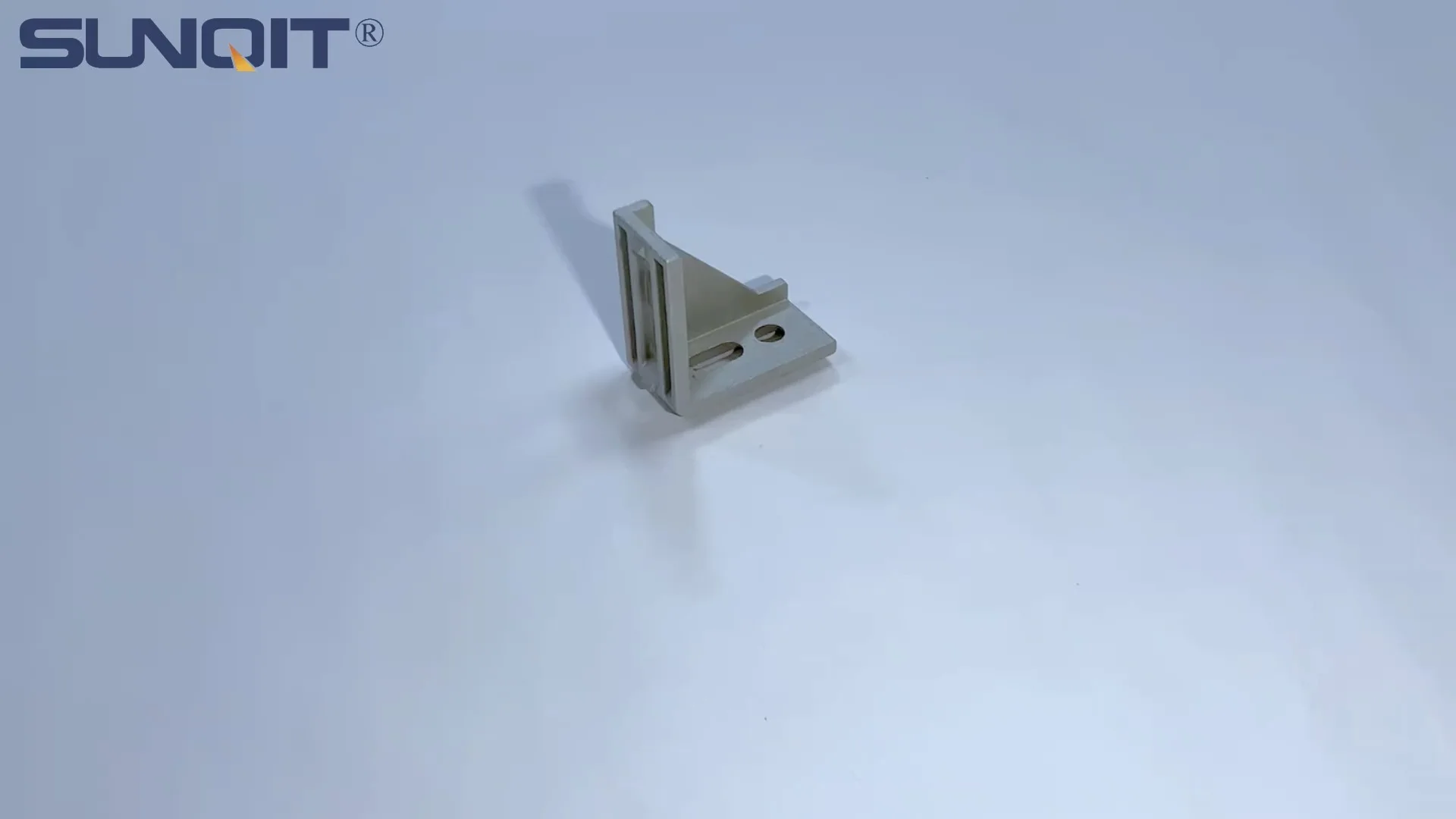
3060 Aluminum Angle Yards
It used for 90° flat connection for 20 series aluminum profile.
Let's start with a simple truth: in the world of logistics, every second counts. Whether you're running a bustling warehouse, a manufacturing plant, or a distribution center, the difference between meeting deadlines and falling behind often comes down to the tools you use to move materials. And if there's one tool that's the unsung workhorse of daily operations, it's the turnover cart. These humble vehicles shuttle parts, products, and supplies from point A to point B, day in and day out. But here's the thing: not all turnover carts are created equal. Many still rely on outdated, heavy materials that slow down workers, waste space, and break down too quickly. That's where 3060 aluminum angle yards come in—quietly revolutionizing how we build and use turnover carts, and turning "good enough" logistics into "exceptional" efficiency.
What Are Turnover Carts, and Why Do They Matter?
First, let's make sure we're on the same page. When we talk about "turnover trolley and rack" systems, we're referring to the carts and storage units designed to handle the constant movement of goods within a facility. Think of them as the circulatory system of your operation: they keep materials flowing to where they're needed, when they're needed. In a typical warehouse, you might see them ferrying raw materials from storage racks to assembly lines, moving finished products to packing stations, or transporting orders to shipping docks. In manufacturing, they're often loaded with tools, components, or work-in-progress items that need to be passed between workstations.
The problem? Traditional turnover carts are often built with steel frames—sturdy, sure, but heavy. A single steel cart can weigh 50 pounds or more empty, making it a struggle for workers to push, especially when loaded with 200+ pounds of goods. Over time, steel rusts, joints loosen, and wheels wear out, leading to frequent repairs or replacements. And if you need to adjust the cart's design—say, adding a shelf or changing the height—you're looking at drilling, welding, or hiring a metalworker. Not exactly adaptable in a world where production lines and order sizes change overnight.
Enter the modern turnover cart, reimagined with aluminum extrusion profile components—and at the heart of this transformation? 3060 aluminum angle yards. These unassuming pieces of metal might not look like much, but they're the reason today's carts are lighter, stronger, more adaptable, and ultimately, more efficient.
3060 Aluminum Angle Yards: The Backbone of Modern Turnover Carts
Let's break down what "3060 aluminum angle yards" actually are. The name gives a hint: "3060" typically refers to the dimensions—often 30mm by 60mm—making them a mid-sized profile that strikes a perfect balance between strength and weight. "Aluminum" speaks to the material: lightweight, corrosion-resistant, and infinitely recyclable. And "angle yards" describes their shape: a right-angle (90-degree) profile, with two flat sides meeting at a corner. This simple design is genius because it adds rigidity to cart frames without adding unnecessary bulk. Imagine building a cube out of straight pipes versus using angle yards at the corners—suddenly, the structure is far sturdier, even with thinner walls.
But what really sets 3060 aluminum angle yards apart is how they're made: via aluminum extrusion. Extrusion is a manufacturing process where heated aluminum is pushed through a die, creating long, uniform profiles with consistent shapes. For angle yards, this means the T-slots (those tiny grooves running along the length of the profile) are built right in. T-slots are like the Swiss Army knife of industrial design—they let you attach almost any accessory without drilling or welding. Need to add a shelf? Slide a bracket into the T-slot and tighten a screw. Want to mount caster wheels? Bolt a plate into the slot. It's quick, it's tool-free (or requires just a hex key), and it's reversible—so you can reconfigure the cart tomorrow if your needs change.
Here's a real-world example: A electronics manufacturer recently switched from steel to 3060 aluminum angle yard carts for moving circuit boards. Their old steel carts weighed 65 pounds empty; the new aluminum ones? Just 28 pounds. Workers who used to strain to push loaded carts now glide them across the factory floor with one hand. And when they needed to add dividers to separate different board sizes? They grabbed a few aluminum profile accessories—T-slot brackets and plastic dividers—snapped them into place, and were back to work in 10 minutes. No more waiting for the maintenance team to drill holes. No more wasted downtime. That's efficiency in action.

Why Aluminum? The Material Advantage
You might be wondering: Why aluminum instead of steel or plastic? Let's start with weight. Aluminum is about 1/3 the weight of steel, which is a game-changer for carts. A lighter cart is easier to push, reducing worker fatigue and the risk of strains or injuries. OSHA reports that overexertion is one of the leading causes of workplace injuries, often linked to manual material handling. By cutting cart weight in half, 3060 aluminum angle yards directly address this issue, keeping teams healthier and more productive.
Then there's corrosion resistance. Steel carts left in damp warehouses or near cleaning chemicals start rusting within months, weakening the frame and leaving unsightly stains on products. Aluminum, on the other hand, forms a natural oxide layer that protects it from rust—even in humid or wet environments. This means aluminum carts last years longer than steel ones, reducing replacement costs. A warehouse manager I spoke with recently said their steel carts needed replacing every 2-3 years; their aluminum carts, now 5 years old, still look and function like new.
And let's not forget sustainability. Aluminum is 100% recyclable, and recycling it uses just 5% of the energy needed to produce new aluminum. For companies aiming to reduce their carbon footprint, switching to aluminum carts is a small change with a big impact. Plus, since aluminum carts are modular, you can replace individual parts (like a bent angle yard or worn caster wheel) instead of the entire cart, cutting down on waste.

Aluminum Profile Accessories: Making Carts Work for You
A 3060 aluminum angle yard is only as good as the accessories that go with it—and aluminum profile accessories are where the real adaptability shines. These aren't your average nuts and bolts; they're purpose-built to work seamlessly with T-slot profiles, turning a basic cart frame into a customized tool for your specific needs.
Take caster wheels, for example. Attaching wheels to a steel cart usually means welding on a metal plate or drilling holes, which weakens the frame over time. With aluminum angle yards, you use a caster mounting bracket that slides into the T-slot and tightens with a thumb screw. Want heavy-duty locking casters for stability? Or swivel casters for tight corners? Swap them out in 2 minutes. No tools, no hassle.
Then there are shelves and dividers. Using L-brackets and aluminum panels, you can add shelves at any height, creating levels for different-sized items. Need to separate small parts from large ones? Snap in plastic dividers that lock into the T-slots. One food distribution center I visited uses this feature to transport both frozen goods (on the bottom shelf, near the insulated base) and dry goods (on the top shelf), all in one cart. Before, they needed two separate carts—now, they're moving twice the goods with half the effort.
Even handles and push bars are customizable. Aluminum profile accessories include ergonomic handles that adjust to the height of different workers, reducing strain on backs and shoulders. And if you need to attach a label holder, a barcode scanner mount, or even a small tool organizer? There's an accessory for that. The possibilities are almost endless, and because everything is modular, you're never stuck with a "one-size-fits-all" cart again.

From Assembly Line to Workbench: How 3060 Angle Yards Streamline Workflows
Let's zoom out and look at the bigger picture: how these carts integrate with the rest of your operation—specifically, workbenches. In manufacturing, the flow goes like this: materials come in, get stored in racks, moved to workbenches for assembly, then finished products go to packaging and shipping. A turnover cart that can seamlessly connect these steps is worth its weight in aluminum (which, as we know, isn't much!).
Here's how it works: A turnover cart built with 3060 angle yards can be adjusted to match the height of your workbench. No more bending down to lift heavy parts from the cart to the bench—just slide them across. One automotive parts manufacturer I worked with did this and saw a 30% reduction in time spent loading/unloading parts at workbenches. Workers reported less back pain, and the assembly line kept moving without delays caused by strained employees.
And when the workbench itself is built with aluminum extrusion profile components? Even better. Many modern workbenches use the same T-slot system as the carts, so you can attach the cart directly to the bench, creating a continuous surface. Imagine a cart loaded with circuit boards rolling up to a workbench, locking into place, and the boards sliding smoothly onto the bench—no lifting, no gaps, no spills. That's the kind of workflow efficiency that turns a good day into a great day for your team.
Traditional vs. 3060 Aluminum Angle Yard Carts: A Head-to-Head Comparison
| Feature | Traditional Steel Cart | 3060 Aluminum Angle Yard Cart |
|---|---|---|
| Weight (empty) | 50–70 lbs | 20–35 lbs |
| Assembly Time | 2–4 hours (requires welding/drilling) | 30–60 minutes (tool-free with T-slots) |
| Durability | Prone to rust; joints loosen over time | Corrosion-resistant; T-slot connections stay tight |
| Adaptability | Hard to reconfigure; requires metalworking | Reconfigurable in minutes with aluminum profile accessories |
| Worker Fatigue | High (heavy, hard to push) | Low (lightweight, easy to maneuver) |
| Long-Term Cost | Higher (frequent repairs/replacements) | Lower (5–10 year lifespan; replaceable parts) |
Case Study: How One Warehouse Cut Costs by 25% with Aluminum Carts
Let's put all this theory into practice with a real story. A mid-sized e-commerce fulfillment center in the Midwest was struggling with rising logistics costs. Their 50+ steel turnover carts were constantly breaking down—rusted wheels, bent frames, and shelves that collapsed under heavy loads. Workers were spending 10+ hours a week just repairing carts, and the warehouse manager estimated they were replacing 10 carts a year at $300 each. To make matters worse, slow-moving carts were causing delays in order fulfillment, leading to unhappy customers and lost sales.
The solution? They replaced all steel carts with 3060 aluminum angle yard carts, equipped with aluminum profile accessories like locking casters, adjustable shelves, and ergonomic handles. The results were staggering:
1. Reduced Labor Costs:
Cart repair time dropped from 10 hours/week to less than 1 hour/week. Workers no longer wasted time fixing broken carts—they spent that time picking and packing orders.
2. Lower Replacement Costs:
After 3 years, only 2 aluminum carts needed replacement (due to accidental damage), compared to 30 steel carts in the same period. Savings: $300/cart x 28 carts = $8,400.
3. Faster Order Fulfillment:
Lighter, more maneuverable carts cut average order picking time by 4 minutes per order. With 500 orders/day, that's 2,000 minutes saved—over 33 hours a week. The warehouse went from missing 10% of daily deadlines to hitting 99.5% on time.
4. Happier Workers:
A post-implementation survey found 85% of workers reported less physical strain, and 90% said the new carts made their jobs "easier and more efficient." Turnover in the warehouse dropped by 15%—a huge win in a tight labor market.
Total annual savings? Over $50,000. Not bad for upgrading a few carts. And the best part? The aluminum carts paid for themselves in less than 6 months.
Choosing the Right 3060 Aluminum Angle Yards for Your Needs
So, you're convinced—aluminum angle yards are the way to go. But how do you choose the right ones for your turnover carts? Start by considering your load capacity. 3060 angle yards are strong, but if you're regularly moving 500+ pound loads, you might want to opt for thicker-walled profiles (look for "1.5mm wall thickness" or higher). For lighter loads (100–300 pounds), standard 1.2mm walls should suffice.
Next, think about accessories. Do you need locking casters? Adjustable shelves? Ergonomic handles? Make sure the angle yards you choose have T-slots that match the accessories—most manufacturers use standard slot sizes (like 8mm or 10mm), but it's always good to double-check. And don't forget about finish: clear anodized aluminum resists scratches, while colored anodizing (black, blue, etc.) can help with organization (e.g., red carts for hazardous materials, green for general use).
Finally, work with a reputable supplier. Look for companies that specialize in aluminum extrusion profile and accessories—they'll have the expertise to help you design the perfect cart for your space. Ask for samples of the angle yards to test strength and fit, and don't be afraid to request a custom design if your needs are unique. A good supplier will walk you through the process, from initial sketch to final assembly.
The Future of Logistics: Lightweight, Adaptable, and Efficient
As logistics operations grow more complex—with faster delivery expectations, smaller order sizes, and ever-changing product lines—the tools we use need to keep up. 3060 aluminum angle yards aren't just a trend; they're a glimpse into the future of material handling: lightweight, adaptable, and designed around the needs of workers and businesses alike.
Imagine a warehouse where turnover carts automatically adjust their height to match workbenches, or where AI sensors mounted on aluminum frames track inventory in real time. It's not science fiction—aluminum's compatibility with smart technology (think RFID tags, IoT sensors) makes it the perfect platform for the next generation of logistics tools. And because aluminum is recyclable, these innovations won't come at the cost of the planet.
But even without the bells and whistles, the impact of 3060 aluminum angle yards is clear: they make turnover carts better. Better for workers, better for businesses, and better for the bottom line. In a world where efficiency is everything, sometimes the smallest changes—like swapping steel for aluminum—are the ones that make the biggest difference.
Conclusion: Your Carts, Reimagined
At the end of the day, turnover carts are more than just tools—they're the backbone of your logistics operation. Every time a worker pushes a cart, every time a load is moved without incident, every minute saved adds up to a more efficient, profitable, and sustainable business. And 3060 aluminum angle yards are the key to unlocking that potential.
So, if you're still using steel carts that slow your team down, cost you money in repairs, and leave you stuck in a "one-and-done" design, it's time for a change. Invest in aluminum extrusion profile carts with 3060 angle yards. Your workers will thank you, your bottom line will thank you, and your logistics operation will finally have the efficiency it deserves.
After all, in logistics, the best cart isn't the one that just gets the job done—it's the one that makes the job easier, faster, and better. And that's exactly what 3060 aluminum angle yards deliver.