- Company Articles
- Products and Technology
- Product knowledge
- 3060 Aluminum Angle Yards Specifications: Thickness, Length & Tolerances

3060 Aluminum Angle Yards Specifications: Thickness, Length & Tolerances
Related Product
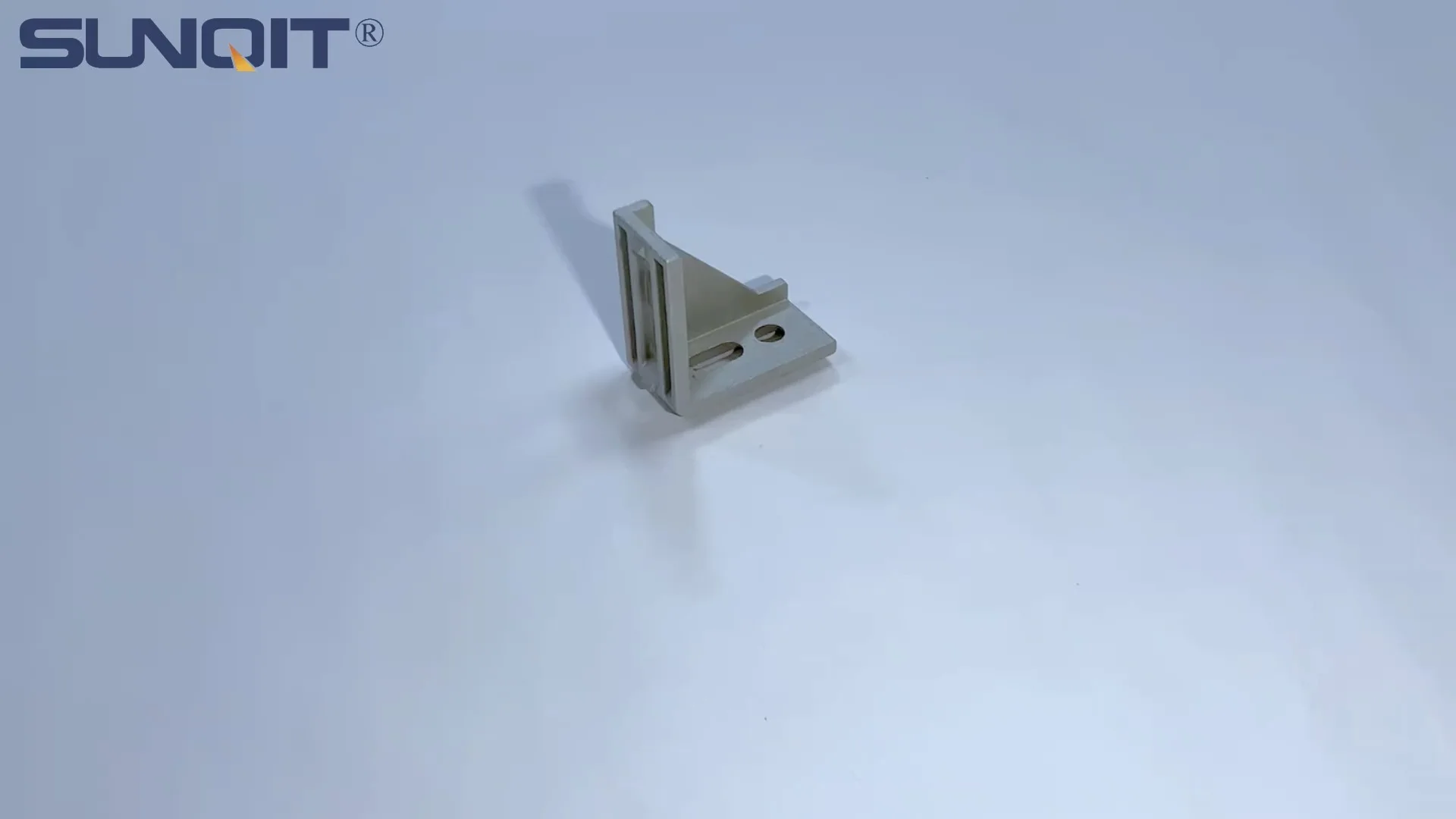
3060 Aluminum Angle Yards
It used for 90° flat connection for 20 series aluminum profile.
Introduction: The Backbone of Modern Framing
Walk into any manufacturing plant, workshop, or even a modern office, and you'll likely spot structures that rely on precision and durability—workbenches where assembly lines hum, material racks holding inventory, or lean system setups that keep operations flowing smoothly. Behind many of these structures lies a humble yet critical component: the aluminum extrusion profile. Among the wide range of profiles available, 3060 aluminum angle yards stand out for their versatility, strength, and adaptability. Whether you're building a sturdy workbench or designing a custom material rack, understanding the specifications of these angle yards is key to ensuring your project meets both functional and safety standards. In this article, we'll dive deep into the details that matter most: thickness, length, tolerances, and how these factors impact real-world applications.
What Are 3060 Aluminum Angle Yards?
Before we get into specs, let's clarify what 3060 aluminum angle yards actually are. At their core, they're a type of aluminum profile—extruded to form an L-shaped cross-section, with the dimensions 30mm (width of one leg) and 60mm (width of the other leg). Think of them as the "cornerstones" of framing: their right-angle design makes them ideal for joining two surfaces, adding rigidity to structures, or creating edges that can support weight, guide movement, or protect materials. Unlike generic steel angles, aluminum angle yards offer the benefits of being lightweight, corrosion-resistant, and easy to work with—properties that make them a favorite in industries ranging from automotive to electronics, where precision and efficiency are non-negotiable.
What sets 3060 aluminum angle yards apart from other profiles (like the slimmer 2020 or bulkier 4080) is their balance of size and strength. The 30mm x 60mm dimensions strike a sweet spot: not too small to handle heavy loads, nor too large to be cumbersome for smaller projects. This makes them a go-to choice for everything from reinforcing a workbench frame to building a multi-tiered material rack B (3 row and 3 floor) in a warehouse. Plus, like most aluminum extrusion profiles, they're designed to work seamlessly with aluminum profile accessories—end caps, connectors, brackets—that simplify assembly and customization.

Thickness Specifications: The Foundation of Strength
Why Thickness Matters
Thickness is perhaps the most critical specification when choosing 3060 aluminum angle yards. It directly impacts two key factors: load capacity and structural rigidity. A thicker profile can support more weight without bending or warping, while a thinner one might be sufficient for lighter applications but could fail under stress. For example, a workbench used for assembling small electronics might get by with a thinner angle yard, but a material rack holding heavy machinery parts would require a thicker, sturdier option. Let's break down the common thickness options and their typical uses.
Standard Thickness Options
3060 aluminum angle yards are available in several standard thicknesses, measured as the wall thickness of the profile's legs. The most common options include:
- 1.5mm Thickness: The lightest standard option, ideal for lightweight applications where weight savings matter more than maximum load. Think of small shelving units, display racks, or temporary workbenches in offices or retail spaces. They're easy to cut, drill, and assemble, making them popular for DIY projects or low-stress environments.
- 2.0mm Thickness: The workhorse of the bunch. This thickness offers a great balance of strength and weight, making it suitable for most general-purpose applications. It's commonly used in workbenches (like the aptly named "workbench E (single deck-without caster)"), conveyor frames, and medium-duty material racks. If you're unsure which thickness to choose, 2.0mm is a safe bet for most industrial and commercial projects.
- 3.0mm Thickness: The heavy-duty option, designed for high-load applications. This thickness is built to withstand constant stress, making it perfect for industrial machinery frames, heavy material racks (like the 3-row, 3-floor material rack B), or structural supports in manufacturing lines. It's slightly heavier and stiffer than 2.0mm, so it's best reserved for projects where durability is non-negotiable.
Thickness Tolerances: Ensuring Consistency
Even within a "standard" thickness, there's a small margin of error known as tolerance. For example, a 2.0mm profile might actually measure between 1.9mm and 2.1mm. This tolerance is tightly controlled by manufacturers to ensure compatibility with aluminum profile accessories and consistent performance. Most 3060 aluminum angle yards adhere to industry standards (like DIN 6060 or ASTM B221), which specify thickness tolerances of ±0.1mm to ±0.2mm, depending on the manufacturer and application. Why does this matter? If the thickness varies too much, accessories like brackets or 3060 aluminum profile end caps might not fit snugly, weakening the structure or causing misalignments in assembly.
Thickness vs. Load Capacity: A Practical Guide
To put thickness into perspective, let's look at how it translates to real-world load capacity. The table below compares common thicknesses, their approximate load capacities (when used as a horizontal beam with supports at both ends), and typical applications:
| Thickness (mm) | Approx. Load Capacity (kg/m, uniformly distributed) | Typical Applications | Compatible Accessories |
|---|---|---|---|
| 1.5mm | 50–75 kg/m | Light shelving, display racks, temporary workbenches | 2020 aluminum corner codes, small brackets |
| 2.0mm | 100–150 kg/m | Standard workbenches, conveyor frames, medium-duty racks | 3060 aluminum profile end cap, 90° aluminum profile connectors |
| 3.0mm | 200–250 kg/m | Heavy material racks, machinery frames, structural supports | Heavy-duty brackets, gusset plates, 3060 aluminum angle yards |
*Note: Load capacity estimates are based on a 3060 angle yard used as a simply supported beam (supports at both ends) with a span of 1 meter. Actual capacity may vary based on alloy type, installation method, and environmental factors.*

Length Specifications: Fitting the Project, Not the Other Way Around
Standard Lengths: Convenience and Cost-Efficiency
Like most aluminum extrusion profiles, 3060 aluminum angle yards are produced in standard lengths to streamline manufacturing and shipping. The most common standard lengths are 2 meters, 3 meters, and 6 meters. Why these lengths? 6 meters is a industry standard for extrusion presses, as it balances material efficiency with ease of transportation (most trucks and shipping containers can accommodate 6-meter lengths without special handling). Shorter lengths (2m, 3m) are often cut from 6-meter stock, making them more accessible for smaller projects or customers who don't need full-length profiles.
For example, a small workshop building a single workbench might only need two 1.5-meter pieces of angle yard. Instead of buying a 6-meter profile and cutting off 4.5 meters of excess, they can purchase a 3-meter length, cut it in half, and minimize waste. This not only saves money but also reduces the hassle of storing long, unwieldy profiles.
Custom Lengths: Tailored to Your Needs
While standard lengths work for many projects, some require custom sizes. Maybe you're building a circular frame that needs 1.2-meter segments, or a high-ceilinged warehouse rack that needs 4.5-meter vertical supports. Most aluminum profile suppliers offer custom cutting services, allowing you to order 3060 angle yards in lengths as short as 100mm or as long as 6 meters (the maximum extrusion length). Keep in mind that custom lengths may come with a small upcharge, and lead times might be longer than for standard sizes—so plan accordingly!
Length Tolerances: Precision in Every Cut
Whether you're buying standard or custom lengths, length tolerance is another key specification. Standard lengths typically have a tolerance of ±2mm per meter, meaning a 3-meter profile might measure between 2998mm and 3002mm. For custom-cut lengths, tolerances are even tighter—often ±0.5mm to ±1mm—since precision is critical for projects where pieces need to fit together exactly (like a multi-section workbench or a lean system with interlocking parts). A supplier with strict quality control will ensure that your 1.5-meter angle yard is exactly 1500mm, not 1498mm or 1503mm, to avoid gaps or misalignments during assembly.

Tolerance Standards: The Invisible Details That Ensure Quality
Tolerances aren't just about thickness and length—they apply to every dimension of 3060 aluminum angle yards, from the angle of the legs (should be exactly 90°) to the straightness of the profile. These "invisible" details might seem minor, but they're what separate a high-quality angle yard from a shoddy one. Let's explore the key tolerance standards you should know.
Angle Tolerance: Keeping It Square
The defining feature of an angle yard is its 90° angle between the two legs. But even a tiny deviation from 90° can throw off a project. For example, if the angle is 89° instead of 90°, a workbench frame might lean to one side, or a material rack might wobble. Industry standards typically require angle tolerances of ±0.5°, meaning the angle must be between 89.5° and 90.5°. High-precision angle yards (used in applications like aerospace or medical device manufacturing) might have even tighter tolerances of ±0.1°.
Straightness Tolerance: Avoiding Bends and Warps
A straight profile is essential for ensuring that structures are level and stable. Imagine installing a 6-meter angle yard as a support beam only to find it curves slightly—this could cause the entire structure to sag or twist. Straightness tolerance measures how much a profile can deviate from a perfectly straight line over its length. For 3060 aluminum angle yards, the standard straightness tolerance is typically 0.5mm per meter, or 3mm for a 6-meter profile. This means that over 1 meter, the profile can bend no more than 0.5mm; over 6 meters, the total bend is limited to 3mm. Suppliers use specialized straightening machines after extrusion to meet these tolerances, ensuring the profile lies flat and true when installed.
Why Tolerances Matter for Accessories
Perhaps the most practical reason to care about tolerances is compatibility with aluminum profile accessories. Take the 3060 aluminum profile end cap, for example: it's designed to snap or screw into the end of the angle yard, covering sharp edges and preventing debris from entering the profile's hollow core. If the profile's width or thickness is outside the tolerance range, the end cap might not fit—either it's too loose and falls off, or it's too tight and cracks when installed. The same goes for connectors, brackets, and hinges: tight tolerances ensure that every piece works together seamlessly, reducing assembly time and minimizing the risk of structural failure.
Material Composition: The Aluminum Alloy Behind the Profile
While we've focused on dimensions, it's worth noting that the material itself plays a big role in the performance of 3060 aluminum angle yards. Most are made from 6063 aluminum alloy, a popular choice for extrusions thanks to its excellent combination of strength, corrosion resistance, and extrudability. 6063 alloy contains magnesium and silicon as its main alloying elements, which give it good mechanical properties (tensile strength of around 180 MPa) and the ability to be anodized—a surface treatment that enhances corrosion resistance and allows for color customization (common colors include silver, black, and gold).
For applications where even higher strength is needed (like heavy machinery), some suppliers offer 3060 angle yards in 6061 aluminum alloy. 6061 has higher tensile strength (around 310 MPa) but is slightly less malleable than 6063, making it harder to extrude into complex shapes. However, for most general-purpose projects, 6063 is more than sufficient—and more cost-effective.
Real-World Applications: How 3060 Angle Yards Shine
To wrap up, let's look at a few examples of how 3060 aluminum angle yards are used in everyday settings, highlighting how thickness, length, and tolerances come into play:
- Workbench Frames: A standard workbench E (single deck-without caster) often uses 2.0mm thick 3060 angle yards for its frame. The 30mm x 60mm legs provide a stable base, while the 2.0mm thickness supports the weight of tools, materials, and workers without bending. Lengths are typically 1.2–1.5 meters for the sides and 0.6–1 meter for the crossbars, cut to fit the bench's dimensions.
- Material Rack B (3 row and 3 floor): This multi-tiered rack needs to support heavy boxes or parts, so it uses 3.0mm thick angle yards for vertical supports and 2.0mm for horizontal shelves. The 3-row, 3-floor design requires precise length cuts (e.g., 1.8-meter vertical posts, 0.6-meter shelf beams) to ensure each tier lines up perfectly, relying on tight length and angle tolerances.
- Lean System Conveyors: In a lean system, 3060 angle yards might be used as side guides for roller tracks, keeping products moving in a straight line. Here, straightness tolerance is critical—even a small bend could cause jams. The angle yards are often anodized to resist wear from constant contact with products, and paired with aluminum profile accessories like brackets to attach the tracks securely.
Conclusion: Choosing the Right 3060 Aluminum Angle Yards
3060 aluminum angle yards are more than just pieces of metal—they're the building blocks of efficient, durable, and adaptable structures. By understanding their thickness, length, and tolerance specifications, you can choose the right profile for your project, ensuring it's strong enough to handle the load, precise enough to fit with accessories, and sized to minimize waste. Whether you're building a simple workbench or a complex lean system, the key is to balance your needs: prioritize thickness for heavy loads, opt for custom lengths for unique designs, and never overlook tolerances—they're the unsung heroes that make sure everything fits together perfectly.
Next time you're planning a project, take a moment to consider the 3060 aluminum angle yards that will bring it to life. With the right specs, they'll not only meet your expectations but exceed them—standing strong, lasting long, and making your work easier, safer, and more efficient.