- Company Articles
- Products and Technology
- Product knowledge
- 3060 Aluminum Angle Yards: Tailored for 3C Assembly Line Optimization

3060 Aluminum Angle Yards: Tailored for 3C Assembly Line Optimization
Related Product
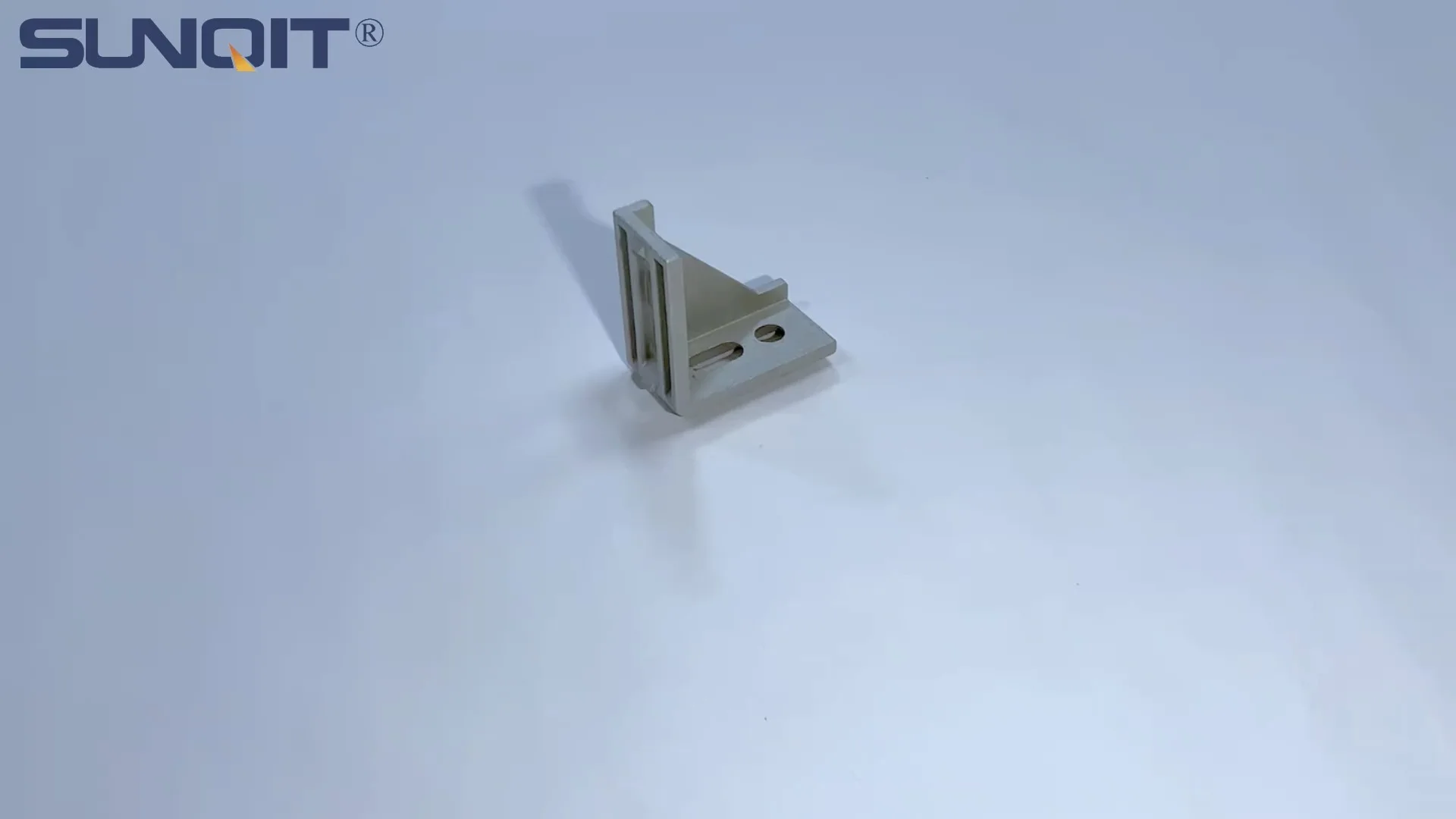
3060 Aluminum Angle Yards
It used for 90° flat connection for 20 series aluminum profile.
In the bustling world of consumer electronics—where smartphones, laptops, and wearables fly off production lines at breakneck speed—efficiency isn't just a goal; it's the lifeblood of survival. 3C assembly lines (short for Computers, Communications, and Consumer Electronics) demand precision, adaptability, and speed like no other industry. A single bottleneck in material flow or a rigid workstation can derail deadlines, inflate costs, and leave brands struggling to keep up with ever-shifting consumer demands. That's where 3060 Aluminum Angle Yards step in: a modular, durable, and surprisingly versatile solution designed to transform chaotic assembly floors into streamlined hubs of productivity. Let's dive into how these unassuming aluminum profiles are quietly revolutionizing 3C manufacturing.
The 3C Assembly Line: A High-Stakes Balancing Act
Walk into any 3C manufacturing plant, and you'll witness a symphony of movement: circuit boards gliding along conveyors, operators meticulously fitting tiny components, and robots zipping between workstations. But beneath this apparent harmony lies a constant battle to balance three critical priorities:
- Speed: New phone models launch every few months, and consumers expect instant availability. Assembly lines must churn out hundreds—sometimes thousands—of units daily.
- Precision: A misplaced screw or misaligned sensor can render a $1,000 device useless. Tolerances here are measured in millimeters, leaving no room for error.
- Flexibility: One week, a line might assemble 6-inch smartphones; the next, it could switch to 10-inch tablets. Rigid, one-size-fits-all workstations simply can't keep up.
Add to this the pressure to reduce waste (a cornerstone of lean system principles) and optimize space (factory real estate isn't cheap), and it's clear: 3C manufacturers need tools that work with their ever-changing needs, not against them. Enter 3060 Aluminum Angle Yards—a yet powerful player in this high-stakes game.
What Are 3060 Aluminum Angle Yards, Anyway?
If you're new to the world of industrial aluminum, the term "3060 Aluminum Angle Yards" might sound like technical jargon. Let's break it down simply: These are lengths of aluminum extrusion profile —think of them as pre-shaped aluminum bars—with a specific cross-section: 30 millimeters wide by 60 millimeters tall. The "angle yard" part refers to their L-shaped (angular) design, which gives them exceptional structural stability while keeping weight low.
But what truly sets them apart is how they're made. Using a process called extrusion, molten aluminum is forced through a die to create the precise 30x60mm shape with built-in T-slots—those handy grooves running along the length of the profile. These T-slots are like the "backbone" of the system, allowing you to attach brackets, shelves, casters, and other aluminum profile accessories with nothing more than a hex key. No welding, no drilling, no permanent modifications. It's modularity at its finest.
Why 3060? Understanding the Numbers
Aluminum profiles come in all shapes and sizes—2020, 3030, 4040, and so on. The numbers refer to their width and height in millimeters. So why choose 3060 over, say, the slimmer 3030 or beefier 4040? It's all about balance:
| Profile Type | Dimensions (mm) | Typical Load Capacity (kg/m) | Best For 3C Assembly |
|---|---|---|---|
| 2020 | 20x20 | 50-80 | Light tool holders, small component bins |
| 3030 | 30x30 | 100-150 | Medium workbenches, single-level racks |
| 3060 | 30x60 | 180-250 | Heavy workstations, multi-tier material racks, conveyor supports |
| 4040 | 40x40 | 250-350 | Industrial-grade machinery mounts, heavy storage |
For 3C assembly lines, 3060 hits the sweet spot. It's strong enough to support heavy circuit board trays or battery packs (up to 250kg per meter!) but not so bulky that it wastes precious floor space. Its L-shape adds rigidity, making it ideal for building stable structures that won't wobble during precision work. And because it's aluminum, it's lightweight—so even large workstations can be moved (with casters, of course) when production needs shift.

5 Ways 3060 Aluminum Angle Yards Solve 3C Assembly Headaches
Now that we know what 3060 Aluminum Angle Yards are, let's get practical. How do they actually improve 3C assembly lines? Here are five key benefits that make them indispensable:
1. Customization Without the Fuss
3C products come in all shapes and sizes—from tiny smartwatches to large gaming laptops. Your assembly tools should too. 3060 Aluminum Angle Yards are like industrial Legos: with the right aluminum profile accessories (think brackets, hinges, and 3060 aluminum profile end caps ), you can build just about anything. Need a workstation with a shelf for tools, a tray for screws, and a cable management slot? Done. Want a material rack with three levels (like Material Rack B, 3 row and 3 floor) to separate circuit boards, screens, and batteries? No problem. And when your product line changes, you don't need to buy new equipment—just reconfigure the existing profiles. It's a game-changer for teams that hate wasting money on one-off fixtures.
2. Durability That Keeps Up With 24/7 Production
3C assembly lines don't sleep. They run shifts around the clock, with operators and machines constantly interacting with workstations and racks. Flimsy materials like wood or plastic would crack under the pressure, and steel—while strong—is heavy and prone to rust (a disaster near sensitive electronics). 3060 Aluminum Angle Yards? They laugh at wear and tear. Aluminum's natural corrosion resistance means they won't rust, even in humid factory environments. And the anodized finish (a thin protective layer added during manufacturing) resists scratches from tools and parts. We've seen 3060 setups last 10+ years with minimal maintenance—far longer than most traditional workbench materials.
3. ESD Safety for Sensitive Electronics
Static electricity is the silent killer of 3C components. A single static discharge can fry a smartphone's motherboard, costing hundreds in scrap. That's why ESD (Electrostatic Discharge) protection is non-negotiable. While 3060 Aluminum Angle Yards themselves are conductive, they can be paired with ESD-safe accessories—like black ESD wheels on roller tracks or anti-static mats on workbenches—to create a fully grounded workspace. Unlike plastic, which can build up static, aluminum dissipates electricity safely, keeping your valuable components intact.
4. Space-Saving Design for Crowded Floors
Factory space is expensive, and 3C plants are often packed to the rafters with equipment. 3060 Aluminum Angle Yards help you make the most of every square inch. Their slim profile (30mm isn't much wider than a smartphone!) means you can build vertical storage racks that reach the ceiling, freeing up floor space for assembly. And because they're modular, you can design workstations that fit exactly the footprint you need—no more bulky tables taking up extra room. One manufacturer we worked with reported reclaiming 15% of their floor space after switching to 3060-based racks and workbenches.
5. Compatibility With Lean Manufacturing Principles
Lean manufacturing is all about eliminating waste—whether it's time, materials, or motion. 3060 Aluminum Angle Yards align perfectly with this mindset. For example:
- Reduced motion waste: Build workstations where tools and materials are within arm's reach (no more walking to a distant shelf).
- Just-in-time delivery: Use 3060-based roller tracks to feed components directly to assembly stations, so operators never wait for parts.
- 5S organization: Custom bins and labeled racks (built with 3060 profiles) make "sort" and "set in order" a breeze.
In short, 3060 Aluminum Angle Yards don't just hold things—they help you build a smarter, more efficient workflow.

Real-World Applications: How 3C Factories Use 3060 Angle Yards
Theory is great, but let's look at real examples. Here are three common ways 3060 Aluminum Angle Yards are used in 3C assembly lines today:
1. ESD Workstations for Circuit Board Assembly
Circuit board assembly is a precision job. Operators need a stable, static-free surface, good lighting, and easy access to tools like soldering irons and microscopes. 3060 Aluminum Angle Yards are the backbone of these workstations. The frame is built with 3060 profiles, topped with an ESD-safe worktop. T-slots hold tool holders, while side brackets support LED task lights. 3060 aluminum profile end caps cover sharp edges, preventing snags on delicate wires. Best of all, if a new circuit board model is larger, the workstation can be extended by adding more 3060 sections—no need to replace the entire unit.
2. Multi-Tier Material Racks for Component Storage
3C assembly requires dozens of components: screws, batteries, screens, cameras, and more. Storing them haphazardly leads to delays and errors. 3060-based material racks (like Material Rack B, with 3 rows and 3 floors) solve this. Each tier is adjustable, so you can customize shelf heights for different component sizes. Roller tracks (another accessory!) can be added to the shelves, letting heavy component trays glide out easily. And because the rack is built with aluminum, it's lightweight enough to move with casters when production lines reconfigure—no more permanent storage fixtures taking up prime real estate.
3. Flexible Conveyor Supports for Part Flow
Getting parts from Point A to Point B smoothly is critical in 3C assembly. Conveyor systems are essential, but their supports often limit flexibility. Not with 3060 Aluminum Angle Yards. The profiles make sturdy, adjustable conveyor supports that can be raised, lowered, or angled to match your line's needs. Need a slight incline to move parts up to a higher workstation? No problem—just adjust the 3060 legs. Adding a curve? Use swivel joints (another handy accessory) to bend the support frame. It's conveyor customization without the engineering headache.

The Long-Term Value: Why 3060 Angle Yards Are Worth the Investment
Let's talk money. 3060 Aluminum Angle Yards aren't the cheapest option upfront—plastic or wood might cost less initially. But in the long run, they're a smart investment. Here's why:
- Durability = fewer replacements: A wood workstation might last 2-3 years; a 3060 aluminum one can last 10+. That's savings over time.
- Reusability: When you reconfigure, you reuse the profiles. No more throwing away old fixtures.
- Lower labor costs: Building with 3060 profiles takes hours, not days. No need for welders or custom fabricators.
- Improved productivity: Faster assembly, less downtime, and fewer errors mean more units shipped—and more revenue.
One 3C manufacturer we spoke to calculated that switching to 3060-based workstations and racks saved them 20% on annual equipment costs and boosted productivity by 15% in the first year alone. The ROI speaks for itself.
Caring for Your 3060 Aluminum Angle Yards: Maintenance Tips
Aluminum is low-maintenance, but a little care goes a long way. Here's how to keep your 3060 Angle Yards in top shape:
- Clean regularly: Wipe down profiles with a damp cloth to remove dust and grease. Avoid harsh chemicals—mild soap and water work best.
- Check joints: Tighten any loose bolts or connectors every few months, especially on workstations that see heavy use.
- replace end caps: If 3060 aluminum profile end caps crack or fall off, replace them promptly to prevent sharp edges.
- Lubricate moving parts: If you're using casters or roller tracks, add a drop of lubricating oil to wheels and bearings annually.
Final Thoughts: 3060 Aluminum Angle Yards—The Unsung Hero of 3C Assembly
In the fast-paced world of 3C manufacturing, success hinges on the details—the tools and systems that keep lines moving, components safe, and operators efficient. 3060 Aluminum Angle Yards may not be the flashiest technology on the factory floor, but they're the backbone of lean, adaptable, and productive assembly lines. With their perfect balance of strength, flexibility, and cost-effectiveness, they're more than just metal profiles—they're a investment in your ability to keep up with the ever-changing demands of consumer electronics.
So, whether you're building a new assembly line from scratch or upgrading an existing one, don't overlook the power of 3060 Aluminum Angle Yards. They might just be the key to unlocking the efficiency and flexibility your 3C operation needs to thrive.