- Company Articles
- Products and Technology
- Product knowledge
- 3060 Aluminum Angle Yards vs 2040: Choosing for Small-Scale Production

3060 Aluminum Angle Yards vs 2040: Choosing for Small-Scale Production
Related Product
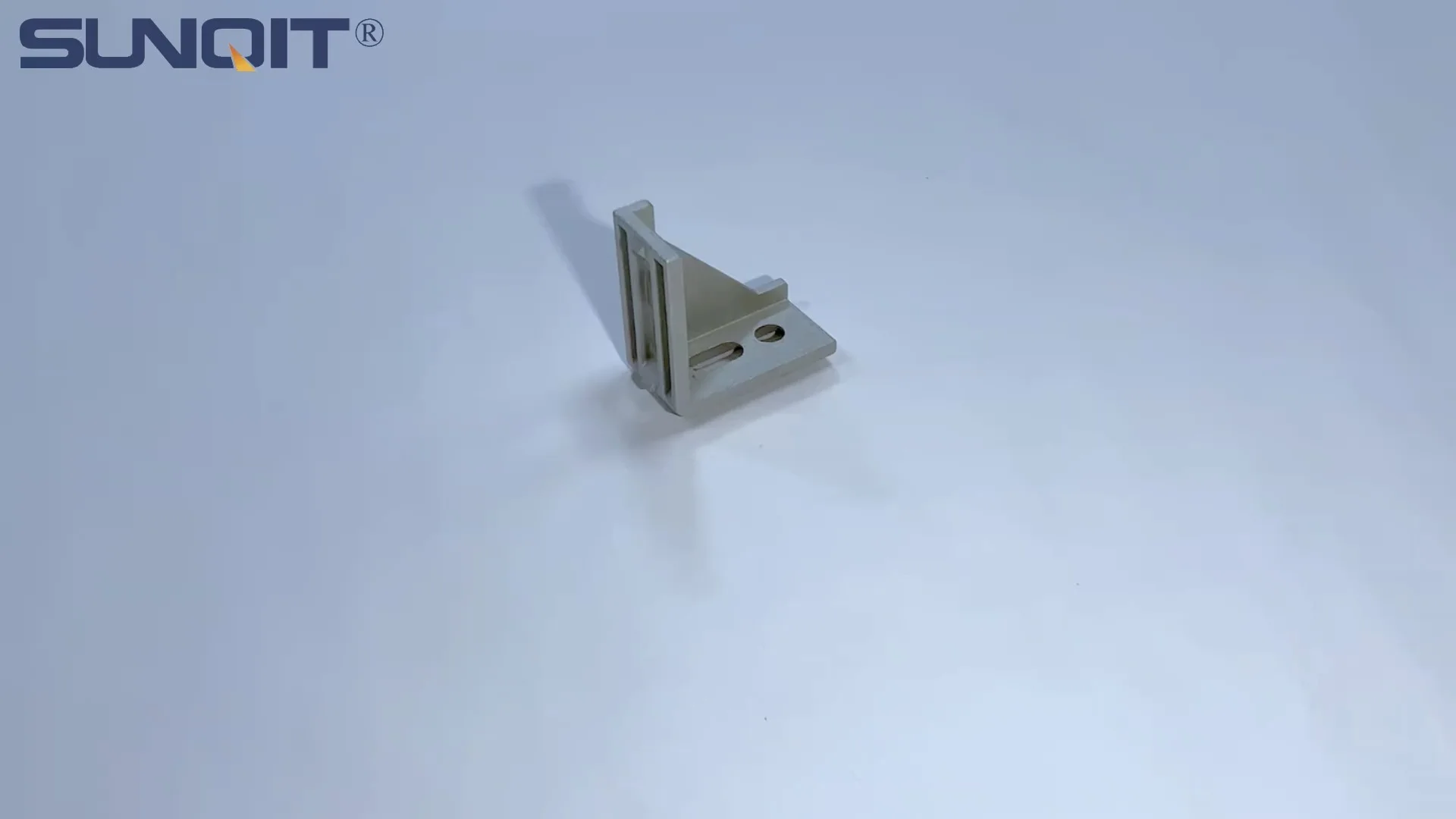
3060 Aluminum Angle Yards
It used for 90° flat connection for 20 series aluminum profile.
Running a small-scale production setup—whether it's a startup workshop, a local manufacturing unit, or a niche assembly line—often feels like solving a puzzle with limited pieces. You need equipment that's durable enough to handle daily use, flexible to adapt as your needs change, and affordable so you don't sink your budget into tools that might not scale with you. If you've spent any time researching workbenches, material racks, or production lines, you've probably stumbled upon aluminum profiles. They're the unsung heroes of small workshops: lightweight, modular, and surprisingly tough. But with so many sizes and types out there, how do you pick the right one? Today, we're diving into two popular options: 3060 aluminum angle yards and 2040 national standard profiles. By the end, you'll know which one fits your small-scale production like a glove.
What Are Aluminum Profiles, Anyway? And Why Do They Matter for Small Shops?
First, let's get on the same page. Aluminum profiles—sometimes called aluminum extrusion profiles—are long, hollow bars of aluminum shaped into specific cross-sections. Think of them as building blocks for your workshop. They come with T-slots (those grooves running along their length) that let you slide in accessories like brackets, shelves, or panels without drilling holes. That modularity is a game-changer for small operations. Need to reconfigure your workbench next month? Just loosen a few bolts and rearrange. Want to add a shelf to your material rack? Snap on a bracket. No welding, no custom fabrication—just quick, easy adjustments.
Aluminum angle yards, specifically, are a type of profile with a right-angle (90-degree) cross-section, making them ideal for frames, supports, and edges where strength and rigidity are key. They're like the backbone of your workshop furniture and equipment. Now, 3060 and 2040 are two common sizes you'll see. The numbers refer to their dimensions: 3060 means 30mm in one leg and 60mm in the other (for angle yards), while 2040 (a national standard profile) is typically 20mm wide and 40mm tall (for rectangular profiles). But numbers alone don't tell the story. Let's break down what each brings to the table.
Meet the Contenders: 3060 Aluminum Angle Yards
What Makes 3060 Stand Out?
Let's start with 3060 aluminum angle yards. At 30mm x 60mm, these profiles are beefier than some smaller options, but still lightweight enough for one person to handle. The right-angle design gives them inherent stability—think of how a corner brace strengthens a bookshelf. That stability makes them a go-to for anything that needs to support weight or resist bending, like workbench frames or heavy-duty material racks.
One of the first things you'll notice is their load capacity. Thanks to their larger cross-section and thicker walls (usually around 1.5mm to 2mm), 3060 angle yards can handle more weight than slimmer profiles. We're talking up to 150-200 kg per linear meter when properly supported—enough for power tools, metal parts, or stacks of raw materials. If your production involves heavy components (like machining small engine parts or assembling electronics with dense circuit boards), that extra strength matters. You won't have to worry about your workbench sagging in the middle after a few months of use.
Another perk? Versatility in accessories. Since they're a standard size, most aluminum profile accessories—like brackets, hinges, and T-slot nuts—fit 3060 angle yards without a hitch. Need to mount a vice to your workbench? Slide in a T-slot nut and bolt it down. Want to add a light bar above your assembly area? There's a bracket for that. This compatibility means you're not locked into a single brand; you can mix and match parts from different suppliers to keep costs low—a big win for small budgets.
When 3060 Shines in Small-Scale Production
3060 aluminum angle yards are stars in setups where durability and load-bearing are non-negotiable. Let's say you run a small machine shop that fabricates custom metal brackets. Your workbench needs to support a drill press, a grinder, and piles of steel sheets. A 3060 frame would stand up to that daily abuse without wobbling. Or maybe you're assembling small appliances—think blenders or toasters—and need a material rack that holds heavy boxes of components. 3060-based racks with 3 rows and 3 floors (like the Material Rack B from some suppliers) can handle those boxes without bending.
They're also great if you anticipate growth. Maybe right now you're assembling 10 units a day, but next year you want to scale to 50. A 3060 workbench or production line won't need to be replaced; you can just add more sections or accessories as your output increases. It's like buying a pair of shoes that grow with you (but way sturdier).

Introducing 2040 National Standard Profiles: The Lightweight Workhorse
Now, let's shift to 2040 national standard profiles. If 3060 is the heavyweight, 2040 is the lightweight boxer—quick, agile, and surprisingly strong for its size. The "2040" refers to its dimensions: 20mm in width and 40mm in height (since it's a rectangular profile, not an angle yard). Unlike angle yards, which have a right-angle shape, 2040 profiles are typically square or rectangular in cross-section, with T-slots on all four sides. This design makes them ultra-flexible for applications where space is tight or you need to mount accessories from multiple angles.
Why 2040 Might Be Your Small Shop's Best Friend
The first advantage of 2040 profiles is their size. At just 20mm x 40mm, they're slimmer than 3060 angle yards, which means they take up less space. If your workshop is in a garage, a small industrial unit, or even a shared makerspace, every square inch counts. A 2040 workbench can fit into a corner without dominating the room, leaving more space for inventory, tools, or your team to move around. They're also lighter—around 1.2-1.5 kg per meter compared to 3060's 2-2.5 kg—so assembling or reconfiguring them is a one-person job. No need to haul in a coworker to help you lift sections; you can rearrange your setup during a lunch break.
Cost is another big factor. 2040 profiles are generally cheaper per meter than 3060 angle yards, and since they're lighter, shipping costs are lower too. For small businesses watching every penny, that adds up. Let's say you need 10 meters of profile to build a workbench and a small material rack. Choosing 2040 could save you 20-30% on the profiles alone, plus less on delivery. That extra cash can go toward better tools, raw materials, or even a coffee machine for the break room (priorities, right?).
Don't let their size fool you—2040 profiles are still tough. They're made from high-strength aluminum alloy (usually 6063-T5, which is known for its balance of strength and corrosion resistance) and can handle 80-120 kg per linear meter when properly supported. That's more than enough for most light to medium tasks: assembling electronics, packing small products, or setting up a quality control station. If your production line involves lightweight components—like phone cases, small toys, or cosmetic packaging—2040 profiles will serve you just fine.
When 2040 Steals the Show
2040 national standard profiles shine in setups where space and budget are tight, and the load is moderate. Take a small electronics assembly workshop, for example. You're putting together circuit boards with tiny components—no heavy machinery, just a few soldering irons and bins of resistors. A 2040 workbench (like Workbench E, a single-deck model without casters) would be perfect here. It's sturdy enough for your tools, lightweight enough to move if needed, and doesn't eat up half your workshop space.
They're also ideal for mobile setups. If you need a turnover trolley to move parts between stations, a 2040 frame with casters is easy to push around without feeling like you're dragging a boulder. Or maybe you run a pop-up production line for seasonal products (like holiday gift sets). 2040 profiles are quick to assemble and disassemble, so you can set up your line in a week and take it down just as fast when the season ends.

Side-by-Side: 3060 Aluminum Angle Yards vs 2040 National Standard Profiles
Comparing these two is like choosing between a pickup truck and a compact car—both get the job done, but each excels in different scenarios. Let's break down their key differences in a table to make it easier:
| Feature | 3060 Aluminum Angle Yards | 2040 National Standard Profiles |
|---|---|---|
| Dimensions | 30mm x 60mm (right-angle cross-section) | 20mm x 40mm (rectangular cross-section) |
| Typical Wall Thickness | 1.5mm – 2.0mm | 1.2mm – 1.5mm |
| Load Capacity (per linear meter) | 150 – 200 kg (with proper support) | 80 – 120 kg (with proper support) |
| Weight (per meter) | 2.0 – 2.5 kg | 1.2 – 1.5 kg |
| Space Requirement | Bulky; needs more room for frames | Slimmer; fits in tight spaces |
| Cost (per meter) | Higher (due to larger size and thickness) | Lower (more budget-friendly) |
| Best For | Heavy loads, durable workbenches, material racks, growth-focused setups | Light to medium loads, space-saving setups, mobile trolleys, temporary lines |
| Accessory Compatibility | Works with most standard aluminum profile accessories | High compatibility with T-slot accessories (all four sides) |
The Fine Print: When to Choose Which
Let's dig deeper into a few key areas where the choice really matters:
Budget: If you're working with a shoestring budget, 2040 profiles are the way to go. Their lower cost per meter and lighter shipping weight can trim your initial investment by 20-30%. But if you can spend a bit more upfront for long-term durability, 3060 angle yards will save you money in the long run by avoiding replacements.
Space: A 3060 workbench might be 60mm deep (from the wall to the edge), while a 2040 one could be 40mm. In a 10x10ft workshop, that extra 20mm per bench adds up. If space is your biggest constraint, 2040 is the clear winner.
Load: Be honest about your daily needs. If you're regularly lifting 50kg boxes onto your material rack, 2040 might struggle over time. But if your typical load is under 30kg, 2040 is more than sufficient.
Future-Proofing: If you plan to scale production or add heavier equipment, 3060 is the safer bet. It's like investing in a laptop with extra RAM—you might not need it now, but you'll be glad you have it later.
Real-World Example: A Small Electronics Workshop's Dilemma
Let's say Maria runs a small workshop assembling smart home sensors. She has 3 employees, a 200 sq ft space, and assembles 20 sensors a day. Her current setup uses plywood workbenches that are starting to warp. She wants to upgrade to aluminum profiles but can't decide between 3060 and 2040.
Her main needs: workbenches for assembly, a small material rack for circuit boards and plastic casings (each box weighs ~10kg), and a turnover trolley to move parts. Her budget is $500 for materials.
For Maria, 2040 national standard profiles make sense. Her loads are light (10kg boxes), space is tight (200 sq ft), and her budget is limited. She could build two Workbench E (single-deck, no casters) with 2040 profiles, a small Material Rack B (3 rows, 3 floors), and a trolley for under $500. If she'd chosen 3060, she might only afford one workbench and no trolley—limiting her team's efficiency.
But if Maria were assembling heavy industrial sensors (each box weighs 40kg), 3060 would be better. The material rack would need to handle those heavier boxes, and the workbench might need to support a soldering station and a testing machine. In that case, spending more on 3060 would prevent warping or breakage down the line.

Beyond the Profiles: Accessories and Suppliers Matter Too
No matter which profile you choose, the right accessories and a reliable supplier can make or break your setup. Let's start with accessories. Aluminum profile accessories are the glue that holds your workshop together—brackets, joints, casters, and T-slot nuts. For 3060 angle yards, you'll want heavy-duty joints like internal rotary aluminum joints or parallel fixation aluminum pipe joints to keep frames rigid. For 2040 profiles, lightweight but strong accessories like aluminum guide rails or plastic roller track guide rails (yellow or grey) work well for material slides.
Then there's the supplier. A good lean system supplier won't just sell you profiles—they'll help you design your setup. They'll ask about your load needs, space constraints, and future plans, then recommend the right mix of profiles and accessories. Look for suppliers who offer samples (so you can test the weight and quality), fast shipping (small shops can't wait weeks for parts), and responsive customer service (you don't want to be stuck with a broken joint and no one to help).
Also, consider compatibility. Some suppliers specialize in specific profiles—make sure the accessories you buy (like roller track connectors or caster wheels) fit your chosen profile. For example, if you go with 2040 national standard profiles, check that the caster accessories have T-slot nuts that slide into 20mm slots. Mismatched parts are a frustrating waste of time and money.
Final Verdict: Which One Should You Choose?
At the end of the day, there's no "better" option—only the one that fits your small-scale production needs. Here's a quick checklist to help you decide:
Choose 3060 aluminum angle yards if:
- You regularly handle heavy loads (50kg+).
- Durability and long-term use are top priorities.
- You have space for bulkier frames.
- You anticipate scaling up production soon.
Choose 2040 national standard profiles if:
- Your loads are light to medium (under 50kg).
- Space is limited (small workshop or shared space).
- Budget is a major constraint.
- You need flexibility (mobile setups, seasonal lines, or frequent reconfigurations).
Remember, you don't have to pick one or the other. Many small workshops mix profiles: 3060 for heavy workbenches and 2040 for lightweight racks or trolleys. It's all about balancing your needs with your resources.
Wrapping Up: Build a Workshop That Grows With You
Small-scale production is all about making smart, sustainable choices. Aluminum profiles—whether 3060 angle yards or 2040 national standard profiles—are sustainable because they're reusable, recyclable, and adaptable. They let you build a workshop that evolves with your business, without draining your budget or locking you into rigid setups.
So, take a step back, assess your daily operations, and ask: What's my typical load? How much space do I have? What's my 1-year plan? The answers will point you to the right profile. And when you're ready to buy, find a lean system supplier who listens to your needs—they'll help you turn those profiles into a production setup that feels like it was custom-built for you.
After all, your workshop should work for you, not the other way around. Whether it's 3060 or 2040, the best profile is the one that lets you focus on what you do best: creating great products.