- Company Articles
- Products and Technology
- Product knowledge
- 3060 Aluminum Profile End Cap Material: Alloy Composition for Strength

3060 Aluminum Profile End Cap Material: Alloy Composition for Strength
Related Product
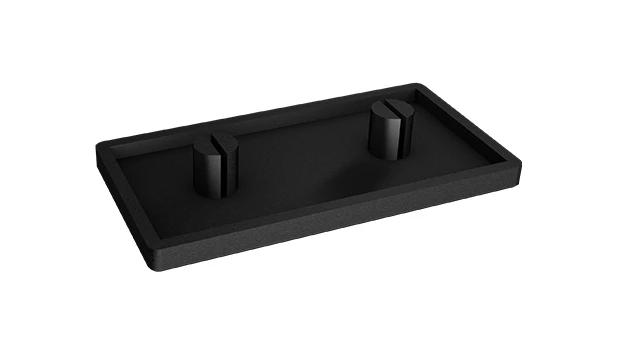
3060 Aluminum Profile End Cap
The aluminum profile end cap adds a finishing touch to your project and closes off profile ends to limit dust and debris buildup, also it can avaid some scratch for material and labor during the assemble work.
Walk into any modern factory, warehouse, or even a well-organized workshop, and you'll probably spot aluminum profiles hard at work. They're the silent backbone of workbenches, the structure behind material racks, and the framework for conveyor systems. Sleek, lightweight, and surprisingly strong, these aluminum extrusion profiles have revolutionized how we build industrial and commercial structures. But here's the thing: even the sturdiest aluminum profile is only as good as its smallest components. Today, we're shining a spotlight on one of those unsung heroes: the 3060 aluminum profile end cap. Specifically, we're diving into the material that makes it tick—its alloy composition—and why that composition is the secret to its impressive strength.
What Are 3060 Aluminum Profile End Caps, Anyway?
Before we get into the science of alloys, let's make sure we're all on the same page about what these end caps actually do. If you've ever run your hand along the edge of an aluminum profile, you know the raw end can be sharp—like a tiny metal blade. Not ideal for a workspace where hands (and sometimes forearms) are constantly moving. That's where end caps come in. They snap or press onto the open ends of profiles, smoothing out those sharp edges and turning a potential hazard into a safe, finished surface.
But their job doesn't stop at safety. Think about all the dust, debris, and even liquids that float around a busy facility. Without end caps, those particles could sneak into the hollow interior of the aluminum profile, gumming up the works over time. End caps act like tiny seals, keeping the inside clean and extending the life of the profile. And let's not forget aesthetics—there's something about a neatly capped profile that makes a workstation or rack look intentional, professional, and well-crafted. In short, end caps are the finishing touch that turns a functional structure into a reliable, long-lasting one.
Real Talk: A friend of mine runs a small electronics assembly shop. A few years back, they skimped on end caps for their workbenches to save a few dollars. Within months, two employees nicked their wrists on sharp profile edges, and dust buildup inside the profiles made the benches rattle whenever they placed heavy equipment on them. They switched to quality end caps, and those problems vanished. Moral of the story? Don't overlook the small parts.
The Heart of the Matter: Material Choice for End Caps
Now, let's talk materials. You might think, "It's just a cap—why not use plastic?" And sure, plastic end caps exist. They're cheap, lightweight, and work for low-stress applications. But in industrial settings—where workbenches hold heavy tools, material racks bear stacks of inventory, and profiles might get bumped, dragged, or even stepped on—plastic just doesn't cut it. It cracks, warps under heat, and wears down quickly. That's why most quality end caps, especially for profiles like the 3060, are made from aluminum alloy. But not just any aluminum alloy—one specifically formulated for strength, durability, and ease of manufacturing.
Aluminum itself is a soft metal. Pure aluminum is malleable, almost like a heavy-duty foil, which is great for bending but terrible for holding shape under pressure. To make it useful for structural parts like end caps, manufacturers mix it with other elements—creating an alloy. The right blend of elements turns soft aluminum into a material that's strong enough to withstand impacts, rigid enough to hold its shape, and still lightweight enough to not add unnecessary bulk to the profile. For 3060 aluminum profile end caps, the alloy of choice is almost always from the 6000 series—and for good reason.

Diving Into Alloy Composition: What Makes It Strong?
The 6000 series alloys are the workhorses of the aluminum world, especially when it comes to extrusion profiles. They're prized for their excellent extrudability (meaning they can be shaped into complex cross-sections, like the T-slots that make aluminum profiles so versatile), good strength, and decent corrosion resistance. Within this series, two alloys stand out for end caps: 6063 and 6061. Let's break down what's in them and how each element contributes to the end cap's performance.
The All-Star Team: Key Elements in 6000 Series Alloys
At its core, any aluminum alloy is mostly aluminum—usually 95% or more. The magic happens in the remaining 5%, where elements like magnesium, silicon, and copper play supporting roles. Let's meet the cast:
| Element | 6063 Alloy Composition (%) | 6061 Alloy Composition (%) | Role in End Cap Performance |
|---|---|---|---|
| Aluminum (Al) | 97.9-99.2 | 95.8-98.6 | The base metal. Provides the lightweight foundation that makes aluminum profiles so easy to handle and install. |
| Magnesium (Mg) | 0.45-0.9 | 0.8-1.2 | The "strength booster." When combined with silicon, it forms magnesium silicide, tiny particles that reinforce the aluminum matrix, making the alloy harder and more resistant to bending or denting. |
| Silicon (Si) | 0.2-0.6 | 0.4-0.8 | The "shaper." Improves the alloy's flow during extrusion, which is crucial for making detailed parts like end caps with tight tolerances. Also works with magnesium to strength. |
| Iron (Fe) | ≤0.35 | ≤0.7 | A "contaminant controller." Small amounts are unavoidable, but too much makes the alloy brittle. Manufacturers keep iron levels low to ensure ductility (the ability to bend without breaking). |
| Copper (Cu) | ≤0.1 | 0.15-0.4 | The "hardness helper." More common in 6061, copper increases the alloy's hardness and tensile strength, though it can reduce corrosion resistance if overused. |
6063 vs, 6061: Which Alloy is Better for End Caps?
Now, you might be wondering: if both 6063 and 6061 are in the 6000 series, which one is used for 3060 aluminum profile end caps? The answer is almost always 6063. Here's why: 6063 has a lower magnesium and silicon content than 6061, which makes it more malleable during the extrusion process. Remember, end caps are often small, with precise shapes—maybe a lip that snaps into the profile, or a curved edge for comfort. 6063 flows more smoothly into these detailed molds, ensuring a tight, consistent fit every time.
But wait—doesn't 6061 have higher strength? Yes, it does. With more magnesium and copper, 6061 has better tensile strength (the maximum stress it can handle before breaking) and hardness. So why not use it for end caps? Because end caps don't need that extreme level of strength. They're not holding up the entire workbench or supporting a rack of heavy boxes. Their job is to stay in place, resist minor impacts, and keep edges safe. 6063 provides more than enough strength for that, while being easier to manufacture into the precise shapes end caps require. It's the sweet spot between strength, workability, and cost.

Strength in Every Detail: How Alloy Composition Translates to Performance
Okay, so we know 6063 alloy is the go-to for end caps. But how exactly does its composition translate to the strength you can actually feel and rely on? Let's break it down into real-world performance factors.
Tensile Strength: Staying Put When Pushed
Tensile strength is a measure of how much pulling force a material can withstand before breaking. For 6063 alloy in its T5 temper (the heat treatment most commonly used for end caps), that number is around 17,000 psi (pounds per square inch). To put that in perspective: if you tried to yank an end cap off a profile with a pair of pliers, you'd need to pull with over 17,000 pounds of force per square inch of contact area. That's not happening in a normal workspace. This means once the end cap is on, it's staying on—even if someone accidentally kicks the profile, or a tool bumps against it.
Impact Resistance: Bouncing Back from Bumps
In a busy shop, things get dropped. Hammers, screwdrivers, maybe even a small parts bin. If one of those hits an end cap, you don't want it to crack or shatter. 6063's alloy composition—balanced magnesium and silicon, low iron—gives it good ductility. Ductility is the ability to deform (bend or dent) without breaking. So instead of shattering on impact, the end cap might absorb the blow, maybe with a small ding, but still stay in place and keep doing its job. Plastic end caps? They'd crack or split. Steel? It might not crack, but it would dent badly, ruining the seal and the smooth edge.
Corrosion Resistance: Fighting the Elements
Aluminum naturally forms a thin oxide layer on its surface, which protects it from rust and corrosion. But the alloy elements can enhance this protection. 6063 has very low copper content, which is good because copper can reduce corrosion resistance. This means even in humid environments, or workshops where liquids (like cleaning solutions) might splash onto the profiles, the end cap won't start pitting or corroding. Over time, it stays looking clean and functional, without flaking or degrading.
Wear Resistance: Standing Up to Daily Use
Think about how often people brush against workbenches, or how tools might scrape against profile edges. End caps take a lot of subtle abuse. The magnesium silicide particles in 6063 alloy act like tiny reinforcements, making the surface harder and more resistant to wear. Unlike plastic, which can get scuffed or develop rough spots over time, anodized 6063 end caps (more on anodizing later) keep their smooth finish, ensuring they continue to protect hands and seal the profile for years.
Beyond the Alloy: Manufacturing Processes That Boost Durability
Alloy composition is the foundation, but how the end cap is made also plays a big role in its final strength. Let's take a quick look at the manufacturing steps that turn raw 6063 alloy into the end caps you see on profiles.
Extrusion: Shaping the Alloy to Perfection
Most aluminum end caps start as billets (cylindrical blocks) of 6063 alloy. These billets are heated to around 800°F (427°C)—hot enough to make the alloy soft and pliable, but not molten. Then, they're pushed through a die (a metal mold) with the exact shape of the end cap. This extrusion process ensures the end cap has a uniform thickness and density, with no weak spots. The die also forms features like the snap-fit lip that grips the inside of the profile—critical for a secure hold.
Heat Treatment: Locking in Strength
After extrusion, the end caps go through a heat treatment called T5 tempering. This involves cooling the extruded parts quickly (quenching) in water, then letting them age at room temperature for several days. Why? The rapid cooling traps the magnesium and silicon atoms in the aluminum matrix, and aging allows them to form those tiny magnesium silicide particles we talked about earlier. These particles act like microscopic anchors, preventing the aluminum atoms from sliding past each other when force is applied. The result? A significant boost in strength and hardness without losing ductility.
Surface Treatment: Protection and Grip
Finally, most end caps get a surface treatment, usually anodizing or powder coating. Anodizing involves dipping the end caps in an electrolytic solution and passing an electric current through them, which thickens the natural oxide layer on the aluminum surface. This makes the end cap even more corrosion-resistant and scratch-resistant. It also gives it a matte, non-slip finish—helpful for keeping the cap in place when it's pressed onto the profile. Powder coating adds a colored, protective layer, which is great for matching end caps to the profile color or adding a pop of visual contrast in a workspace.
Why This Matters for You: Choosing the Right End Caps
So, what does all this talk about alloy composition and manufacturing mean for you, the person actually buying and using these end caps? It means not all end caps are created equal. A cheap end cap might look the part, but if it's made from pure aluminum or a low-quality alloy, it won't have the strength, fit, or durability of a 6063 alloy cap. It might crack when you snap it on, fall off after a few months, or fail to protect edges properly.
When shopping for 3060 aluminum profile end caps, look for suppliers who specify the alloy—preferably 6063—and mention heat treatment (T5 temper). If a supplier can't tell you what alloy their end caps are made of, that's a red flag. You want to know that the small investment you're making in end caps is actually protecting your larger investment in aluminum profiles, workbenches, and racks.
Pro Tip: If you're unsure about an end cap's quality, do a simple "bend test" (on a spare, of course). Gently try to bend the edge of the cap with your fingers. A quality 6063 alloy cap will flex a little but spring back into shape. A cheap plastic or low-alloy cap will either snap or stay bent. It's not scientific, but it's a quick way to separate the good from the bad.
Conclusion: Small Part, Big Difference
The 3060 aluminum profile end cap might be small, but its impact on the safety, durability, and functionality of aluminum structures is huge. And at the heart of that impact is its alloy composition—specifically, the 6063 aluminum alloy, with its balanced blend of magnesium, silicon, and pure aluminum. This composition, combined with careful manufacturing processes like extrusion and heat treatment, gives the end cap the strength to withstand daily wear, the ductility to avoid cracking, and the precision to fit snugly and stay put.
Next time you're setting up a new workbench or installing aluminum profiles in your facility, take a second to appreciate the end caps. They're not just pieces of metal—they're a testament to how the right material science can turn a simple component into an essential part of a reliable, long-lasting system. And when you choose end caps made from quality 6063 alloy, you're not just buying a cap—you're buying peace of mind.