- Company Articles
- Products and Technology
- Product knowledge
- 3060 Aluminum Profile End Caps: How They Support Kaizen Continuous Improvement

3060 Aluminum Profile End Caps: How They Support Kaizen Continuous Improvement
Related Product
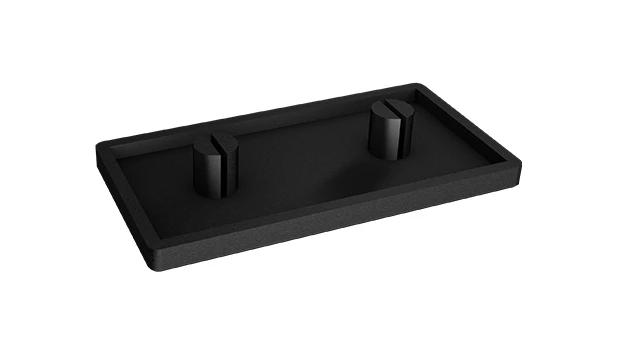
3060 Aluminum Profile End Cap
The aluminum profile end cap adds a finishing touch to your project and closes off profile ends to limit dust and debris buildup, also it can avaid some scratch for material and labor during the assemble work.
In the world of manufacturing, where every process is a symphony of moving parts, the philosophy of Kaizen—continuous improvement—has long been the guiding melody. It's not about grand overhauls or revolutionary technologies; instead, Kaizen thrives in the details: a streamlined workflow here, a safer workstation there, a small component that cuts down on wasted time. And if you've ever walked through a well-organized factory floor, you've likely seen the unsung heroes that make these small improvements possible: aluminum profiles. These lightweight, versatile structures form the backbone of workbenches, material racks, and assembly lines. But today, we're zooming in even closer—on a component so small it might escape notice at first glance, yet so critical it can shift the needle on efficiency, safety, and employee satisfaction: the 3060 aluminum profile end cap.
You might be wondering: How can a simple cap, designed to cover the end of an aluminum extrusion, play a role in Kaizen? Let's start by unpacking what Kaizen truly means. At its core, Kaizen is about empowering teams to identify inefficiencies, eliminate waste, and create a workplace that adapts and grows. It's the idea that every member of the organization, from the shop floor to the executive suite, has a stake in making things better. And in that spirit, even the smallest tools and components deserve attention. The 3060 aluminum profile end cap, when chosen and implemented thoughtfully, becomes more than just a finishing touch—it becomes a catalyst for the incremental changes that define Kaizen.
Understanding the Foundation: Aluminum Extrusion Profiles in Modern Manufacturing
Before we dive into the specifics of end caps, let's set the stage with the star of the show: the aluminum extrusion profile. These profiles are the building blocks of lean manufacturing systems, prized for their strength, flexibility, and ease of customization. Unlike traditional steel structures, aluminum profiles are lightweight, resistant to corrosion, and can be quickly assembled or reconfigured using simple tools. This adaptability makes them ideal for environments where workflows evolve regularly—a key requirement for Kaizen, where rigidity is the enemy of progress.
Aluminum extrusion profiles come in a range of sizes, each tailored to different needs. The "3060" in our focus today refers to its dimensions: 30mm in width and 60mm in height. This size strikes a balance between stability and versatility, making it a popular choice for workbenches, material racks, and medium-duty assembly lines. Picture a typical 3060 aluminum profile: a long, hollow beam with a T-slot running along its length. These T-slots allow for easy attachment of accessories—everything from shelves and brackets to conveyor tracks and lighting. But if you've ever handled an unfinished aluminum profile, you know the ends can be sharp, prone to collecting dust, and even a little unsightly. That's where the 3060 aluminum profile end cap enters the story.
What Are 3060 Aluminum Profile End Caps, and Why Do They Matter?
At first glance, a 3060 aluminum profile end cap might seem like a trivial accessory. It's a small, often plastic or rubber cover designed to fit snugly over the open ends of an aluminum extrusion. But to dismiss it as "just a cap" is to miss its role as a silent enabler of Kaizen. Let's break down its functions, and you'll see why it's far more than a cosmetic addition.
Safety First: Preventing Injuries and Reducing Risks
In any manufacturing environment, safety is the foundation of productivity. A single workplace injury can disrupt workflows, damage morale, and derail improvement efforts. Raw aluminum extrusion profiles, with their cut ends, can have sharp edges—especially if the cutting process leaves burrs or uneven surfaces. Imagine a line worker rushing to adjust a material rack, their hand brushing against an exposed profile end. A small cut might seem minor, but it can lead to downtime, increased medical costs, or even more serious issues if gloves tear or bacteria enter the wound.
3060 aluminum profile end caps eliminate this risk by covering those sharp edges with a smooth, rounded surface. Many end caps are made from soft yet durable materials like PVC or EPDM rubber, which provide a cushioned barrier. In electronics manufacturing, where static electricity can damage sensitive components, you'll even find ESD-safe end caps—designed to dissipate static charges and protect both workers and products. By prioritizing safety in this small way, end caps reduce the likelihood of accidents, keeping teams focused on their tasks and minimizing interruptions to the production flow. For Kaizen, this is a classic example of "prevention over correction": addressing a potential problem before it becomes a larger issue.
Efficiency Through Maintenance Reduction
Kaizen teaches us to eliminate "muda" (waste), and one of the most insidious forms of waste is unnecessary maintenance. Think about the open ends of an aluminum profile: over time, they can collect dust, debris, or even small tools that fall into the hollow interior. Cleaning out these profiles becomes a regular chore—time that could be spent on value-adding tasks. Worse, debris inside the profile can interfere with T-slot accessories, making it harder to slide brackets into place or causing jams when adjusting components.
End caps seal off the profile's interior, preventing dust and debris from entering. This simple act reduces the need for frequent cleaning, freeing up maintenance teams to focus on more critical tasks. It also protects the T-slot itself, ensuring that accessories can be added or removed smoothly—even after months of use. For example, a 3060 aluminum profile used in a busy assembly line might need to have a shelf repositioned weekly as production demands change. With an end cap keeping the T-slot clean, that repositioning takes seconds instead of minutes, adding up to hours of saved time over a year. That's the kind of incremental efficiency gain Kaizen thrives on.
Aesthetics and Morale: The "5S" Connection
Kaizen is closely linked to the 5S methodology—Sort, Set in Order, Shine, Standardize, Sustain—a system for maintaining a clean, organized workplace. A cluttered, messy environment isn't just inefficient; it demotivates employees and signals a lack of care for the workspace. Exposed aluminum profile ends, with their rough edges and tendency to collect dust, can make even the most well-designed workstation feel unfinished.
3060 aluminum profile end caps add a polished, professional look to workbenches and racks. They come in a variety of colors—often matching the profile's anodized finish or the company's brand colors—creating a cohesive, intentional appearance. This might seem like a small detail, but studies have shown that organized, visually appealing workspaces boost employee satisfaction and engagement. When workers see that their employer cares about even the smallest aspects of their environment, they're more likely to take pride in their work and contribute ideas for improvement—exactly the kind of culture Kaizen aims to foster.

Material Matters: Choosing the Right 3060 End Cap for Your Kaizen Goals
Not all end caps are created equal, and choosing the right one is part of the Kaizen process of continuous optimization. 3060 aluminum profile end caps are typically made from three materials: plastic (PVC or polypropylene), rubber, or ESD-safe compounds. Each has its strengths, and selecting the best fit depends on your workplace's specific needs.
Comparing End Cap Materials: A Quick Guide
| Material | Key Benefits | Best For | Considerations |
|---|---|---|---|
| PVC/Polypropylene Plastic | Cost-effective, lightweight, resistant to chemicals | General manufacturing, dry environments, non-critical applications | Less impact resistance than rubber; may crack in extreme temperatures |
| Rubber (EPDM/Nitrile) | Shock-absorbent, non-slip, excellent for high-traffic areas | Workbenches, material handling trolleys, areas with frequent contact | Slightly more expensive than plastic; may degrade in direct sunlight over time |
| ESD-Safe Compounds | Dissipates static electricity, protects sensitive electronics | Electronics manufacturing, semiconductor plants, cleanrooms | Higher cost; requires certification to meet industry standards |
For example, a automotive parts assembly line might opt for rubber end caps on their 3060 workbenches, where tools are frequently set down or dropped— the rubber provides extra cushioning, reducing tool damage and noise. A semiconductor factory, on the other hand, would prioritize ESD-safe end caps to prevent static discharge from damaging microchips. Even within the same facility, different areas might use different end cap materials—another example of Kaizen's focus on tailored, context-specific improvements.

Installation and Integration: How End Caps Support Quick, Flexible Changes
One of the hallmarks of Kaizen is the ability to make changes quickly and with minimal disruption. Traditional manufacturing setups often require welding or drilling to modify structures, which is time-consuming and limits adaptability. Aluminum profiles, with their T-slot design, solve this problem—but only if their accessories are equally easy to install. 3060 aluminum profile end caps excel here, with a design that prioritizes simplicity.
Installing a typical 3060 end cap takes seconds: you simply press it into the open end of the profile until it clicks into place. No tools, no adhesives, no special training required. This ease of installation means that even frontline workers—those closest to the workflow—can make improvements themselves. Imagine a team noticing that a material rack's exposed ends are collecting dust. Instead of waiting for maintenance to schedule a fix, they can grab a handful of end caps and install them on the spot. This empowers employees to take ownership of their workspace, a core principle of Kaizen.
But the flexibility doesn't stop at installation. If a profile needs to be reconfigured—say, cut to a shorter length during a workflow redesign—the end cap can be easily removed and reused on the new, shorter section. This reusability reduces waste (another 5S principle) and keeps costs low, ensuring that improvement efforts don't break the budget. In a world where Kaizen encourages "small wins," the ability to make a tangible change in minutes is invaluable.
Real-World Impact: Case Studies of Kaizen in Action with 3060 End Caps
To truly understand the value of 3060 aluminum profile end caps, let's look at two real-world examples where they've contributed to meaningful Kaizen improvements. These aren't hypothetical scenarios—they're stories from factories where small changes led to measurable results.
Case Study 1: Automotive Supplier Reduces Downtime by 15%
A mid-sized automotive parts manufacturer in the Midwest was struggling with frequent disruptions on their assembly line. Workers reported minor cuts from exposed aluminum profile ends on their workbenches, leading to occasional breaks and a dip in morale. Additionally, maintenance teams were spending 2-3 hours per week cleaning debris out of the profiles' T-slots, which had become clogged with metal shavings and dust. The plant manager, a Kaizen enthusiast, decided to test 3060 rubber end caps on a single production line as a pilot project.
Within two weeks, the results were clear: no more reported cuts, and maintenance time on that line dropped to less than 30 minutes per week. Encouraged, the manager rolled out end caps across all 12 assembly lines. Over the next quarter, total downtime due to injuries and maintenance fell by 15%, and employee surveys showed a 20% increase in satisfaction with the workspace. The best part? The total cost of the end caps was less than $500—a fraction of the savings from reduced downtime.
Case Study 2: Electronics Plant Improves ESD Compliance
A semiconductor manufacturer in California faced a different challenge: maintaining ESD compliance in their cleanroom. Static electricity could damage the sensitive microchips they produced, so all equipment needed to meet strict ESD standards. Their existing workbenches, made with 3060 aluminum profiles, had exposed ends that occasionally generated static charges when brushed against. The plant's quality team identified this as a potential risk but struggled to find a solution that didn't require replacing the entire workbench system.
After researching aluminum profile accessories, they discovered ESD-safe 3060 end caps. These caps were made from a conductive compound that dissipated static charges, preventing them from building up on the profile ends. The team installed the end caps overnight, and follow-up testing showed a 90% reduction in static-related incidents. This small change not only improved compliance but also reduced the need for expensive ESD testing equipment in those areas, freeing up budget for other Kaizen projects.
Beyond End Caps: Integrating with Other Aluminum Profile Accessories
Kaizen is about systems thinking—seeing how individual components work together to create a more efficient whole. 3060 aluminum profile end caps are most powerful when paired with other aluminum profile accessories, creating a cohesive, optimized workspace. Let's explore a few key accessories and how they complement end caps in a Kaizen-focused environment.
Aluminum Profile Rubber Strip: Sealing Gaps and Enhancing Safety
While end caps cover the profile's ends, aluminum profile rubber strips fit into the T-slots along the profile's length. These strips seal gaps, reduce noise from moving parts, and add an extra layer of safety by preventing tools from slipping into the slots. When used with end caps, they create a fully enclosed, smooth surface—ideal for workbenches where precision is key. For example, a 3060 profile workbench with both end caps and rubber strips becomes a safer, quieter space for assembly work, aligning with Kaizen's goal of reducing distractions and risks.
Roller Tracks and Connectors: Streamlining Material Flow
Many manufacturing workflows rely on roller tracks to move materials from one station to the next. These tracks attach to aluminum profiles via T-slot connectors, creating gravity-fed or powered conveyors. End caps play a role here by ensuring the roller track's support structure (the 3060 profiles) remains clean and damage-free, preventing jams or misalignments. A well-maintained roller track system, paired with end caps to protect the profiles, reduces material handling time—a key driver of efficiency in Kaizen.
Casters and Leveling Feet: Mobility and Stability
For workstations that need to be moved (a common Kaizen strategy to adapt to changing workflows), casters are essential. 3060 aluminum profiles can be fitted with caster wheels via T-slot brackets, turning a fixed workbench into a mobile cart. End caps ensure that even when the cart is moved, the profile ends don't catch on doorways or other equipment. Similarly, leveling feet—used to stabilize workbenches on uneven floors—work with end caps to create a stable, safe base. Together, these accessories turn 3060 profiles into adaptable, Kaizen-ready tools that grow with your needs.
The Future of Kaizen: Innovations in Aluminum Profile End Caps
Kaizen is never static, and neither are the tools that support it. As manufacturing evolves, so too do aluminum profile accessories like end caps. Today, we're seeing innovations that make end caps even more integral to continuous improvement:
- Smart End Caps with RFID Tags: Imagine end caps embedded with RFID tags that track when a profile was last inspected or reconfigured. This data helps maintenance teams prioritize upkeep, aligning with Kaizen's focus on data-driven improvement.
- Eco-Friendly Materials: With sustainability becoming a core Kaizen value, manufacturers are developing end caps from recycled plastics or biodegradable materials, reducing environmental impact without sacrificing performance.
- Modular Designs: New end cap designs feature built-in clips or brackets, allowing them to double as mounting points for small tools or labels. This multi-functionality reduces the need for separate accessories, streamlining the workspace further.
These innovations show that even the simplest components can evolve to meet the changing needs of Kaizen, proving that continuous improvement applies to the tools themselves as much as the processes they support.
Conclusion: The Small Component That Drives Big Change
As we wrap up, let's return to the heart of Kaizen: the belief that every detail matters. The 3060 aluminum profile end cap may be small, but its impact is far-reaching. It enhances safety, reduces maintenance, improves aesthetics, and empowers employees to take ownership of their workspace. In doing so, it becomes more than an accessory—it's a symbol of the Kaizen mindset: seeing potential in the overlooked, finding value in the mundane, and never settling for "good enough."
Whether you're running a large manufacturing plant or a small workshop, the lesson is clear: Kaizen isn't about waiting for the next big breakthrough. It's about looking at your current tools, processes, and yes, even your aluminum profile end caps, and asking: "How can this be better?" In that question lies the power to transform not just a workspace, but an entire culture of continuous improvement.
So the next time you walk through a factory, take a moment to notice the small things—the end caps on the aluminum profiles, the rubber strips in the T-slots, the little details that keep the workflow moving. Those are the quiet champions of Kaizen, and they're proof that great things truly come in small packages.