- Company Articles
- Products and Technology
- Product knowledge
- 3060 Aluminum Profile End Caps in 3C Assembly: Critical for Component Safety

3060 Aluminum Profile End Caps in 3C Assembly: Critical for Component Safety
Related Product
3060 Aluminum Profile End Cap
The aluminum profile end cap adds a finishing touch to your project and closes off profile ends to limit dust and debris buildup, also it can avaid some scratch for material and labor during the assemble work.
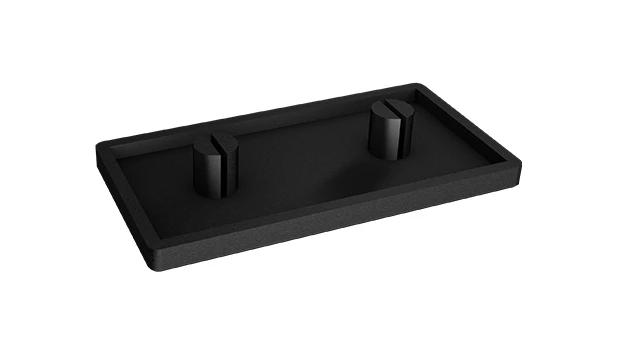
In the fast-paced world of 3C (Consumer Electronics) manufacturing—where every second counts and precision is non-negotiable—even the smallest components play a starring role in ensuring safety, efficiency, and product quality. Today, we're shining a spotlight on an unsung hero of the assembly line: the 3060 aluminum profile end cap. While it might seem like a accessory, this small piece of hardware is a linchpin in protecting both workers and delicate electronics from harm. Let's dive into why these end caps matter, how they integrate with modern manufacturing systems, and why overlooking them could cost your operation more than just time.
The Backbone of 3C Assembly: Aluminum Extrusion Profiles
Walk into any 3C manufacturing facility—whether it's churning out smartphones, laptops, or smartwatches—and you'll notice a common sight: sleek, modular structures made from aluminum extrusion profiles. These profiles are the backbone of modern assembly lines, used to build everything from workbenches and material racks to conveyor systems and testing stations. Why aluminum? For starters, it's lightweight yet surprisingly strong, making it easy to reconfigure as production needs change. It's also resistant to corrosion, which is critical in cleanrooms where dust and moisture can ruin sensitive electronics. And let's not forget cost-effectiveness: aluminum extrusion profiles are affordable to produce, customize, and maintain, making them a favorite among manufacturers aiming to balance quality and budget.
Among the many sizes and shapes of aluminum profiles, the 3060 aluminum extrusion profile stands out for its versatility in 3C applications. The numbers "3060" refer to its dimensions: 30mm in width and 60mm in height. This size hits a sweet spot—sturdy enough to support heavy equipment like soldering stations or testing rigs, yet slim enough to fit into tight spaces on the assembly line. You'll find 3060 profiles forming the frames of workbenches where technicians assemble circuit boards, the sides of flow racks that transport delicate screens, and even the supports for overhead lighting systems in cleanrooms. But here's the thing: an aluminum extrusion profile is only as good as its accessories. Without the right components to hold it together, seal its edges, and protect its ends, even the most well-designed profile can become a liability.
Meet the Unsung Hero: 3060 Aluminum Profile End Caps
If aluminum extrusion profiles are the bones of the assembly line, then aluminum profile accessories are the connective tissue that holds everything together. And among these accessories, the 3060 aluminum profile end cap is the quiet guardian that often goes unnoticed—until something goes wrong. So, what exactly is a 3060 aluminum profile end cap? Put simply, it's a small, often plastic or rubber cover that fits snugly over the exposed ends of a 3060 aluminum profile. Think of it as a "cap" for the profile's open end, sealing it off from the outside world.
At first glance, you might wonder: Why bother with such a tiny part? The answer lies in the nature of aluminum extrusion. When a profile is extruded—pushed through a die to create its shape—it leaves the ends rough and open. These open ends have sharp edges (even after basic finishing) and hollow interiors. Without an end cap, those sharp edges pose a risk to anyone handling the profile, whether it's a worker adjusting a workbench or a technician loading components onto a material rack. Worse, the hollow interior can collect dust, debris, or even small screws and washers—all of which can later fall out and damage sensitive electronics like microchips or LCD screens.
But the 3060 aluminum profile end cap does more than just cover a hole. It's designed to fit the unique dimensions of the 3060 profile, creating a tight seal that prevents debris from entering and edges from cutting. Some end caps are even designed with additional features, like non-slip surfaces to keep tools from sliding off workbench edges, or ESD (Electrostatic Discharge) properties to protect against static electricity—a silent killer in 3C manufacturing, where a single static spark can fry a $500 circuit board. In short, these end caps are the first line of defense in keeping both people and products safe.

The Hidden Dangers: What Happens Without Proper End Caps?
To truly appreciate the value of 3060 aluminum profile end caps, let's consider the alternative: an assembly line where profiles are left uncovered. It might seem harmless at first, but the risks add up quickly—from minor nuisances to major safety violations and product defects.
Worker Safety Risks: Sharp, exposed aluminum edges are a recipe for cuts and scrapes. Imagine a technician leaning over a workbench to adjust a component, only to brush their arm against an uncovered 3060 profile end. A small cut might seem insignificant, but in a high-precision environment, even a drop of blood can contaminate a circuit board, leading to costly rework. Worse, repeated exposure to these edges can cause chronic injuries like lacerations or nerve damage over time. OSHA (Occupational Safety and Health Administration) standards are clear about minimizing sharp hazards in the workplace, and uncovered profile ends are a direct violation that could result in fines or shutdowns.
Component Contamination: The hollow interior of an uncovered aluminum profile acts like a magnet for dust, metal shavings, and loose fasteners. Over time, these contaminants build up and eventually dislodge—often at the worst possible moment. For example, during the final testing phase of a smartphone, a tiny metal shaving might fall from an uncovered material rack and land on the device's charging port, causing a short circuit. The result? A defective product that makes it past quality control and ends up in a customer's hands, leading to returns, warranty claims, and damage to your brand's reputation.
Equipment Damage: Uncovered profile ends can also damage the tools and machinery that rely on them. Take a conveyor system built with 3060 profiles: if the end of a support beam is left exposed, it might catch on a passing cart or tool, bending the profile or jamming the conveyor. Repairs would require shutting down the line, costing hours of production time. In a factory that produces 10,000 smartphones a day, even a 30-minute shutdown translates to 500 lost units—all because of a missing 50-cent end cap.
These aren't hypothetical scenarios. In 2023, a major electronics manufacturer in Southeast Asia reported a 23% increase in minor worker injuries after switching to cheaper, unbranded aluminum profiles that didn't include end caps. The company later estimated that the cost of treating those injuries, combined with lost productivity from workers calling in sick, exceeded the savings from skipping end caps by a factor of 10. It's a classic case of penny-wise, pound-foolish—and it's entirely avoidable with the right accessories.

The Science of Safety: What Makes a Great End Cap?
Not all 3060 aluminum profile end caps are created equal. A cheap, poorly made end cap might fall off after a week of use, leaving the profile exposed again. A good end cap, on the other hand, is engineered to last, with materials and design features that address the unique challenges of 3C manufacturing. Let's break down what goes into making a high-quality end cap.
Material Matters: Most end caps are made from plastic or rubber, but the specific type matters. PVC (Polyvinyl Chloride) is a popular choice for standard applications—it's affordable, flexible, and resistant to moisture. However, in environments where static electricity is a concern (like semiconductor assembly), ESD-safe nylon end caps are a better bet. Nylon conducts static away from sensitive components, preventing discharges that could damage electronics. For high-temperature areas, like near soldering stations, silicone end caps are ideal—they can withstand temperatures up to 200°C without melting or deforming. The key is to match the end cap material to the conditions of your workspace.
Fit and Finish: A end cap that doesn't fit snugly is worse than no end cap at all—it might fall off unexpectedly, leaving the profile exposed. High-quality end caps are precision-molded to match the exact dimensions of the 3060 profile, with a slight interference fit that holds them in place without requiring adhesives. Some end caps even feature internal ribs or tabs that grip the inside of the profile, ensuring they stay put even during vibrations from conveyor systems or heavy equipment. Look for end caps with a smooth, burr-free finish—rough edges on the cap itself can still cause cuts or snag on gloves.
Durability: 3C assembly lines run 24/7, so end caps need to withstand constant use. A good end cap should resist cracking, chipping, or fading, even after months of exposure to cleaning chemicals, UV light, and mechanical stress. Manufacturers often test end caps by subjecting them to repeated impact (simulating tools being dropped on them) and flexing (simulating profiles being moved or reconfigured). The best end caps can handle hundreds of these cycles without failing.
To illustrate the differences between end cap types, let's take a look at a comparison table of three common options used in 3C manufacturing:
| End Cap Type | Material | Key Features | Best For | Safety Benefits |
|---|---|---|---|---|
| Standard PVC | PVC (Polyvinyl Chloride) | Snug fit, moisture-resistant, affordable | General assembly workbenches, non-ESD areas | Covers sharp edges, prevents debris entry |
| ESD-Safe Nylon | Conductive Nylon | Static-dissipative, chemical-resistant, high strength | Semiconductor assembly, circuit board testing | Prevents static damage, covers edges, debris protection |
| High-Temp Silicone | Silicone Rubber | Heat-resistant (up to 200°C), flexible, non-slip | Soldering stations, thermal testing areas | Resists melting, maintains seal in high heat, non-slip surface |
As you can see, each type has its strengths, and choosing the right one depends on your specific needs. The takeaway? Don't skimp on end cap quality—investing in the right type can save you from costly accidents and defects down the line.
Fitting into the Bigger Picture: End Caps and Lean Systems
In modern manufacturing, efficiency isn't just about speed—it's about creating a lean system that minimizes waste, maximizes productivity, and prioritizes safety. Lean systems rely on tools like 5S (Sort, Set in Order, Shine, Standardize, Sustain) to keep workspaces organized and efficient. And guess what? 3060 aluminum profile end caps play a key role in making these systems work.
Let's start with "Shine," the third S in 5S, which focuses on cleanliness. A workspace cluttered with debris from uncovered profiles isn't just dirty—it's a waste of time. Workers have to stop what they're doing to clean up, or worse, spend extra time inspecting products for contamination. By sealing profile ends with end caps, you eliminate a major source of dust and debris, making it easier to keep workbenches and material racks clean. This, in turn, reduces the time spent on cleaning and inspection, freeing up workers to focus on assembling products.
Then there's "Standardize," which ensures that processes are consistent across the factory. Using standardized 3060 aluminum profile end caps means that every workbench, rack, and conveyor has the same level of protection. Workers don't have to guess whether a profile is safe to touch—they know that any 3060 profile in the facility has a properly fitted end cap. This consistency reduces errors and makes training new employees easier, as they can trust that the workspace is designed with safety in mind.
Perhaps most importantly, end caps support "Sustain," the final S, by extending the lifespan of aluminum profiles. When profiles are left uncovered, they're more likely to get damaged—dents, scratches, or bent edges that require replacement. By protecting the ends, end caps help profiles last longer, reducing the need to buy new ones. This not only saves money but also reduces waste, aligning with lean principles of minimizing resource use.
Take, for example, a laptop assembly line that implemented a lean system with 3060 aluminum profiles and end caps. Before lean, workers spent 15 minutes each shift cleaning debris from uncovered profiles. After adding end caps, that time dropped to 2 minutes. Over a year, that's a savings of over 1,000 hours—time that could be spent assembling an extra 5,000 laptops. Plus, the line saw a 40% reduction in profile replacements, cutting material costs by $12,000 annually. All from a simple accessory.
Real-World Impact: Stories from the Factory Floor
Numbers and theory are one thing, but hearing real stories from manufacturers who've experienced the difference that 3060 aluminum profile end caps make brings the importance home. Let's look at two case studies from 3C facilities that upgraded their end caps—and reaped the rewards.
Case Study 1: Smartphone Assembly in Vietnam
A mid-sized electronics manufacturer in Ho Chi Minh City produces around 500,000 smartphones per month. Their assembly line uses 3060 aluminum profiles to build workbenches where technicians install cameras and batteries. For years, they used generic plastic end caps that often fell off or cracked after a few weeks. Workers regularly reported minor cuts on their forearms, and quality control teams found small plastic fragments in 0.3% of finished phones—enough to cause 1,500 returns annually.
In 2022, the company switched to ESD-safe nylon end caps designed specifically for 3060 profiles. The new end caps had a ribbed interior that gripped the profile tightly, and their ESD properties protected against static damage. Within three months, worker-reported injuries dropped by 85%, and plastic fragment defects fell to 0.02%—a 93% reduction. The company estimates that the $5,000 investment in new end caps saved them $45,000 in injury treatment, returns, and rework costs that year.
Case Study 2: Smartwatch Testing Facility in Germany
A German manufacturer specializing in smartwatch testing equipment uses 3060 aluminum profiles to build custom testing rigs. These rigs hold watches in place while they're subjected to extreme temperatures and humidity. Initially, they used no end caps, reasoning that the profiles were "out of the way" of workers. But over time, dust and condensation began collecting inside the profiles, leading to corrosion. This corrosion eventually caused a rig to fail during a critical test, damaging 20 prototype watches worth $20,000 each.
After the incident, the company installed high-temperature silicone end caps on all profiles. The end caps sealed the profiles, preventing dust and moisture from entering. They also added a small drainage hole to the bottom of each end cap to release any condensation that did form. In the two years since, the facility has had zero rig failures due to corrosion, and maintenance costs for the rigs have dropped by 60%. As the facility manager put it: "We used to think end caps were a luxury. Now we know they're a necessity."
How to Choose the Right End Caps for Your Facility
Now that you understand why 3060 aluminum profile end caps are critical, how do you go about selecting the right ones for your 3C assembly line? Here's a step-by-step guide to help you make an informed decision:
Step 1: Assess Your Workspace Conditions
Start by evaluating the environment where the profiles will be used. Is static a concern? If you're working with semiconductors or circuit boards, ESD-safe end caps are a must. Are there high temperatures, like near ovens or soldering tools? Opt for heat-resistant materials like silicone. Do workers handle the profiles frequently? Look for end caps with non-slip surfaces to prevent tools from sliding off.
Step 2: Measure Your Profiles (Twice!)
Not all 3060 profiles are identical—some have slightly different tolerances or slot designs. Measure the inner and outer dimensions of your profiles to ensure the end caps will fit. A cap that's too loose will fall off; one that's too tight might crack when installed. Most manufacturers provide detailed size charts, so compare your measurements to these charts before buying.
Step 3: Check for Certifications
For critical applications, look for end caps with certifications like ISO 9001 (quality management) or ANSI/ESD S20.20 (ESD protection). These certifications ensure that the end caps meet strict safety and performance standards. Avoid unbranded or generic end caps—they're unlikely to have undergone rigorous testing.
Step 4: Test Before Full Deployment
Before ordering end caps for your entire facility, buy a small batch and test them in your workspace. Install them on a few profiles and monitor how they hold up over a week or two. Do they stay in place? Are they easy to install and remove (for reconfiguration)? Do they address the safety issues you're trying to solve? Use this testing phase to refine your choice.
Step 5: Partner with a Reputable Supplier
Finally, work with a supplier who specializes in aluminum profile accessories. A good supplier will not only have a wide range of end caps but also offer technical support—helping you choose the right type, providing samples, and ensuring on-time delivery. They can also alert you to new end cap designs or materials that might better suit your needs.
Looking Ahead: The Future of End Caps in 3C Manufacturing
As 3C manufacturing continues to evolve—with trends like miniaturization, automation, and Industry 4.0—so too will the role of 3060 aluminum profile end caps. Here are a few innovations we're likely to see in the coming years:
Smart End Caps with Sensors
Imagine end caps embedded with tiny sensors that monitor temperature, humidity, or vibration. These "smart" end caps could alert maintenance teams if a profile is overheating (indicating a problem with nearby equipment) or if a conveyor is vibrating excessively (signaling a need for repair). This proactive monitoring could prevent downtime and further enhance safety.
Eco-Friendly Materials
With sustainability becoming a top priority for manufacturers, we'll see more end caps made from recycled or biodegradable materials. For example, some companies are experimenting with end caps made from plant-based plastics that decompose naturally at the end of their lifespan, reducing landfill waste.
Customized Designs for Specialized Applications
As 3C products become more complex, so too will assembly line designs. We'll see end caps tailored to unique profiles, like curved or angled 3060 variants, or end caps with built-in cable management features to keep wires and cords organized—further reducing clutter and improving safety.
Integration with Digital Twins
Industry 4.0 is all about digital twins—virtual replicas of physical systems. In the future, end caps could be tagged with RFID chips that allow them to be tracked in the digital twin. This would let manufacturers monitor end cap lifespan, track replacements, and even simulate how different end cap types affect system performance.
Final Thoughts: Small Part, Big Impact
In the high-stakes world of 3C manufacturing, where precision and safety are everything, it's easy to focus on the "big" components—robots, circuit boards, testing equipment. But as we've explored, even the smallest parts, like 3060 aluminum profile end caps, play a critical role in keeping workers safe, products defect-free, and operations efficient. These unassuming accessories are more than just covers—they're guardians of quality, protectors of workers, and enablers of lean manufacturing.
So, the next time you walk through your assembly line, take a moment to look at the aluminum profiles. Are their ends covered? Are the end caps in good condition? If not, consider this: investing in high-quality 3060 aluminum profile end caps isn't just a safety measure—it's a smart business decision. It's about protecting your most valuable assets: your team and your reputation. And in an industry where margins are tight and competition is fierce, that's an investment that pays dividends.