- Company Articles
- Products and Technology
- Application Cases
- 3060 Aluminum Profile End Caps in Automotive Parts Storage: Case Study

3060 Aluminum Profile End Caps in Automotive Parts Storage: Case Study
Related Product
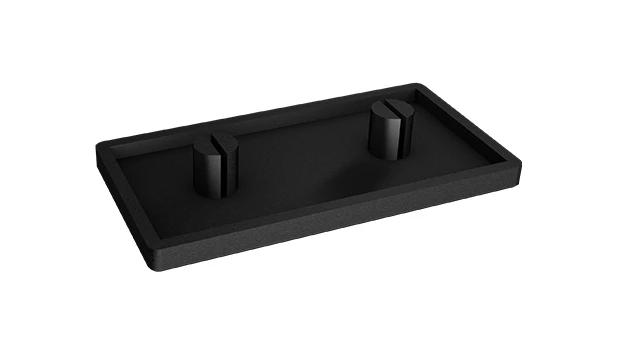
3060 Aluminum Profile End Cap
The aluminum profile end cap adds a finishing touch to your project and closes off profile ends to limit dust and debris buildup, also it can avaid some scratch for material and labor during the assemble work.
On a brisk Monday morning at BrightHorizon Automotive's assembly plant in Ohio, lead technician Raj Patel knelt beside a cluttered storage rack, his gloved hand searching for a small plastic grommet. "Again," he muttered, pulling back a bleeding finger—snagged on the sharp, exposed edge of a metal storage shelf. Nearby, intern Lila struggled to stack a box of wiring harnesses, only for it to topple sideways, spilling parts across the floor. "This is the third time this week," she sighed, eyeing the dented corner of a harness. Down the aisle, plant manager Maria Gonzalez frowned at her clipboard: 12 minutes wasted per worker daily on searching for parts, 8 reported minor injuries in the past month, and storage space maxed out despite the plant running at 75% capacity. "We need a change," she thought, tucking the clipboard under her arm. That change, it turned out, would hinge on a small but critical component: the 3060 aluminum profile end cap.
This is the story of how BrightHorizon transformed its chaotic parts storage system into a model of lean efficiency, with the 3060 aluminum extrusion profile and its (complementary) aluminum profile accessories—particularly end caps—taking center stage. What began as a quest to fix frayed gloves and lost time evolved into a complete overhaul of how the plant managed space, safety, and workflow. Let's dive into how a humble piece of hardware became the unsung hero of their operations.
The Problem: A Storage System Stuck in the Past
BrightHorizon's storage woes weren't unique. Like many mid-sized automotive plants, they'd relied on a hodgepodge of second-hand steel racks, wooden shelves, and plastic bins for decades. Over time, this patchwork approach had unraveled into three critical pain points:
1. Safety Hazards: The steel racks, though sturdy, had sharp, unfinished edges where welds had chipped or paint had worn away. Workers like Raj frequently caught fingers, gloves, or clothing on these edges, leading to cuts, scrapes, and even dropped parts (which sometimes caused slips). "I've got a drawer full of band-aids at my workstation," joked assembly line worker Mei, "but it's not really a joke when you're bleeding on a part that goes into a car." Worse, the wooden shelves, warped by years of temperature fluctuations, often tilted, making stacked boxes unstable. In one incident, a 40-pound box of brake calipers had fallen, narrowly missing a passing forklift operator.
2. Wasted Time and Space: The one-size-fits-all steel racks offered little flexibility. Narrow parts (like bolts) got lost in deep bins, while bulky items (like dashboard panels) hung over the edges, wasting vertical space. "We were storing 10 parts where we could fit 20," Maria explained. Retrieval time suffered, too: with no clear labeling system and inconsistent shelf heights, workers spent an average of 12 minutes per shift just hunting for items. "It's not just time," said shift supervisor Tom. "It's frustration. When you're rushing to meet a quota, fumbling for parts kills morale."
3. Damage to Parts: The unprotected steel and wood surfaces were brutal on delicate components. Plastic clips cracked when banged against metal edges; rubber gaskets picked up splinters from wooden shelves; and wiring harnesses frayed on rough surfaces. Quality control reports showed a 5% defect rate directly linked to storage damage—costing the plant $12,000 monthly in scrapped parts and rework.
Maria knew half-measures wouldn't cut it. "We needed a system that was flexible, safe, and durable," she said. After researching lean manufacturing solutions, she reached out to MetroLean Solutions, a local supplier specializing in aluminum profile systems. Their pitch? A modular storage setup built around the 3060 aluminum extrusion profile, enhanced with aluminum profile accessories like end caps, connectors, and adjustable shelving. "The end caps were barely mentioned in the first meeting," Maria recalled. "But once we saw the prototype, we realized they were the glue holding it all together."
The Solution: 3060 Aluminum Profiles and the Critical Role of End Caps
MetroLean's proposal centered on the 3060 aluminum extrusion profile—a lightweight yet robust structural component with T-slot grooves that allow for easy attachment of accessories. Unlike rigid steel, aluminum profiles are modular: they can be cut to length, connected with joints, and reconfigured as needs change. But what truly sold Maria was the focus on (details)—like the 3060 aluminum profile end caps. "They seemed like an afterthought at first," she admitted, "but when the sales rep demonstrated them, it clicked."
So, what exactly is a 3060 aluminum profile end cap? Simply put, it's a small, usually plastic or aluminum cap designed to fit snugly into the open ends of aluminum extrusion profiles. At BrightHorizon, they opted for nylon end caps—durable, impact-resistant, and soft enough to protect both parts and workers. "Steel racks have sharp edges; these end caps turn them into smooth, safe surfaces," explained MetroLean's lead designer, Alex Chen, holding up a 3060 profile with an end cap pressed into its end. "See? No more snags, no more cuts. And because they're color-coded—we used blue for electrical parts, red for mechanical—workers can instantly spot the right section."
But the end caps' role went beyond safety. They also protected the aluminum profiles themselves. "Aluminum extrusions have precision-machined T-slots," Alex noted. "If debris, moisture, or parts get stuck in those slots, the accessories—like shelf brackets or dividers—won't fit right. End caps seal the ends, keeping out dust and preventing small parts from falling into the profile's hollow core." For BrightHorizon, this meant less maintenance (no more fishing nuts and bolts out of steel rack frames) and longer-lasting equipment.
The system MetroLean proposed wasn't just about profiles and end caps, though. It was a holistic lean solution:
- Modular Racks: 3060 aluminum extrusion profiles formed the vertical and horizontal frames, with adjustable shelves held in place by T-slot brackets. Unlike fixed steel racks, shelves could be moved up or down in 1-inch increments to fit parts of all sizes.
- Workbenches: Custom aluminum workbenches, built with the same 3060 profiles, replaced rickety wooden tables. Each workbench featured integrated tool rails, power strips, and storage bins—all attached via T-slots.
- Mobile Carts: Lightweight aluminum carts with lockable casters allowed workers to transport parts directly to assembly lines, reducing trips to the storage area.
- Labeling and Color-Coding: End caps in different colors (blue, red, green) paired with clear, magnetic labels turned the racks into a visual system. "Even new hires could find parts in minutes," Maria noted.
But the star of the show? Those 3060 end caps. "They're the reason the system feels 'finished,'" said Raj, running a hand along a capped profile edge during the prototype demo. "Smooth as a tabletop. No more bleeding fingers."

Implementation: From Blueprint to Bench
In late March, the MetroLean team arrived with crates of 3060 aluminum extrusion profiles, boxes of aluminum profile accessories (end caps, brackets, joints), and a crew of installers. The plan was to phase the transition: start with the electrical parts section (the most disorganized), then move to mechanical components, and finally roll out the workbenches. "We didn't want to disrupt production," Maria emphasized. "So we worked nights and weekends, with a skeleton crew to help move parts temporarily."
The first step was (dismantling) the old steel and wooden racks—a process that revealed just how bad things had gotten. "There were soda cans, old gloves, even a lost wrench at the back of one rack," laughed Lila, who helped sort debris. Next, the installers cut the 3060 profiles to length using a miter saw, then deburred the edges (though the end caps would later cover any remaining roughness). "Aluminum cuts like butter compared to steel," Alex noted. "We had the frames up in two nights."
Then came the end caps. Each 3060 profile end was wiped clean, and the nylon caps were pressed into place with a rubber mallet—no tools needed. "They fit like a lid on a jar," Raj observed. "Snug, but easy to pop off if we need to reconfigure the rack later." The caps came in two styles: flat for horizontal surfaces (to prevent parts from catching) and domed for vertical posts (to shed dust and moisture). For high-traffic areas, they used reinforced aluminum end caps, which could withstand heavier impacts.
By mid-April, the electrical parts section was complete. The transformation was staggering: rows of sleek, silver aluminum racks with blue end caps, each shelf labeled with magnetic tags ("Fuses: 10A – 30A," "Wiring Harnesses: Model X-7"). Workers gathered to gawk. "Is this the same room?" Mei asked, running a hand along a shelf. "I could eat off these surfaces." The real test came the next morning, when the assembly line fired up. Raj, tasked with retrieving a batch of 10A fuses, walked to the rack, scanned the blue end caps, and pulled the bin in 15 seconds flat. "That used to take me 5 minutes," he said, grinning. "I might actually finish early today."
"The end caps might seem small, but they're everywhere. When I'm stacking boxes, I don't have to worry about the corners getting torn up. When I reach for a part, my hand glides over the edges instead of getting stuck. It's like the racks were designed for us, not against us." — Mei Lin, Assembly Line Worker

Results: The Numbers Speak for Themselves
Six months after the final rack was installed, Maria sat down with her team to review the data. The results were transformative, with metrics that went far beyond "fewer cuts" or "happier workers." Here's how the numbers stacked up:
| Metric | Before (Jan 2024) | After (Oct 2024) | Improvement |
|---|---|---|---|
| Time spent retrieving parts per worker/day | 12 minutes | 3 minutes | 75% reduction |
| Storage capacity (parts per sq. ft.) | 15 parts | 28 parts | 87% increase |
| Reported injuries (cuts, scrapes, slips) | 8/month | 0/month | 100% reduction |
| Defects due to storage damage | 5% | 0.5% | 90% reduction |
| Worker satisfaction score (1-10) | 5.2 | 8.7 | 3.5-point increase |
Perhaps the most surprising win was the boost in worker satisfaction. "It sounds silly, but coming into a clean, organized space makes you want to do better work," said Tom, the shift supervisor. "People take pride in keeping the racks neat now. I've even seen workers straightening labels during breaks." Lila, now a full-time technician, added, "I don't dread going to the storage room anymore. It's… calm. And when you're calm, you make fewer mistakes."
Financially, the ROI was clear. The $85,000 investment in the aluminum profile system (including labor) paid for itself in under a year: reduced scrap costs ($10,800/month saved), lower injury-related downtime (estimated at $5,000/month), and productivity gains (12 minutes/worker/day × 150 workers = 30 extra hours of production daily, worth ~$7,500/day). "We're on track to hit 100% capacity by next quarter," Maria reported to upper management. "And we did it without expanding the building."
The 3060 aluminum profile end caps, though a small part of the budget, played an outsized role in these results. "They're the reason the system feels durable and intentional," Alex from MetroLean noted during a follow-up visit. "Without them, you'd still have sharp edges, debris in the T-slots, and parts getting damaged. They turn a good system into a great one."
Beyond Storage: A Culture of Lean Thinking
The success of the storage overhaul sparked something bigger at BrightHorizon: a shift toward lean thinking. Workers began suggesting other improvements, inspired by how the aluminum profiles had simplified their daily tasks. "If we can fix storage with these profiles, why not use them for assembly line fixtures?" Raj proposed. Soon, the plant added custom aluminum tool holders, adjustable workbench lights, and even a modular inspection station—all built with 3060 profiles and accessories. "It's like we unlocked a new way of problem-solving," Maria said.
The end caps, too, became a symbol of the plant's commitment to (attention to detail). "We had a meeting where someone joked, 'Should we put end caps on our coffee mugs?'" laughed Tom. "But it stuck. Now, when we design anything—whether it's a new rack or a process—we ask, 'What's the "end cap" here? What small thing will make this safer, smoother, or more efficient?'"
For Raj, the change was personal. "I used to hate coming to work on Mondays," he admitted. "Now? I walk through that storage room, see those blue end caps, and think, 'We did this.' It's not just metal and plastic—it's proof that we care about how we work. And that makes all the difference."
Conclusion: The Power of Small Solutions
BrightHorizon's story isn't about aluminum extrusion profiles or end caps. It's about solving big problems with thoughtful, human-centered solutions. What began as a quest to fix bleeding fingers and lost parts ended with a more efficient, safer, and happier workplace—all because they invested in a system designed to adapt to people , not the other way around.
The 3060 aluminum profile end cap, in particular, teaches us a valuable lesson: great change often hinges on small details. It's easy to overlook the "little things"—the edges, the gaps, the moments of friction in our daily work. But as BrightHorizon discovered, those little things add up. They shape how we feel about our jobs, how efficiently we work, and how safe we feel when we clock in each day.
So, the next time you walk through a warehouse, a factory, or even an office, take a look around. What "end caps" are missing? What small, overlooked component could turn chaos into order, frustration into pride, or waste into efficiency? At BrightHorizon, that answer was clear. And it all started with a cap on a profile.