- Company Articles
- Products and Technology
- Solution
- 3060 EU Standard Aluminum Profile for Electronic Component Racks: Anti-Static Solutions

3060 EU Standard Aluminum Profile for Electronic Component Racks: Anti-Static Solutions
Related Product
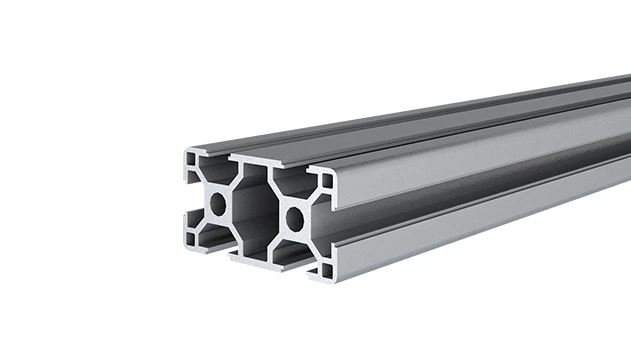
3060 EU Standard Aluminum Profile
3060 is a 3.00 x 6.00CM fractional 30 series square extrusion T-slot profile with four open T-slots, two side with 3.00cm face, two side with 6.0cm face. The profile has align-a-grooves to assist in aligning connecting profiles.
The Hidden Threat of Static in Electronics: Why Every Spark Matters
Walk into any modern electronics manufacturing facility, and you'll notice a symphony of precision: robots assembling tiny circuits, workers in grounded wristbands handling delicate components, and racks upon racks of neatly organized parts. But beneath this orchestrated chaos lies an invisible enemy—static electricity. It's silent, it's, and it has the power to turn a flawless microchip into a worthless piece of silicon in milliseconds. For anyone building or managing electronic component storage, this isn't just a nuisance; it's a critical threat to product quality, customer trust, and the bottom line.
Static electricity builds up when two materials rub against each other—something as simple as sliding a component tray across a shelf or even walking across a carpeted floor. When that charge discharges, it can send a jolt of electricity through a sensitive electronic part. Unlike the static shock you feel when touching a doorknob (which might be 2,000–4,000 volts), even a discharge as low as 50 volts can damage a semiconductor. Worse, some components might not fail immediately; they could develop "latent defects," failing weeks or months after deployment, leading to costly returns and reputational damage. In industries like aerospace, medical devices, or automotive electronics, where reliability is non-negotiable, this risk is simply unacceptable.
This is where anti-static solutions come in. They're not just "nice-to-haves"—they're the backbone of responsible electronics manufacturing and storage. From grounded work surfaces to anti-static packaging, every detail matters. But one often-overlooked hero in this fight is the material we use to build the very racks and workstations that house these components. Enter the 3060 EU standard aluminum profile: a versatile, durable, and inherently static-friendly material that's changing how facilities protect their most valuable assets.
Why Anti-Static Solutions Are Non-Negotiable for Electronic Components
Let's start with the basics: why exactly do electronic components need such specialized anti-static protection? To put it bluntly, modern electronics are getting smaller and more sensitive by the day. A smartphone chip today can contain billions of transistors packed into a space smaller than a fingernail. These tiny structures are incredibly vulnerable to electrostatic discharge (ESD). Even a charge that's too weak to feel can create a voltage difference across a transistor, burning it out or altering its performance.
Consider this: a typical USB drive contains flash memory chips that can be damaged by static charges as low as 100 volts. A microprocessor in a laptop? It might fail at just 250 volts. Compare that to the static charge generated by shuffling across a wool carpet, which can reach 25,000–35,000 volts—enough to fry hundreds of these chips in an instant. And it's not just during manufacturing; storage and transportation are equally risky. Components sitting on a rack, being moved from one workstation to another, or even just resting in a warehouse can accumulate static if the environment isn't controlled.
The cost of ignoring ESD is staggering. According to industry reports, ESD damage costs the electronics industry billions of dollars annually in scrapped parts, rework, and warranty claims. For small to medium-sized manufacturers, a single batch of damaged components could derail production schedules or even put the business at risk. Beyond the financial hit, there's the human cost: the frustration of a team that worked tirelessly to assemble a product, only to have it fail due to an invisible force. Anti-static solutions aren't just about protecting parts—they're about protecting people's hard work and the trust of customers who rely on those products.

Meet the 3060 EU Standard Aluminum Profile: A Foundation for Safety
When it comes to building racks, workstations, and storage systems for electronic components, the material you choose matters as much as the design. Wood can build up static, plastic might not dissipate charges effectively, and stainless steel, while durable, can be heavy and hard to customize. That's where the 3060 EU standard aluminum profile shines. It's not just a piece of metal—it's a carefully engineered solution designed to balance strength, flexibility, and anti-static performance.
First, let's break down what "3060 EU standard" means. The numbers refer to the profile's dimensions: 30mm in width and 60mm in height. The "EU standard" tag ensures it meets strict European union regulations for material safety, durability, and consistency—critical for industries where compliance is non-negotiable. But what really sets it apart is its composition. Aluminum is a naturally conductive material, which means it can help dissipate static charges rather than letting them build up. When properly grounded, a rack made with 3060 aluminum profile acts like a lightning rod for static, channeling any accumulated charge safely into the ground before it can harm components.
But conductivity is just the start. The 3060 profile's design is a masterclass in versatility. Its T-slot structure—longitudinal grooves running along its length—lets you attach accessories like shelves, brackets, and dividers with ease. Need to adjust the height of a shelf to fit taller component boxes? Just loosen a few bolts, slide the bracket, and retighten. Want to add a roller track to let components glide smoothly from one workstation to another? The T-slots make it simple to mount. This flexibility is a game-changer for facilities that need to adapt to changing production needs or component sizes. Unlike fixed wooden or plastic racks, a 3060 aluminum system grows and evolves with your business.
Durability is another key advantage. Aluminum is lightweight but surprisingly strong—strong enough to support heavy loads of components without bending or warping. It's also resistant to corrosion, which means it holds up in factory environments where humidity or occasional spills might be a concern. And unlike steel, it won't rust, ensuring your racks look and perform like new for years. For facilities that operate 24/7, this longevity translates to lower maintenance costs and less downtime spent replacing worn-out equipment.
Building Safe Zones: 3060 Profile and the ESD Workstation Ecosystem
An anti-static storage system is more than just a rack—it's part of a larger ecosystem designed to protect components from the moment they arrive at the facility until they're installed into a final product. At the heart of this ecosystem is the ESD workstation, where most component handling and assembly happens. And the 3060 EU standard aluminum profile is the perfect partner for these workstations, creating a seamless transition from storage to production.
Imagine a typical ESD workstation: a flat, grounded work surface, anti-static mats, wrist strap connectors, and overhead ionizers to neutralize airborne static. Now, picture that workstation connected to a 3060 aluminum rack system. Components can slide directly from the rack onto the workstation via a roller track, minimizing manual handling and the risk of static buildup. The rack and workstation share the same grounding system, ensuring there's no voltage difference between them that could cause a discharge. It's a closed loop of protection, where every element works together to keep components safe.
But the 3060 profile doesn't just support ESD workstations—it enhances them. For example, you can attach tool holders directly to the profile, keeping screwdrivers, tweezers, and other tools within arm's reach without cluttering the workspace. Cable management clips can be mounted in the T-slots to keep power cords and data cables organized, reducing tripping hazards and the chance of accidental component damage from tangled wires. Even small details, like adjustable feet on the rack, ensure the entire setup is level, preventing component trays from sliding off and reducing strain on workers' backs.
What really makes this combination powerful is consistency. When every rack, workstation, and storage unit in a facility is built with the same 3060 profile system, it creates a uniform environment where static protection is standardized. New employees don't have to learn different protocols for different areas—they know that any surface made with 3060 aluminum is grounded and safe. This consistency reduces human error, one of the biggest risks in ESD protection. After all, even the best anti-static equipment is useless if someone forgets to follow the procedures.
Aluminum Profile Accessories: The Little Things That Make a Big Difference
A 3060 EU standard aluminum profile is a strong foundation, but it's the accessories that turn it into a fully functional anti-static storage solution. Aluminum profile accessories are like the punctuation in a sentence—small, but they make the whole thing make sense. From end caps that protect components from sharp edges to grounding clips that ensure static flows away, these details are what elevate a basic rack into a precision tool for component safety.
Take end caps, for example. The raw ends of aluminum profiles can be sharp, posing a risk of cuts to workers or snags on anti-static bags. A simple plastic or rubber end cap snaps into place, covering those edges and adding a finished look. Then there are the brackets and connectors. 3060 profiles use specialized joints that lock securely into the T-slots, allowing you to build racks at any angle—90 degrees for vertical shelves, 45 degrees for sloped chutes, or even custom angles for unique component shapes. These joints are designed to hold tight under heavy loads, so you never have to worry about a shelf collapsing under the weight of components.
Grounding accessories are perhaps the most critical. Grounding clips attach directly to the aluminum profile, creating a path for static charges to flow to the ground. Some clips even come with built-in resistance to ensure the charge dissipates slowly, preventing a sudden discharge that could still damage sensitive components. For added safety, you can add grounding labels to the rack, reminding workers to check the ground connection regularly. It's a small step, but it reinforces the habit of static protection.
Dividers and bin holders are another must-have. Electronic components come in all shapes and sizes—resistors the size of a grain of rice, capacitors as big as a thumb, and everything in between. Adjustable dividers let you create custom-sized compartments in a rack, keeping components organized and easy to find. Bin holders can be mounted on the profile to hold plastic storage bins, making it simple to sort parts by type, value, or production stage. This organization doesn't just save time; it reduces the need to rummage through piles of components, which can generate static through friction.
Even something as simple as a label holder makes a difference. Clear, visible labels on each shelf or bin reduce the chance of misplacing components, which can lead to unnecessary handling and static buildup. And because the label holders mount directly to the 3060 profile's T-slots, they're easy to move or replace when component types change. It's these small, thoughtful touches that make the 3060 system feel less like a product and more like a partner in keeping components safe.
Roller Track: Smooth Flow, Less Static
In a busy electronics facility, components are constantly on the move—from receiving to storage, storage to workstation, and workstation to assembly. Every time a component is picked up, carried, and set down, there's a risk of static buildup. That's where roller track comes in. When integrated with 3060 aluminum profile racks, roller track turns manual handling into a smooth, automated process, reducing static risk and boosting efficiency.
Roller track is exactly what it sounds like: a series of small rollers mounted on a frame, allowing trays or bins of components to slide freely with minimal effort. When mounted on a 3060 profile rack, it creates a gravity-fed system—components flow from a higher shelf to a lower one, or from a rack to an adjacent ESD workstation, without anyone having to lift a finger. This not only saves time but also reduces the friction that causes static. Think about it: sliding a bin across a roller track generates far less static than carrying it across the room and setting it down.
But not all roller tracks are created equal. For anti-static applications, you need tracks with rollers made from conductive materials, like aluminum or ESD-safe plastic. These rollers dissipate any static that might build up as components move, ensuring charges don't transfer to the parts inside. The 3060 profile's T-slots make it easy to mount these tracks securely. You can adjust the angle of the track to control the speed of the flow—steeper for heavier bins, gentler for delicate components. Some tracks even come with brakes or stoppers to prevent bins from sliding too fast and crashing into each other, which could damage components or generate static from impact.
One of the best things about combining roller track with 3060 aluminum profile is how customizable it is. Need a straight track to connect two workstations? Done. A curved track to navigate around a machine? No problem. Even spiral tracks for vertical storage systems are possible with the right brackets and connectors. This flexibility means you can design a material flow system that fits your facility's layout, rather than forcing your layout to fit the system. And because it's all built on the same 3060 profile system, adding or modifying tracks is as simple as adding a new section of profile and attaching the rollers—no need for welding or complex tools.
Workbench Integration: Where Storage Meets Production
A workbench isn't just a table—it's the command center of electronic component assembly. It's where engineers inspect parts, technicians solder connections, and quality control checks are performed. When that workbench is built with 3060 EU standard aluminum profile, it becomes more than just a workspace; it's an extension of your anti-static storage system, creating a seamless transition from storage to production.
Let's start with the basics: the workbench frame. Using 3060 aluminum profile for the legs and frame ensures the entire structure is grounded. Add an anti-static worktop—typically a laminate surface infused with conductive fibers—and you've got a surface that dissipates static charges rather than letting them pool. The T-slots on the profile let you mount accessories like monitor arms, tool panels, and overhead shelves, keeping the worktop clear for components. This clutter-free space reduces the risk of knocking over parts and minimizes the number of surfaces components come into contact with, lowering static buildup.
But the real magic is in how the workbench connects to your 3060 rack system. Imagine a workbench with a roller track mounted along one side, feeding directly from a nearby 3060 aluminum rack. Components slide from the rack onto the track, roll gently onto the workbench, and are ready for assembly—no lifting, no carrying, no static-generating movement. When the work is done, finished parts can slide back onto the track and into a "completed" rack, keeping the workflow moving smoothly. It's a closed loop that minimizes human interaction with components, one of the biggest sources of static risk.
Ergonomics also play a role in anti-static protection. A poorly designed workbench forces workers into awkward positions—reaching, bending, or stretching to grab components. These movements increase the likelihood of accidental contact with non-grounded surfaces or dropping parts, both of which can generate static. The 3060 profile's adjustability lets you customize the workbench height, shelf positions, and track angles to fit the people using it. Taller workers can raise the worktop, shorter workers can lower it, and everyone can keep tools and components within easy reach. When people are comfortable, they're more focused—and less likely to make mistakes that compromise static protection.
How 3060 Aluminum Profile Stacks Up Against Other Materials
To truly appreciate the value of 3060 EU standard aluminum profile, it helps to see how it compares to other common materials used for electronic component racks. Let's break it down in a side-by-side comparison:
| Material | Anti-Static Performance | Durability | Flexibility (Customization) | Cost (Long-Term Value) |
|---|---|---|---|---|
| 3060 EU Aluminum Profile | Excellent (conductive, dissipates static when grounded) | High (corrosion-resistant, lightweight but strong) | Outstanding (T-slots for easy accessory mounting, adjustable shelves/angles) | Moderate upfront, low long-term (minimal maintenance, reusable components) |
| Stainless Steel | Good (conductive, but heavier and harder to ground uniformly) | Very High (rust-resistant, but prone to dents) | Low (fixed welding required for modifications) | High (expensive upfront and hard to repurpose) |
| Plastic | Poor to Fair (non-conductive; anti-static additives wear off over time) | Low (prone to cracking, warping in heat/cold) | Low (molded shapes, hard to modify) | Low upfront, high long-term (needs frequent replacement) |
| Wood | Very Poor (insulative, builds up static easily) | Low (susceptible to moisture, warping, and pest damage) | Moderate (can be cut/sanded, but permanent modifications) | Low upfront, high long-term (high maintenance, short lifespan) |
As the table shows, 3060 aluminum profile strikes a rare balance of anti-static performance, durability, flexibility, and cost-effectiveness. Stainless steel might be durable, but it's heavy, hard to customize, and expensive. Plastic is cheap upfront but wears out quickly and doesn't protect against static over time. Wood is a non-starter for static-sensitive environments. The 3060 profile, on the other hand, checks all the boxes: it protects components from static, lasts for years with minimal upkeep, adapts to changing needs, and delivers strong long-term value.
Real-World Results: A Case Study in Static Reduction
Talk is cheap—what really matters is how 3060 EU standard aluminum profile performs in real-world settings. Let's look at a case study: a mid-sized electronics manufacturer specializing in IoT sensors. Before switching to 3060 aluminum racks and workstations, they struggled with frequent ESD-related defects. Their old setup used a mix of wooden shelves, plastic bins, and steel workbenches, and they were seeing an average of 5–7 defective sensors per batch of 100—a 5–7% defect rate that was eating into profits.
After consulting with an anti-static solutions provider, they decided to overhaul their storage and workstation systems with 3060 aluminum profile. They installed grounded racks with roller tracks, ESD workstations with integrated tool holders, and aluminum profile accessories like grounding clips and conductive dividers. Within three months, their defect rate dropped to 0.5%—a 90% reduction. Workers reported fewer static shocks, and component handling time decreased by 20% because parts flowed more smoothly from racks to workstations.
The manufacturer also noticed indirect benefits. Their warranty claims dropped by 65% because latent defects from static damage virtually disappeared. New employees learned the static protection protocols faster, thanks to the standardized 3060 system. And when they needed to reconfigure their production line for a new sensor model, they were able to adjust the racks and workstations in a day—something that would have taken a week with their old fixed wooden and steel setup. The upfront investment in 3060 aluminum profile paid for itself within six months, and the long-term savings continue to add up.
Installation Tips: Getting the Most Out of Your 3060 Aluminum System
Installing a 3060 EU standard aluminum profile system is relatively straightforward, but a few tips can ensure you get the best anti-static performance and longevity:
1. Prioritize Grounding: Even the most conductive aluminum profile won't protect components if it's not properly grounded. Use dedicated grounding clips and connect them to a verified earth ground (not just a power outlet's ground pin). Test the ground connection regularly with a multimeter to ensure it's working.
2. Plan for Workflow: Before installing racks and roller tracks, map out how components move through your facility. Place racks close to workstations to minimize travel distance, and angle roller tracks to ensure smooth, controlled flow. A little planning now saves time and frustration later.
3. Use Quality Accessories: Cheap or incompatible accessories can undermine the system's performance. Stick with aluminum profile accessories designed for 3060 EU standard profiles—they'll fit better, last longer, and ensure a secure connection.
4. Train Your Team: A system is only as good as the people using it. Train workers on how to adjust shelves, check grounding, and handle components safely. Make static protection part of your daily huddles to keep it top of mind.
5. Inspect Regularly: Check for loose bolts, damaged rollers, or worn end caps monthly. Tighten connections, replace worn parts, and clean tracks to keep everything running smoothly. Preventive maintenance is always cheaper than fixing problems after they occur.
Conclusion: Investing in Protection, Investing in Peace of Mind
At the end of the day, choosing the right material for electronic component racks isn't just about storage—it's about protecting what matters. Static electricity is a silent threat, but it's one we can defend against with the right tools. The 3060 EU standard aluminum profile isn't just a rack; it's a commitment to quality, reliability, and the safety of the components that power our modern world.
Whether you're running a small startup or a large manufacturing plant, the benefits are clear: better anti-static protection, lower defect rates, greater flexibility, and long-term cost savings. When you combine 3060 aluminum profile with ESD workstations, roller tracks, and quality accessories, you're not just building a storage system—you're building a culture of precision and care. And in an industry where the smallest mistake can have big consequences, that's invaluable.
So, the next time you walk through an electronics facility, take a closer look at the racks and workstations. Chances are, the ones that stand out—neat, flexible, and quietly protecting millions of tiny components—are built with 3060 EU standard aluminum profile. Because when it comes to static protection, the best solutions are the ones you barely notice… until you realize how much they've saved you.