- Company Articles
- Products and Technology
- Product knowledge
- 3060 EU Standard Aluminum Profile for Flow Racks: Optimizing Warehouse Picking Efficiency

3060 EU Standard Aluminum Profile for Flow Racks: Optimizing Warehouse Picking Efficiency
Related Product
3060 EU Standard Aluminum Profile
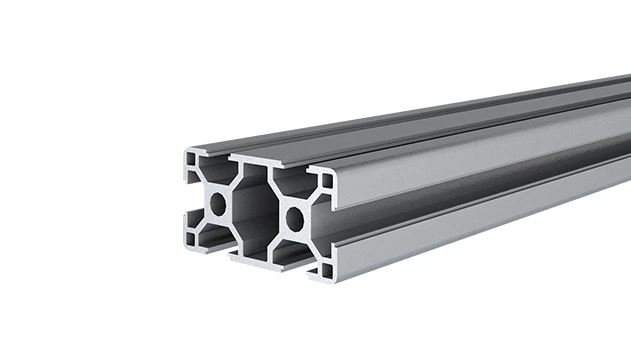
3060 is a 3.00 x 6.00CM fractional 30 series square extrusion T-slot profile with four open T-slots, two side with 3.00cm face, two side with 6.0cm face. The profile has align-a-grooves to assist in aligning connecting profiles.
It's a Tuesday morning in a bustling e-commerce fulfillment center. The clock hits 9 AM, and the first wave of orders floods the system. Workers rush to pick items from towering racks, pushing carts that creak under the weight of boxes. In one corner, a picker pauses, frustration creasing their brow—an item has jammed in the flow rack, slowing down the entire line. Nearby, a supervisor sighs, eyeing the day's targets. "If only we could cut down on these delays," they mutter. Sound familiar? For warehouse managers and operations teams, inefficiencies like these aren't just daily headaches—they're costly. Picking errors, slow material flow, and rigid storage systems can eat into profits, demotivate staff, and even damage customer relationships. But what if there was a solution that didn't just patch the problem, but transformed how your warehouse operates from the ground up? Enter the 3060 EU Standard Aluminum Profile—a quiet game-changer that's redefining what modern warehouses can achieve, especially when paired with flow racks and roller tracks. Let's dive into how this unassuming piece of material science is turning chaotic warehouses into models of lean, efficient productivity.
Understanding the 3060 EU Standard Aluminum Profile: More Than Just Metal
Before we jump into how the 3060 aluminum profile revolutionizes flow racks, let's get to know the star of the show. At first glance, it might look like just another metal bar, but there's a reason it's become a staple in European and global warehouses alike. The "3060" in its name refers to its dimensions: 30 millimeters in width and 60 millimeters in height. Simple enough, right? But those numbers are carefully chosen to strike a balance between strength and versatility—wide enough to support heavy loads, slim enough to fit into tight spaces, and proportioned to work seamlessly with a universe of accessories. What sets the "EU Standard" apart? It's not just a marketing term. EU standards for aluminum profiles (like those set by organizations such as DIN or EN) ensure strict quality control: consistent wall thickness, precise tolerances, and material composition that meets safety and durability benchmarks. This means when you buy a 3060 EU standard profile, you're not getting a generic piece of aluminum—you're getting a component engineered to perform reliably, even in the toughest warehouse environments.
But what's in the metal itself? Most 3060 profiles are made from 6063-T5 aluminum alloy, a material prized for its exceptional combination of strength, corrosion resistance, and workability. Unlike brittle steel or heavy iron, 6063-T5 aluminum is lightweight—about a third the weight of steel—yet surprisingly strong. It's also naturally resistant to rust and corrosion, thanks to a thin oxide layer that forms on its surface, protecting it from moisture, chemicals, and the wear and tear of daily use. This makes it ideal for warehouses where humidity, spills, or temperature fluctuations are common (think food storage, pharmaceutical facilities, or even outdoor loading docks). And because it's anodized—a process that thickens that oxide layer—the profile gains an extra layer of protection, along with a smooth, professional finish that resists scratches and fading. In short, this isn't just aluminum—it's aluminum built to last.
Another key feature of the 3060 EU profile is its T-slot design. Run your hand along its length, and you'll notice long, narrow grooves (or "slots") along its sides. These slots are the secret to its versatility. They allow you to attach accessories—like brackets, roller tracks, casters, or even shelves—without drilling holes or welding. Just slide a bolt or connector into the slot, tighten it, and you're done. Need to reconfigure your flow rack next month? No problem—loosen the bolts, adjust the accessories, and tighten again. This modularity is a far cry from traditional materials like wood or steel, which require permanent modifications that are time-consuming and costly to undo. For warehouses that need to adapt to changing inventory, seasonal demand spikes, or new product lines, this flexibility isn't just convenient—it's essential.
Why Aluminum Profiles Beat Traditional Materials for Flow Racks
If your warehouse is still using wood, steel, or even plastic for flow racks, you might be wondering: Why switch to aluminum? Let's break it down. Traditional materials have their place, but they often come with trade-offs that hold warehouses back. Wood, for example, is cheap upfront, but it's prone to warping, rotting, or pest infestations. Steel is strong, but it's heavy—making installation a nightmare and reconfiguration nearly impossible without heavy machinery. Plastic is lightweight but lacks the structural integrity to support heavy loads over time. Aluminum profiles, and the 3060 EU standard in particular, solve these problems by offering a rare "have-it-all" package: strength, lightness, durability, and flexibility. To put this in perspective, let's compare the most common materials side by side:
| Feature | Wood | Steel | 3060 EU Aluminum Profile |
|---|---|---|---|
| Weight (per meter) | ~2-5 kg (varies by type) | ~8-12 kg (mild steel) | ~1.2-1.8 kg (6063-T5 alloy) |
| Corrosion Resistance | Poor (prone to rot, mold) | Needs coating (rusts without paint) | Excellent (natural oxide layer + anodization) |
| Load Capacity | Low to moderate (depends on thickness) | High (but heavy, hard to maneuver) | High (supports 50-100 kg/m without bending) |
| Customization | Limited (requires cutting, drilling; permanent) | Limited (welding/drilling needed; hard to modify) | Unlimited (T-slots allow tool-free accessory attachment) |
| Longevity | 5-10 years (with maintenance) | 15-20 years (with regular painting) | 20+ years (minimal maintenance) |
| Sustainability | Renewable but requires deforestation | Recyclable but high energy to produce | 100% recyclable, low energy to recycle |
The numbers speak for themselves. Aluminum profiles are lighter than steel, stronger than wood, and more customizable than both. But beyond the stats, there's a practical difference in how they feel to work with. Imagine installing a new flow rack section with steel: you'd need a team of workers, maybe a forklift, and hours of welding or bolting. With 3060 aluminum profiles? Two people can carry the materials, assemble the frame using simple hand tools, and have the rack up and running in an afternoon. That's not just time saved—that's labor costs reduced, downtime minimized, and the ability to respond quickly to urgent needs (like a sudden influx of orders before the holiday season).
Another hidden benefit? Aluminum's thermal conductivity. In warehouses with temperature-controlled zones (like those storing electronics or pharmaceuticals), steel can conduct heat or cold, making it harder to maintain stable conditions. Aluminum, while still conductive, can be paired with insulating accessories or anodized finishes to mitigate this, helping keep energy costs in check. And let's not forget about safety. Steel racks can develop sharp edges over time, and wood can splinter—both hazards for workers handling items. Aluminum profiles , with their smooth, anodized surfaces and rounded edges (a common feature in EU standard designs), reduce the risk of cuts and scrapes. Plus, their lightweight nature means fewer workplace injuries from lifting heavy components during installation or reconfiguration. When you add it all up, the 3060 aluminum profile isn't just a material upgrade—it's a safety, cost, and efficiency upgrade rolled into one.

Flow Racks and the 3060 Profile: A Match Made for Material Flow
Now that we understand what makes the 3060 EU standard aluminum profile special, let's talk about how it pairs with flow racks—the dynamic duo that's transforming material handling. Flow racks (also called gravity flow racks) are designed to let items "flow" from the back to the front using gravity, eliminating the need for workers to reach deep into shelves or climb ladders. They're a staple in order picking, kitting, and assembly lines, where speed and accuracy are critical. But here's the thing: a flow rack is only as good as its frame. If the frame is flimsy, the rollers jam. If it's too heavy, reconfiguring it is a nightmare. If it's not customizable, you can't adapt to different product sizes. That's where the 3060 aluminum profile steps in as the perfect backbone.
Let's start with structure. A typical flow rack consists of vertical uprights, horizontal beams, and inclined roller tracks that carry the products. The vertical uprights need to support the weight of the beams, the roller tracks, and the items on the rack—sometimes hundreds of kilograms. The 3060 profile's 60mm height gives it exceptional vertical strength, while its 30mm width provides stability against lateral (side-to-side) movement. This means you can load up the rack with heavy items—think automotive parts, large electronics, or bulk retail goods—without worrying about the frame bending or wobbling. And because the profile is hollow (another weight-saving feature), it reduces the overall mass of the rack without sacrificing strength. This is especially important for multi-level flow racks, where the upper levels need to be light enough to avoid overloading the floor or foundation.
But the real magic happens with the roller tracks. Roller tracks (another key keyword from our list) are the "conveyor belt" of the flow rack, using wheels or balls to let items glide forward as the front items are picked. To work well, these tracks need to be precisely aligned, securely attached, and adjustable to different angles (since the incline determines how fast items flow). The 3060 profile's T-slots make attaching roller tracks a breeze. Most roller track systems come with brackets or placon mounts (like the "roller track placon mount for aluminum profile flat" from our keyword list) that slide into the T-slots and lock in place with a hex key. No drilling, no welding—just a secure, tool-free connection. And if you need to adjust the angle of the track (say, to slow down delicate items or speed up heavy ones), you can simply loosen the brackets, tilt the track, and retighten. This level of adjustability is a game-changer for warehouses dealing with a mix of product sizes and weights. Imagine a cosmetics warehouse: small, lightweight lipstick boxes need a gentle incline to avoid jamming, while larger skincare kits might need a steeper angle to flow properly. With a 3060-based flow rack, you can set each track to its ideal angle in minutes, not hours.
Another advantage is scalability. As your business grows, you might need to add more levels to your flow rack or extend its length. With traditional steel racks, this often means buying a whole new section and welding it on. With 3060 aluminum profiles, you can simply add more uprights and beams using compatible joints (like the "internal rotatary aluminum joint" or "multi-angle fixed aluminum joint"). These joints are designed to connect profiles at 90°, 45°, or even custom angles, letting you build up, out, or around obstacles with ease. For example, if you need to add a third level to a rack to accommodate seasonal inventory, you can do it without disrupting the existing structure—just attach new vertical 3060 profiles to the base, add horizontal beams, and install fresh roller tracks. It's modularity at its finest, ensuring your flow rack grows with your business, not against it.
Lean Systems: How 3060 Profiles Support Continuous Improvement
If you've spent any time in warehouse management, you've probably heard of "lean systems"—the philosophy of minimizing waste while maximizing value. Lean isn't just a buzzword; it's a mindset that drives everything from how you arrange your racks to how you train your staff. And the 3060 EU standard aluminum profile is a lean enthusiast's dream tool. Let's break down how it supports key lean principles like "just-in-time" (JIT) production, "5S" (sort, set in order, shine, standardize, sustain), and waste reduction.
First, JIT production. The goal here is to have materials arrive exactly when they're needed, reducing inventory storage costs and waste. For this to work, your material handling system needs to be responsive—able to quickly adapt to changes in production schedules or supplier deliveries. 3060 aluminum flow racks excel here because they're easy to reconfigure. Suppose your assembly line switches from producing Product A to Product B, which has different dimensions. With a steel rack, you'd be stuck until you can modify the shelves or buy new ones. With a 3060-based rack, you can adjust the roller tracks, add dividers, or even change the rack's height to fit Product B in minutes. This means less time waiting for materials and more time producing goods—exactly what JIT is all about.
Then there's 5S, a cornerstone of lean systems. "Set in order" (the second S) emphasizes organizing the workplace so everything has a place and is in its place. A disorganized warehouse wastes time as workers hunt for tools or materials. The 3060 profile's modularity makes "set in order" achievable. You can build custom workstations (like "workbench E (single deck-without caster)" from the keyword list) using 3060 profiles, attaching tool holders, bins, and even computer mounts directly to the T-slots. This keeps tools within arm's reach, reducing motion waste (another lean no-no). For example, an assembly workstation could have a 3060 frame with a roller track feeding parts to the operator, a shelf above for tools, and a bin below for waste—all organized in a logical, efficient flow. And because the profile is lightweight, you can even add casters (using "caster installation base" accessories) to make the workstation mobile, letting you move it to where the work is instead of making workers move to the workstation. That's "set in order" taken to the next level.
Waste reduction is another area where the 3060 profile shines. In lean terms, waste includes overproduction, waiting, defects, and unused talent. Let's tackle defects first: jams in flow racks are a common source of defects (items get damaged when they jam, or picking errors occur when workers rush to unjam the rack). The 3060 profile's precise tolerances and smooth roller track attachments reduce jams by ensuring the tracks are level and stable. Add in high-quality roller track components (like "swivel roller balls 1 inch" or "plastic roller track guide rail yellow"), and you've got a system that moves items smoothly, minimizing damage. Waiting waste is reduced by the profile's quick assembly and reconfiguration—no more waiting days for a new rack to be installed. And overproduction? When your storage system is flexible, you're less likely to overstock items "just in case," because you know you can adjust your racks to fit more inventory if needed. Even unused talent is addressed: because the 3060 system is so easy to use, workers can suggest and implement small improvements (like rearranging a roller track) without needing to involve engineers or managers, empowering them to take ownership of their workspace.
Perhaps the most powerful lean benefit of the 3060 profile is its support for "continuous improvement." Lean isn't a one-and-done project; it's about constantly finding ways to get better. With traditional rigid systems, trying out a new layout or process can be risky—if it doesn't work, you've wasted time and money. With the 3060 profile, experimentation is low-risk. Want to test a new U-shaped picking path? Disassemble a few racks, rearrange the profiles, and see how it goes. If it works, keep it; if not, put it back in an hour. This culture of experimentation leads to breakthroughs that rigid systems would never allow. One warehouse we worked with, for example, used 3060 profiles to build a temporary "test rack" for a new product line. They ran it for a week, identified bottlenecks, adjusted the roller track angles and shelf heights, and then scaled the design for their main facility—all without disrupting their regular operations. That's the power of a system that grows with your ideas, not against them.
Essential Accessories: Elevating Your 3060 Flow Rack System
A 3060 EU standard aluminum profile is a fantastic foundation, but it's the accessories that turn a basic frame into a fully functional, tailored solution. Think of it like building a house: the walls (profiles) give it structure, but the doors, windows, and fixtures make it livable. When it comes to flow racks, the right accessories can enhance safety, boost efficiency, and extend the system's lifespan. Let's explore some of the most essential ones from our keyword list, and how they work with the 3060 profile to create a seamless workflow.
Joints and Connectors: The Glue That Holds It All Together
No modular system works without reliable joints, and the 3060 profile has a wide range to choose from. The "internal rotatary aluminum joint" is a standout: it allows two profiles to connect at any angle (from 0° to 180°) and lock in place, making it perfect for building diagonal supports or custom-shaped racks. For example, if you need a flow rack that wraps around a pillar in the warehouse, internal rotatary joints let you bend the frame around the obstacle without cutting the profiles. Then there's the "90° aluminum pipe joint inside connection," which creates a clean, flush corner between two profiles—ideal for vertical uprights and horizontal beams where space is tight. These joints are made from the same 6063-T5 aluminum as the profiles, ensuring they match in strength and corrosion resistance, and they attach using set screws that tighten into the T-slots, creating a secure, rattle-free connection. Unlike plastic joints (which can wear out over time) or steel joints (which add weight), aluminum joints are lightweight, durable, and designed to last as long as the profiles themselves.
Roller Tracks and Guides: Keeping Items Moving Smoothly
We've touched on roller tracks, but let's dive deeper into the accessories that make them perform. The "roller track placon mount for aluminum profile high" is a must-have for taller flow racks: it raises the roller track off the profile, creating space underneath for bins or tools. The "roller track placon mount center support bracket" adds stability to long roller tracks, preventing sagging in the middle (which can cause jams). For warehouses with ESD (electrostatic discharge) concerns (like those handling electronics), "40 steel roller track black ESD wheel" tracks are essential—they dissipate static electricity, protecting sensitive components from damage. And let's not forget guides: "plastic roller track guide rail grey" or "aluminum guide rail A" attach to the sides of the roller tracks, keeping items centered and preventing them from falling off the edges. This is especially useful for irregularly shaped items, like boxes with handles or rounded edges. One warehouse we consulted for was struggling with small parts (like screws and washers) falling through the gaps in their roller tracks—adding "swivel roller balls 0.5 inch" (smaller diameter balls) and "aluminum guide rail B" solved the problem in a day, saving them thousands in lost inventory.
Casters and Leveling Feet: Mobility and Stability
Not all flow racks need to be stationary. Sometimes you need a mobile unit for kitting (assembling components) or for temporary storage during peak seasons. That's where casters come in. "Flat swivel castor wheel with brake" accessories attach to the base of 3060 profile frames using "caster installation base" plates, turning a static rack into a mobile cart. The swivel feature lets you maneuver tight corners, and the brake ensures the cart stays put when in use. For stationary racks, "adjustable leveling feet" (like "M10*56 rubber leveling feet") are essential. They screw into the bottom of the 3060 uprights, letting you level the rack on uneven floors—critical for preventing roller tracks from tilting and causing jams. The rubber base also dampens vibrations (from nearby forklifts, for example) and protects the warehouse floor from scratches. One distribution center we worked with had a problem with their flow racks "walking" across the floor during busy periods (vibrations from constant picking caused them to slowly shift). Adding heavy-duty leveling feet with rubber pads solved the issue, keeping the racks stable and the floors intact.
End Caps and Protectors: Safety and Longevity
Small details can make a big difference in safety and maintenance. "3060 aluminum profile end cap" accessories snap onto the ends of the profiles, covering the open T-slots and preventing dust, debris, or small items from getting stuck inside. They also give the rack a clean, finished look and eliminate sharp edges (another win for worker safety). For profiles used in high-traffic areas (like near loading docks), "aluminum side guard" accessories attach to the sides of the rack, protecting the profiles from bumps and scrapes from forklifts or pallet jacks. These guards are made from thick, anodized aluminum and bolt into the T-slots, absorbing impacts and extending the life of the rack. Even something as simple as "plastic pipe cover" for exposed joints can prevent workers from catching their sleeves or gloves, reducing the risk of accidents. These small accessories might seem trivial, but they add up to a safer, more durable, and more professional-looking system.
Real-World Success: How Companies Are Using 3060 Profiles to Transform Their Warehouses
Enough theory—let's look at how real businesses are using 3060 EU standard aluminum profiles to solve real problems. Take "AutoParts Inc.," a mid-sized automotive parts distributor in Germany. Before switching to 3060-based flow racks, their warehouse struggled with two major issues: slow picking times (workers had to walk long distances to reach parts) and frequent jams in their steel flow racks (due to heavy, oily parts sticking to the rollers). Their solution? They replaced their steel racks with 3060 aluminum frames, added "85 steel roller track" with "black ESD wheels" (to handle the oil and static from metal parts), and installed mobile workstations (built with "workbench E (single deck-without caster)" frames) near the racks. The results? Picking times dropped by 28% because workers could access parts from the mobile workstations, and jams decreased by 90% thanks to the smooth-rolling ESD wheels and adjustable track angles. They also saved €15,000 in annual labor costs by reducing the need for maintenance on jammed racks.
Another example is "BeautyBox Fulfillment," an e-commerce company in France specializing in cosmetics. They needed a system that could handle small, fragile items (like perfume bottles) and large, bulky ones (like gift sets) on the same rack. Their old wood flow racks were prone to splintering, and the fixed shelves couldn't accommodate different product heights. After installing 3060 aluminum flow racks with "38 aluminum roller track yellow with wheel flange" (the flanges prevent small bottles from tipping) and "mini aluminum roller track black" for tiny items like lip gloss, they saw a 40% reduction in damaged goods. They also added "internal rotatary aluminum joints" to create angled sections, letting them fit more products in the same space. Best of all, when they launched a new line of skincare products with larger packaging, they simply adjusted the roller tracks and added a new level using extra 3060 profiles—no need to buy a new rack.
Even non-traditional warehouses are benefiting. "GreenGrocers," a fresh produce distributor in the UK, needed flow racks that could withstand humidity and frequent cleaning (to comply with food safety regulations). Steel racks were rusting, and wood was absorbing moisture and harboring bacteria. They turned to 3060 aluminum profiles with "stainless steel swivel roller balls 1 inch" (stainless steel resists corrosion from water and cleaning chemicals) and "aluminum honeycomb panel" shelves (for storing bulk produce). The aluminum frames are easy to wipe down, the stainless steel rollers don't rust, and the modular design lets them rearrange the racks daily to accommodate different fruits and vegetables (berries need shallow tracks, while melons need deeper ones). As a result, they've reduced food waste by 15% (less bruising from jams) and passed their food safety audits with zero issues.
Installation and Maintenance Tips: Getting the Most Out of Your 3060 System
You've decided to invest in 3060 EU standard aluminum profiles for your flow racks—great choice! Now, how do you ensure you get the best results? Let's start with installation. First, plan your layout carefully. Use warehouse layout software or even sketch it on paper, marking where the flow racks will go, how wide they'll be, and how many levels you need. Measure twice, cut once (though with aluminum profiles, you can often buy pre-cut lengths from suppliers to save time). When assembling the frame, start with the base: connect the vertical uprights to the horizontal beams using 90° joints, ensuring the frame is square (use a level to check). Tighten the joints just enough to hold the frame steady—you can fully tighten them once the frame is level. Next, attach the roller tracks: slide the placon mounts into the T-slots, position the tracks at the desired angle (usually 5-10° for most items), and tighten the mounts. Test the flow with a few sample items—if they move too fast, reduce the angle; if they're too slow, increase it. Finally, add accessories like end caps, guides, and casters, and label the racks for easy picking.
Maintenance is surprisingly simple with 3060 aluminum profiles. Weekly, inspect the joints and roller tracks for looseness—tighten any set screws that have come loose (a quick turn with a hex key is all it takes). Wipe down the profiles and tracks with a damp cloth to remove dust and debris (this is especially important for ESD systems, where dust can affect conductivity). Every month, check the roller wheels for wear—replace any that are cracked or sticking (most suppliers sell replacement wheels individually, so you don't need to buy a whole new track). For warehouses in humid or corrosive environments, an annual coat of anti-corrosion spray (compatible with anodized aluminum) can extend the profile's life. And if you need to reconfigure the system, take photos of the original layout first—this makes it easier to put it back if the new layout doesn't work. One pro tip: keep a small toolkit on hand with hex keys, a level, and replacement joints/rollers—this lets you fix minor issues on the spot before they become big problems.
Conclusion: The 3060 Profile—Your Warehouse's Foundation for the Future
In a world where warehouses are under constant pressure to do more with less—faster shipping, lower costs, higher accuracy—the 3060 EU standard aluminum profile isn't just a material choice; it's a strategic investment. It's the quiet hero that turns chaotic picking floors into models of efficiency, rigid storage systems into flexible hubs, and frustrated workers into empowered problem-solvers. Whether you're running a small e-commerce fulfillment center or a large manufacturing plant, the 3060 profile's strength, versatility, and lean-friendly design make it the ideal foundation for flow racks, roller tracks, and workstations that grow with your business. It's not just about metal and joints—it's about creating a warehouse that adapts, improves, and thrives in an ever-changing market. So, the next time you walk through your warehouse and see a jammed flow rack or a worker struggling with a heavy cart, remember: there's a better way. And it starts with a simple, 30mm x 60mm piece of aluminum that's changing the game, one pick at a time.