- Company Articles
- Products and Technology
- Product knowledge
- 3060 EU Standard Aluminum Profile for Textile Machinery: Durability in Continuous Use

3060 EU Standard Aluminum Profile for Textile Machinery: Durability in Continuous Use
Related Product
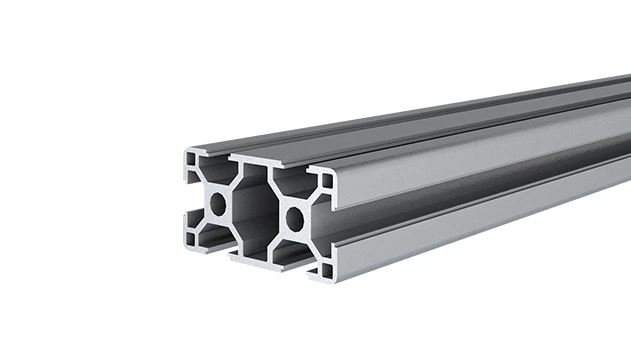
3060 EU Standard Aluminum Profile
3060 is a 3.00 x 6.00CM fractional 30 series square extrusion T-slot profile with four open T-slots, two side with 3.00cm face, two side with 6.0cm face. The profile has align-a-grooves to assist in aligning connecting profiles.
In the fast-paced world of textile manufacturing, where machines hum around the clock and every second counts, the reliability of equipment components isn't just a luxury—it's the backbone of productivity. Textile machinery, from spinning frames to weaving looms, operates under relentless conditions: constant vibration, varying loads, and the need to adapt to ever-changing production demands. At the heart of many of these machines lies a component that often goes unnoticed but plays a critical role in their performance: aluminum profiles. And among the myriad options available, the 3060 EU standard aluminum profile stands out as a workhorse, designed to thrive in the chaos of continuous industrial use.
The Unseen Hero: Why Aluminum Profiles Matter in Textile Machinery
Before diving into the specifics of the 3060 EU standard profile, let's take a step back. Textile manufacturers don't just need machinery that works—they need machinery that works consistently . A single breakdown can disrupt an entire production line, leading to missed deadlines, wasted materials, and frustrated teams. This is where aluminum profiles come in. Unlike traditional steel structures, which are heavy and prone to rust, aluminum profiles offer a unique blend of strength, lightness, and versatility. They're the building blocks for everything from machine frames and workbenches to material racks and conveyor systems, providing the structural integrity needed without weighing operations down.
But not all aluminum profiles are created equal. The EU standard profiles, in particular, are engineered to strict quality benchmarks, ensuring uniformity, durability, and compatibility across components. For textile machinery, which often requires custom configurations (think adjustable workbenches or modular material racks), this compatibility is a game-changer. It means manufacturers can adapt and reconfigure their setups without overhauling entire systems—a flexibility that's invaluable in an industry where production needs shift with trends and demand.
Meet the 3060 EU Standard Aluminum Profile: A Profile Built for the Long Haul
Quick Facts: The 3060 EU standard aluminum profile gets its name from its dimensions: 30mm in width and 60mm in height. It's part of a broader family of aluminum extrusion profiles, each tailored to specific load and space requirements. What makes the 3060 stand out? Its balance of size, strength, and weight, making it ideal for medium-to-heavy-duty applications in textile machinery.
1. Dimensions That Deliver: Why 30mm x 60mm?
At first glance, those numbers might seem arbitrary, but they're anything but. Textile machinery components like workbenches and material racks need to support significant weight—think spools of fabric, bundles of yarn, or heavy tools—while still allowing for easy movement and adjustment. The 3060 profile's width and height strike a sweet spot: it's narrow enough to fit into tight machine layouts but tall enough to provide the vertical strength needed to resist bending under load. This makes it a popular choice for building frames that hold everything from control panels to roller tracks, where stability is non-negotiable.
2. Aluminum Extrusion Profile: Strength from Precision Engineering
The 3060 EU profile is an aluminum extrusion profile, meaning it's formed by pushing heated aluminum through a die to create its specific cross-sectional shape. This process isn't just efficient—it results in a material with uniform density and structural integrity. Unlike cast aluminum, which can have weak spots, extruded profiles are consistent from end to end, ensuring that every inch of the 3060 profile can handle the same level of stress. For textile machinery, which vibrates constantly during operation, this uniformity is critical. It reduces the risk of fatigue cracks or sudden failures, even after years of non-stop use.
3. The T6 Temper: Heat-Treated for Hard-Wearing Performance
Strength isn't just about size—it's about how the material is treated. Most high-quality 3060 EU profiles undergo a T6 heat treatment, a process that involves solution annealing (heating the aluminum to a specific temperature) followed by quenching and artificial aging. This transforms the metal's microstructure, increasing its hardness and tensile strength. The result? A profile that can withstand not just static loads (like a stack of fabric on a workbench) but also dynamic stresses, such as the constant movement of roller tracks or the vibration of spinning machinery. In textile plants, where machines run 24/7, this heat-treated resilience is the difference between a profile that lasts 2 years and one that lasts 10.

Beyond the Profile: Aluminum Profile Accessories That Complete the Package
A profile is only as good as the accessories that connect it. The 3060 EU standard doesn't exist in a vacuum—it's part of an ecosystem of aluminum profile accessories designed to make assembly, adjustment, and maintenance as seamless as possible. Let's break down a few key players:
- Connectors and Joints: From 90° aluminum profile connectors that lock profiles at right angles to gusset plates (like the gusset alp 3030) that reinforce corners, these accessories ensure that joints stay tight even under stress. In textile machinery, where vibrations can loosen fasteners over time, robust connectors are essential for preventing structural wobble.
- End Caps and Covers: These small but mighty components seal the ends of profiles, preventing dust, lint, and moisture from entering—all common hazards in textile environments. Lint, in particular, is a silent enemy; it can build up inside unprotected profiles, causing corrosion or jamming moving parts. End caps keep the profile clean and extend its lifespan.
- Adjustable Feet and Casters: For workbenches or mobile material racks, adjustable feet (like anti-slip leveling feet) keep the structure stable on uneven factory floors, while casters allow for easy repositioning. In textile plants, where layouts change to accommodate new orders, this mobility is a lifesaver.
Together, these accessories turn the 3060 profile from a standalone component into a modular system—one that can be customized, expanded, or reconfigured with minimal downtime. For example, a manufacturer might start with a simple workbench using 3060 profiles and later add a roller track (using aluminum guide rails) to feed materials directly to the bench, all without replacing the original frame. This adaptability is why the 3060 EU standard is a favorite among textile engineers: it grows with the business.
How Does 3060 Stack Up Against Other Profiles? A Real-World Comparison
To truly appreciate the 3060 EU profile, it helps to see how it compares to other common aluminum profiles used in textile machinery. Below is a breakdown of key specs and use cases:
| Profile Type | Dimensions (W x H) | Max Load Capacity (kg/m) | Weight (kg/m) | Best For |
|---|---|---|---|---|
| 2020 EU Standard | 20mm x 20mm | 50-80 | 0.7-0.9 | Light-duty components (e.g., small tool holders, cable management) |
| 3030 EU Standard | 30mm x 30mm | 150-200 | 1.2-1.5 | Medium loads (e.g., small workbenches, light material racks) |
| 3060 EU Standard | 30mm x 60mm | 300-400 | 2.0-2.3 | Heavy loads + flexibility (e.g., large workbenches, machine frames, roller track supports) |
| 4040 EU Standard | 40mm x 40mm | 250-350 | 1.8-2.1 | High stability, limited space (e.g., fixed machine bases) |
As the table shows, the 3060 profile outperforms smaller profiles like the 2020 and 3030 in load capacity, making it suitable for heavier tasks. While the 4040 profile is strong, its square shape can be less space-efficient than the 3060's rectangular design, which fits better in tight machine layouts. For textile machinery, which often requires both strength and adaptability, the 3060 hits the mark.
Real-World Toughness: 3060 in Action at a Textile Plant
Let's paint a picture: Imagine a mid-sized textile factory in Portugal, producing knitwear for fast-fashion brands. Their production floor is a hive of activity: rows of knitting machines, workers manning workbenches to inspect finished products, and conveyor belts ferrying spools of yarn from storage to the machines. At the center of it all is a modular material rack system built with 3060 EU profiles and aluminum profile accessories.
This rack, designed to hold 3-row, 3-floor stacks of yarn spools (each spool weighing 5-10kg), operates 18 hours a day. Workers load and unload it constantly, pushing and pulling heavy carts that bump against its frame. The environment is humid (to prevent yarn from drying out), and lint floats in the air, settling on every surface. After three years of this abuse, what does the rack look like? The 3060 profiles show minimal signs of wear—no rust, no bending, and the connectors still lock tight. The only maintenance needed? A quick wipe-down to remove lint and occasional tightening of a loose joint. Compare that to the steel racks the factory used previously, which rusted within two years and required frequent repainting. The switch to 3060 profiles cut maintenance costs by 40% and reduced downtime due to rack failures to zero.
This isn't an isolated case. Across Europe, textile manufacturers are swapping out older, bulkier materials for 3060 EU profiles, citing not just durability but also efficiency . Because the profiles are lightweight, they're easier to install and reconfigure—when the factory needed to expand production last year, they added two more levels to the material rack in a single day, using only basic tools and extra 3060 sections and connectors. No welding, no heavy lifting, no disruption to the rest of the line.
Why EU Standards? Trust, Consistency, and Peace of Mind
You might be wondering: Why focus on "EU standard" profiles? In short, it's about trust. EU standards (EN 755, for example) set strict guidelines for aluminum extrusion profiles, covering everything from dimensional accuracy to mechanical properties. When a manufacturer buys a 3060 profile labeled "EU standard," they know it will match the specs on the datasheet—no surprises. This consistency is crucial when building complex machinery, where even a 1mm discrepancy in profile size can throw off an entire assembly.
EU standards also mandate rigorous testing. Profiles are checked for things like tensile strength, yield strength, and corrosion resistance, ensuring they meet the demands of industrial environments. For textile manufacturers, who operate on tight margins, this reliability reduces the risk of costly mistakes. They don't have to worry about whether a batch of profiles will underperform—they can focus on making great textiles.
The Future-Proof Choice: Why 3060 Makes Sense for Tomorrow's Textile Industry
The textile industry is evolving. Fast fashion demands shorter production cycles, and sustainability is no longer a buzzword but a business imperative. Aluminum profiles align with both trends. Their modularity allows manufacturers to adapt quickly to changing production needs, reducing waste from overbuilding. And aluminum is 100% recyclable, with no loss in quality—when a profile finally reaches the end of its life (which, with 3060, is decades down the line), it can be melted down and repurposed, aligning with circular economy goals.
Moreover, as textile machinery becomes more automated (think AI-powered quality control or robotic material handling), the need for precise, stable structures will only grow. The 3060 EU profile, with its consistent dimensions and high load capacity, provides the stable base these advanced systems require. It's not just a profile for today—it's a profile built to support the factories of tomorrow.
Final Thoughts: The 3060 EU Profile—More Than Metal, It's a Partner
In the end, the 3060 EU standard aluminum extrusion profile isn't just a piece of metal. It's a partner in productivity, a silent guardian against downtime, and a tool for innovation. For textile manufacturers, who face the daily challenge of balancing speed, quality, and cost, it's a choice that pays dividends—today, tomorrow, and for years to come. So the next time you walk through a textile plant, take a closer look at those unassuming aluminum frames. Chances are, they're 3060 EU profiles—quietly keeping the world clothed, one durable, reliable component at a time.