- Company Articles
- Products and Technology
- Product knowledge
- 3060 EU Standard Aluminum Profile in 3C Assembly Lines: Precision & Stability Advantages

3060 EU Standard Aluminum Profile in 3C Assembly Lines: Precision & Stability Advantages
Related Product
3060 EU Standard Aluminum Profile
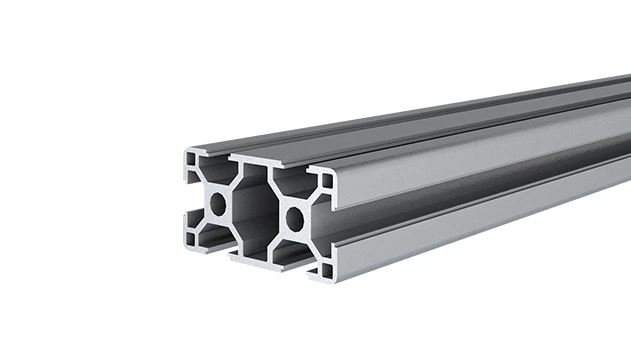
3060 is a 3.00 x 6.00CM fractional 30 series square extrusion T-slot profile with four open T-slots, two side with 3.00cm face, two side with 6.0cm face. The profile has align-a-grooves to assist in aligning connecting profiles.
Walk into any modern 3C manufacturing facility—where smartphones, laptops, and wearables come to life—and you'll notice a quiet hero working behind the scenes: the assembly line infrastructure. These lines don't just move parts from point A to B; they're the backbone of precision, speed, and adaptability. In an industry where a fraction of a millimeter can mean the difference between a flawless product and a costly recall, manufacturers are constantly seeking tools that balance rigidity with flexibility. Enter the 3060 EU Standard Aluminum Profile—a workhorse that's redefining what's possible in 3C assembly. Let's dive into why this unassuming piece of aluminum extrusion has become a game-changer for teams aiming to build better, faster, and smarter.
The 3C Industry's Hidden Challenge: Balancing Speed, Precision, and Change
3C products—computers, communications, and consumer electronics—are notoriously demanding. Think about the last smartphone you held: its slim design, intricate internal components, and seamless functionality are the result of thousands of precise steps. But here's the catch: 3C manufacturers don't just build one product. They churn out new models yearly, if not quarterly. A factory assembling the latest flagship phone might need to retool its lines entirely six months later for a mid-range device. This constant change is the industry's biggest headache.
Traditional assembly setups often struggle with this. Heavy steel frames are durable but hard to modify; plastic components lack the strength for long-term use; and generic workbenches can't adapt to new part sizes or workflows. What manufacturers need is a system that's precise enough to handle tiny components, stable enough to support round-the-clock production, and flexible enough to reconfigure in days, not weeks. That's where the 3060 EU Standard Aluminum Profile steps in.
What Makes 3060 Aluminum Profile Stand Out? A Closer Look
First, let's get familiar with the basics. The "3060" in its name refers to its cross-sectional dimensions: 30mm in width and 60mm in height. It's part of the EU standard aluminum extrusion profile family, which is known for strict manufacturing tolerances and consistent quality. But numbers alone don't tell the story. What makes this profile a star in 3C lines is how it marries three critical traits: precision engineering, structural stability, and modular versatility.
Quick Fact: Aluminum extrusion is a process where heated aluminum billets are pushed through a die to create uniform shapes. For 3060 profiles, this process achieves tolerances as tight as ±0.1mm—smaller than the thickness of a human hair. That precision ensures every piece fits together perfectly, no matter how many times you reconfigure your setup.

Precision: When "Good Enough" Isn't Enough for 3C
In 3C assembly, precision isn't a luxury—it's survival. Imagine assembling a laptop motherboard: components like microchips and capacitors are smaller than your fingernail, and misalignment by even 0.5mm can render the board useless. The workbenches, flow racks, and tool holders that support these tasks must be built to the same exacting standards.
3060 aluminum profiles excel here, thanks to their extrusion process. Unlike cut or welded metal, extruded profiles have consistent wall thickness and straight edges. This means when you attach a bracket to a 3060 rail, it sits flush. When you build a workbench frame, the legs are perfectly parallel. When you install a flow rack for small components, the rollers align evenly, so parts glide smoothly without jamming.
Take, for example, a smartphone screen assembly station. The screen itself is delicate, and any vibration or wobble in the workbench could lead to cracks or misaligned adhesives. A frame built with 3060 profiles ensures the work surface stays level and stable, even when operators are working at full speed. The tight tolerances also mean that accessories—like adjustable tool trays or ESD wristband holders—fit without gaps, reducing the risk of tools slipping or static damage.
Stability: The Unsung Hero of High-Volume Production
3C assembly lines run 24/7. That means the infrastructure supporting them must handle constant use, heavy loads, and occasional bumps without bending, warping, or failing. Aluminum might not seem as "tough" as steel, but 3060 profiles leverage aluminum's unique strength-to-weight ratio to deliver impressive stability.
Aluminum has a modulus of elasticity of about 69 GPa—lower than steel, but when combined with the 3060's design (taller height for vertical strength, wider base for lateral stability), it becomes remarkably rigid. A typical 3060 profile can support up to 150 kg per linear meter when properly mounted—more than enough for most 3C applications, where workbenches hold tools, components, and semi-assembled products.
Consider a flow rack used to transport battery packs for tablets. These racks need to tilt slightly to let gravity move the packs along roller tracks, but they can't sag under the weight of 50+ batteries. A 3060 frame ensures the rack maintains its angle consistently, so each battery moves at the same speed, preventing bottlenecks downstream. Even after months of use, the aluminum doesn't fatigue, meaning less maintenance and fewer production stops.
Versatility Through Aluminum Profile Accessories: Build What You Need, When You Need It
A profile is only as good as the accessories that bring it to life. The 3060 system shines here, thanks to a vast ecosystem of aluminum profile accessories—brackets, connectors, end caps, hinges, and more. These accessories turn raw profiles into custom workbenches, flow racks, material carts, and even automated guided vehicle (AGV) tracks. What's better? Most of these connections require no welding or drilling—just bolts, T-slot nuts, and a hex key. That means a team can reconfigure a workstation in an afternoon, not a week.
Let's break down some key accessories and how they enhance 3060's utility in 3C lines:
- T-slot Nuts and Bolts: These slide into the 3060's T-shaped grooves, letting you attach accessories anywhere along the profile. Need to move a tool holder 10cm to the left? Just loosen the bolt, slide, and retighten.
- Angle Brackets: Perfect for joining profiles at 90° angles—essential for building workbench frames or flow rack sides. They come in various sizes to match different load needs.
- Roller Track Guides: Attach these to 3060 profiles to create custom flow racks. In 3C lines, these racks move small parts (like camera lenses or charging ports) from storage to assembly stations smoothly.
- Adjustable Feet: Level workbenches on uneven factory floors, ensuring stability even in less-than-ideal environments.
This modularity is a lifesaver for 3C manufacturers. When a new product launch requires a taller workbench, you don't buy a new one—you add extension profiles. When a component size changes, you swap out the roller track guides for narrower ones. It's like building with industrial-grade Legos, but for adults who need their creations to work 24/7.
3060 vs. Other Profiles: Why It's the Sweet Spot for 3C
The EU standard aluminum profile family includes smaller profiles (like 2020, 3030) and larger ones (like 4040, 4080). So why choose 3060 for 3C? Let's compare using a real-world scenario: building a workbench for smartphone motherboard assembly.
| Profile Type | Cross-Section (WxH mm) | Max Load Capacity (kg/m) | Best For | Limitations in 3C |
|---|---|---|---|---|
| 2020 EU Standard | 20x20 | 50 | Light-duty shelving, small carts | Too narrow; can't support heavy tools or multiple components. |
| 3030 EU Standard | 30x30 | 100 | Small workbenches, test stations | Limited vertical space for mounting accessories (e.g., tool hooks). |
| 3060 EU Standard | 30x60 | 150 | Mid-sized workbenches, flow racks, AGV tracks | None for most 3C tasks; balances load, space, and flexibility. |
| 4040 EU Standard | 40x40 | 200 | Heavy-duty assembly lines, industrial machinery | Overkill for 3C; bulkier and more expensive than needed. |
As the table shows, 3060 hits the "Goldilocks zone." It's wide enough to mount multiple accessories (like a monitor arm and a parts bin) on one side, tall enough to provide vertical stability, and strong enough to handle typical loads—without the bulk of larger profiles. For 3C lines, where space is often tight and every square meter counts, this balance is invaluable.
Real-World Impact: How 3060 Profiles Transform 3C Assembly Lines
Let's step into a hypothetical (but realistic) 3C factory to see 3060 profiles in action. Meet TechNova, a manufacturer producing smartwatches. Last year, they struggled with their assembly line for the "WatchX" model: workbenches were too low, flow racks kept jamming, and reconfiguring for a new strap design took two weeks. Then they switched to 3060 aluminum profiles. Here's what changed:
1. Custom Workbenches for Ergonomics: TechNova's operators complained about back pain from bending over low workbenches. Using 3060 profiles and adjustable feet, the team built height-adjustable workbenches. Now each operator sets their station to elbow height, reducing fatigue and increasing productivity by 12%.
2. Flexible Flow Racks for Component Delivery: WatchX straps come in 12 colors, each needing its own bin. TechNova built flow racks with 3060 frames and color-coded roller tracks. When a new color is added, they simply add a new track section—no welding, no downtime. Stockouts dropped by 30% because components are always within reach.
3. Rapid Reconfiguration for New Models: When TechNova launched the WatchX Lite (a smaller, cheaper version), they needed narrower workbenches and shorter flow racks. Their old steel setup would have required cutting and rewelding, but with 3060, they disassembled the old frames, cut profiles to new lengths (using a simple miter saw), and reassembled—all in three days. That's a 75% reduction in retooling time.
TechNova's story isn't unique. Across the 3C industry, manufacturers are reporting similar wins: faster time-to-market for new products, lower maintenance costs, and happier operators. The 3060 profile doesn't just solve infrastructure problems—it unlocks innovation.
Sustainability: A Bonus for Eco-Conscious 3C Brands
Today's consumers care about the planet, and 3C brands are under pressure to reduce their carbon footprints. Aluminum is inherently sustainable: it's 100% recyclable, and recycling it uses 95% less energy than producing new aluminum. For manufacturers, this means that when a 3060 setup is no longer needed, the profiles can be melted down and reused—no waste.
Compare this to steel, which is heavier (increasing shipping emissions) and harder to recycle, or plastic, which often ends up in landfills. 3060 profiles also have a long lifespan—10+ years in typical use—so brands replace them less frequently, further cutting waste. For companies like Apple or Samsung, which highlight sustainability in their marketing, choosing 3060 aligns with their values and resonates with customers.
Choosing the Right Supplier: What to Look For
Not all 3060 profiles are created equal. To get the precision and stability your 3C line needs, partner with a reputable aluminum extrusion profile supplier. Here are key traits to seek:
- Certifications: Look for suppliers with ISO 9001 (quality management) and ISO 14001 (environmental management) certifications. EU standard compliance is a must—ask for test reports on tolerance and material composition.
- Accessory Range: A good supplier offers not just profiles but the full range of accessories (brackets, rollers, fasteners) to avoid compatibility issues.
- Technical Support: 3C setups can be complex. Choose a supplier that provides design assistance—help with load calculations, assembly drawings, or custom accessory recommendations.
- Lead Times: In 3C, speed matters. Suppliers with local warehouses or short production lead times (2–4 weeks) keep your reconfiguration projects on track.
Conclusion: 3060 Aluminum Profile—The Backbone of Modern 3C Assembly
The 3C industry doesn't stand still, and neither should its infrastructure. The 3060 EU Standard Aluminum Profile isn't just a piece of metal—it's a solution to the industry's biggest challenges: precision for tiny components, stability for nonstop production, and versatility for constant change. When paired with the right aluminum profile accessories, it becomes a blank canvas for innovation, letting manufacturers build, adapt, and grow without limits.
Whether you're assembling the next breakthrough smartphone or scaling up production for a new tablet, 3060 profiles offer something rare in manufacturing: a system that works with your team, not against it. It's no wonder more and more 3C leaders are making the switch. After all, in an industry where every second and every millimeter counts, the right tools can turn good production lines into great ones.