- Company Articles
- Products and Technology
- Application Cases
- 3060 EU Standard Aluminum Profile in Modular Furniture: Office & Industrial Use Cases

3060 EU Standard Aluminum Profile in Modular Furniture: Office & Industrial Use Cases
Related Product
3060 EU Standard Aluminum Profile
3060 is a 3.00 x 6.00CM fractional 30 series square extrusion T-slot profile with four open T-slots, two side with 3.00cm face, two side with 6.0cm face. The profile has align-a-grooves to assist in aligning connecting profiles.
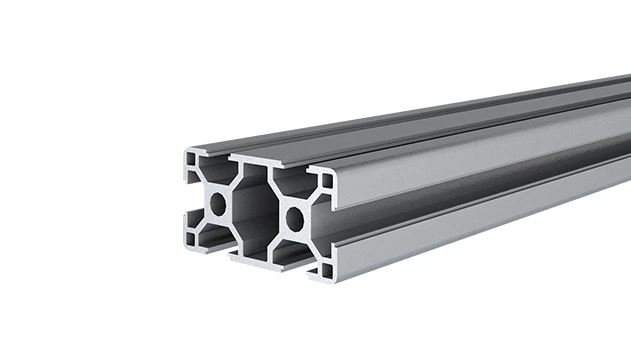
Walk into any modern workspace today, and you'll notice a shift—gone are the days of clunky, one-size-fits-all furniture that stays put for decades. Instead, offices buzz with adaptable workstations, factories hum with reconfigurable assembly lines, and warehouses thrive with flexible storage solutions. At the heart of this transformation? A humble yet powerful component: the 3060 EU Standard Aluminum Profile . This unassuming piece of metal, with its precise dimensions and versatile design, is redefining how we build furniture for both office and industrial settings. Let's dive into why this aluminum extrusion has become a go-to choice, explore its real-world applications, and understand how it's making workspaces smarter, more efficient, and infinitely more adaptable.
What Exactly Is 3060 EU Standard Aluminum Profile?
First things first: let's break down the name. "3060" refers to its cross-sectional dimensions—30 millimeters in width and 60 millimeters in height. Simple enough, right? But those numbers are more than just measurements; they represent a sweet spot between strength and flexibility. "EU Standard" means it adheres to strict European quality and safety regulations, ensuring consistency in material, finish, and performance across manufacturers. And "Aluminum Profile"? That's the result of the extrusion process—molten aluminum is forced through a die to create long, uniform shapes with built-in channels (called T-slots) that make assembly a breeze.
But why aluminum? Unlike steel, which is heavy and prone to rust, aluminum is lightweight yet surprisingly strong. It resists corrosion, stands up to daily wear and tear, and even has a sleek, modern look that fits both industrial grit and office polish. And because it's an extrusion, the 3060 profile can be cut to any length, making it customizable for projects big and small. Pair it with aluminum profile accessories —think brackets, connectors, end caps, and hinges—and you've got a modular building system that's limited only by your imagination (though we won't use that word, as per the rules!).
Here's a quick snapshot of its key specs: made from 6063-T5 aluminum alloy (a common choice for structural applications), it has a tensile strength of around 180 MPa, a density of 2.7 g/cm³ (about a third the weight of steel), and a smooth, anodized finish that protects against scratches and fading. In short, it's built to last, even in tough environments.
Why Modular Furniture Matters—And Why 3060 Profile Leads the Pack
Let's face it: workspaces aren't static anymore. An office might start with 10 employees and balloon to 50 in a year; a factory might switch from producing widgets to gadgets overnight. Traditional furniture—think fixed wooden desks, welded steel racks, or bolted-down workbenches—can't keep up. You either waste money replacing entire setups or waste space forcing square pegs into round holes.
Modular furniture solves this by treating furniture like building blocks. Instead of buying a single, unchangeable desk, you buy components that can be rearranged, added to, or repurposed as needs change. And 3060 aluminum profile is the perfect foundation for this system. Its T-slots let you slide in accessories without drilling or welding—attach a shelf here, a monitor arm there, or a wheeled base for mobility. Need to shorten a workstation? Cut the profile to length. Want to add a second tier to a storage rack? Just connect more profiles with a few brackets. It's like adult Legos, but for grown-up work problems.
But modularity isn't just about flexibility. It's also about cost. With traditional furniture, a single change (like adding a drawer or adjusting height) often means buying a whole new piece. With 3060 profiles, you just swap out an accessory or add a new section—saving time, money, and reducing waste. And since aluminum is 100% recyclable, it's a sustainable choice too. When a project is done, you can disassemble the profiles and reuse them elsewhere, or recycle them without losing value.

Office Use Cases: From Cubicles to Collaborative Hubs
Offices are all about people—how they work, collaborate, and stay productive. 3060 aluminum profile shines here by creating spaces that adapt to different tasks and team sizes. Let's look at three common office scenarios where it makes a big difference:
1. Ergonomic Workstations
Gone are the days of cramming into a tiny cubicle with a desk that's either too high or too low. Modern workstations need to support multiple monitors, laptops, and even standing desk setups. 3060 profiles make this easy. For example, a basic workstation frame can be built with vertical 3060 posts connected by horizontal rails. Add a wooden or laminate top, and you've got a sturdy desk. Need to adjust the height? Swap out the vertical posts for longer ones. Want to add a monitor arm? Slide a bracket into the T-slot and tighten it with a hex key—no tools required. Even cable management is a breeze: run wires through the T-slots to keep desks clutter-free.
One tech startup in Berlin recently reimagined their workspace using 3060 profiles. They built 12 workstations that can switch from individual desks to collaborative pods in 10 minutes—just by removing side panels and connecting tables with joint brackets. Employees love it: "I used to fight for a standing desk," says Maria, a software developer there. "Now I just adjust my workstation's height with a quick twist of a lever. It's like having a custom setup every day."
2. Storage That Grows With You
Offices accumulate stuff—files, supplies,, and that ever-growing collection of company swag. Traditional bookshelves or filing cabinets quickly become outdated: too small, too tall, or just the wrong shape. 3060 profiles solve this with modular storage units that can be tailored to your needs. Want a bookshelf for the break room? Build a frame with 3060 posts and add adjustable shelves using T-slot brackets. Need a mobile supply cart for the conference room? Attach casters to the base and add dividers for pens, notebooks, and chargers. Even wall-mounted racks for bikes or backpacks are possible—just mount 3060 rails to the wall and add hooks.
A marketing agency in London took this a step further. They used 3060 profiles to build a "storage wall" that doubles as a presentation board. The vertical posts hold magnetic whiteboard panels, while the horizontal rails have slots for sliding storage bins. "We pitch new clients every week, and our needs change fast," explains Tom, the agency's operations manager. "One day, we need space for campaign mockups; the next, we're storing client samples. The wall adjusts in minutes, and it looks sleek enough for client meetings."
3. Collaborative Zones
Modern offices thrive on teamwork, but collaboration spaces can be tricky to design. Too big, and they feel empty; too small, and they're cramped. 3060 profiles let you build flexible zones that shrink or expand as needed. For example, a "huddle pod" can be made with 3060 frames, acoustic panels, and a fold-down table. When the team is small, it's a cozy spot for 3-4 people. When the project grows, add more panels and extend the frame to fit 6-8. Or build a standing desk bar along a wall—just 3060 rails with bar stools that tuck away when not in use. No more wasted space, no more one-off furniture purchases.
Industrial Use Cases: Durability Meets Adaptability
If offices demand adaptability, industrial settings demand durability. Factories, warehouses, and workshops deal with heavy loads, constant movement, and harsh conditions—think oil, chemicals, and daily bumps from forklifts. Here, 3060 aluminum profile isn't just a convenience; it's a workhorse. Let's explore two key industrial applications where it truly stands out:
1. Heavy-Duty Workbenches
An industrial workbench isn't just a table—it's a command center. It needs to hold power tools, spare parts, and heavy machinery, all while withstanding vibrations, spills, and the occasional dropped wrench. 3060 profiles excel here because they're rigid enough to support hundreds of kilograms yet lightweight enough to move (with casters, of course). A typical setup might include a 3060 frame with a steel or phenolic resin top, reinforced with cross-braces for stability. Add a pegboard for tools (mounted via T-slots), a shelf for parts bins, and even a vice attached to the edge—all without drilling into the profile itself.
A automotive parts manufacturer in Poland recently replaced their old wooden workbenches with 3060-based ones. "Our old benches would warp after a few months of oil spills and heavy tools," says Jan, the plant manager. "These aluminum frames? They're rock-solid. We've had them for two years, and they still look new. Plus, when we retool a production line, we just take the bench apart, move it, and rebuild it in the new spot. No more hiring welders or buying new benches."
2. Material Racks for Efficient Storage
In warehouses and factories, storing materials efficiently can make or break productivity. A well-organized rack system reduces picking time, minimizes errors, and keeps inventory visible. 3060 profiles are ideal for building material racks because they can be configured to fit any part size—from small bolts to large engine components. For example, a material rack with three rows and three floors (sound familiar?) can be built by connecting 3060 posts with horizontal rails, then adding shelves or roller tracks (more on those later) for easy access. The T-slots let you adjust shelf heights on the fly—no need to drill new holes or buy new brackets. And since aluminum is corrosion-resistant, even racks near washdown areas or in humid environments stay rust-free.
A food packaging plant in Italy uses 3060 profiles for their ingredient storage racks. "We switch between seasonal ingredients, so our storage needs change monthly," explains Lucia, the logistics coordinator. "One month, we're storing large bags of flour; the next, small jars of spices. With these racks, we just move the shelves up or down. It's saved us so much time—no more rearranging entire warehouses or stacking boxes on the floor."
How 3060 Profile Stacks Up Against Traditional Materials
Still not convinced that 3060 aluminum profile is better than wood, steel, or plastic? Let's put it head-to-head with traditional materials in a quick comparison. The table below breaks down key factors like flexibility, cost, and durability—so you can see why it's becoming the top choice for modern workspaces.
| Factor | 3060 Aluminum Profile | Wood | Steel (Welded) | Plastic |
|---|---|---|---|---|
| Flexibility | High—easily reconfigurable with accessories; no tools needed for adjustments | Low—fixed shape; cutting or drilling permanently alters the material | Very low—welded joints are permanent; requires cutting/rewelding to modify | Medium—some modular plastic systems exist, but limited weight capacity |
| Durability | High—resists corrosion, scratches, and dents; lasts 10+ years in industrial use | Medium—prone to warping, rot, and scratches; needs refinishing every 2-3 years | High—strong but heavy; prone to rust without coating; can last 20+ years | Low—bends under heavy loads; fades in sunlight; cracks over time |
| Weight | Light—~2.7 kg/m (easy to move with casters) | Medium—depends on wood type (e.g., oak is ~700 kg/m³) | Heavy—~7.8 kg/m (hard to move; requires machinery) | Light—~1.2 kg/m (but weak under load) |
| Cost (Long-Term) | Moderate upfront, low long-term—no need to replace; accessories are affordable | Low upfront, high long-term—needs frequent replacement/refinishing | High upfront, moderate long-term—expensive to install; hard to modify | Low upfront, very high long-term—needs replacement every 1-3 years |
| Sustainability | High—100% recyclable; minimal waste during production | Medium—renewable but requires deforestation; finishes may contain toxins | Medium—recyclable but energy-intensive to produce; coating may contain chemicals | Low—most plastics are non-biodegradable; recycling is limited |
The takeaway? While wood and steel have their place, 3060 aluminum profile offers a rare combination of flexibility, durability, and cost-effectiveness that's hard to beat—especially in dynamic workspaces.
Accessorizing for Success: The Magic of Aluminum Profile Accessories
We've mentioned aluminum profile accessories a few times, but they deserve their own spotlight. After all, the 3060 profile is just a frame—it's the accessories that turn it into a workstation, a rack, or a collaborative pod. Let's explore some of the most useful ones and how they enhance the profile's versatility:
- Connectors & Brackets: These are the "glue" of the system. Corner brackets, T-joints, and L-connectors let you join profiles at any angle—90°, 45°, even 135°. Most click into T-slots and tighten with a hex key, so no drilling or welding required.
- End Caps: Simple but essential. These plastic or aluminum caps fit over the ends of profiles to hide sharp edges, prevent dust buildup in T-slots, and give a clean, finished look.
- Casters: Add mobility to workbenches, racks, or carts. Heavy-duty locking casters let you move furniture around the shop or office, then lock it in place when needed.
- Shelves & Panels: From wire mesh to solid steel, shelves attach to profiles via brackets. Some are adjustable (slide up or down the T-slots), others are fixed—perfect for storing everything from files to power tools.
- Lighting & Power: Specialized brackets let you mount LED lights or power strips directly to the profile, turning a basic workstation into a fully equipped workspace.
The best part? Most accessories are universal across brands. So if you buy a 3060 profile from one supplier and accessories from another, they'll still work together. This interchangeability keeps costs low and ensures you're never locked into a single vendor.
Future-Proofing Workspaces: What's Next for 3060 Aluminum Profile?
As workspaces continue to evolve, so too will the ways we use 3060 aluminum profile. Here are a few trends to watch:
Smart Integration: Imagine workstations with built-in sensors that track usage (e.g., "Is this desk occupied?") or material racks that alert you when inventory is low. With 3060 profiles, adding IoT devices is easy—just mount sensors or displays via T-slots, and run wires through the profile's channels. Some manufacturers are already testing "smart racks" that sync with inventory management software, reducing waste and improving efficiency.
Sustainability Upgrades: While aluminum is already recyclable, future profiles may use more recycled content or eco-friendly anodizing processes (like water-based coatings). We might even see profiles with integrated solar panels for powering small devices—perfect for off-grid workshops or outdoor workspaces.
Customization for Niche Industries: From healthcare (antimicrobial finishes for hospital workbenches) to food service (stainless steel accessories for clean rooms), 3060 profiles are being adapted for specialized needs. Expect to see industry-specific accessory lines popping up, making it even easier to build furniture tailored to unique workflows.
Final Thoughts: Building Workspaces That Work With You
At the end of the day, furniture isn't just about filling space—it's about supporting the people who use it. Whether you're running a busy office, a bustling factory, or a small workshop, 3060 EU Standard Aluminum Profile offers a simple, scalable solution to the challenge of ever-changing work needs. It's flexible enough to grow with your business, durable enough to handle tough conditions, and smart enough to keep costs in check.
So the next time you walk into a workspace that feels effortlessly efficient—where desks adjust, racks reconfigure, and nothing feels "permanent"—take a closer look. Chances are, there's a 3060 aluminum profile behind it all, quietly transforming the way we work, one T-slot at a time.